REVIEW · NEW DELHI
Delhi Textile & Handicraft Tour: Artisan Workshops Experience
Book on Viator →Operated by india arrival tours · Bookable on Viator
A Delhi textile day can feel like a cheat code. This private tour strings together the city’s best textile and handicraft stops, with live craft demos and shopping guidance so you can tell quality from sales talk. You’ll move from Old Delhi’s trims and fabric lanes to South Delhi workshop markets, with time at studios where pashminas, silk/cotton dress material, carpets, and embroidered décor are the main event.
Two things I especially like: the hotel pickup and private air-conditioned car, which makes the day workable instead of exhausting, and the practical artisan interactions where you can watch skills in action (weaving, embroidery, and Zardozi depending on what’s available). One thing to consider: some markets get crowded, so wear comfortable shoes and expect a bit of push-and-pull in busier lanes.
In This Review
- Key highlights at a glance
- Old Delhi Textile Lanes: Chandni Chowk and the Trims-Heavy Hunt
- Connaught Place Fabric Boutique: Premium Cotton, Silk, and Designer Materials
- Nehru Place Zardozi and Embroidery Workshop: Watching the Stitch Work Up Close
- Gole Market for Carpets and Pashmina: Traditional Loops and Loom-First Craft
- Khan Market Tailoring Consultation: Measurements, Style Advice, and Optional Orders
- Dilli Haat Craft Boutique: Home Décor Textiles and Artisan-Made Pieces
- Price and Logistics: Does $60 Deliver Real Value?
- How to Shop Smarter When You Have a Guide (and Time Limits)
- Comfort, Crowds, and Weather: What You Should Pack for This Day
- Who Should Book This Tour (and Who Might Skip It)
- Should You Book Delhi Textile & Handicraft Tour?
- FAQ
- What’s the duration of the Delhi Textile & Handicraft Tour?
- Is hotel pickup and drop-off included?
- Is the Tuk-tuk ride included?
- What demonstrations are included?
- Can I get custom tailoring done during the tour?
- What’s included in the price, and what is not?
Key highlights at a glance
- Tuk-tuk ride through Old Delhi lanes to reach the textile and trims maze faster
- Live demonstrations in weaving/embroidery and sometimes Zardozi or Zari work
- Stop-by-stop shopping help so you compare fabric, workmanship, and value
- Carpet weaving and pashmina focus with a hands-on feel from traditional looms
- Custom tailoring consultation in Khan Market with measurements and style guidance
- Flexible, private group day (only your group), with customizable stops
Old Delhi Textile Lanes: Chandni Chowk and the Trims-Heavy Hunt
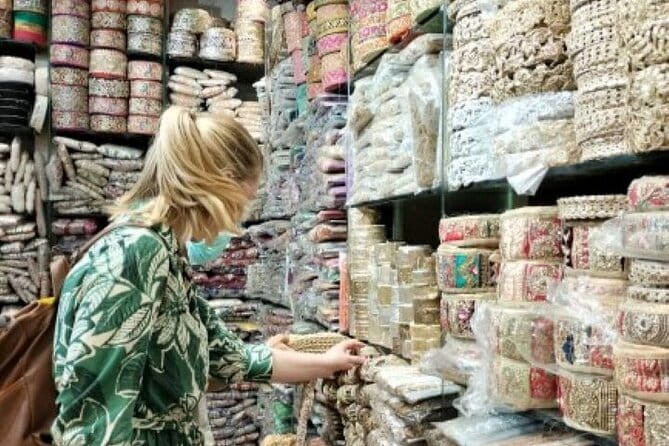
Chandni Chowk is where you go when you want textiles to feel real, not showroom perfect. On this tour, you start in the textile & trims market area, where the lanes are lined with fabric stalls, lace, Zari (metallic thread), and accessory shops. It’s a great place to build your “eye” early, because you’ll immediately see the range—from budget-looking trims to higher-end dress materials.
The tour also includes a short Tuk-tuk ride through narrow market lanes, which matters more than it sounds. Old Delhi roads can be slow and congested on foot, so this little push helps you get into the shopping mood without losing half the morning to navigation.
What’s good here: you learn to look at texture and finishing first, not just price tags. A guide’s job isn’t to block you from shopping—it’s to help you shop with less stress and fewer blind spots.
Possible drawback: if you come during peak hours, Chandni Chowk can feel crowded. You’ll still have time, but don’t plan a leisurely stroll where you can take 50 photos and linger everywhere.
You can also read our reviews of more tours and experiences in New Delhi.



Connaught Place Fabric Boutique: Premium Cotton, Silk, and Designer Materials

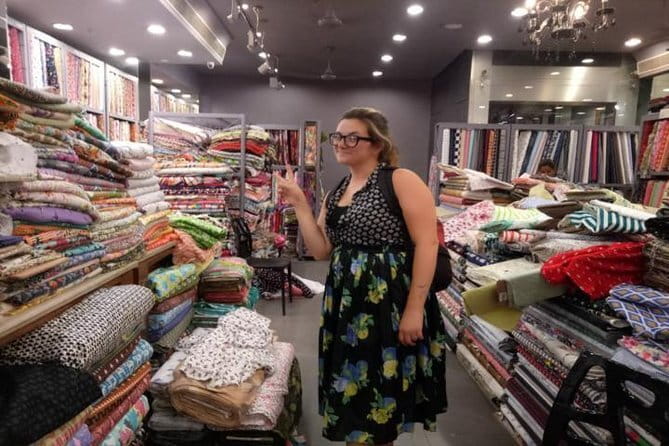
From Old Delhi’s tight lanes, you shift to a more structured shopping stop at Connaught Place. This part of the day is designed for quality checking, not just browsing. You visit a boutique fabric house focused on premium cotton, silk, and designer materials.
Why this matters: after you’ve seen the wide range of textiles in Old Delhi, the Connaught Place stop helps you narrow down what you actually want. Dress material shoppers often struggle with this step—every stall sounds convincing. A guided stop lets you focus on fundamentals like fabric feel, weave, and finishing, then move toward better value choices.
You’ll spend about an hour here, which is enough time to handle fabrics, compare options, and ask practical questions without burning your whole day on one area.
Nehru Place Zardozi and Embroidery Workshop: Watching the Stitch Work Up Close
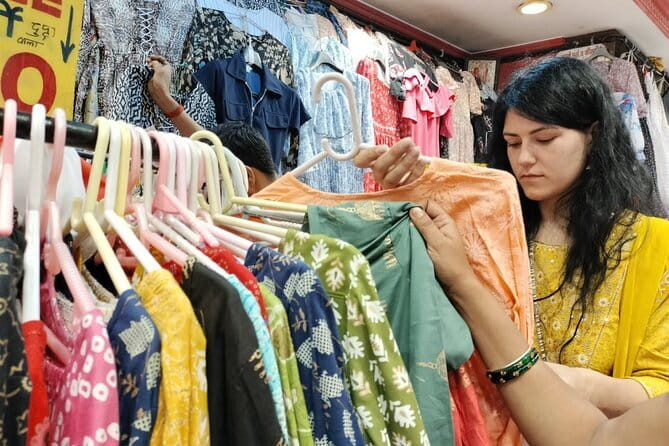
Nehr u Place is where needlework becomes a real process you can watch. The workshop portion focuses on Zardozi and hand-embroidery demos, and you may also see Aari style embroidery depending on availability.
This is one of the stops I’d prioritize if you like crafts with labor behind them. When you see how decorative thread, metallic elements, and stitched patterns are built, shopping gets smarter. You start to recognize what’s likely to be machine-made versus time-intensive handwork—and that makes a big difference when you’re comparing embroidered pieces.
You’ll get about an hour here. The practical win is that the guide can help you translate what you’re seeing into shopping decisions, like what to look for in stitching quality and how pieces are finished.
Reality check: live demonstrations depend on availability. You’re still going to a workshop setting, but the exact mix can vary (Zardozi and weaving/embroidery are mentioned as included depending on what’s scheduled).
Gole Market for Carpets and Pashmina: Traditional Loops and Loom-First Craft
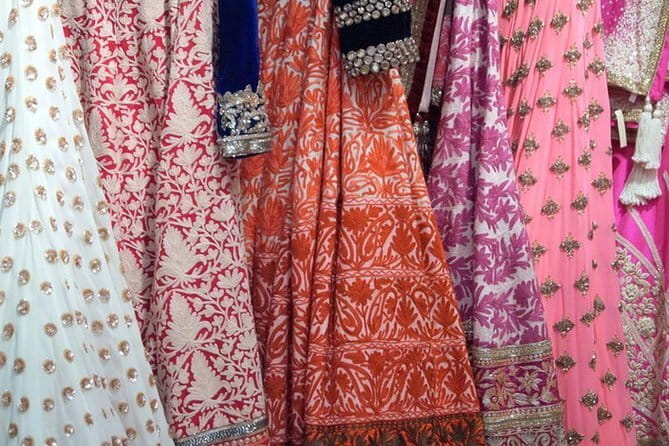
Gole Market is the place for carpet weaving and pashmina learning. The focus here is carpet weaving on traditional looms plus discovering Kashmiri pashmina and silk blends. You’ll also get a live weaving demonstration, which is exactly the kind of thing that makes a purchase feel grounded instead of purely speculative.
Two reasons this stop is such good value:
- Carpets and woven textiles can be hard to judge from a photo. Watching weaving shows you how density and structure are built.
- Pashmina blends are often marketed in a lot of ways. When you see what goes into the craft, you can shop with more confidence.
You’ll spend about an hour. If you’re serious about woven purchases, wear something comfortable for sitting/standing as demos run on artisan pacing, not tourist pacing.
Possible drawback: woven-textile shopping can tempt you into overbuying because you’ll see options back-to-back. If you know what you want, great. If you’re unsure, ask the guide to help you shortlist before you get swept into comparisons.
Khan Market Tailoring Consultation: Measurements, Style Advice, and Optional Orders
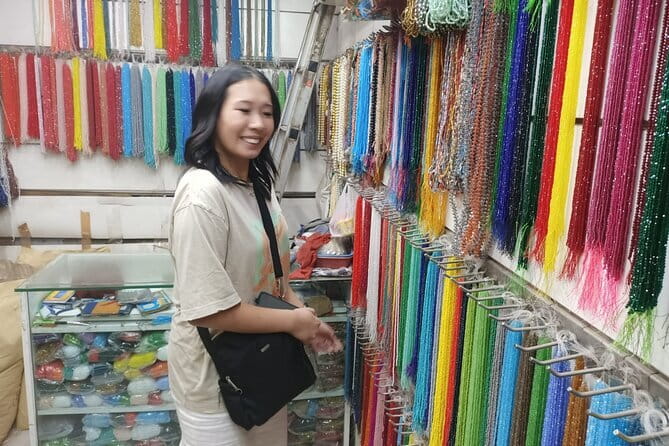
If you want the day to produce more than shopping bags, Khan Market is the payoff. This stop is a custom tailoring experience with measurements and style consultation. You can look at fabric choices and get design guidance, and the tour states that optional stitching orders are available.
Even if you don’t plan to order something that day, this is a useful stop. You learn how Indian tailoring and fabric choices work in a practical way—how a garment shape depends on material behavior, drape, and finish. That knowledge often helps you buy better shirts, kurtas, or dress pieces later.
The time here is about an hour, which is enough for a consult and fabric discussion without turning your tour into a long workshop appointment.
Consideration: tailoring orders likely take extra planning beyond the tour itself (the tour mentions optional stitching orders, but it doesn’t specify production or delivery details). If you’re traveling short-term, double-check timing with the tailor during the consultation.



Dilli Haat Craft Boutique: Home Décor Textiles and Artisan-Made Pieces

Dilli Haat is a softer landing after workshops and weaving. You get about 30 minutes at a handicraft boutique that focuses on handmade textiles and home décor—think cushion covers, wall art, runners, and embroidered pieces made by master artisans.
This is ideal for souvenirs because these items are more “gift-ready” than raw fabric rolls. It’s also the easiest place to compare what style and workmanship look like in smaller formats, which can help you decide whether you want to go bigger later.
Given the short time, you’ll want to focus. If you’re shopping here, it helps to already know what you want to carry home—one or two décor items max, or a few coordinated textiles.
Price and Logistics: Does $60 Deliver Real Value?
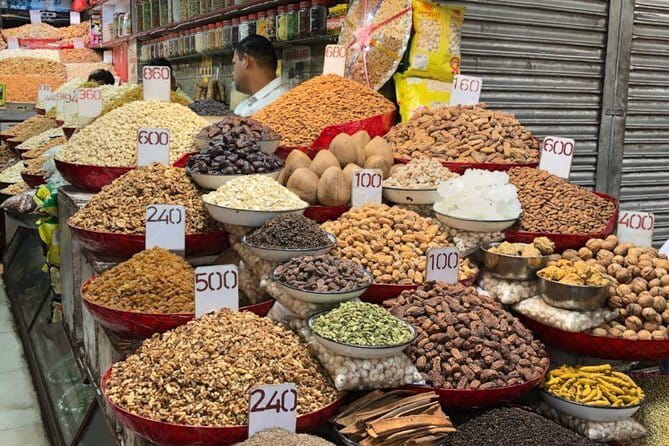
At $60 per person for an 8-hour private experience, this tour is priced like you’re paying for time, guidance, and access—not just transportation. And that distinction matters.
Here’s where the value comes from:
- Private air-conditioned vehicle + hotel pickup/drop-off: you’re not wasting the day figuring out routes between Old Delhi and multiple South Delhi markets.
- Professional English-speaking local guide: the guide’s role is to help you compare quality and shop with less pressure.
- Live demonstrations: watching weaving/embroidery (and Zardozi depending on availability) is what turns this from a shopping list into an experience with context.
- Tuk-tuk ride included: it’s a small line item, but it helps you move through the worst of the lane chaos.
Not included are meals and gratuities of $5 per person. So budget for lunch/snacks on your own, and keep a little cash/plan for tips.
Also, note the booking rhythm: it’s commonly booked about 7 days in advance. That tells me demand exists, and if you’re traveling in a busy season, you’ll want to reserve early so your guide can tailor the day without last-minute scrambling.
How to Shop Smarter When You Have a Guide (and Time Limits)
This tour is set up for a smart shopping day, but you still need a game plan. Here’s what I recommend to make the day pay off:
- Pick a priority before you start. Are you shopping for dress material, a pashmina, carpets, or décor? If you don’t choose, it’s easy to get spread thin across too many tempting options.
- Treat demonstrations like a checklist. When you see embroidery or weaving, use it as a reference for what good craftsmanship looks like, not just something interesting to watch.
- Use the guide for quality comparison. The tour explicitly focuses on helping you compare quality and find authentic pieces. Ask what questions you should be asking about the specific item you’re holding.
- If you want tailoring, decide on fabric early. The consult is included, and that means fabric selection is part of the value. The earlier you narrow down choices, the smoother the consultation tends to feel.
One more practical note: the guide’s approach is described as pressure-free. Still, if you’re not ready to buy, it’s okay to say you’re comparing. You’ll get more value from walking out with fewer, better choices.
Comfort, Crowds, and Weather: What You Should Pack for This Day
This is a walking-and-market day, even with transport between stops. The tour recommends comfortable walking shoes, and I agree.
Keep these practical points in mind:
- Markets can be crowded during peak hours, especially Old Delhi lanes.
- You’ll be moving between shopping areas, so bring water and plan for breaks.
- The tour states it runs in all weather conditions, so pack accordingly. Even on clear days, you can get sun and dust exposure in market streets.
Because the vehicle is private and air-conditioned, you’ll get real recovery time between stops, which helps a lot if you’re not used to Delhi traffic and heat.
Who Should Book This Tour (and Who Might Skip It)
This experience fits you if you:
- love textiles and want to understand them beyond branding
- want artisan workshops and live demos
- prefer a guided, organized shopping route through multiple markets
- want the option of a tailoring consultation without spending your whole day coordinating it yourself
- are traveling solo, as a couple, or with a small group and want a private setup
You might skip it if you:
- only want museum-style sightseeing and don’t care about shopping or craft demos
- are extremely time-limited and hate markets
- expect a lot of included meals (meals are not included)
Should You Book Delhi Textile & Handicraft Tour?
I think this is a solid booking when your goal is quality shopping with context. The combination of private pickup, multiple focused stops, and live craft demonstrations makes it more than a typical market tour. At $60, the value is strongest if you actually plan to interact with the craft side—watch the weaving/embroidery, ask questions, and use the guide to compare what you’re considering.
If you want a shopping day that feels planned (not chaotic) and you’re open to learning what separates good work from fast work, book it. If you’re only browsing for fun and you dislike crowds, you may want a lighter, more relaxed plan instead.
FAQ
What’s the duration of the Delhi Textile & Handicraft Tour?
The tour runs about 8 hours (approx.).
Is hotel pickup and drop-off included?
Yes. The tour includes hotel pickup and drop-off in Delhi, plus a private air-conditioned vehicle.
Is the Tuk-tuk ride included?
Yes. A Tuk-tuk ride through Old Delhi market lanes is included as part of the Chandni Chowk stop.
What demonstrations are included?
The tour includes live demonstrations such as weaving and embroidery, and it mentions Zardozi as part of the experience depending on availability.
Can I get custom tailoring done during the tour?
Yes. There is a custom tailoring consultation with measurements and style guidance at the Khan Market stop, and optional stitching orders are available.
What’s included in the price, and what is not?
Included are the private vehicle, professional English-speaking guide, hotel pickup/drop-off, live demonstrations, Tuk-tuk ride, and personalized assistance. Meals are not included, and gratuities are $5 per person.