REVIEW · NEW DELHI
Delhi Agra Jaipur Udaipur Rajasthan 9 Days Tour From New Delhi
Book on Viator →Operated by Bagga India Tour · Bookable on Viator
This trip works because it slows down just enough. It strings together Delhi, Agra, Jaipur, Jodhpur, and Udaipur with UNESCO landmarks and local guides, so the days feel full without feeling like you’re sprinting across North India.
I especially like the way the plan handles logistics: door-to-door hotel transfers, an AC car with chauffeur, and airport pickup in Delhi. That matters when traffic, lines, and travel time can steal your energy.
One thing to watch: the tour price covers the guide and vehicle, but monument entrance fees, hotel stays, and meals aren’t included, and tips may come up depending on how you want service to be handled.
In This Review
- Key highlights you’ll actually feel day-to-day
- Price and logistics: what $316.67 covers (and what it doesn’t)
- Delhi days: Old Delhi markets to Qutub Minar without whiplash
- Jama Masjid and Chandni Chowk, then Red Fort from outside
- Humayun’s Tomb, Lotus Temple, and Qutub Minar: three moods, one day
- India Gate and Rashtrapati Bhawan for the capital’s modern frame
- Agra on the clock: Taj Mahal, Agra Fort, and the Baby Taj effect
- Taj Mahal with battery transport from the parking area
- Agra Fort: power and history in stone
- Itimad-ud-Daula: the softer, detailed cousin
- Fatehpur Sikri and Chand Baori: the road stops that make the trip feel longer
- Fatehpur Sikri: Mughal ambition in red sandstone
- Chand Baori stepwell: a water structure that hits visually
- Monkey Temple (Galtaji) adds a different kind of energy
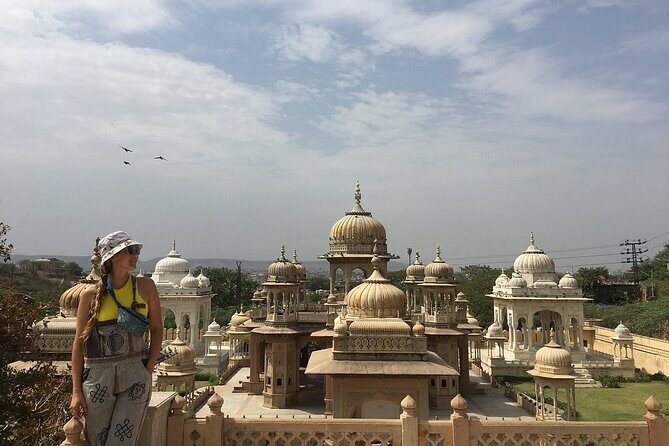
- Jaipur: Amber Fort, Hawa Mahal, City Palace, and the observatory angle
- Amber Fort and the view-based stops
- Hawa Mahal: the iconic facade works best up close
- City Palace and the Albert Hall Museum time slot
- Jantar Mantar and Panna Meena ka Kund for the hands-on side
- Jodhpur’s Mehrangarh and the city center that’s easy to enjoy
- Mehrangarh Fort: Rajasthan power on a hill
- Jaswant Thada and Umaid Bhawan Museum add variety
- Clock Tower Market: a practical stroll at the end
- Ranakpur Jain Temple and Udaipur’s palace-and-lake day
- Ranakpur Jain Temple: a different spiritual architecture
- Udaipur check-in and a calm arrival
- Udaipur highlights: City Palace, Jagdish Temple, Sahelion Ki Bari, Lake Pichola
- City Palace: the long Mewar timeline in one complex
- Jagdish Temple: a compact but meaningful stop
- Sahelion Ki Bari and gardens that actually let you breathe
- Lake Pichola: the city’s signature view
- Day 9: a flexible morning, then airport or rail drop-off
- How to get the best experience from this kind of route
- Money planning: separate entrance fees, hotels, and meals
- Ticket and line strategy: use the skip-the-line benefit
- Guide style: ask for a no-pressure day
- Cars and schedules: why the chauffeur matters
- Should you book this tour?
- FAQ
- What is included in the Delhi, Agra, Jaipur, Jodhpur, Udaipur 9-day tour?
- Are monument entrance fees included?
- Are meals and hotel accommodation included?
- How does airport or railway drop-off work on the final day?
- Is this a private tour or a group tour?
- What is the cancellation policy?
Key highlights you’ll actually feel day-to-day
- Private city guides in each stop, so you get context for Mughal forts, stepwells, and the observatories in Jaipur
- Skip-the-line entrance ticket handling plus a battery rickshaw/bus to Taj Mahal when needed
- AC chauffeur-driven comfort across long stretches between cities
- UNESCO coverage that doesn’t stop at one city: Delhi sites, Taj Mahal, and more across the route
- Ranakpur Jain Temple as a road-trip moment that adds a very different side of Rajasthan
- You can customize, which helps if you want more time at one palace or less shopping time
Price and logistics: what $316.67 covers (and what it doesn’t)
At about $316.67 per person for the 9-day experience, you’re mainly paying for the human and transport pieces: an air-conditioned car with chauffeur, live government-approved city guides, door-to-door transfers, bottled mineral water, and all tolls, fuel, parking charges.
What you usually pay separately is the stuff that can’t be lumped into a fixed tour price: hotel accommodation, food, and monument entrance fees. Since entrances for places like the Taj Mahal and other major sites can add up, I suggest you budget for that early so the math doesn’t surprise you later.
This is also a private tour for your group only, which is great for flexibility—but it can mean schedules are set by the itinerary. If you’re hoping to wander freely without following set stops, you may want a customization request.
You can also read our reviews of more tours and experiences in New Delhi.



Delhi days: Old Delhi markets to Qutub Minar without whiplash
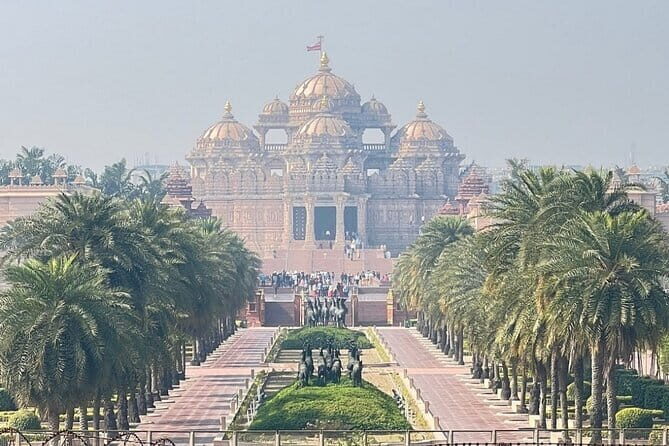
Delhi on this route is split into a classic one-two punch: the older lanes of Old Delhi, then the grand monuments of New Delhi. The big win here is pacing: you start with a morning pick-up at 9:00am, then keep moving through major sights across the city.
Jama Masjid and Chandni Chowk, then Red Fort from outside
You’ll begin in Old Delhi at Jama Masjid, a massive 17th-century mosque. It’s not just a photo stop; the scale makes the surrounding area make sense, especially once you’re standing in the complex and absorbing how the city was planned around landmark religion.
From there, you head to Chandni Chowk, a historic market area known for spices and everyday goods. The plan even includes a tuk-tuk ride, which is a smart way to save your legs when lanes get crowded.
The itinerary also includes Red Fort as a stop. You’ll see it as a major Mughal power statement, built between 1639 and 1648, with its long wall giving you that strong, fortress feel from the outside. If you decide you want more time inside, that would be an entrance-fee add-on.
Humayun’s Tomb, Lotus Temple, and Qutub Minar: three moods, one day
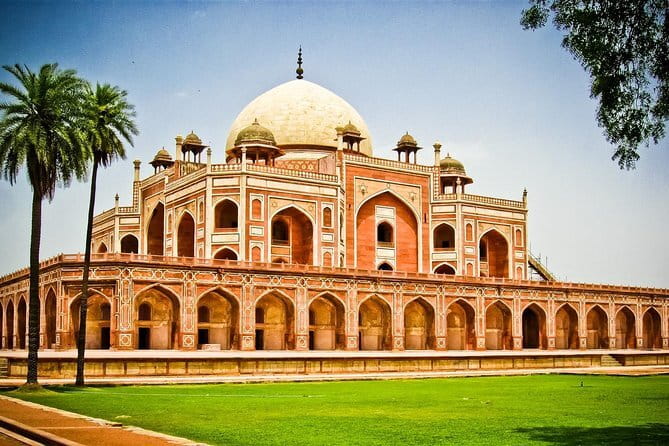
Next comes Humayun’s Tomb, a UNESCO World Heritage site that’s often a gateway into Mughal architecture and garden planning. It helps you understand the style you’ll later see reflected in Agra.
Then you move to the Lotus Temple, known for its calm, lotus-flower-like form with white marble petals. It’s a contrast break: same city, totally different atmosphere.
After that, Qutub Minar rounds out the UNESCO set. The tower is part of a larger complex, and the height and detail of the minaret make it feel like a vertical timeline of Delhi’s long story.
India Gate and Rashtrapati Bhawan for the capital’s modern frame
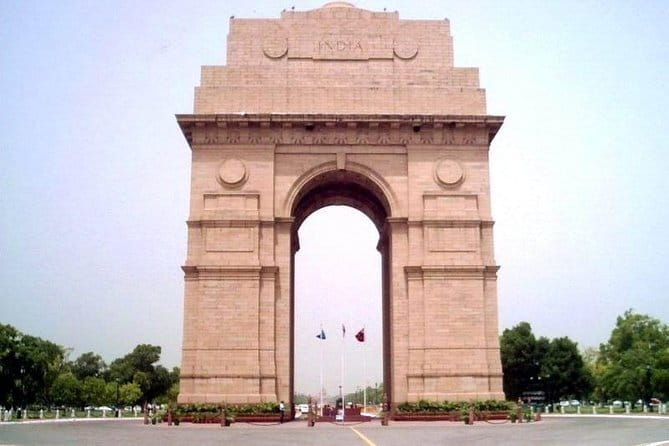
You’ll also stop at India Gate, a 42m memorial arch. Even if you don’t read every name, the scale and setting make it clear it’s about remembrance tied to the army.
Finally, there’s Rashtrapati Bhawan (President’s House), including its massive layout and the idea that it once functioned as the British viceroy’s residence. The time here is brief, but it gives you context for how Delhi’s power centers shifted through time.
Practical note: Delhi is a lot of sights in one go. Wear shoes you can handle for changing surfaces, and carry water. The trip provides bottled mineral water, which helps keep you comfortable during the day.


Agra on the clock: Taj Mahal, Agra Fort, and the Baby Taj effect
Agra is where the whole route earns its name. After breakfast and check-out on day 3, you drive from Delhi, and the emphasis goes straight to the essentials.
Taj Mahal with battery transport from the parking area
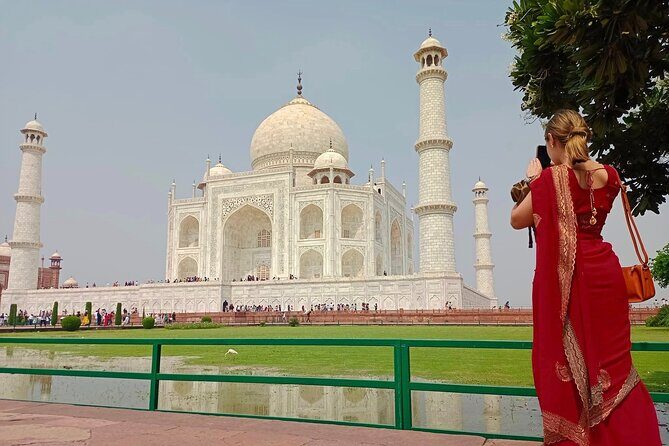
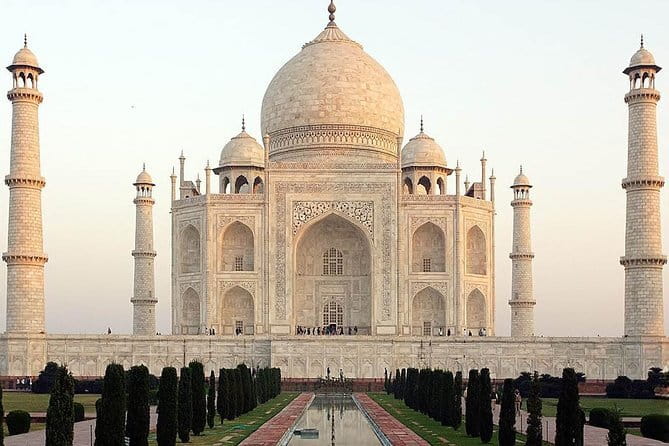
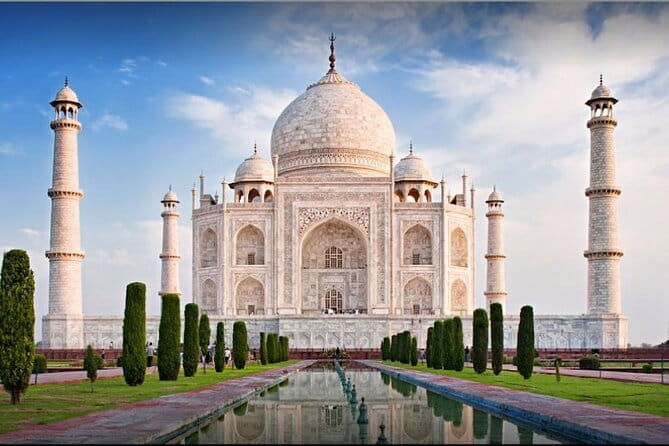
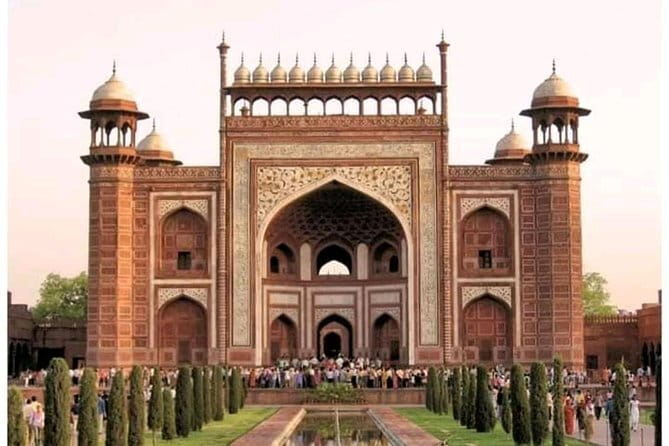
The headline is, of course, the Taj Mahal, the ivory-white marble mausoleum commissioned in 1631 by Shah Jahan. You’ll have a dedicated time window—listed as up to 3 hours—so you can actually look at details rather than just arriving, snapping, and leaving.
A very practical perk is the battery bus/rickshaw ride from the parking lot to the Taj Mahal area. That saves time and energy, especially if you’re carrying camera bags or if walking distances feel tiring after a city day.
Agra Fort: power and history in stone
Next comes Agra Fort, sometimes called the city’s Red Fort. It links to Mughal history through coronation and later renovations, and even an outside-and-inside visit gives you that “this was a working stronghold” feeling.
Itimad-ud-Daula: the softer, detailed cousin
To round out Agra, you’ll visit Itimad-ud-Daula, often described as the Baby Taj. The value here is that it’s smaller and more intimate, so you can spot workmanship and design choices that you might miss when the Taj is dominating your attention.
Tip for your comfort: Agra can feel intense under the sun. The itinerary is structured, but you can pace yourself inside each monument and take brief pauses before moving on.
Fatehpur Sikri and Chand Baori: the road stops that make the trip feel longer

Day 4 is a travel day, but it doesn’t waste the hours. You drive from Agra to Jaipur, with stops that add real variety.
Fatehpur Sikri: Mughal ambition in red sandstone
You’ll visit Fatehpur Sikri, a former Mughal city site. It’s known for its cluster of red sandstone buildings and major entrance features such as Buland Darwaza leading into the Jama Mosque area. The effect is that you’re not only seeing a monument—you’re seeing a planned city in ruins, which makes the drive feel like part of the history, not a break from it.
Chand Baori stepwell: a water structure that hits visually
Then there’s Chand Baori (Abhaneri Stepwell), built by the Nikumbha Dynasty in the 9th century. Stepwells are functional architecture, and this one is famous for its scale and symmetry. Even if you’re not a “structure nerd,” it’s one of those places where the geometry makes you slow down.
Monkey Temple (Galtaji) adds a different kind of energy
The plan includes Monkey Temple (Galtaji). You’ll find a series of temples in a narrow crevice setting among hills. The main thing you’ll notice is how lively the area can be, so keep your belongings secure and keep your eyes on where you step.
Jaipur: Amber Fort, Hawa Mahal, City Palace, and the observatory angle
Once you arrive in Jaipur and check in, day 5 focuses on the city’s main sights. The itinerary lists several attractions, so expect a full day.
Amber Fort and the view-based stops
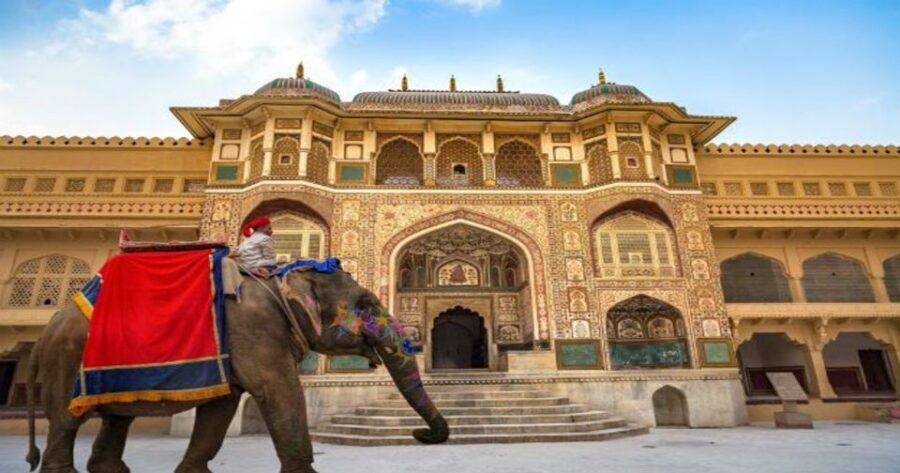
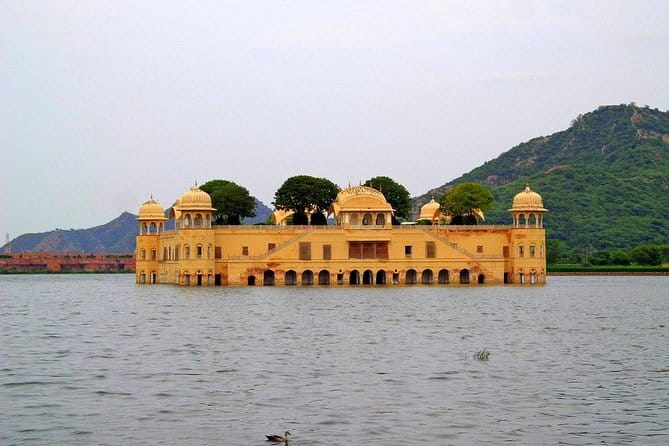
You start with Amber Fort and also include Jal Mahal along the way. Jal Mahal is a great “pause spot” because it lets you see the palace from a distance and break up the fortress-heavy day. Amber Fort is the centerpiece: big fort energy, lots to look at, and a strong sense of Rajput power.
Hawa Mahal: the iconic facade works best up close
You’ll also visit Hawa Mahal, the Palace of Breeze, known for its 953 windows (jharokhas). The windows are the point: you get why it was designed as a screen-like facade and why it’s become one of the most recognizable shapes in Jaipur.
City Palace and the Albert Hall Museum time slot
The schedule includes City Palace and Albert Hall Museum as well. City Palace helps you understand how royal administration shaped the city. Albert Hall Museum adds a more museum-style break if you want objects and collections rather than pure architecture.
Jantar Mantar and Panna Meena ka Kund for the hands-on side
You’ll also visit Jantar Mantar, the astronomical observatory built in 1734, including the world’s largest sundial as part of the complex. It’s a reminder that science and statecraft were tied together in this era.
And don’t skip Panna Meena ka Kund, a stepwell with distinctive 16th-century architecture. Stepwells have a “cool me down and store water” purpose, but they also function like public architecture—people used them as part of daily life.
A small reality check: The Jaipur day includes a lot of stops. If you dislike being rushed from one place to another, ask your guide for a little extra time at whichever site matters most to you—whether it’s Amber Fort, Jantar Mantar, or City Palace.
Jodhpur’s Mehrangarh and the city center that’s easy to enjoy
Day 6 moves from Jaipur to Jodhpur. The highlight is a fortress that dominates the skyline: Mehrangarh Fort.
Mehrangarh Fort: Rajasthan power on a hill
Mehrangarh is described as one of the largest forts in India. That size is the point: from inside, you see why it was built to control and protect. Even if you only spend part of the day here, it’s the kind of place that makes the Rajasthan story feel more tangible.
Jaswant Thada and Umaid Bhawan Museum add variety
You’ll also visit Jaswant Thada, a cenotaph built in 1899 in memory of Maharaja Jaswant Singh. The feeling is calmer and more reflective than the fort.
Then there’s Umaid Bhawan Museum, connected to the Umaid Bhawan Palace built between 1928 and 1943. It gives you a sense of how Jodhpur moved into a newer era without losing its identity.
Clock Tower Market: a practical stroll at the end
The itinerary ends with Clock Tower Market and a short time there. It’s useful for snacks, simple shopping, and stretching your legs after a fort-focused day.
In at least one smooth version of this experience, the driver was named Dutt, known for handling complicated traffic with confidence. That’s worth mentioning because Jodhpur’s roads can be busy, and the car-and-driver setup is what keeps the days from feeling chaotic.
Ranakpur Jain Temple and Udaipur’s palace-and-lake day
Day 7 is a transfer day from Jodhpur to Udaipur, with Ranakpur Jain Temple included along the route. That’s a smart move because it breaks up travel with a meaningful stop.
Ranakpur Jain Temple: a different spiritual architecture
Ranakpur Jain Temple (Chaturmukha Dharna Vihara) is a Svetambara Jain temple dedicated to Rishabhanatha. You’ll spend about an hour here, and the value is the contrast: you’re not only seeing Hindu and Mughal-era landmarks on this trip, you’re also stepping into a Jain temple setting with its own design logic.
Udaipur check-in and a calm arrival
After Ranakpur, you continue to Udaipur and check in for an overnight stay. Udaipur is often thought of as lakes and palaces, and you can feel that shift as soon as you’re in the city.
In one version of this kind of trip, a driver named Suresh was highlighted for being professional and reliable from Delhi all the way to Udaipur—exactly the kind of steady presence you want on multi-day road movement.
Udaipur highlights: City Palace, Jagdish Temple, Sahelion Ki Bari, Lake Pichola
Day 8 is built around classic Udaipur anchors, with time for both monuments and scenic settings.
City Palace: the long Mewar timeline in one complex
The itinerary includes City Palace, described as built over nearly 400 years by Mewar rulers. It’s not just one building—it’s a complex, so plan to look slowly at how the parts connect.
Jagdish Temple: a compact but meaningful stop
Next is Jagdish Temple, built in the time period of 1628–1653 by Maharaja Jagat Singh. It’s on a small terrace and built with vastu shastra principles, so it’s a good stop if you like understanding how design and belief connect.
Sahelion Ki Bari and gardens that actually let you breathe
Sahelion Ki Bari is included for its gardens and architectural beauty. It’s one of those stops where you’ll notice the theme of court life and leisure—then get a chance to slow down again.
Lake Pichola: the city’s signature view
Finally, you end at Lake Pichola. Even without a formal boat plan, the lake setting is a big reason Udaipur is so easy to fall for. The itinerary lists about an hour, which is enough to enjoy the space without feeling stuck.
Day 9: a flexible morning, then airport or rail drop-off
On the final day, you get a choice: a morning tour of Udaipur, or time on your own activities. That flexibility matters if you want to do last-minute shopping, pick up a few photos, or just rest after a long route.
After that, your driver drops you at Udaipur Airport or the railway station based on your schedule. Having a dedicated transfer at the end is a quiet quality-of-life win.
How to get the best experience from this kind of route
This tour is designed for comfort and smooth pacing, but you can improve your experience by planning a few things up front.
Money planning: separate entrance fees, hotels, and meals
Since monument entrance fees, accommodations, and meals aren’t included, I’d treat your budget as two layers:
- what you pay for transport + guides
- what you pay on top for hotels, food, and ticketed sights
If you don’t do this, you can end up feeling like the day got expensive after the fact.
Ticket and line strategy: use the skip-the-line benefit
The trip includes arrangements to skip-the-line for monument entrance tickets, and also uses battery transport to the Taj Mahal area when you need it. That’s not just convenient—it prevents time from evaporating in queues.
Guide style: ask for a no-pressure day
One downside that shows up in service feedback is that some guides can feel pushy, including stopping at shops you didn’t ask for, and tipping being expected repeatedly. I suggest you set the tone early: tell your guide you want to focus on monuments and city sights, and that any optional shopping stops should only happen if you ask.
Cars and schedules: why the chauffeur matters
Road time across Delhi–Agra–Jaipur–Jodhpur–Udaipur is real. Having an AC car with a chauffeur, with tolls and fuel handled, makes the route feel calmer than self-driving or piecing together transit.
Should you book this tour?
Book it if you want a private, guided north India route that hits Delhi, Agra, Jaipur, Jodhpur, and Udaipur without trying to manage every turn yourself. It’s a strong fit if you value UNESCO sights and want local context from city guides, with the convenience of door-to-door transfers and included airport pickup in Delhi.
Skip it or adjust it if your budget can’t handle extra costs for hotels, meals, and monument entrances, or if you’re sensitive to shopping stops and tipping expectations. If you do book, send a note asking to keep the focus on monuments and tours only—your day will feel better for it.
If that’s your style, this is a practical way to see the highlights of the region with less stress and more story.
FAQ
What is included in the Delhi, Agra, Jaipur, Jodhpur, Udaipur 9-day tour?
The tour includes an air-conditioned car with chauffeur, live government approved city tour guides in each city, door-to-door hotel pick up and drop off, complimentary drinking mineral water bottles, all toll tax/state tax/fuel/parking charges, skip-the-line of monuments entrance tickets, and battery rickshaw/cycle rickshaw rides when needed. It also includes New Delhi airport pick up.
Are monument entrance fees included?
No. Monument entrance fees are not included in the tour price.
Are meals and hotel accommodation included?
No. Food (including breakfast, lunch, and dinner) and hotel accommodation are not included.
How does airport or railway drop-off work on the final day?
On day 9, your driver will drop you at the Udaipur airport or railway station based on your schedule.
Is this a private tour or a group tour?
This is a private tour/activity. Only your group will participate, and a private driver and private tour guide are provided as per the itinerary.
What is the cancellation policy?
There is free cancellation. You can cancel up to 24 hours in advance for a full refund, based on the experience’s local start time.