REVIEW · JAIPUR
Best of Jaipur 1, 2-Day Private Full-Day Delhi Sightseeing
Book on Viator →Operated by India saying namaste Trips · Bookable on Viator
In This Review
- A well-paced Jaipur day beats a random hop
- Key takeaways before you go
- How the private Jaipur route actually feels
- Stop 1: Hawa Mahal (Palace of Wind) for the right kind of photo
- Stop 2: Jantar Mantar, the UNESCO must-do
- Stop 3: Nahargarh Fort for big Jaipur views
- Stop 4: Jaigarh Fort for fort energy without overthinking
- Stop 5: Birla Mandir Temple for a calm pause
- Stop 6: Panna Meena ka Kund, the photo-worthy water tank
- Stop 7: City Palace of Jaipur for the royal core
- Stop 8: Albert Hall Museum for culture in a manageable chunk
- Stop 9: Akshardham Temple as a modern contrast
- Stop 10: Jal Mahal photo moment at the water palace
- Stop 11: Galta Ji for the monkey-temple style atmosphere
- Admission tickets and budgeting without surprises
- Who this tour is best for
- Should you book this private Jaipur sightseeing tour?
- FAQ
- What’s the duration of this private Jaipur sightseeing tour?
- Is this tour private or shared?
- What’s included in the price?
- Are admission tickets included?
- Do you offer pickup and drop-off in Jaipur?
- Which places are included on the route?
- Is the guide available in English?
- Can I cancel for a refund?
A well-paced Jaipur day beats a random hop
If you want Jaipur in one day without feeling rushed, this private sightseeing plan is a smart way to do it. You’ll hit major landmarks with an English-speaking guide, including the UNESCO site at Jantar Mantar, and you can follow the preset flow or ask for tweaks along the way. I like the way the tour builds in time at each stop (so you’re not sprinting from one photo to the next), and I also like the private setup with door-to-door pickup and drop.
The one drawback to flag: admission tickets are not included, so you’ll need to buy entry directly at the places you visit, and some stops depend on what’s open that day.
This tour is also flexible in a practical way. The company is known for adjusting the day to help you make the most of your time, including adding popular side stops like the monkey temple area (Galta Ji) and photo moments at the water palace (Jal Mahal).
Key takeaways before you go
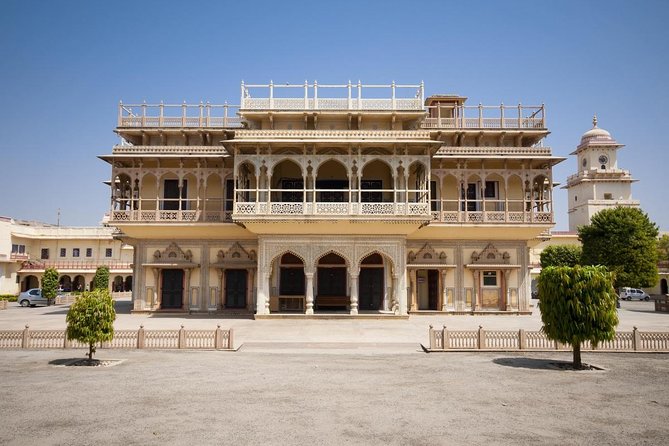
- Private pickup and drop anywhere in central Jaipur (hotels, Airbnbs, railway station, airport).
- English-speaking guide to connect the dots between places instead of just naming them.
- UNESCO focus with Jantar Mantar, plus Jaipur City as a UNESCO-recognized destination.
- Fort-and-temple route that gives variety: viewpoints, royal buildings, worship sites.
- Tickets are your responsibility, so budget extra for entries and plan around opening hours.
You can also read our reviews of more tours and experiences in Jaipur.



How the private Jaipur route actually feels
This is built as a full-day, private city tour with transport included. You ride in a cab, and your guide handles the route and pacing, which matters in Jaipur where sights are spread out.
A big reason I like this setup is the value of doing it private at a low per-person price point. For $22.70 per person, you’re essentially paying for a guided day with transportation, and you only add entrance fees on top where required.
You also get a mobile ticket, which is helpful if you’d rather keep paperwork off your phone. And because it’s private, you won’t get stuck waiting on other groups to finish the same stop.
Stop 1: Hawa Mahal (Palace of Wind) for the right kind of photo
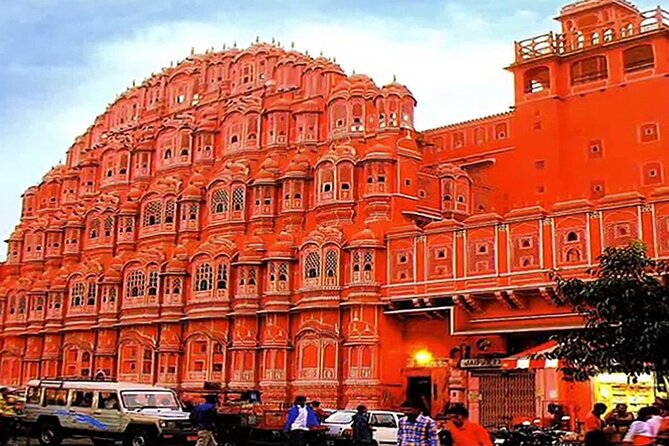
Hawa Mahal is the kind of landmark that pulls people in fast, usually for the façade and the idea of a palace made for airflow. This stop is timed at about 30 minutes, so it’s a quick hit rather than a long linger.
What you’ll want to focus on here is how the building looks from different angles. In a short stop, your guide can help you choose a couple of viewpoints where you’ll get the best shots without burning your whole day.
If you’re the type who likes to read every plaque, just know the time is tight. Ask your guide what to prioritize so you leave with real context, not just a quick exterior glance.
Stop 2: Jantar Mantar, the UNESCO must-do
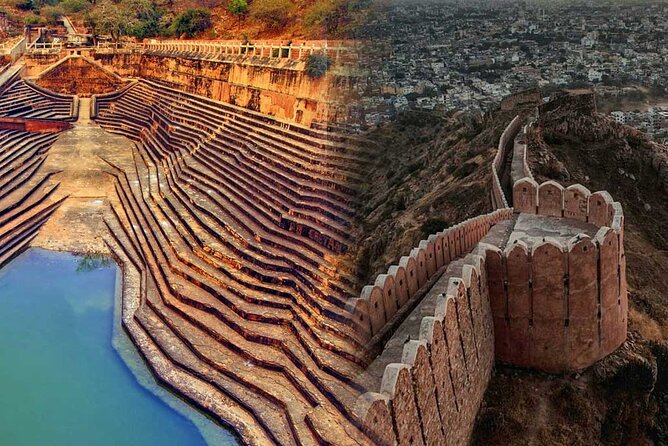
Jantar Mantar is one of the anchors of the day, and it’s also the clearest UNESCO payoff. The tour includes about 30 minutes here, which is usually enough time to understand what you’re looking at and still take photos.
This is a good stop if you like seeing how people in the past measured and tracked the sky. Your guide can explain the purpose behind the structures so the site feels less like a collection of rocks and more like a functioning idea.
One practical tip: keep your expectations realistic for a 30-minute slot. If you want deeper time for photos and slow wandering, you’ll probably want to ask for a bit more time or reduce another stop elsewhere.
Stop 3: Nahargarh Fort for big Jaipur views
Nahargarh Fort is next, with about 1 hour allotted. Fort time is never just about buildings; it’s about the outlook, the sense of the land, and how the city sits around the fort.
This is also where you get a break from temples and palace façades. If your day starts feeling “sight-seeing busy,” switching to a fort viewpoint usually helps reset your brain.
Consider footwear. Even when the walk is manageable, forts often mean uneven surfaces and steps. You’ll feel more comfortable if you wear closed shoes and keep water in your day bag.





Stop 4: Jaigarh Fort for fort energy without overthinking
Jaigarh Fort is included after Nahargarh, with about 30 minutes. That shorter duration can work if you treat it as a “see the key parts” stop, not a full exploration.
This stop is useful because it adds variety. Instead of repeating the same kind of view twice, you’ll likely notice different layouts and the overall fort mood changes from one site to the next.
If you’re a history-first visitor, you’ll probably want to use your guide’s time effectively here. Ask what to look for so you don’t miss the point while you’re moving fast for photos.
Stop 5: Birla Mandir Temple for a calm pause
Birla Mandir Temple gives you a lighter change of pace between fort stops and palace/museum stops. You get about 30 minutes, which is generally enough time to visit respectfully and observe the place without turning it into a long detour.
A temple stop also works well because it slows down your day. Instead of racing between landmarks, you have a natural moment to sit, look around, and reset.
For comfort, dress for a place of worship. That means keeping shoulders and knees covered as a safe default, and planning for modest weather changes you might feel inside/outside depending on the day.
Stop 6: Panna Meena ka Kund, the photo-worthy water tank
Panna Meena ka Kund is a quick stop (about 30 minutes), but it’s one of those Jaipur features that people remember. It’s included as part of the route because it offers a different visual from palaces, forts, and temples.
In a short time, you’ll get the most from this stop by focusing on the structure and the step-like design. Your guide can help you place it in the broader story of how Jaipur handled water and daily life—at least at the level the tour route supports.
Wear shoes you trust. Places like this often involve stairs and uneven ground, and the last thing you want is to cut your time short because your feet hurt.
Stop 7: City Palace of Jaipur for the royal core
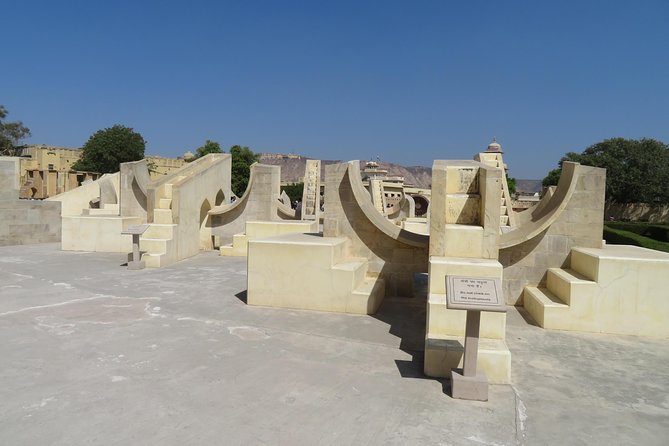
City Palace is a larger stop at about 2 hours, which makes sense. This is where you can actually slow down and absorb what a palace complex feels like as a working space and an architectural statement.
Because the time is longer, you’ll have room to do two things well: walk through the main areas and take a breather to review what your guide has explained. It’s also the stop where you’ll probably feel the most “Jaipur identity,” since it’s the kind of landmark that ties together the city’s past and its present look.
If you get tired, don’t force it. Use your 2 hours like a menu: prioritize what matters most to you and accept that not every corner can be equally interesting on a one-day schedule.
Stop 8: Albert Hall Museum for culture in a manageable chunk
Albert Hall Museum is included for about 30 minutes. That’s short for a museum, but it can still be worthwhile if you treat it as an introduction.
This works best if your goal is to get oriented and understand how the city presents art, artifacts, and its own narrative. Ask your guide what they recommend you focus on in the time you have.
If you’re a museum person, you might wish you had extra time. For first-timers, though, the quick visit is a good way to keep the day balanced without sacrificing the rest of the route.
Stop 9: Akshardham Temple as a modern contrast
Akshardham Temple is on the list with about 30 minutes. This is the kind of stop that can feel like a contrast to the more “old Jaipur” vibe of forts and palaces.
In this time window, the key is to go in with an open mind. Don’t compare it scene-for-scene with older sites. Instead, use it as a chance to see how different religious and architectural styles show up in the same city day.
If it’s busy when you arrive, your guide can help you navigate what’s practical so your time doesn’t turn into waiting.
Stop 10: Jal Mahal photo moment at the water palace
Jal Mahal is included with about 30 minutes, and it’s a favorite for a reason: it’s built for iconic photos. Even if you don’t spend long inside or right up close (this is a timed stop), you’ll get the visual payoff.
This is also a strong example of why having a guide matters. They can help you choose where to stand for photos and keep you moving efficiently through the day’s traffic and crowds.
Plan for glare and sun. In Jaipur, light can be intense. A quick adjustment in where you stand often makes the difference between a washed-out picture and a sharp one.
Stop 11: Galta Ji for the monkey-temple style atmosphere
Galta Ji rounds out the day (about 30 minutes). It’s included as a temple stop with a distinct character, and it’s also the type of place people remember for its lively, open feel.
This is where the tour’s flexibility can shine. A guide can help you manage the route so you see the key areas without getting stuck in slow sections.
Do keep an eye on your belongings and move carefully. Temple areas can be active, and a short stop means you’re usually focused on moving and looking rather than unpacking into a long sit-down.
Admission tickets and budgeting without surprises
The tour includes private transportation and an English-speaking guide, but it does not include admission tickets. The itinerary notes admissions are excluded, with tickets handled directly where you go.
That means you should budget for entries as an add-on. The exact total depends on which sites you pay for that day and how tickets are handled at each stop.
I recommend you bring some cash and also check if the site accepts cards or mobile payment. When you’re dealing with multiple stops in one day, payment hiccups can waste minutes you don’t have.
Also remember: some places are visited only if they’re open. The guide can adjust on the fly within the route, but you should expect at least one stop might shift if opening hours don’t line up.
Who this tour is best for
This tour fits you if you want a private Jaipur day that covers the main highlights without turning into a stressful checklist. It’s especially good for first-timers who don’t want to plan the route themselves.
It’s also a strong match if you care about context. The whole point of a guide here is to connect the dots across landmarks, so you walk away understanding what each site represents in the Jaipur story.
If you’re traveling with limited time—just a quick stop in Jaipur between other plans—this route is a practical way to see a lot without switching hotels or learning a new transport system.
Should you book this private Jaipur sightseeing tour?
I’d book it if you want a straightforward, guide-led day that hits the big names and keeps the pace sane. The price-to-structure ratio is attractive: private transport, an English-speaking guide, and a well-shaped route.
Skip it only if you already know Jaipur deeply and plan to linger for hours at each major site. With stops timed in shorter windows—especially at the palaces and monuments—you’re getting a curated overview, not a slow, all-day deep study.
If you like your travel days organized but still want a little flexibility, this is the kind of tour that helps you get your bearings fast and see the highlights in a way that actually feels manageable.
FAQ
What’s the duration of this private Jaipur sightseeing tour?
It runs for approximately 4 to 8 hours, depending on how the day flows and which places are open.
Is this tour private or shared?
It’s a private tour/activity, so only your group participates.
What’s included in the price?
Included are private transportation, an English speaking guide, and visiting the listed places if open.
Are admission tickets included?
No. Admission tickets are excluded, and you buy directly where you go.
Do you offer pickup and drop-off in Jaipur?
Yes. There is private pickup and drop-off within any place in Jaipur city, including hotels, Airbnbs, restaurants, the railway station, and the airport.
Which places are included on the route?
The route includes Hawa Mahal, Jantar Mantar, Nahargarh Fort, Jaigarh Fort, Birla Mandir Temple, Panna Meena ka Kund, City Palace of Jaipur, Albert Hall Museum, Akshardham Temple, Jal Mahal, and Galta Ji.
Is the guide available in English?
Yes, the guide is listed as English speaking.
Can I cancel for a refund?
Yes. You can cancel up to 24 hours in advance for a full refund. If you cancel less than 24 hours before the start time, you won’t get a refund.