REVIEW · UDAIPUR
8 Day Udaipur to Chittorgarh Bundi Ranthambore and Jaipur Tour
Book on Viator →Operated by Udaipur Private Tour Taxi · Bookable on Viator
Four cities, one easy road trip.
This 8-day private Rajasthan drive strings together big-ticket sights and real variety. You’ll move from Udaipur’s Lake Pichola viewpoints to the UNESCO clout of Chittorgarh Fort, then to Bundi’s dramatic stepwells before finishing with two Ranthambore safari outings and Jaipur’s palace-and-bazaar day. I like the pace because it’s not just sightseeing in a line. It’s history, architecture, and wildlife in the same trip.
Two things I’d bet you’ll appreciate right away: the private air-conditioned car with an English-speaking driver and the fact that Ranthambore is built into the plan with safari time (not just a photo stop). One possible drawback to weigh: the price covers the transport and driver, but monument entrances and national park/safari fees are not included, plus you’ll handle hotel and meals separately.
In This Review
- Key highlights worth your attention
- Rajasthan, handled with a private driver and smart routing
- Udaipur: City Palace to Monsoon Palace viewpoints
- Jagdish Temple and the City Palace complex
- Saheliyon Ki Bari and the hilltop Sajjangarh Monsoon Palace
- Bonus Udaipur stops: cars, haveli museum, and an evening show
- Chittorgarh Fort and Chittorgarh town markets: history that hits hard
- Bundi: stepwells, murals, and Taragarh Fort views
- Taragarh Fort: big gates, cannons, and mural energy
- Raniji-ki-Baori: the Queen’s Stepwell as a photo and design lesson
- Garh Palace and layered hillside grandeur
- Ranthambore National Park: two safari chances and what to expect
- Jaipur: Hawa Mahal, Jantar Mantar, City Palace, and the Amer area
- Albert Hall Museum and Birla Mandir
- Hawa Mahal, Jantar Mantar, and City Palace in one arc
- Royal Gaitor, Jal Mahal, and the stepwell contrast
- Devisinghpura / Amer area time
- Price and logistics: what $936.18 per group really buys
- Who this tour fits best (and who should reconsider)
- Should you book this Udaipur to Chittorgarh Bundi Ranthambore and Jaipur tour?
- FAQ
- Is hotel pickup included?
- What’s the group size for this private tour?
- Are hotel accommodations included in the price?
- Are entrance fees for monuments included?
- Are the Ranthambore safari fees included?
- Will I have an English-speaking driver?
- Do I get any safari time in Ranthambore?
Key highlights worth your attention
- Private door-to-door pickup means less hassle on arrival and departure days
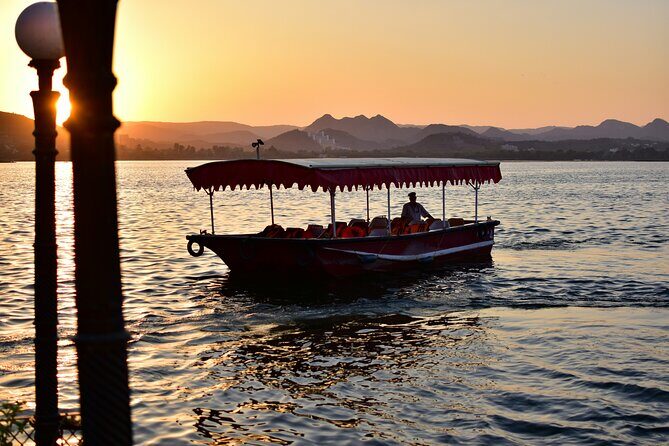
- City Palace views in Udaipur over Lake Pichola, plus gardens and hilltop viewpoints
- Chittorgarh Fort as the centerpiece UNESCO site with temples, palaces, and reservoirs inside
- Bundi’s stepwells (baolis) like Raniji-ki-Baori, plus Taragarh Fort murals and views
- Two Ranthambore safaris gives you more chances than a single outing
- Jaipur’s major hits in one logical sweep: Hawa Mahal, Jantar Mantar, City Palace, and more
Rajasthan, handled with a private driver and smart routing
This is the kind of trip where you actually get to enjoy the scenery instead of fighting with schedules. You travel in a private air-conditioned car with an English-speaking driver, and you get pickup from your hotel (or the airport) and a drop-off when you’re done. For an 8-day road itinerary, that matters more than it sounds. You’re not waiting on public transport. You’re not negotiating rides between sites. You’re moving as a unit.
There’s also a practical upside for planning: the tour uses mobile tickets. That usually means fewer printouts and less last-minute scrambling.
You should still know what you’re paying for. The included items cover the car, driver, fuel, tolls, parking, and the driver’s daily allowance and accommodation. What you’ll add on: your own hotel nights, meals, and entrance fees for monuments, plus the national park entry and safari fees.
You can also read our reviews of more tours and experiences in Udaipur.
Udaipur: City Palace to Monsoon Palace viewpoints
Udaipur is where this trip starts feeling like Rajasthan poetry—after you’ve had the long travel day sorted out. Day 1 is a simple entry: you arrive, get transferred to your hotel, check in, and then you’re free to wander the local markets in the evening. I like this approach. You’re not stuffed into major monuments right away. You get your bearings first.
On Day 2, the tour leans into Udaipur’s most “you came here for this” places.
Jagdish Temple and the City Palace complex
Jagdish Temple is the 17th-century anchor in the city center, dedicated to Lord Vishnu, with Indo-Aryan architecture and carved detail. You don’t need hours here. Even a short visit can help you understand the cultural layer underneath the palaces.
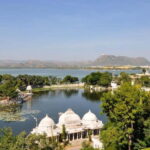
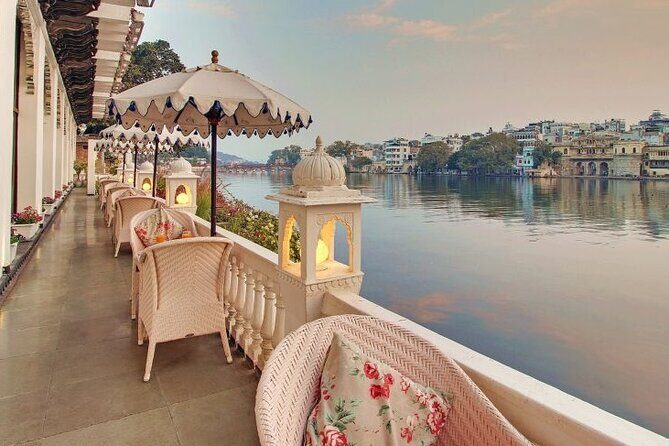
Then you move to City Palace of Udaipur, the grand complex that looks out over Lake Pichola. This is one of those places where the main attraction is the whole setting, not only one room. Expect time for walking and viewpoints around the palace area.
Practical tip: pace yourself. Palace complexes can feel big because they’re built on multiple levels. Take breaks when you can, especially if midday sun is strong.
Saheliyon Ki Bari and the hilltop Sajjangarh Monsoon Palace
Sahelion Ki Bari (Garden of the Maidens) is built for calm—marble pavilions, lawns, lotus pools, and fountains. If the day’s first stops feel like “architecture overload,” this is your reset button.
Next comes Sajjangarh Monsoon Palace, perched on a hilltop. It’s a 19th-century monsoon retreat, built for the views. It also gives you a nice contrast: palace-living energy in the city, then open-air calm up on the hill.
Bonus Udaipur stops: cars, haveli museum, and an evening show
If you’re the type who likes unusual side content, the Vintage Collection of Classic Cars Museum is a fun change of pace. It features royal vehicles from the Mewar house, including examples like Rolls-Royce, Cadillac, and vintage Buicks. Even if you’re not a car person, it adds a human feel to royal life.
Bagore Ki Haveli Museum is another good option: an 18th-century mansion on Lake Pichola’s waterfront showing royal artifacts, costumes, and traditional art. In the evening, there’s also the Dharohar Dance Show mentioned as part of the experience. If you catch it, it’s a way to see Rajasthan culture in motion rather than only in stone.



Chittorgarh Fort and Chittorgarh town markets: history that hits hard
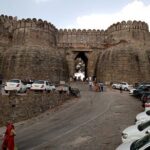
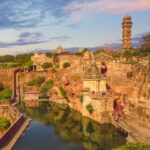
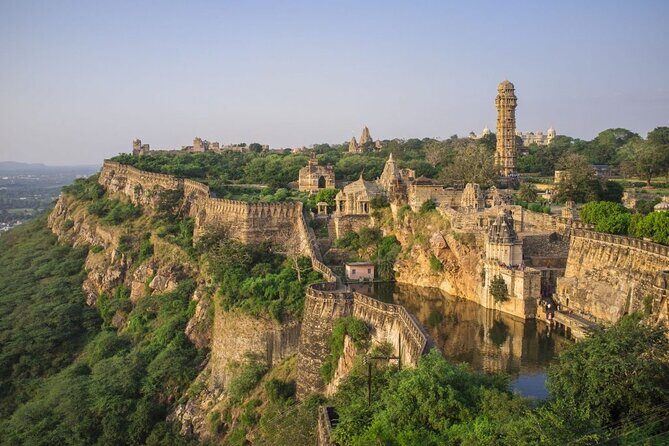
Day 3 is where the trip turns more serious. Chittorgarh Fort is the headline: one of India’s largest forts, UNESCO World Heritage, and built around centuries of Rajput valor and sacrifice stories. The fort area includes palaces, temples, towers, and reservoirs—so you’re not just walking a wall. You’re stepping through layers.
Chittorgarh can feel emotional, but it’s also practical to visit. The fort is a big site, and you’ll want your energy for steady walking. Plan for a mix of open areas and sheltered corners, and don’t rush your photo stops. Details matter here: the architecture and the layout tell the story more than any single viewpoint.
After the fort, the tour shifts to Chittorgarh town markets. You’ll have time for browsing in areas like Sadar Bazaar and Gandhi Chowk, plus other shopping lanes. This is where you can pick up small gifts or snacks without turning the day into a shopping mission.
Bundi: stepwells, murals, and Taragarh Fort views
Bundi is a quieter, more local-feeling change of scene. Day 4 starts with arrival, hotel check-in, and a few hours to get oriented. Bundi is known for stepwells (baolis), palaces, and lakes—so it’s a different flavor from Udaipur’s lakes and Jaipur’s grand city grid.
Taragarh Fort: big gates, cannons, and mural energy
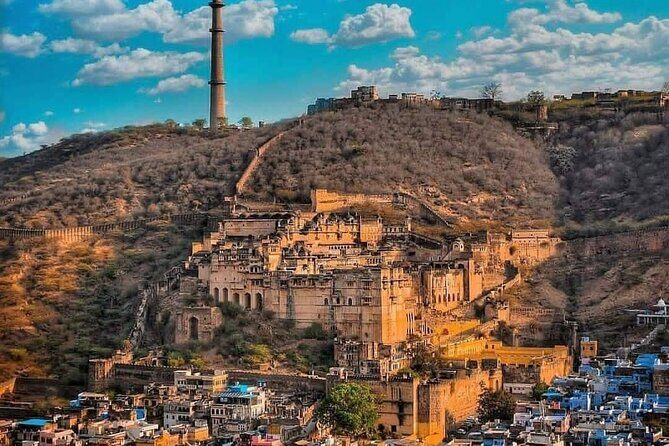
Taragarh Fort (built in 1354) sits on a hilltop overlooking Bundi. It’s known for massive gateways, ancient cannons, and vibrant murals. This is also a viewpoint stop—Aravalli hills stretch out around you. If you like fort architecture, Taragarh is worth your time even if you’re not chasing every inscription.
Raniji-ki-Baori: the Queen’s Stepwell as a photo and design lesson
Raniji-ki-Baori (Queen’s Stepwell) is the standout here. It’s a 150-foot-deep stepwell built in the 17th century with ornate pillars, arched gateways, and intricate carvings. You can see multiple levels and the structure’s layered geometry.
If you’ve ever wondered why stepwells became important social and engineering spaces, this stop helps you “read” the place. It’s not just stairs to water—it’s built form, community function, and design.
Garh Palace and layered hillside grandeur
Garh Palace is perched on Bundi’s hills with layered architecture and frescoes. Even though you won’t have all day, the complex gives you that sense of history stacked on history—different rulers adding, adapting, and remodeling through time.
Bundi note: this day is very walk-and-look. Comfortable shoes make a real difference.
Ranthambore National Park: two safari chances and what to expect
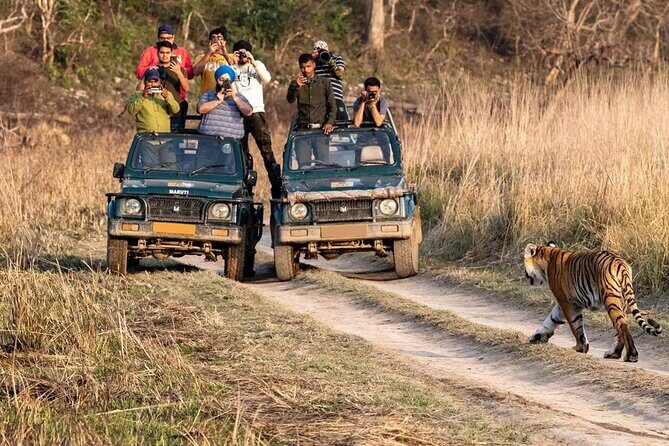
Day 5 and Day 6 are the wildlife block. After breakfast, you head from Bundi toward Ranthambore National Park, check in, and then you get safari time in the afternoon. Day 6 gives you another safari outing in the morning before traveling onward to Jaipur.
A quick reality check: you’re going to Ranthambore for the possibility of tigers, but wildlife timing is wildlife timing. Still, having two safari days beats the “one and done” approach. If the first outing isn’t your moment, the second gives you another shot.
Ranthambore itself is one of India’s premier safari destinations, and it’s described here as home to the elusive Bengal tiger. Beyond tigers, your safari drive also gives you chances to spot other wildlife.
Practical safari tips that fit this exact situation:
- Bring light layers. Morning and afternoon temperature swings can be noticeable.
- Keep water with you, and plan for sun because safaris mean you’re in the open.
- On safari days, don’t schedule anything mentally “tight” outside your safari slot. Let the day breathe.
Also note the costs: the national park entry fee and the safari admission fee are not included, so you’ll want to budget those separately.
Jaipur: Hawa Mahal, Jantar Mantar, City Palace, and the Amer area
Once you leave Ranthambore in the morning, you’ll drive about 4 hours to Jaipur on Day 6. Check in, then the rest of the day is a mix of museum and religious architecture.
Albert Hall Museum and Birla Mandir
Albert Hall Museum is Jaipur’s oldest state museum and sits in Ram Niwas Garden. It’s described as Indo-Saracenic style, and it houses artifacts like paintings, sculptures, arms, and more. Even a short museum stop helps you understand what Jaipur collected, protected, and displayed.
Birla Mandir is a white marble temple dedicated to Lord Vishnu and Goddess Lakshmi. It’s set at the base of Moti Dungri Hill, with peaceful surroundings and detailed carvings. This is a good breather after road time.
Hawa Mahal, Jantar Mantar, and City Palace in one arc
Day 7 keeps the big names coming, but it’s still manageable because the stops are spaced across the day.
- Hawa Mahal (Palace of Wind): built in 1799 by Maharaja Sawai Pratap Singh, with five stories and 953 small windows (jharokhas) designed for royal ladies to observe the street below.
- Jantar Mantar: a UNESCO World Heritage site and stone astronomical observatory with 19 instruments.
- City Palace of Jaipur: a palace complex mixing Rajput, Mughal, and European architectural styles, with courtyards, gardens, and museum areas.
I like that this combo gives you different angles of the city: street-facing royal design, science-in-stone, and then the administrative and ceremonial center.
Royal Gaitor, Jal Mahal, and the stepwell contrast
After the main three, you get a shift to calmer or more unusual visuals.
- Royal Gaitor Tumbas: marble cenotaphs (chhatris) of former Maharajas underneath Nahargarh Fort.
- Jal Mahal: a palace in the middle of Man Sagar Lake that looks like it floats on water.
- Panna Meena ka Kund: a square-shaped stepwell with symmetrical staircases on all four sides and a chamber set into its northern wall. It’s mentioned as free in this tour plan, so it’s a good use of time if you like architecture details.
Devisinghpura / Amer area time
You also visit Devisinghpura, described as part of the historic town of Amer, known for heritage architecture and traditional charm. It’s listed as about 11 km from Jaipur. This is a nice way to end the cultural sweep with a more old-town feel.
Price and logistics: what $936.18 per group really buys
This tour is priced at $936.18 per group up to 3 people for the 8-day experience. The value is mostly in the private transport and the driver support. You’re not paying per person for a shared shuttle experience. You’re paying for a dedicated car, a driver, and the travel time between sites.
What’s included:
- Private air-conditioned car with an English-speaking driver
- Pickup and drop-off from hotel or airport
- Fuel, tolls, parking, and applicable taxes
- Driver daily allowance and accommodation
What’s not included:
- Hotel accommodation
- Meals
- Monument entrance fees
- National park entry fee and safari admission
So your real cost depends on what you pay for hotels in each city and how you handle meals. But even with those add-ons, this can be good value if you want to do Udaipur → Chittorgarh → Bundi → Ranthambore → Jaipur without juggling drivers, trains, or complicated routing.
Also, because it’s private for up to 3, it suits small groups, couples, and friends who want to keep the day flexible when the best photo moment happens.
Who this tour fits best (and who should reconsider)
This trip fits best if you want a balanced mix:
- Major monuments with UNESCO stops (Chittorgarh Fort and Jantar Mantar)
- Architectural variety (palaces, temples, stepwells)
- Real wildlife time with two Ranthambore safaris
- A private driver so you spend less energy on logistics
Consider reconsidering if you:
- Hate adding entrance fees on top of the tour price
- Prefer ultra-late starts and slow mornings. This plan is built for regular sightseeing blocks.
- Want meals included in the upfront price.
One small human note from past experiences: drivers like Parkash are praised for being friendly, careful on the road, and helpful with the flow of the itinerary. That’s the kind of thing you feel most on a road trip. You notice when it’s smooth.
Should you book this Udaipur to Chittorgarh Bundi Ranthambore and Jaipur tour?
I’d book it if you want a straightforward, private Rajasthan road trip that covers the big cultural hits and still gives you serious safari time. The strongest reasons to choose this one are the private car with pickup, the UNESCO fort and observatory, Bundi’s stepwells and forts, and the fact you get two Ranthambore safari outings instead of one.
I’d pause if your budget depends on everything being fully included. Monument entrances and the national park/safari fees are extra, and you’ll also budget hotels and meals.
If you’re traveling as a small group (up to 3), and you like the idea of moving city to city with a driver who keeps things organized, this is a practical way to see Rajasthan without the usual stress.
FAQ
Is hotel pickup included?
Yes. The tour includes pickup and drop-off from your hotel or from the airport.
What’s the group size for this private tour?
It’s private and your group size can be up to 3 people.
Are hotel accommodations included in the price?
No. Hotel accommodation is not included. Meals are also not included.
Are entrance fees for monuments included?
No. Monument entrance fees are not included.
Are the Ranthambore safari fees included?
No. The national park entry fee and the safari admission fee are not included.
Will I have an English-speaking driver?
Yes. The private car comes with an English-speaking driver.
Do I get any safari time in Ranthambore?
Yes. You have one safari outing in the afternoon and another in the morning on the following day.