Golden Triangle, made simple by train. This 5-day circuit links Delhi, Agra, and Jaipur with guided sightseeing and rail travel, so you spend less time figuring logistics and more time looking at the real stuff. You’ll hit UNESCO sites in Delhi, see Mughal highlights in Agra, then move on to Jaipur’s royal architecture.
I especially like the built-in rhythm: early starts when they matter, like the Taj Mahal sunrise. I also like the hands-on help throughout the trip, including hotel pickup/drop-off and assistance boarding trains.
One consideration: it’s not a slow vacation. You’ll begin early in the mornings (chauffeur pick-ups start very early), and the tour notes that train timing can shift with bad weather.
In This Review
- Key highlights to look forward to
- The real value: a Golden Triangle with train timing that works
- Day 1 in Delhi: Old City walking, Humayun’s Tomb, Qutub Minar, and Jama Masjid by rickshaw
- Day 2 to Agra: Shatabdi morning travel, Agra Fort, Baby Taj, and sunset views at Mehtab Bagh
- Day 3: Sunrise at the Taj Mahal plus Fatehpur Sikri on the way to Jaipur
- Day 4 in Jaipur: Amber Palace, Jal Mahal photos, Hawa Mahal pass-by, City Palace, Jantar Mantar
- Day 5: Early train back to Delhi and airport or drop-off
- What’s included (and why it’s worth paying attention to)
- Who this tour fits best
- Should you book the 5-day Golden Triangle train tour?
- FAQ
- What cities does this Golden Triangle tour cover?
- How long is the tour?
- What time does the tour start on the first day?
- Is Taj Mahal sunrise included?
- Are train tickets included?
- Does the tour include hotel stays?
- Are entrance fees included?
- Is pickup and drop-off included?
- What should I bring or consider for this trip?
Key highlights to look forward to
- Taj Mahal at sunrise with dedicated time for the view and photos
- UNESCO World Heritage stops in Delhi: Humayun’s Tomb and Qutub Minar
- Agra Fort + Itmad-ud-Daula (Baby Taj) in one strong day
- Galta (Monkey Temple) included in the Jaipur experience
- Shatabdi and train transfers timed for sightseeing, not just transit
- Guide + entrance fees + local transport handled for you
The real value: a Golden Triangle with train timing that works
The Golden Triangle route (Delhi–Agra–Jaipur) is famous because it stacks top sights inside a short window. What makes this tour feel like good value is that it pairs that “greatest hits” plan with real-world rail travel—plus a guide who keeps you moving.
In practical terms, you’re not just buying tickets to get somewhere. You’re getting a structure: pickup, help with boarding, guided visits, and included entry fees. That matters because this route lives and dies by timing—especially for Taj Mahal sunrise.
And based on the strong rating, the standout theme is stress reduction. When you’re traveling abroad, the toughest part is usually not the attractions. It’s the steps between them. This tour is built to take those steps out of your hands.
You can also read our reviews of more tours and experiences in New Delhi.



Day 1 in Delhi: Old City walking, Humayun’s Tomb, Qutub Minar, and Jama Masjid by rickshaw
Your tour starts at 9:00 am with a Delhi sightseeing day focused on the Mughal-era core of the city. The plan begins in the Old City of Shahjahanabad, where the sights and streets feel intentionally layered—like you’re moving through different chapters of the city at walking speed.
First stop is Humayun’s Tomb, a major UNESCO World Heritage site and a major moment in the evolution of Mughal architecture. Don’t rush this one. The tomb complex is all about symmetry, design, and the way the space is framed, so give yourself time to notice details rather than just snapping wide shots.
Next comes Qutub Minar, the tall stone tower linked to the early period of Muslim rule in India. It’s the kind of landmark that reads instantly from a distance—then gets more interesting up close as you look at how it’s built.
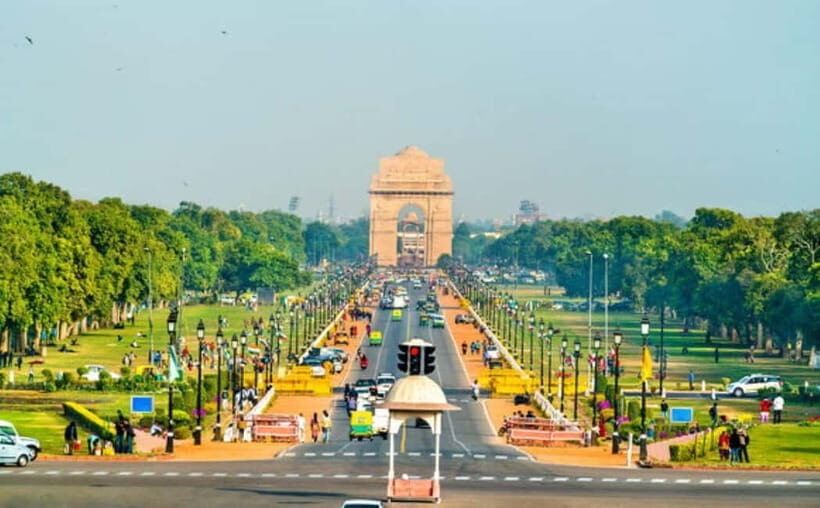
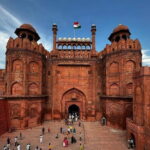
After that, the tour shifts into “big Delhi views” mode: you pass India Gate, drive past the Red Fort, and then head to Raj Ghat, Mahatma Gandhi’s cremation site. These stops are shorter, but they add context. Delhi isn’t only about monuments that came before modern India—it’s also about what happened after.
The day ends with Jama Masjid, described as the largest mosque in Asia, visited by bicycle rickshaw. This is one of those small operational details that changes the feel of a city: you cover ground without turning the day into a marathon. Also, Jama Masjid includes 45 minutes, and the ticket here is listed as free—so it doesn’t eat into your time.
Practical tip: you’ll be around mosques, so plan clothing that’s comfortable and modest. And bring shoes you can walk in for a while, since these areas are not built for slow strolling.
Day 2 to Agra: Shatabdi morning travel, Agra Fort, Baby Taj, and sunset views at Mehtab Bagh
Day 2 is your early-morning push. You depart for Agra by Shatabdi train at 6:00 am. The chauffeur is at your hotel by 5:15 am, and the tour includes guidance to help you board. That early schedule can sound intense on paper, but it’s actually smart: it protects your day in Agra instead of wasting hours in transit later.
Once you arrive, the guide meets you at the exit gate of the coach and helps with getting to the vehicle and hotel check-in. After a refreshment window, you’re straight into Mughal power in Agra.
First major stop: Agra Fort. The included visit is 1 hour, and this is one of the best ways to understand why the Taj Mahal sits where it does. The fort gives you the broader military and political setting. Taj is the emotion. Agra Fort is the machinery that made that kind of building possible.
Next is Itmad-ud-Daula, also known as the Baby Taj. You get 30 minutes, and this one rewards patient looking. The tour describes it as a marble mausoleum built by Nur Jahan in memory of her father. It’s smaller than the Taj, but it’s highly detailed, and that’s exactly why it works as a pairing: you see “how” the Mughal style becomes “beautiful.”
Then you head to Mehtab Bagh (Moonlight Garden) for sunset views of the Taj Mahal from across the river. Your time here is 30 minutes, with an explicit focus on pictures. Even if you’re not a dedicated photographer, plan to slow down. The value is in the perspective shift: you’re not looking up at the monument from the same angle as the main Taj experience.
Day 3: Sunrise at the Taj Mahal plus Fatehpur Sikri on the way to Jaipur
Day 3 is the emotional headline day. You’re doing a sunrise tour of the Taj Mahal with 2 hours at the site, and entrance fees are included. Sunrise isn’t a gimmick here—it’s the best way to see how light changes the surface of the white marble. The Taj Mahal looks different at each moment, and the “early” timing helps you avoid the day’s harshest lighting.
When I plan a Taj day, I aim for two things: time to watch the light shift, and time to notice the architecture. This schedule gives you room to do both, instead of rushing from gate to gate.
After the Taj, the tour drives you toward Jaipur and stops at Fatehpur Sikri, Akbar’s abandoned capital. The stop is 1 hour, with admission listed as free. Fatehpur Sikri is fascinating because it feels like an entire city preserved in place—an idea of power that didn’t last forever. In a Golden Triangle itinerary, it also breaks up the monotony of only seeing active cities.
Then you travel onward by train to Jaipur in the evening. The guide helps you board and find your seat, and your chauffeur meets you on arrival for hotel check-in.
Practical note: sunrise days can be tiring even when they run smoothly. Wear layers. Mornings can feel cool, and later you’ll want something light.
Day 4 in Jaipur: Amber Palace, Jal Mahal photos, Hawa Mahal pass-by, City Palace, Jantar Mantar
Jaipur is where the trip becomes more than Mughal. Day 4 is built around royal architecture and science-meets-empire design.
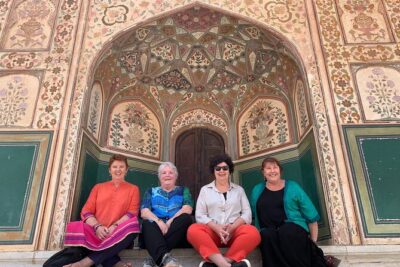
First up: Amber Palace, visited for 1 hour 30 minutes. It’s set on a ridge overlooking the Moata Lake, and the fort setting matters. It’s not just a palace you walk through—it’s a defensive viewpoint that explains why the kings chose this location.
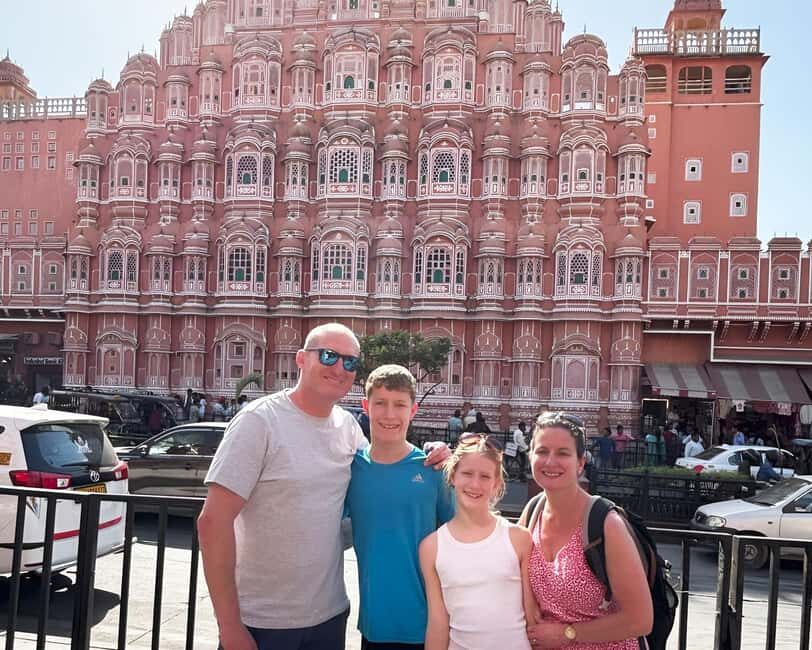
After Amber, you pass Jal Mahal and you can take pictures from outside the lake. Then you pass Hawa Mahal, the Palace of Winds with its five-storey façade and latticed-window look. You won’t have a long stop here, but the pass-by works as a visual palate cleanser between heavier visits.
Next is the City Palace Museum for 1 hour, with an included focus on costumes and armor, including items associated with Mughals and Rajputs. This museum-style stop helps you see the culture behind the buildings. It’s also usually easier to handle in real life than another long outdoor walk.
Finally, you reach Jantar Mantar, the stone astronomical observatory built by Maharaja Jai Singh in the 18th century. Your listed time is 30 minutes. Even with that limited window, it’s a strong stop because it shows how rulers treated science and observation as something practical and public.
Galta (Monkey Temple) is listed as a highlight for the tour, so you can expect it to be part of your Jaipur temple experience. Since the exact timing isn’t spelled out in the day-by-day detail, treat it as part of the Jaipur sightseeing day block and plan to stay flexible.
Practical tip: Jaipur days can involve sun, dust, and stair-climb moments. I’d keep a small water plan in mind (drinks are not listed as included), and wear shoes that won’t punish you by hour three.



Day 5: Early train back to Delhi and airport or drop-off
Your final day follows the same logic as the rest of the tour: get you out early, then get you home cleanly. You board an early morning train from Jaipur to New Delhi, and your chauffeur arrives by 5:00 am to help with boarding and finding your seat and coach.
On arrival in Delhi, your chauffeur is waiting and drops you at the New Delhi airport or another location you choose. It’s a simple finish that avoids the usual last-day scramble.
What’s included (and why it’s worth paying attention to)
This tour packages several things together that often become expensive or complicated when you DIY it:
- 4 nights in a 5-star hotel
- Private fully air-conditioned cab for local moves
- Buffet breakfast plus 4 buffet lunches (and other breakfasts listed)
- Professional guide
- Hotel pickup and drop-off plus airport pickup and departure
- 2nd class train tickets
- Monument entry fees
- Entrance fees are included for the stops that list them
The price is $200.54 per person. Even if you price it out yourself, you’ll likely find that the combination of guided visits, entrance fees, train travel, and hotel nights gets you close quickly. The value is less about one single bargain and more about the bundle working as a system.
The only spot where you should adjust expectations is the train class. The tour specifies 2nd class train tickets, which can be perfectly fine, but it’s not the same as upgraded seating. If you’re the kind of person who needs extra comfort to enjoy travel, consider how you handle regular public rail conditions.
Who this tour fits best
This is a strong match if you want:
- A classic Golden Triangle route with guided context, not just selfies
- Early-morning highlights without planning battles
- Fewer moving parts when it comes to train boarding, local transfers, and entry tickets
- A schedule that hits major sites without turning each day into an endurance test
It may not be the best fit if you want a super relaxed pace, because early departures and timed visits are part of the design.
Should you book the 5-day Golden Triangle train tour?
I’d recommend booking if you value structure, convenience, and maximum sightseeing per day. The big strength here is that you’re handed a working plan—pickup, guides, entrance fees, and train connections—so you spend your energy on the sights like Humayun’s Tomb, Qutub Minar, Agra Fort, Baby Taj, and Taj Mahal sunrise, not on logistics.
I’d hesitate if you dislike very early mornings or if you’re sensitive to the possibility of train delays due to bad weather. Also, since it’s a private group tour and the hotel is listed as 5-star, it’s best for travelers who appreciate comfort and included basics rather than travelers who want to build everything from scratch.
If your goal is: see the Golden Triangle the smart way, with clear guidance and less stress, this is a very practical choice.
FAQ
What cities does this Golden Triangle tour cover?
It covers New Delhi, Agra, and Jaipur, with round-trip train travel starting from Delhi.
How long is the tour?
The tour runs for 5 days (approximately).
What time does the tour start on the first day?
The meeting point start time is 9:00 am in Delhi.
Is Taj Mahal sunrise included?
Yes. The itinerary includes a sunrise visit to the Taj Mahal in Agra, with entrance tickets included.
Are train tickets included?
Yes. The tour includes 2nd class train tickets, including the Shatabdi train for the Delhi to Agra transfer and trains to Jaipur and back to Delhi.
Does the tour include hotel stays?
Yes. It includes 4 nights of accommodation in a 5-star hotel.
Are entrance fees included?
Yes. Monument entry fees are included for the listed sightseeing stops.
Is pickup and drop-off included?
Yes. The tour includes hotel pickup and drop-off, plus airport pick up and departure.
What should I bring or consider for this trip?
You should bring a current valid passport on the day of travel, wear comfortable walking shoes, and plan for a moderate physical fitness level.