REVIEW · NEW DELHI
3-Days Private Luxury Golden Triangle Tour to Agra and Jaipur From New Delhi
Book on Viator →Operated by Golden Triangle Tours India · Bookable on Viator
You can hit three icons without the stress. This 3-day private Golden Triangle tour links Delhi, Agra, and Jaipur with door-to-door pickup, daily car transfers, and guides that help you make sense of what you’re seeing. You’ll move fast, but you won’t feel lost.
I love the air-conditioned private car for the long stretches between cities. I also like that you get English-speaking private guides at key stops, so it’s not just photos and walking.
One thing to watch: monument entrance fees aren’t included (listed around $90 per person), and driver/guide tips are also extra.
In This Review
- Key highlights worth planning around
- Why This Golden Triangle Works in Only 3 Days
- Day 1 in Delhi: Qutub Minar, Government Landmarks, and Old Delhi Markets
- Qutub Minar: UNESCO first stop, no warm-up required
- Lotus Temple: modern calm in a busy city
- India Gate, Parliament House, and Rashtrapati Bhavan: imperial-meets-republic vibe
- Agrasen Ki Baoli: step wells aren’t just for photos
- Humayun’s Tomb: a Mughal masterpiece before Agra steals the show
- Chandni Chowk and Jama Masjid: shopping streets and a massive mosque
- Red Fort: the center of Mughal power
- Evening: drive to Agra via expressway, then check in
- Day 2 in Agra: Taj Mahal Sunrise, Agra Fort, and Baby Taj
- Taj Mahal at sunrise: guided inside + a time-saver schedule
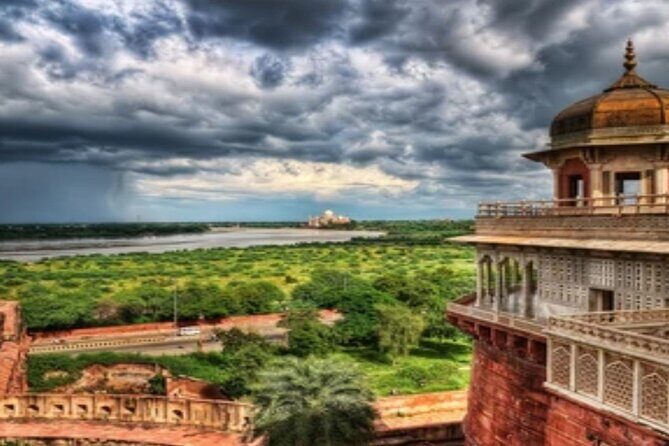
- Agra Fort: Mughal architecture with a defensive backbone
- Itmad-ud-Daula (Baby Taj): refined, quieter, and very worth it
- Chand Baori: 3,500 steps and a stepwell mood shift
- Overnight in Agra
- Day 3 in Jaipur: Amber Palace Views, City Palace Details, and Hawa Mahal’s Angle
- Panna Meena ka Kund: quick stepwell stop near Amber Fort
- Amber Palace: the fort-palace tour that actually feels like a story
- Jal Mahal: the lake palace you see from the outside
- City Palace: where administration and ceremony lived
- Jantar Mantar: UNESCO instruments for astronomy and measurement
- Hawa Mahal: the Palace of Breeze for a quick, iconic finish
- Return to Delhi (or drop at Jaipur airport)
- Private Guides and the Chauffeur System: What You’re Really Paying For
- Your guide helps with tickets so you don’t lose time
- The best feedback is about driver safety and guide quality
- Private tour means you set the pace
- Price and Budget Reality: What $138.46 Includes and What You Should Expect to Pay
- Included in the base experience
- Hotels are included only if you book that option
- Monument entrance fees are extra
- Tips are extra, too
- Value verdict
- What I’d Pack and How I’d Handle the Pace
- Hotels and Room Setup: The Twin-Sharing Reality
- Who Should Book This Golden Triangle Tour
- Should You Book This 3-Day Private Golden Triangle Tour?
- FAQ
- Where does the tour start and end?
- Is pickup included?
- Is this tour private?
- How long is the tour?
- Are the hotel and breakfasts included?
- What’s included in the tour price?
- Are monument entrance tickets included?
- Does the guide help with entrance tickets?
- Can I cancel for a full refund?
Key highlights worth planning around
- Door-to-door pickup in Delhi, Noida, and Gurugram keeps your first morning from turning into a taxi hunt.
- Taj Mahal sunrise timing means you’ll see the monument when the light is best and the crowds are usually lower.
- Full private guiding through Delhi’s Old and New contrasts (Qutub Minar area plus Chandni Chowk, Jama Masjid, and Red Fort).
- Amber Palace plus Jantar Mantar in Jaipur gives you both fort-life views and science/astronomy architecture in one day.
- Tickets support from your guide helps you avoid time-wasting lines for entrances.
Why This Golden Triangle Works in Only 3 Days
Golden Triangle travel can feel like a sprint. Delhi first, then Agra, then Jaipur. Most people struggle with two things: transit time and what to prioritize. This tour solves the first problem with a private air-conditioned car and set daily drives. It tackles the second with private local guides who give you historical context as you go.
The route makes sense because the cities “talk” to each other. Delhi sets the stage with Mughal and imperial-era monuments. Agra is the emotional payoff with the Taj Mahal and other Mughal power statements. Jaipur rounds it out with Rajasthan court life, fort views, and the city’s early precision-planning (yes, even the astronomy fits into the day).
If you’re visiting India for the first time, I think this is a smart way to compress the big hits without turning every day into a logistics puzzle.
You can also read our reviews of more private tours in New Delhi



Day 1 in Delhi: Qutub Minar, Government Landmarks, and Old Delhi Markets
Day 1 starts immediately after pickup. Your rep meets you at Indira Gandhi Intl Airport and drives you straight to the Qutub Minar area. That matters because Delhi can eat your energy quickly. When the schedule begins on time, you’re not spending your first day recovering from travel.
Qutub Minar: UNESCO first stop, no warm-up required
Qutub Minar is a UNESCO World Heritage site, tied to Qutub-ud-din Aibak. Even if you know nothing going in, this is the kind of monument that makes you slow down. It’s tall, iconic, and historically grounded. Expect admission not to be included, so plan for the entrance cost.
Practical tip: this stop is a good place to get your footing. Comfortable shoes help, because you’ll likely do some walking before the day gets even more active.
Lotus Temple: modern calm in a busy city
Next is the Lotus Temple, built in 1986. It’s famous for its flower-like shape and has won architecture awards. The best part here is the contrast: after the older, monumental feel of Qutub Minar, Lotus Temple feels clean and contemporary.
Admission is listed as free, so it’s a nice value stop inside your day’s budget.
India Gate, Parliament House, and Rashtrapati Bhavan: imperial-meets-republic vibe
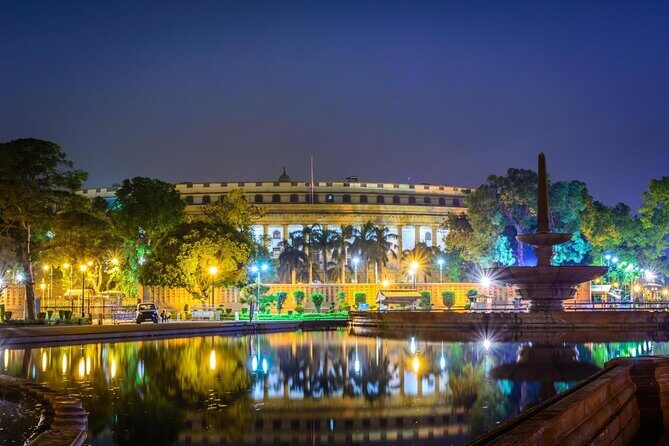
You’ll pass by India Gate, a war memorial dedicated to soldiers of British India. The tour also includes time around Parliament House (Sansad Bhavan) and Rashtrapati Bhavan, the President of India’s residence and estate gardens.
One note: the itinerary lists a long time set aside for the Parliament complex area. If you prefer strict pacing, ask your guide how they plan to structure that window so you don’t feel like you’re waiting around.
Admission is listed as free for these stops, so you can focus on the architecture and the symbolism.
You can also read our reviews of more tours and experiences in New Delhi






Agrasen Ki Baoli: step wells aren’t just for photos
Agrasen ki Baoli is a protected monument and a historic stepwell. It’s described as about 60 meters long. This is the kind of stop that many first-time visitors skip, but it’s worth it because it’s different from the standard skyline monuments.
It’s free. That makes it a strong “value per minute” stop, especially if you want something less expected than the usual big-ticket buildings.
Humayun’s Tomb: a Mughal masterpiece before Agra steals the show
Humayun’s Tomb is the tomb of Mughal Emperor Humayun, commissioned in 1558. Admission isn’t included, but guided time here is a big payoff. It helps you understand how Mughal garden-tomb design worked before you reach the Taj Mahal later.
I like pairing this with what you’ll see in Agra, because Humayun’s Tomb gives you a mental checklist for what to notice at the Taj.
Chandni Chowk and Jama Masjid: shopping streets and a massive mosque
After that, you’ll shift into Old Delhi mode with Chandni Chowk shopping area and then Jama Masjid, one of the largest mosques in India (built 1650 to 1656 by Shah Jahan).
Admission is listed as free for Chandni Chowk, but not included for Jama Masjid. Jama Masjid can also be a bit of a “dress and flow” situation—your guide can help you with what to expect at the entrance and how to move through the site respectfully.
If you’re someone who likes to see how people actually live alongside monuments, Old Delhi is where you’ll feel it.
Red Fort: the center of Mughal power
Red Fort is next. It was the main residence of Mughal emperors for nearly 200 years, until 1856. It also houses museums. Admission isn’t included, so this is another cost item—but it’s one of the clearest “why the Mughals mattered” stops in the Delhi section.
Evening: drive to Agra via expressway, then check in
Finally, you’ll have time for lunch at a local restaurant, then drive through the Yamuna Expressway to your Agra hotel. Your day ends with check-in and the rest of the evening at leisure.
For me, the practical win is that the transfer is handled. Agra traffic plus unfamiliar roads can be tiring. Here, you get an assigned ride and a plan.
Day 2 in Agra: Taj Mahal Sunrise, Agra Fort, and Baby Taj
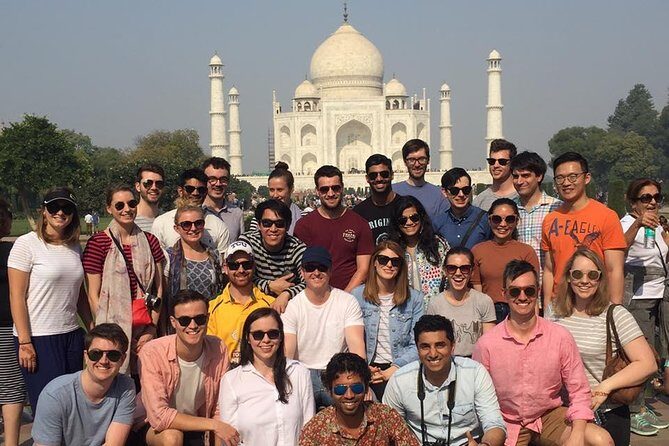
Agra is where this tour turns emotional. Day 2 is built around a sunrise Taj Mahal visit, which is usually the best moment for seeing the monument at its most magical without spending your whole day stuck in peak crowds.
Taj Mahal at sunrise: guided inside + a time-saver schedule
You’ll wake up early and start with a sunrise view of the Taj Mahal. The guided visit inside is planned for about two hours.
Taj Mahal entrance isn’t included, so you’ll pay the monument fee separately. Still, the value here is your guide’s interpretation. The Taj looks beautiful even without context, but with context you start noticing the design logic and the symbolism.
Practical tip: bring something light for early morning. Even if the weather feels fine later, mornings can feel cooler around sunrise.
Agra Fort: Mughal architecture with a defensive backbone
After Taj Mahal, you’ll visit Agra Fort, another UNESCO site. The guide-focused history here matters, because forts can feel like “walls” unless someone explains the structure and what each area was used for. Your time is listed at about one hour.
Admission isn’t included, but again, this is a key stop for understanding what “power” looked like beyond the love story of the Taj.
Itmad-ud-Daula (Baby Taj): refined, quieter, and very worth it
Next is Itmad-ud-Daula, often called Baby Taj. It’s a Mughal mausoleum, and the tour gives about 30 minutes here. I like this stop because it’s detailed and smaller, which can make it feel more intimate than the biggest monuments.
If you’re the type who enjoys textures—stonework, gardens, edges—this is where you might slow down.
Chand Baori: 3,500 steps and a stepwell mood shift
Then you’ll go to Chand Baori, described as a stepwell reached by 3,500 steps. This is listed as about one hour and admission isn’t included.
This is a very different type of site from the Mughal tomb complex. It turns your day from “imperial beauty” to “engineering and water.” Even if you don’t plan to climb all the way down, the geometry is the star.
Overnight in Agra
You’ll end the day back at your Agra hotel. The itinerary doesn’t force more evening touring, which is smart. Agra days can be intense. I’d use the downtime to reset and recharge for Jaipur.
Day 3 in Jaipur: Amber Palace Views, City Palace Details, and Hawa Mahal’s Angle
Jaipur is where you’ll see Rajasthan court life and the city’s planning style. Day 3 is a full day after breakfast, moving from stepwell to fort to palaces to instruments.
Panna Meena ka Kund: quick stepwell stop near Amber Fort
You’ll start with Panna Meena ka Kund, a stepwell near Amber Fort. Time is listed at 15 minutes, and admission is free.
This is a “blink-and-you’ll-miss-it” stop. If you want a slower pace, ask your guide if you can grab an extra minute or two for photos and details.
Amber Palace: the fort-palace tour that actually feels like a story
Then comes Amber Palace, the former capital until 1728. You’ll travel there and get about a two-hour tour of palaces, squares, and monuments with a guide.
Admission isn’t included, but Amber is usually the Jaipur moment people remember. The fort setting gives you strong views, and a guide helps you connect what you’re seeing to who built it and why.
Practical tip: Jaipur fort areas often mean stairs and uneven ground. Wear shoes you trust.
Jal Mahal: the lake palace you see from the outside
Next is Jal Mahal, the palace located in Man Sagar Lake. It’s listed as 30 minutes, and admission is free.
This stop is more about the visual composition than a long interior visit. Plan for photos with the lake angle, and let your guide steer you toward the best vantage points without wasting time.
City Palace: where administration and ceremony lived
City Palace is next, and you’ll spend about one hour. It was constructed in 1721 and served as the administrative and ceremonial seat of the Maharaja of Jaipur.
Admission isn’t included. With a guide, you get a clear sense of what the palace functioned as. Without that, it can feel like a collection of rooms. The guiding turns it into “why this matters.”
Jantar Mantar: UNESCO instruments for astronomy and measurement
Then Jantar Mantar, a UNESCO World Heritage site built in 1734. You’ll have about one hour and admission isn’t included.
This is one of those stops that surprises people because it’s not “just old stuff.” The guide helps you understand that these are architectural instruments for measuring time and movement. If you like science or enjoy clever designs, this is the most satisfying Jaipur stop that isn’t a palace.
Hawa Mahal: the Palace of Breeze for a quick, iconic finish
Finally, you’ll see Hawa Mahal, also known as the Palace of Winds. Time is listed at about 15 minutes, and admission is free.
You don’t need long here. The value is getting the iconic façade angle, then moving on without dragging the day into fatigue.
Return to Delhi (or drop at Jaipur airport)
After Jaipur, you’ll make a roughly five-hour journey back to Delhi or be dropped at Jaipur airport. The itinerary gives both options depending on what’s arranged for you.
After three intense days, this final transfer is where the private car really earns its keep.
Private Guides and the Chauffeur System: What You’re Really Paying For
The headline features are easy to list: pickup offered, air-conditioned car, private local guides, mineral water, and mobile ticket. But here’s the part that matters for your day-to-day comfort: you’re not trying to manage navigation, entrances, and timing across three cities.
Your guide helps with tickets so you don’t lose time
Entrance fees for monuments are listed as not included, around $90 per person. What’s useful is that your guide helps you buy entrance fees for monuments so you won’t have to wait in queues to purchase tickets.
Even if you’re fine with lines, saving time on entry can protect your energy. In a packed route, losing 30 to 60 minutes here and there adds up fast.
The best feedback is about driver safety and guide quality
The posted experience feedback highlights two things again and again: drivers who feel safe and capable, and guides who keep the flow smooth. One driver is specifically named as Mahaveer, described as absolutely fabulous with strong safety. Another contact name that came up around trip coordination is Gopal Khatik, who made an effort to handle requests before the trip.
That matters because Golden Triangle itineraries live and die by execution. You don’t just want someone who knows history. You want someone who keeps you on schedule, communicates clearly, and fixes small issues without turning them into big problems.
Private tour means you set the pace
This is private for your group. That matters when you want to linger at a viewpoint or move faster through a less interesting room. It also reduces the stress of constantly merging with strangers in huge groups.
Price and Budget Reality: What $138.46 Includes and What You Should Expect to Pay
The listed price is $138.46 per person, but the true cost depends on which option you choose.
Included in the base experience
You get private sightseeing with local guides, transport by a private air-conditioned car, and complementary mineral water per day. You also get pickup in Delhi, Noida, and Gurugram, plus mobile tickets.
Hotels are included only if you book that option
The tour includes 2 nights accommodation only if you choose the option that includes hotels. In that case, breakfast is also included (daily breakfast, listed as 2 breakfasts).
If you don’t book the hotel-inclusive option, you’ll still do the sightseeing and transfers, but you’ll arrange your own lodging in Delhi/Agra/Jaipur timing.
Monument entrance fees are extra
Entrance fees are not included, and the total is listed as about $90 per person for all cities monument entrances. That’s normal for a tour built around paid monuments, but you should budget for it up front so you’re not surprised when you reach the gates.
Tips are extra, too
Driver and guide tips are not included. If you want a smooth end to the trip, plan to budget a tip amount in your mind ahead of time.
Value verdict
I think the value is strongest if you want three-city coverage with private guiding and car transfers, without stitching it together yourself. If you’re the kind of traveler who loves self-guided museum hopping, you could build it cheaper. But if you want the time saved and the context delivered, the structure here is aimed at convenience.
What I’d Pack and How I’d Handle the Pace
This is a short, high-output itinerary. To enjoy it instead of just surviving it, you’ll want the basics right.
- Comfortable walking shoes: forts, tomb complexes, and old-city streets add up.
- A light layer for early mornings: sunrise Taj timing starts early.
- Respectful clothing for mosque stops: especially for Jama Masjid.
- Patience for transit time: transfers are approximate and depend on traffic.
Also, keep expectations realistic. Even with private guiding, you can’t spend hours at every site in three days. Your guide’s job is to help you see the key ideas quickly, then move on.
Hotels and Room Setup: The Twin-Sharing Reality
If you book the option including hotels, you get 2 nights accommodation with breakfast (listed as daily breakfast, 2 times). Rooms are generally twin-sharing. If you’re traveling with 3 people, rooms default to triple-sharing unless you pay an additional charge to get 2 rooms.
That’s practical to know before you book, especially if you prefer privacy. If you care about room layout, confirm the room arrangement right away.
Who Should Book This Golden Triangle Tour
This tour fits you if:
- You want private local guides and a driver, not DIY logistics across three cities.
- You’re short on time and still want the major monuments: Qutub Minar, Humayun’s Tomb, Taj Mahal, Amber Palace, City Palace, and more.
- You like structured sightseeing with some free time for meals and hotel downtime.
- You prefer safety and smooth execution, which the feedback strongly emphasizes (including a named driver, Mahaveer).
It might be less ideal if:
- You want a slow, in-depth pace with long museum time.
- You’re allergic to paying entrance fees on top of the tour price.
- You enjoy planning your own route and buying tickets yourself.
Should You Book This 3-Day Private Golden Triangle Tour?
I’d book it if your priority is getting maximum value from limited time with minimal hassle. The door-to-door pickup, air-conditioned private car, and guided pacing are built for first-timers who don’t want to spend their vacation doing route planning and ticket logistics.
Two final checks before you decide:
- Confirm whether you’re choosing the hotel-inclusive option, since accommodation and breakfasts only apply then.
- Budget for entrance fees (listed around $90 per person) and remember tips are extra.
If that fits your style, this is a strong way to experience the Golden Triangle without the usual planning stress.
FAQ
Where does the tour start and end?
It starts at Indira Gandhi Intl Airport in New Delhi. The experience ends back at the meeting point.
Is pickup included?
Yes. Pickup is offered from the airport, railway station, hotel, or any pickup location in Delhi, Noida, and Gurugram.
Is this tour private?
Yes. It’s a private tour/activity, and only your group participates.
How long is the tour?
The duration is approximately 3 days.
Are the hotel and breakfasts included?
Hotel accommodation for 2 nights and daily breakfast (2 breakfasts) are included only if you book the option that includes hotels.
What’s included in the tour price?
The tour includes private local guides, sightseeing, transport in a private air-conditioned car, complimentary mineral water per day, pickup, and a mobile ticket.
Are monument entrance tickets included?
No. Entrance fees are not included, and the tour lists entrance fees as about $90 per person for monuments.
Does the guide help with entrance tickets?
Yes. Your guide helps you buy entrance fees for monuments so you do not have to wait in line to purchase them.
Can I cancel for a full refund?
Yes, you can cancel up to 24 hours in advance for a full refund. If you cancel less than 24 hours before the start time, the amount you paid won’t be refunded.