REVIEW · JAIPUR
3 Days: Private Guided Tour Of Jaipur & Agra With Drop At Delhi
Book on Viator →Operated by Unseen Tours and Travels · Bookable on Viator
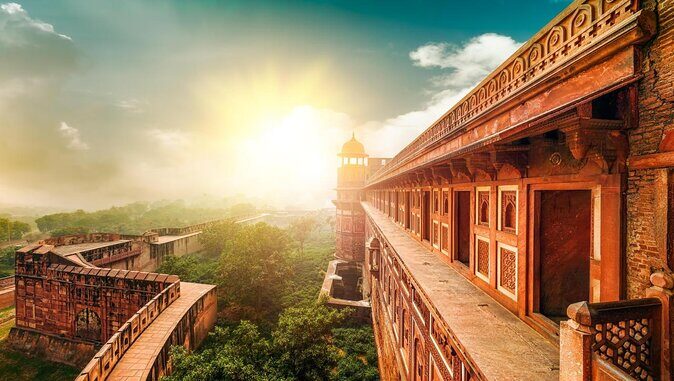
A few days here feel packed but not rushed. This private tour links Jaipur’s forts and palaces with Agra’s Mughal icons, and it finishes with a convenient drop in Delhi. The mix works well: you’ll see big-name sights like the Taj Mahal, then balance them with quieter, highly photogenic stops like the stepwell at Chand Baori.
What I like most is the value of getting two nights of accommodation included while still keeping the touring pace sensible. I also like that the sightseeing is backed by local guides in Jaipur, Fatehpur Sikri, and Agra, so you get context instead of just photo stops. One thing to consider: monument entry fees are not included, so you’ll want to budget extra for tickets paid directly on site.
In This Review
- Key Things That Make This Jaipur–Agra–Delhi Tour Work
- The Big Picture: Three Days, Two Cities, One Clean Finish in Delhi
- Day 1 in Jaipur: Fort Views, Palaces, and a Quick Hit of the Old City
- Amer Palace (Amer Fort): The Hilltop Start
- Jal Mahal: A Palace in the Lake
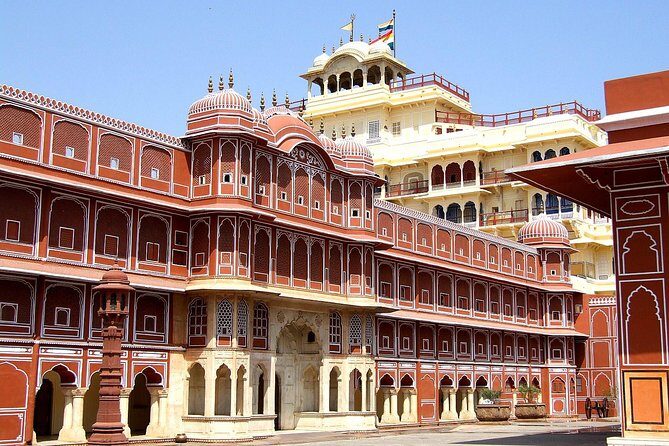
- City Palace: Where Jaipur’s Royal Line Stayed Put
- Jantar Mantar: UNESCO and the World’s Largest Stone Sundial
- Hawa Mahal: The Palace of Wind (Zenana Views)
- Day 2: Stepwell to Fatehpur Sikri to the Taj Mahal (With Sensible Timing)
- Chand Baori (Stepwell): A Geometry Lesson You Can Walk Through
- Fatehpur Sikri: Red Sandstone, Big Gate Energy
- Taj Mahal: The Icon You Still Need Time For
- Day 3 in Agra: Itmad-ud-Daula and Agra Fort
- Itmad-ud-Daula (The Baby Taj): Jewel-Box Detail Time
- Agra Fort: Power in Stone
- Guides, AC Vehicles, and the Real Value of Being Private
- The Jaipur Dinner With a Local Family: The Human Part
- Price and Value: Is $187 a Good Deal for 3 Days?
- What to Watch Out For (So You’re Not Caught Off Guard)
- Who This Tour Fits Best
- Should You Book This 3-Day Private Jaipur and Agra Tour?
- FAQ
- How long is the Jaipur and Agra tour?
- Is this tour private or shared?
- What’s included in the price besides sightseeing?
- How many nights of accommodation are included?
- What kind of accommodation options are available?
- Are monument entry tickets included?
- Where do you get dropped off at the end of the tour?
- Which major sites are included in the itinerary?
- What is the cancellation policy for a full refund?
- Is there an age limit?
Key Things That Make This Jaipur–Agra–Delhi Tour Work
- Private, group-only touring: your group stays together with an AC vehicle and driver, not a crowded bus shuffle.
- Two hotel nights included (3/4/5-star options): you’re not paying separately for lodging across the two main cities.
- Local guides at the major clusters: Jaipur + Fatehpur Sikri + Agra get guide coverage, so information doesn’t feel patchy.
- A real Jaipur dinner with an Indian family: it’s built into the tour, not an optional add-on.
- A logical route: Jaipur → Fatehpur Sikri → Taj Mahal → Agra sights → Delhi drop.
- Plan for entry fees: nearly every major stop has tickets you pay separately.
The Big Picture: Three Days, Two Cities, One Clean Finish in Delhi
This is a straight-line route built for first-timers: you get Jaipur on Day 1, the Fatehpur Sikri + Taj Mahal combo on Day 2, and classic Agra landmarks on Day 3. You also get a drop in Delhi at your hotel of choice or at the airport, which is a big deal if you’re chaining flights or onward travel.
The pace is set by scheduled time blocks at each site (mostly 30 minutes to about 1.5 hours). That means you’re not stuck waiting around all day in one place, but you also don’t feel like you’re sprinting every 10 minutes. It’s the kind of itinerary that works when you want to see a lot without turning the trip into a checklist.
Logistics are kept simple: pickup and drop-off are included, bottled water is provided, and all transport is in an air-conditioned vehicle. Since it’s private, you’re not negotiating for a seat or standing for long transfers. If traffic or local conditions slow things down, the driver and guide can usually adjust the flow without derailing the whole day.
You can also read our reviews of more guided tours in Jaipur



Day 1 in Jaipur: Fort Views, Palaces, and a Quick Hit of the Old City
Your Jaipur day is built around the core sights most people come for, but it doesn’t linger forever in just one area.
Amer Palace (Amer Fort): The Hilltop Start
Amer Palace (Amer Fort) is the “wow” opening. You’ll spend about 1 hour 30 minutes here, which is enough time to get your bearings, walk the main areas, and take in the fort’s commanding position above the town. The fort’s hilltop setting is part of why it feels cinematic—this is where Jaipur’s power and craftsmanship show up fast.
The ticket isn’t included, so remember: monument entry fees are extra and paid on the spot. If you’re trying to keep the day streamlined, it’s smart to carry cash and be ready for on-site payment.
Jal Mahal: A Palace in the Lake
Next is Jal Mahal, the “Water Palace,” where the building sits in the middle of Man Sagar Lake. The stop is short (about 15 minutes), but it works as a visual palate cleanser after Amer. Even with limited time, it’s a memorable scene because the palace looks like it belongs to the landscape, not just onto it.
This is one of those stops that’s less about deep exploration and more about atmosphere. If you’re the type who likes quick, strong photos, you’ll enjoy it.
City Palace: Where Jaipur’s Royal Line Stayed Put
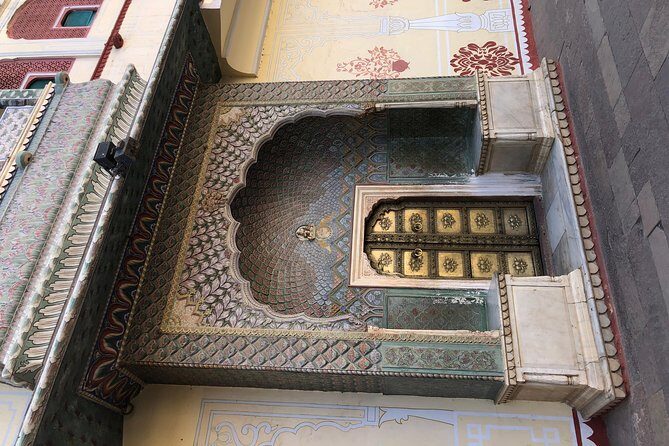
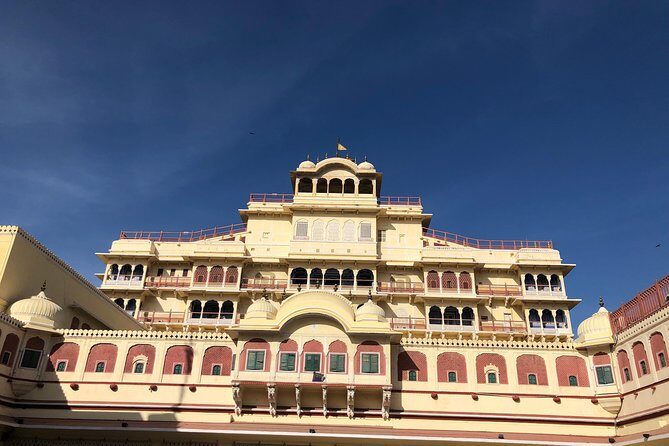
The City Palace of Jaipur gives you the more grounded royal connection. You’ll spend about 1 hour here. It’s a good stop to understand how Jaipur’s rulers shaped the city, especially since the palace ties directly to the founding and move of court from Amber to Jaipur.
Tickets are not included here either, so again: budget for entry fees.
You can also read our reviews of more private tours in Jaipur





Jantar Mantar: UNESCO and the World’s Largest Stone Sundial
Then it’s Jantar Mantar, a UNESCO World Heritage site and a collection of astronomical instruments built under Sawai Jai Singh II. You’ll have about 40 minutes. If you usually find “science museums” dry, this is different: the instruments are built into the city as massive, workable tools. The highlight is the world’s largest stone sundial, which helps you understand the scale and ambition of the project.
This is also a great stop when the day gets hot. You’ll see a lot without needing long, exhausting walks.
Hawa Mahal: The Palace of Wind (Zenana Views)
Finish the Jaipur set with Hawa Mahal, the famous “Palace of Wind.” Plan for about 15 minutes. Its pink and red sandstone facade looks like it was made for quick admiration from the outside, and the design is tied to the Zenana concept (women’s chambers). You won’t spend a long time here, but it’s a sharp, iconic ending for Day 1.
Day 2: Stepwell to Fatehpur Sikri to the Taj Mahal (With Sensible Timing)
Day 2 moves out of Jaipur and into the Mughal corridor, with one important caveat: long-distance travel and site crowds can stretch timelines. The tour still keeps sight windows practical, so you can usually enjoy each place without feeling like you’re constantly rushing.
Chand Baori (Stepwell): A Geometry Lesson You Can Walk Through
First stop is Chand Baori near Abhaneri. You’ll get about 15 minutes here. In that short time, the stepwell is still worth it because it’s one of those places where the design grabs you instantly. The layered steps create repeating lines and shadows, and you’ll often see people who look like they’ve been “studying” the angles with their phones.
Because entry fees aren’t included, keep that in mind when you plan your budget.
Fatehpur Sikri: Red Sandstone, Big Gate Energy
Then comes Fatehpur Sikri, where you’ll spend about 1 hour 30 minutes. Fatehpur Sikri is known for its red sandstone buildings clustered around the center, and for the key monuments that feel like they’re talking to each other across courtyards.
One of the main highlights is Buland Darwaza (the entrance to Jama Masjid). You’ll also see the Tomb of Salim Chishti (marble) and Diwan-E-Khas, the carved-hall space with its notable central pillar. The Jodha Bai Palace, with its mix of Hindu and Mughal styles, plus the Panch Mahal with its multiple levels, helps you read the whole complex as more than one landmark.
Tickets aren’t included, but the entry is part of the experience here: Fatehpur Sikri’s scale makes it feel like a full-day site even though the time block is about 90 minutes. That’s exactly why it fits in with Day 2.
Taj Mahal: The Icon You Still Need Time For
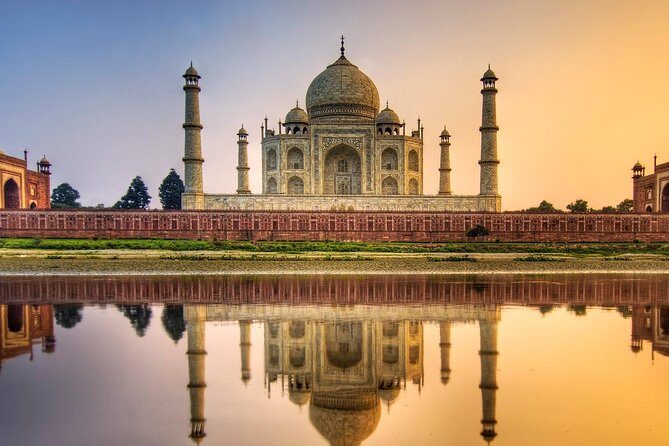
Finally, you reach the Taj Mahal for about 1 hour 30 minutes. The Taj Mahal is an ivory-white marble mausoleum commissioned in 1632 by Shah Jahan for Mumtaz Mahal, with Shah Jahan’s tomb also located inside. That basic story helps you appreciate why the symmetry, the marble, and the overall layout feel so emotionally intentional.
Like the other major sites, the Taj Mahal ticket is extra and paid directly. If you’re trying to get the best photos, timing matters. Even with a guide and a set slot, you’ll want to be alert to your own priorities: do you want close inspection inside, or do you prefer longer exterior viewing and photos?
Day 3 in Agra: Itmad-ud-Daula and Agra Fort
Day 3 stays in Agra and focuses on Mughal-era architecture beyond the Taj. That choice makes the whole trip feel more complete, because it shows you variety within the same cultural world.
Itmad-ud-Daula (The Baby Taj): Jewel-Box Detail Time
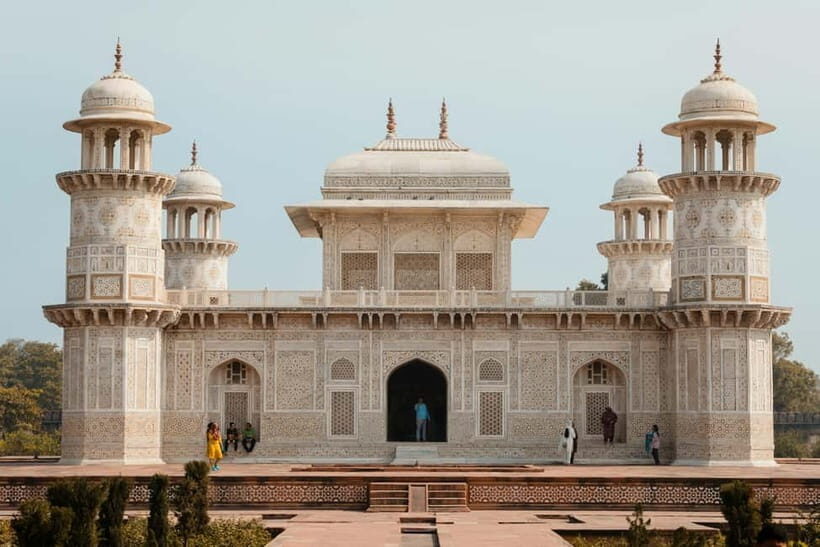
You’ll spend about 40 minutes at Itmad-ud-Daula, often called the Baby Taj. It’s a Mughal mausoleum in Agra and is frequently described as a draft of the Taj Mahal, which is a useful mental frame. You can see the evolution in design thinking: how the craftsmanship and decorative approach develop and mature.
This stop is ideal if you like details more than crowds. The scale is smaller than the Taj, and the mood often feels quieter.
Agra Fort: Power in Stone
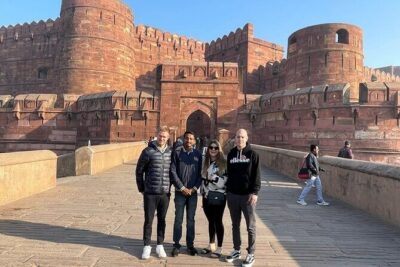
Next is Agra Fort, with about 30 minutes. It served as the main residence of Mughal emperors until the capital shifted from Agra to Delhi in 1638. You’ll also learn it was later used by the Marathas before the British capture, which helps you connect the fort to the wider sweep of Indian power shifts.
Agra Fort is not “one big photo” like the Taj can be. It’s more about understanding the fortress logic and how rule was supported by architecture. If you’re tired from earlier days, this is a good day to enjoy a more moderate pacing.
Guides, AC Vehicles, and the Real Value of Being Private
This tour is private, meaning it’s just your group. That changes the whole feel of sightseeing. You’re not waiting on strangers who bought the wrong ticket type, not negotiating for bathroom breaks, and not stuck outside a gate while the bus group files in.
You also get local guides in Jaipur, Fatehpur Sikri, and Agra. That matters because each site has its own “language.” Amer Fort’s structure isn’t just walls—it’s strategy. Jantar Mantar isn’t just old rocks—it’s instruments built to measure time and sky. Fatehpur Sikri isn’t just a place to stand—it’s a system of buildings that makes sense when explained well.
All transport is in an air-conditioned vehicle, which is a lifesaver when you’re moving between Jaipur, Fatehpur Sikri, and Agra in changing daytime temperatures. Bottled water is included, so you’re not scrambling to find something basic during a tight schedule.
The Jaipur Dinner With a Local Family: The Human Part
One standout here is the included traditional dinner with an Indian family in Jaipur. This is the kind of add-on that can either feel staged or feel real. Here, the tone is clearly meant to be personal: you’re not just eating, you’re stepping into a local home setting.
A review highlight also notes that on at least one occasion, the company owner joined the dinner with his family. That’s not something you can count on, but it does suggest the organizers take the dinner seriously and try to make it feel like a connection rather than a conveyor-belt meal.
If you value learning through everyday life—how people set a table, what a family meal feels like—this is a genuine bonus. If you don’t like home-style meals or you’re very picky, you should still go in prepared and communicate food needs when possible. The only thing not included is food and drinks beyond what’s specified.
Price and Value: Is $187 a Good Deal for 3 Days?
$187 per person for three days covering Jaipur and Agra can be good value, especially because the price includes:
- Two nights of accommodation (in the 3-star, 4-star, or 5-star category you choose)
- Hotel pickup and drop-off
- An AC vehicle and driver
- Local guides in Jaipur, Fatehpur Sikri, and Agra
- Breakfast (2)
- A traditional dinner with a local family in Jaipur
- Bottled water
The main thing that can change the financial picture is monument entry fees, since those are not included and are paid directly. For many travelers, the biggest surprise isn’t the transport or the guides—it’s realizing how quickly ticket costs add up across a tight itinerary that includes multiple major landmarks.
Still, if you’re comparing this against booking separately (guide + car + hotels + airport transfers), the bundled structure usually wins. The value gets even better if you’re traveling as a small group, because it’s private but also has group-discount options.
What to Watch Out For (So You’re Not Caught Off Guard)
Here are the practical considerations that matter most:
- Entry fees are extra. Plan for tickets at Amer Fort, City Palace, Jantar Mantar, Hawa Mahal, Chand Baori, the Taj Mahal, Itmad-ud-Daula, and Agra Fort (plus any related charges you encounter on site).
- Timing depends on traffic and the day’s conditions. The tour notes that transfer durations are approximate. In real life, that means you might hit some sites a few minutes later than the ideal clock time.
- Short stops mean you choose priorities. Hawa Mahal and Jal Mahal are quick. If you want long walks and deep exploration at every stop, you may want an itinerary with more spare time.
- Comfort in planning. Since most stops aren’t all-day, wear shoes you can move in quickly. Bring something for sun and heat. Even with AC driving, walking within forts and complexes is still the main work.
Who This Tour Fits Best
This tour is a smart pick for:
- First-time visitors who want the headline sights without losing the plot
- People who like private, guided travel with clear pacing
- Travelers who value a home dinner experience in Jaipur
- Families or couples who want someone else handling the driving and sequencing
It might not fit best if you:
- Want to spend half a day or more at one site (this itinerary is intentionally efficient)
- Hate paying separate entry fees and prefer all-inclusive ticket pricing
- Need complete free time every day (the schedule is designed around set stop durations)
Should You Book This 3-Day Private Jaipur and Agra Tour?
If your goal is to cover Jaipur and Agra in a way that feels organized, guided, and realistically paced, I’d say yes, book it—especially if you’re traveling with someone who hates long transport days and you want the comfort of an AC vehicle.
The biggest reason to book is the mix: famous monuments plus a couple of high-impact stops that aren’t always the top-of-mind for first-timers. The second reason is practical value: you’re not just buying sightseeing, you’re also getting lodging, breakfast, and a traditional dinner folded into the package.
If you decide to go, do one simple thing: budget for entry fees upfront, and you’ll feel in control instead of surprised on the ground.
FAQ
How long is the Jaipur and Agra tour?
It’s approximately 3 days.
Is this tour private or shared?
It’s private. Only your group will participate.
What’s included in the price besides sightseeing?
The tour includes hotel pickup and drop-off, an AC vehicle and driver, local guides in Jaipur, Fatehpur Sikri, and Agra, bottled water, breakfast (2), two nights of accommodation, and one traditional dinner with an Indian family in Jaipur.
How many nights of accommodation are included?
Two nights of accommodation are included.
What kind of accommodation options are available?
The accommodation is offered as per the option selected: 3 Star, 4 Star, or 5 Star.
Are monument entry tickets included?
No. Monument entry fees are not included and are payable directly.
Where do you get dropped off at the end of the tour?
You’ll be dropped at the hotel of your choice in Delhi or at the airport.
Which major sites are included in the itinerary?
Key stops include Amer Palace, Jal Mahal, City Palace, Jantar Mantar, Hawa Mahal, Chand Baori, Fatehpur Sikri, the Taj Mahal, Itmad-ud-Daula, and Agra Fort.
What is the cancellation policy for a full refund?
You can cancel up to 3 days in advance of the experience for a full refund.
Is there an age limit?
The minimum drinking age is 18 years.