REVIEW · NEW DELHI
TripAdvisor Recommended: All Inclusive Half Day Delhi Tour
Book on Viator →Operated by Motivacation tours · Bookable on Viator
Delhi can feel huge fast, so plan smart.
This all-in-one half-day tour is a practical way to get your bearings in New Delhi, with a private guide who adjusts the pace to your interests. You’ll hit major landmarks across the city without spending your limited time figuring out traffic, routes, and what matters most.
I love how much value you get for the money: air-conditioned comfort plus bottled water and a professional guide included. I also like that the plan isn’t rigid—you can choose your tomb-and-museum mix (and even go for an Old Delhi night option, depending on the timing you pick).
One thing to consider: timing can shift what you see. Gandhi Smriti is closed on Mondays, and the tour includes choices (like Humayun’s Tomb vs. Qutub Minar), so you’ll want to check your day and your preferred stops before you book.
In This Review
- Key points I’d highlight before you go
- Why a half-day Delhi highlights circuit actually works
- Getting picked up and getting comfortable in the city flow
- Stop 1: Agrasen Ki Baoli, the quick monument with serious character
- Stop 2: India Gate and Rajpath, where a memorial meets a main boulevard
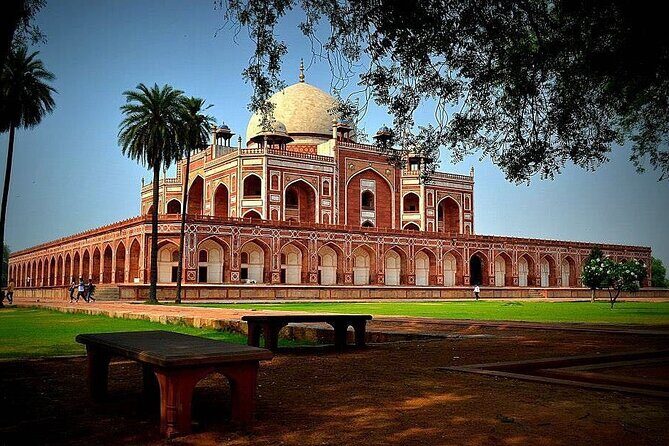
- Stop 3: Humayun’s Tomb, where you slow down and actually look
- Stop 4: Gandhi Smriti (with a real schedule heads-up)
- The government-and-classics stretch: Rashtrapati Bhavan, Parliament, Lutyens’ Delhi, and more
- Stop 5: Lodhi Gardens, the calmer reset before you head back
- Choosing the late-evening Old Delhi option and handling the night mood
- Price and value: why $24.99 can work for a private tour
- Timing, duration, and how to avoid the rush feeling
- Who this tour suits best (and who should adjust expectations)
- Should you book this half-day private tour?
- FAQ
- How long is the Delhi half-day tour?
- Is this tour private?
- Do I get pickup included?
- Are entrance fees included?
- What stops are included?
- Is Gandhi Smriti open every day?
- What’s the difference between choices like Humayun’s Tomb vs Qutub Minar?
- Do I need a printed ticket?
- Can I cancel and get a full refund?
Key points I’d highlight before you go

- Private, just-your-group format that makes it easier to ask questions and move at a pace you can handle
- Air-conditioned hotel or airport pickup that saves time in a city where that matters
- Stop-by-stop planning with specific time blocks, including Humayun’s Tomb and India Gate
- Gandhi Smriti option with a built-in schedule reality (closed on Monday)
- Lodhi Gardens pause for a calmer reset between monuments
- Late-evening Old Delhi by night option if you want a different feel than daytime sightseeing
Why a half-day Delhi highlights circuit actually works
If this is your first time in Delhi, you’re probably facing the same problem I see in travel plans all the time: the city is massive, and the “top sights” list is long. A half-day tour that’s built around a few high-impact stops helps you get oriented fast—then you can decide what to revisit later.
What makes this one workable is the rhythm. You’re not bouncing randomly. You start with a shorter stop, then move into the big visual markers of New Delhi—think wide ceremonial roads and Mughal-era architecture—before finishing with a park break. It’s a smart way to cover contrast: government and memorial spaces, a major tomb complex, then a green area to breathe.
Also, the private guide part matters more than it sounds. In Delhi, the stories behind the stones change how you look at the same buildings. Instead of just snapping photos, you understand what you’re seeing: why a memorial sits where it does, what made a tomb groundbreaking, and how Gandhi’s life connects to the museum you’re walking through.
You can also read our reviews of more tours and experiences in New Delhi.



Getting picked up and getting comfortable in the city flow
Your ride is part of the value here. You get an air-conditioned vehicle with hotel or airport transfers included (based on your pickup details). That matters because Delhi traffic can turn a simple plan into a stress test.
The tour is also structured as a private activity, meaning it’s only your group. That’s a big difference from shared tours where you’re stuck waiting on strangers to decide if they want to go inside or just take a photo from the gate.
One detail I appreciate: the tour includes bottled water. You’ll still want to dress for heat and sun, but having water handled lets you focus on the day instead of logistics.
If you land with a name like Rahul, Ankush, Ravi, or Hariom attached to your day, you can expect a guide who keeps things organized and gives you time at each stop rather than rushing you through for the next checkmark. (These are actual guide names connected to this tour style.)
Stop 1: Agrasen Ki Baoli, the quick monument with serious character
Agrasen Ki Baoli is a protected monument, and it’s the kind of place that can surprise you because you might not expect it to be on a short highlights route. It’s known for its stepped architecture and the sense of quiet even when you’re not far from busy streets.
You get about 15 minutes here, and admission is included. That short window is perfect if you treat it like a warm-up: pause, take in the shape, notice the scale, then move on with your “Delhi senses” switched on.
Practical tip: because it’s a monument stop with a tight time box, go in knowing you won’t be lingering for an hour. Use the time to observe details and grab a few solid photos from the right angles, then let your guide connect it to the broader Delhi story.
Stop 2: India Gate and Rajpath, where a memorial meets a main boulevard

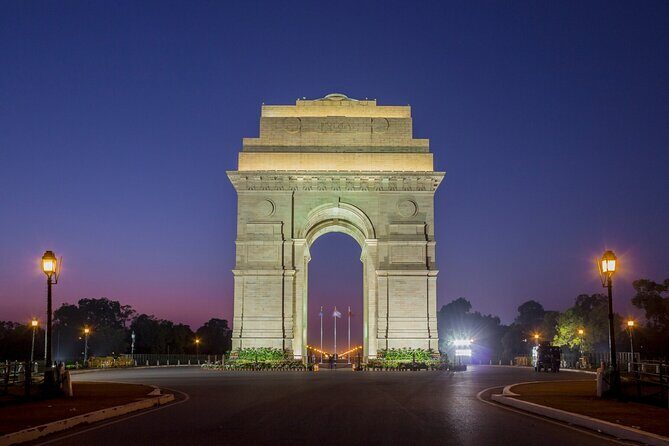
From Agrasen Ki Baoli, you shift into the grand, ceremonial side of New Delhi. India Gate sits along Rajpath, on the wide ceremonial axis that defines how much planning goes into this part of the city.
You’ll spend about 20 minutes at India Gate, with admission included. This is a good stop for two reasons:
- It’s an easy landmark to orient yourself around for the rest of your trip.
- It gives you a sense of how Delhi uses space—this isn’t just a monument, it’s part of a larger visual layout.
If you’re the type who likes to understand what a place meant at the time it was built, let your guide do the talking here. The story behind what it’s called and what it commemorates changes the way you look at the names and the alignment.
Quick photo note: India Gate looks best when you can include some of the surrounding roadway lines. If your guide knows angles, ask them where to stand. That small request saves you time.
Stop 3: Humayun’s Tomb, where you slow down and actually look

This is one of the centerpieces on the route. You get about 55 minutes here, and admission is included.
Humayun’s Tomb is the tomb of Mughal Emperor Humayun, commissioned by his first wife and chief consort, Empress Bega Begum, in 1558. That date matters because it frames why the site carries so much architectural weight in Delhi.
What you’ll enjoy in a practical sense is the walking layout and the ability to take your time. A tomb complex isn’t only about “one building.” You can step back, see how the structure is organized, then come forward again for detail.
Where this stop works especially well on a first visit: your brain starts sorting Delhi into eras. Humayun’s Tomb becomes a reference point. Later, when you see newer or different styles, you’ll notice the differences faster.
From the guides’ approach on this route, you can expect a steady pace. If you end up with a guide like Rahul, this is often one of the highlights, because he tends to connect the architecture to the real people and choices behind it. If you want time for photos, this is also a stop where you can ask for an extra minute or two without derailing the whole schedule.



Stop 4: Gandhi Smriti (with a real schedule heads-up)
Gandhi Smriti is a museum dedicated to Mahatma Gandhi, and the tour includes about 30 minutes here with admission included. It’s located on Tees January Road, and it’s also known historically as Birla House or Birla Bhavan.
Important reality check: it’s closed on Mondays. So if you’re traveling on a Monday, you should be prepared for your day to run differently or for that stop to be swapped out in practice.
When it’s open, this is the kind of place that works well even if you’re not an encyclopedia-style history fan. Gandhi’s story feels personal, and the setting is built for learning rather than just looking.
A good use of your time here: don’t try to read everything. Pick the parts your guide highlights. If you’re a photo person, ask about what’s worth capturing inside and what you can skip.
The government-and-classics stretch: Rashtrapati Bhavan, Parliament, Lutyens’ Delhi, and more
Besides the named primary sights, the route includes sights tied to New Delhi’s government quarter and planned city design. Expect stops or photo opportunities around:
- Rashtrapati Bhavan, the president’s official residence
- Parliament House (Lok Sabha and Rajya Sabha)
- Lutyens’ Delhi, named for British architect Sir Edwin Lutyens
- The National Gallery of Modern Art, based at Jaipur House
Even if you spend less time here than at Humayun’s Tomb, it’s still valuable. This area helps you understand why Delhi feels different from other Indian cities. The streets are wide, the geometry is clear, and the buildings signal power and planning in a way you can feel immediately once you’re on the right roads.
Practical tip: this is where your guide can help you connect names to what you’re seeing. If you know what’s what, you stop feeling like you’re passing buildings that all look similar.
Stop 5: Lodhi Gardens, the calmer reset before you head back
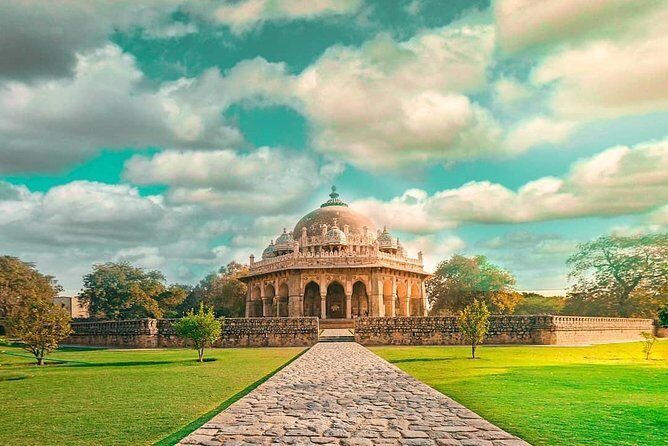
You finish with Lodhi Gardens, a city park spread across about 90 acres. This is a smart ending because it breaks up the monument intensity with a slower pace and open space.
You’ll have about 20 minutes here, and admission is free. In a short tour, that’s exactly the right length: enough time to breathe, walk a bit, and take a few photos in gentler light, not enough time to turn the day into a second sightseeing event.
Lodhi Gardens also includes notable tomb structures like Mohammed Shah’s Tomb and the Tomb of Sikandar Lodi, plus features like Shisha Gumbad and Bara Gumbad. Your guide can point out what’s worth noticing quickly, so you don’t miss the key pieces while you’re enjoying the park feel.
If you’re heat-sensitive, this is where you’ll likely appreciate the break most.
Choosing the late-evening Old Delhi option and handling the night mood
One of the more interesting flex points is the late-evening Old Delhi option to experience the oldest part of the city by night. Old Delhi at night changes the vibe fast: you get cooler air, more life around lanes, and street energy that feels different from the government quarter.
Here’s how to think about it: your half-day plan is already built for quick impact in New Delhi. Adding an Old Delhi evening experience is for when you want contrast—planned wide avenues in the daytime, then crowded lanes and older streets after dark.
If your goal is your first Delhi night without getting lost, this is the kind of add-on that can make the city feel friendly instead of overwhelming. Just keep your expectations realistic: it’s still a half-day style schedule, so you’ll be moving more than wandering.
Price and value: why $24.99 can work for a private tour
At $24.99 per person, this is priced like a budget sightseeing block—yet it includes the parts that usually cost extra on your own:
- Bottled water
- Air-conditioned vehicle
- Private transportation and a professional guide
- Entrance fees if you book the tour option that includes entrances
Not included: tips for your driver and guide (recommended) and any other fees not listed.
So where’s the real value? In New Delhi, the “hidden cost” isn’t ticket prices. It’s your time and your mental energy: figuring out routes, negotiating, and managing multiple entry points on a tight schedule. This tour covers the coordination with a vehicle and guide, which is often what turns a good day into a stressful one.
One practical strategy: if you’re already paying for multiple entrances later, choose the option that includes entrance fees. It reduces friction and keeps your budget cleaner. If you already plan to skip one or two indoor sites, you might weigh that, but you’re safer if you want the full circuit as written.
Timing, duration, and how to avoid the rush feeling
The tour runs about 3 to 4 hours. That’s short enough to fit into a busy itinerary, but long enough to make several stops meaningful.
Because time blocks exist at key sites—like 55 minutes at Humayun’s Tomb and 30 minutes at Gandhi Smriti—you can walk away without feeling like you blinked and missed everything.
To avoid the rush feeling, do this:
- Wear comfortable shoes. Tomb and garden walking adds up.
- Keep your phone charged. You’ll want photos at India Gate and the tomb complex.
- Have a simple priority list before you go: one must-see, one would-like-to-see, and one you’ll skip if time compresses.
Your private guide’s job is to help you manage that. If you’re with someone like Ankush, you can expect an approach that gives you time at each stop rather than steamrolling you through.
Who this tour suits best (and who should adjust expectations)
This tour is a strong fit if you:
- Have only a short window in New Delhi
- Want an easy orientation route with major landmarks
- Prefer learning with a guide rather than using apps alone
- Value comfort, especially with pickup and air-conditioning
It may not be the best fit if you want:
- A very slow, museum-deep day
- Long stays at each attraction
- A fully open-ended itinerary with no time boxes
For travelers who like to return later, this half-day style plan is great. It gives you the framework to decide what deserves more time the next day.
Should you book this half-day private tour?
Yes, if you want a fast start with minimal hassle. For the price, you’re getting the core ingredients that matter in Delhi: a guide, an air-conditioned ride, included water, and a route that hits key landmarks in a realistic time window.
I’d especially book it if your itinerary needs structure and you want to see both the grand New Delhi side and at least one major cultural site like Humayun’s Tomb, with the option to include Gandhi Smriti when it’s open.
Before you commit, check one thing: what day of the week you’re going, because Gandhi Smriti is closed on Mondays. If your schedule lands on Monday, you’ll want to plan for what replaces it in your day.
If you match that one detail, you’ll likely come away with clear bearings, better context, and fewer hours lost to traffic and route figuring.
FAQ
How long is the Delhi half-day tour?
It runs for about 3 to 4 hours.
Is this tour private?
Yes. It’s a private tour/activity, and only your group participates.
Do I get pickup included?
Pickup is offered, and the description notes hotel or airport transfers are included.
Are entrance fees included?
Entrance fees are included if you book the tour option with entrance included. The tour also notes some sites are free (like Lodhi Gardens).
What stops are included?
The main stops listed are Agrasen Ki Baoli, India Gate, Humayun’s Tomb, Gandhi Smriti (subject to closure), and Lodhi Gardens, with additional sights in the government and planned city area as part of the route.
Is Gandhi Smriti open every day?
No. Gandhi Smriti is closed on Monday.
What’s the difference between choices like Humayun’s Tomb vs Qutub Minar?
The tour allows you to choose between options for one of the main heritage stops, so your exact mix can depend on what you select.
Do I need a printed ticket?
You get a mobile ticket.
Can I cancel and get a full refund?
Yes. You can cancel up to 24 hours in advance for a full refund. If you cancel within 24 hours of the start time, the amount paid is not refunded.