REVIEW · NEW DELHI
07 Days Golden Triangle Tour with Mathura & Vrindavan
Book on Viator →Operated by Abyss Tours · Bookable on Viator
Golden Triangle meets Krishna country. This 7-day private route links Agra, Jaipur, and Delhi with Mathura and Vrindavan temples, so you get big-name monuments and devotion in the same trip. I love the air-conditioned private car that makes long drives feel manageable, and I love that hotels are included, which saves you from last-minute hotel hunting between cities. One heads-up: monument and camera fees are not included, so your entrance costs at places like the Taj Mahal and forts may add up.
From the start, you have a meet-and-greet in Delhi and a mobile ticket, and the tour is truly private so your group stays together. I also like the built-in time for craft workshops: Agra’s inlay marble visit and Jaipur’s block printing workshop. The only possible drawback is timing—some mornings are early, and temple visits can mean you’ll be on the go again before you fully relax.
A couple of calendar quirks matter. Taj Mahal is closed every Friday, and Red Fort and Lotus temple are closed every Monday, so the operator may shift which sights you see on which day. If you’re traveling in rainy July–August, pack an umbrella or rain coat and plan for slippery sidewalks around monuments.
In This Review
- Key Points to Know Before You Go
- Why This 7-Day Golden Triangle Plus Krishna Circuit Works
- Private Air-Conditioned Car: The Real Comfort Upgrade
- Day 1 in Delhi: Meet-and-Greet to a Sleep-Friendly Start
- Day 2 Mathura and Vrindavan Temples: Krishna Janmasthan to Prem Mandir
- Day 3 Agra Fort: Arrive, Check In, Then Ease Into Agra
- Day 4 Taj Mahal Sunrise + Chand Baori Stepwell
- Day 4 Also Includes Agra’s Marble Inlay Workshop Visit
- Day 5 Jaipur City Sights: Jantar Mantar, Amber Palace, and Photo Stops That Count
- Jaipur’s Block Printing Workshop: A Craft Stop That Adds Meaning
- Day 6 Jaipur to Delhi: Transfer Day Done Right
- Day 7 Delhi’s Big Finale: Old Delhi Mosque to Qutub Minar
- Workshops, Temples, and Monuments: How the Trip Feels in Motion
- Price and Value: What $400 Per Person Covers
- Practical Tips So You Don’t Lose Time or Money
- Should You Book This Tour?
- FAQ
- What’s included in the Golden Triangle tour price?
- Are monument entrance fees and camera fees included?
- Is accommodation included or do I need to book hotels separately?
- How many breakfasts are included?
- Is an English-speaking guide included?
- What time does the tour start in Delhi?
Key Points to Know Before You Go
- Private, air-conditioned transport between Delhi, Agra, Jaipur, and back to Delhi
- Hotels included in a 3-star budget category across all cities
- Temple-heavy day in Mathura and Vrindavan, including Prem Mandir
- Sunrise-style Taj Mahal timing (when open) plus Agra Fort later
- Hands-on craft viewing: inlay marble in Agra and block printing in Jaipur
- A balanced Delhi mix of Old Delhi mosques plus Mughal-era mausoleums and Qutub Minar
Why This 7-Day Golden Triangle Plus Krishna Circuit Works
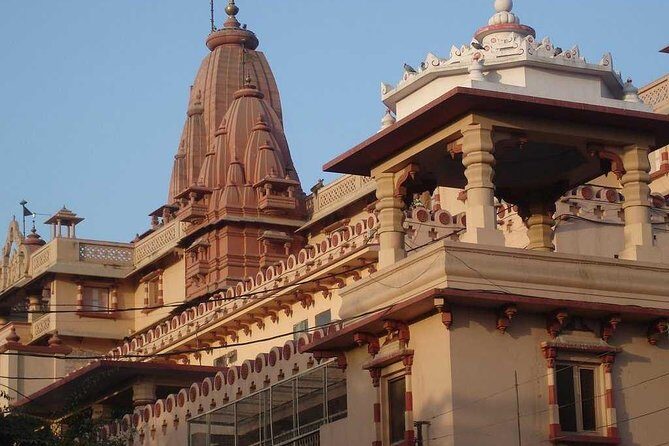
Most Golden Triangle trips feel like a checklist. This one adds a second theme so the days don’t blur together: you’re pairing the classic monuments with a full day in Mathura and Vrindavan, the heartland of Krishna devotion. That matters because it changes the mood. One day you’re staring at white marble symmetry; the next you’re walking temple complexes where the focus is prayer, bells, and ritual rhythms.
The route is also built for comfort. You’re not relying on public transit between cities, and you’re not doing the “figure it out” scramble at station exits. A private car plus scheduled hotel stops keeps your energy for sightseeing instead of logistics.
You’ll still have to manage your own expenses for entrances and meals, but the core structure is sensible: major monuments, a couple of signature cultural detours, and enough hotel time to reset.
You can also read our reviews of more tours and experiences in New Delhi.



Private Air-Conditioned Car: The Real Comfort Upgrade
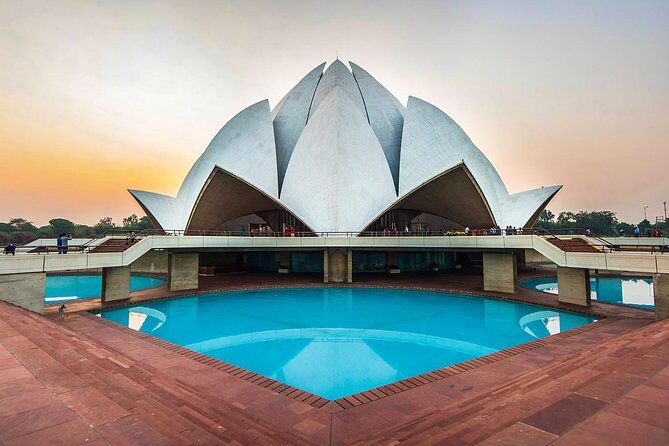
This tour includes a safe, comfortable air-conditioned private car with a driver. It’s set up by group size—small groups may use a Swift Dzire or Etios, while larger groups go by Toyota Innova or a Tempo Traveler. That flexibility helps because it usually means fewer awkward “too many people in too little space” moments.
Another detail that’s easy to miss: fuel, road and state taxes, toll fees, and parking fees are included. Those add up fast on a long route. Also, driver food and lodging are included, which generally supports smoother travel days.
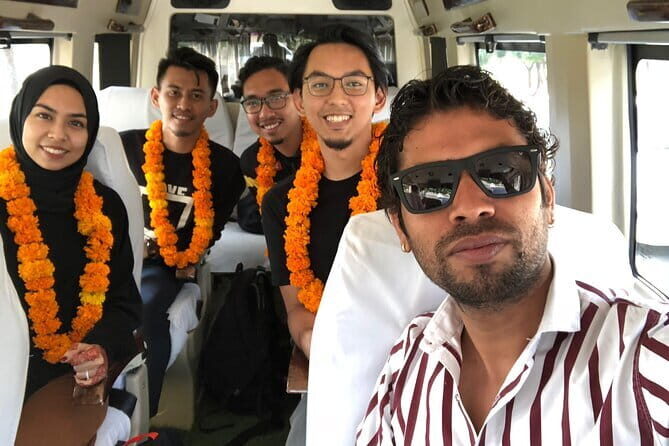
If you hate wasting time, you’ll appreciate that pickups and transfers are arranged. The tour starts at New Delhi with a meeting point return at the end, so you’re not left trying to match buses or ride-shares after a long final day.
Day 1 in Delhi: Meet-and-Greet to a Sleep-Friendly Start
On arrival in Delhi, you’re met by the tour representative and transferred to your hotel. You’ll stay overnight in Delhi, which is smart because it gives you a buffer day before the big monument sprint.
Hotel check-in time is at 12 noon. If your flight lands early, your room might be available only depending on availability. Translation: plan to store luggage if needed, then wander nearby or grab a coffee until your room opens.
This is also a good day to adjust to North India’s pace and noise levels. You’re setting up for three intense city blocks—Mathura/Vrindavan, Agra, Jaipur—then wrapping back into Delhi.
Day 2 Mathura and Vrindavan Temples: Krishna Janmasthan to Prem Mandir
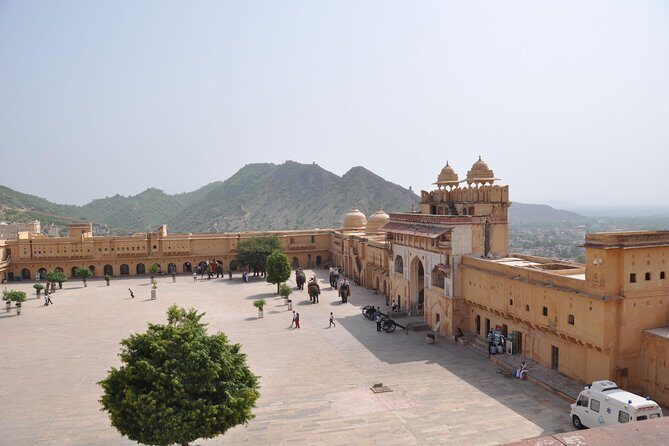
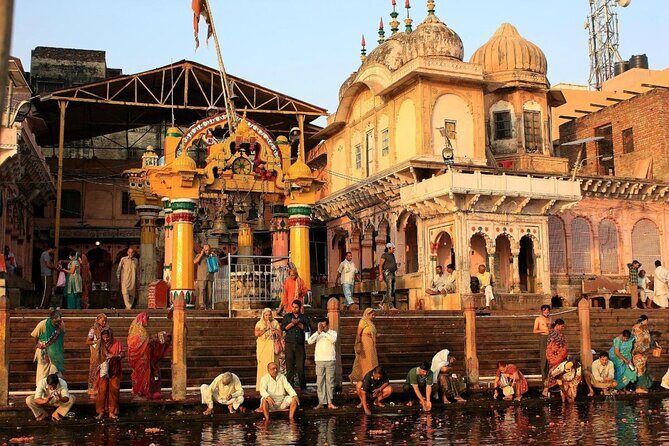
This is the most spiritual day of the trip, and it starts early. You leave for Mathura after breakfast and begin at Shri Krishna Janmasthan, a temple complex connected to the birthplace tradition of Krishna. Admission isn’t included for this stop, so budget for the gate fee.
Next you visit Shri Banke Bihari Temple in Vrindavan. This one has free admission, and it’s typically the kind of place where you feel the devotional focus immediately—prayer rhythms, family groups, and the sense that people come for more than photos.
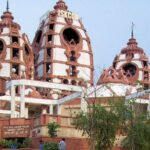
If time permits, you continue to Prem Mandir (Shyama Shyam Dham). It’s free to enter, and the complex is large, so it tends to give you space to walk and absorb the atmosphere rather than rushing in and out.
Practical tip: dress respectfully. Shoulders and knees covered is the easiest way to keep temple visits comfortable for everyone in your group.
Day 3 Agra Fort: Arrive, Check In, Then Ease Into Agra
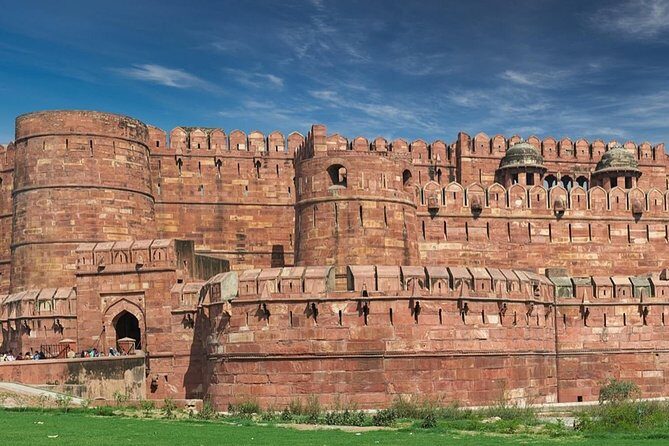
Today you travel from Delhi to Agra. After breakfast, you’ll head to Agra, check into your hotel, and then later visit Agra Fort. This is a nice pacing choice because it avoids landing in Agra and immediately doing Taj Mahal on day one.
Agra Fort is another layer of the Mughal story around the Taj region. You’ll get a break between travel time and the big-ticket Taj visit. Admission isn’t included for Agra Fort, so expect a separate entrance cost here too.
Overnight is in Agra, giving you time to rest before the early morning Taj day. If you’re the type who gets cranky with early starts, this is where you’ll feel the benefit of the schedule.

Day 4 Taj Mahal Sunrise + Chand Baori Stepwell
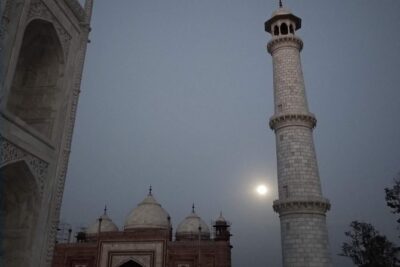
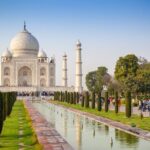
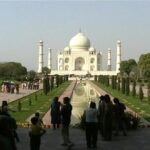
Wake early and visit the Taj Mahal. The schedule gives about two hours here, which usually works well if you want time for photos, walking the grounds, and taking in the layout without feeling rushed. Admission isn’t included, so again, plan for gate fees.
One important calendar note: the Taj Mahal is closed every Friday. If your dates land on a Friday, the operator notes that you can keep an option to visit on the day before or after.
Later you stop at Chand Baori in Abhaneri. This is a stepwell—deep, geometric, and instantly photogenic. You’ll have around 30 minutes here, and admission isn’t included. In real terms, this stop is great because it breaks the Taj-and-fort pattern with a very different kind of landmark: architectural mathematics you can walk around.
Day 4 Also Includes Agra’s Marble Inlay Workshop Visit
This trip isn’t just monument viewing. In Agra, you get a free visit at a famous inlay marble workshop. That’s the kind of cultural stop that helps you understand what you’re seeing at the Taj Mahal scale—stonework, inlaid details, and the labor behind the finish.
Even if you’re not shopping, it’s worth paying attention to how materials are worked and assembled. You’ll likely see craftsmen demonstrating techniques tied to marble ornamentation, and you’ll come away with a more grounded appreciation than a quick photo alone.
Day 5 Jaipur City Sights: Jantar Mantar, Amber Palace, and Photo Stops That Count
After breakfast, you start Jaipur with a mix of drive-bys and main sights. You’ll take a drive past Hawa Mahal, the iconic five-story honeycombed façade from 1799. It’s a quick view, but it’s one of those landmarks you want to see at least once in person.
Then you hit Jantar Mantar, the 18th-century astronomical complex built by Maharaja Sawai Jai Singh II. The giant stone instruments are tied to studying the movement of constellations and stars. Admission isn’t included, but the stop is short, around 30 minutes, which keeps it from dragging.
Next is the City Palace, where Rajput and Mughal architecture overlap. It’s about a one-hour visit, and tickets aren’t included. This one usually feels rewarding because you can spot the blend of styles without needing a big lecture to get it.
After that comes Amber Palace (Amer Fort), with about two hours. Admission isn’t included here either. This is a major “plan your time” stop because it’s not just one building—it’s a fortified experience on a hillside.
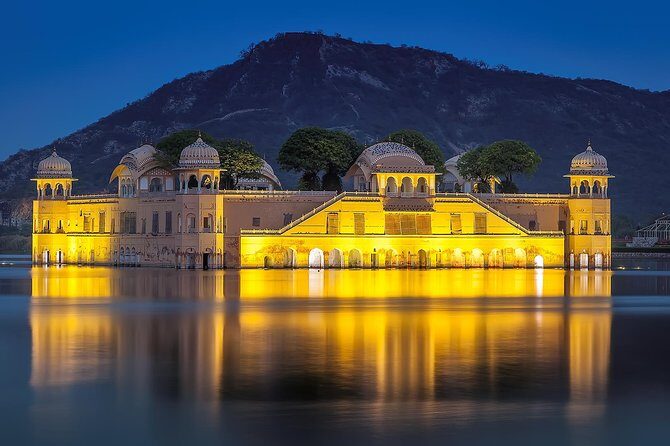
On the way back you stop at Jal Mahal for about 15 minutes for photos. The palace sits in the middle of Man Sagar Lake, and it’s a quick visual break. Then there’s a drive pass for Albert Hall Museum in Ram Niwas Garden, with about 15 minutes.
Jaipur’s Block Printing Workshop: A Craft Stop That Adds Meaning
In Jaipur, you get a free visit to a famous block printing workshop. This is one of those stops that turns “looking at culture” into seeing culture at work.
Block printing isn’t just a technique—it’s a whole chain of steps: carved blocks, dyes, careful placement, and repetition. Even if you don’t buy anything, watching the process can make the printed textiles you’ll see around town feel less random.
If you do want to shop later, this workshop gives you a baseline so you can recognize better craftsmanship instead of paying only for a label.
Day 6 Jaipur to Delhi: Transfer Day Done Right
You’ll check out of your Jaipur hotel after breakfast and travel back to Delhi. Upon arrival, you check in again and overnight in Delhi.
This day is built to keep things from turning into a marathon. You’re not cramming five Jaipur sights into a final half-day and then also rushing through Delhi’s Old City. Instead, you arrive with enough time to reset before day seven.
Hotel check-in again follows the 12 noon policy, so if you arrive before that, you may need to wait depending on availability. Still, having a transfer planned beats trying to guess timing with traffic on your own.
Day 7 Delhi’s Big Finale: Old Delhi Mosque to Qutub Minar
Old and new Delhi both show up on the final day.
You start with Jama Masjid, one of the main mosques of Old Delhi. It’s free, with about 30 minutes. Admission being free is nice because it means your last-day entrance spending is a bit lower.
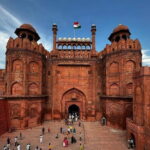
Then you visit Red Fort for about one hour. Admission isn’t included. Red Fort is closed every Monday, so if your tour lines up with a Monday, expect the schedule to adjust.
You’ll also see drive-past sights like India Gate, the war memorial, plus a stop at Humayun’s Tomb (about one hour). Admission isn’t included for Humayun’s Tomb either.
Finally, there’s a drive pass through Lotus Temple, which is particularly pretty at night when it’s lit up. It’s closed on Mondays. The last major stop is Qutub Minar, around one hour. Admission isn’t included, and it’s one of the most impressive early Indo-Islamic architecture highlights of the city.
If you like structure, this final day is satisfying: mosque, fort, mausoleum, minaret—each one different in shape and purpose.
Workshops, Temples, and Monuments: How the Trip Feels in Motion
The secret sauce here isn’t just what’s on the list. It’s the alternation of experiences.
You get a temple-focused day in Mathura/Vrindavan, then a fort and mausoleum-heavy day in Agra, then a palace and astronomy mix in Jaipur, and then Delhi’s Old/New blend to close. That pacing keeps you from feeling like you’re repeating the same “grand building, quick photo” loop.
It also helps that you’re in a private car, so you can move between sites without losing time to station navigation. You can also plan your energy around the day’s first major stop: Taj Mahal morning and temple mornings usually set the tone.
Price and Value: What $400 Per Person Covers
At $400 per person for 7 days, the value comes from what’s bundled for you. Included are private air-conditioned transportation, 3-star budget hotels in each city, and breakfast for six days. Also included are fuel, road/state taxes, tolls, parking, and driver food and lodging.
The trip also includes two cultural workshop visits: inlay marble in Agra and block printing in Jaipur. Those are often the extras that make a “Golden Triangle only” trip feel more human.
What’s not included is equally important. Monument fees and any camera fees at entrances are not included. Meals (lunch or dinner) aren’t included unless specified. Tips, laundry, telephone bills, and beverages are personal expenses. An English-speaking guide is not included, but can be arranged at an extra cost of $10 per person per city.
So the best way to think about it: you’re paying for comfort, organization, and the core route. You’re not paying for every ticket at every gate.
Practical Tips So You Don’t Lose Time or Money
Bring a simple budget plan for entrance fees because many of the big sites are pay-at-gate: Taj Mahal, Agra Fort, Amber Palace, City Palace, Jantar Mantar, and Red Fort are explicitly not included. Camera fees can also be charged.
Wear shoes that work for uneven temple and monument grounds. You’ll walk more than you think, especially in Fort and palace areas.
Pack something respectful for temples—cover shoulders and knees for Mathura and Vrindavan. Also, keep an eye on the closure rules: Friday affects the Taj Mahal, and Monday affects Red Fort and Lotus Temple.
For rainy season travel (July–August), an umbrella or rain coat helps more than you’d expect. For booking, you also need a passport sent at time of booking to email us.
If you want better language support, ask about adding an English-speaking guide at $10 per person per city. The tour is private, so a guide can be especially useful if you like context while you walk.
Should You Book This Tour?
Yes, if you want a Golden Triangle route that feels organized and comfortable, and you specifically want Mathura and Vrindavan added without the stress of building your own schedule. The private air-conditioned car plus included hotels and breakfast are the big reasons it works, and the workshops make it feel more than just monuments.
Skip it or consider customizing if you hate early mornings or you dislike paying extra for entrance fees at multiple major sites. Also check your travel dates for the Friday Taj Mahal closure and the Monday Red Fort/Lotus Temple closures so you don’t end up disappointed if timing changes.
If you like learning through what people actually do—marble work and block printing—this is a smart, cost-reasonable way to experience more of North India in a single week.
FAQ
What’s included in the Golden Triangle tour price?
The tour includes a private air-conditioned car with driver, 3-star budget accommodation in all cities, fuel and road/state taxes, toll fees, and parking. It also includes free visit stops for an inlay marble workshop in Agra and a block printing workshop in Jaipur, plus breakfast for six days.
Are monument entrance fees and camera fees included?
No. Any monuments and camera fees at entrances are not included, and you’ll need to pay those directly at the sites where applicable.
Is accommodation included or do I need to book hotels separately?
Accommodation is included. You’ll stay in 3-star budget hotels in Delhi, Agra, and Jaipur as per the tour plan.
How many breakfasts are included?
Breakfast is included for 6 days during the 7-day tour.
Is an English-speaking guide included?
An English-speaking guide is not included. An English-speaking guide can be arranged for an extra cost of $10 per person per city.
What time does the tour start in Delhi?
The activity starts at 8:00 am in New Delhi, with pickup arranged through the meeting point.