REVIEW · JAIPUR
Ultimate Jaipur Tuk Tuk Tour with Pickup
Book on Viator →Operated by Rajasthan Incredible Tours · Bookable on Viator
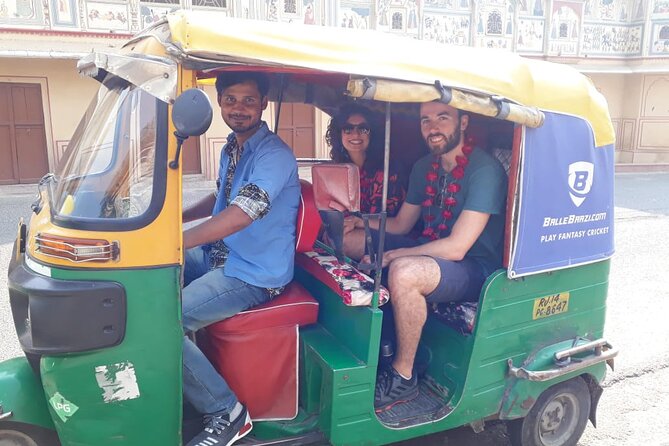
Jaipur by tuk-tuk is a great kind of chaos. This 9-hour sightseeing loop is built for getting around fast without the big-bus feel, with pickup and drop so you don’t lose your morning to taxis and bargaining. You also get a private, customizable setup, which means you can move at a pace that works for your group and your photo stops.
Two things I really like: first, the route is designed for variety, pairing royal landmarks with the city’s astronomy and everyday visual culture. Second, you’re not stuck in a crowded vehicle all day; the tuk-tuk format helps you get your bearings fast and enjoy street life as you pass through it. A possible drawback is that monument entrance fees and meals cost extra, so your final budget depends on which sites you choose to enter and how you plan lunch.
In This Review
- Key highlights at a glance
- Why a tuk-tuk day works in Jaipur
- Pickup, route length, and what $16 really buys
- City Palace: where Jaipur’s royals and power still linger
- Jantar Mantar: nineteen instruments and a sundial on stone
- Hawa Mahal: the Wind Palace and its designed viewpoint
- Jal Mahal: the Water Palace quick stop on Man Sagar Lake
- Albert Hall Museum: a break with architectural style
- Royal Gaitor Tumbas: peaceful maharaja graves, less crowded
- Amer: the fort-town near Jaipur and why it’s worth the time
- Panna Meena ka Kund: stepwell calm and cool geometry
- Comfort, shoes, and heat-smart planning for a full day
- Who should book this tuk-tuk loop
- Should you book Ultimate Jaipur Tuk Tuk Tour with Pickup?
- FAQ
- What’s the duration of the Ultimate Jaipur tuk-tuk tour?
- What’s included in the price?
- Are monument entrance fees included?
- Does the tour include meals?
- Is there free admission at any stops?
- Is pickup from my hotel included?
- Do I need a passport?
- What is the cancellation policy?
Key highlights at a glance
- Hotel/airport/station pickup and drop included to keep the day smooth
- Tuk-tuk pacing that feels more personal than a large-group bus
- Major Jaipur hits: City Palace, Jantar Mantar, Hawa Mahal, Amer
- Fast photo-and-walk stops that limit wasted time between locations
- Bottled water on board, plus fuel, parking, tolls handled
- Peaceful add-ons like Royal Gaitor Tumbas and Panna Meena ka Kund
Why a tuk-tuk day works in Jaipur
Jaipur can be a lot. Roads, crowds, heat, and the constant urge to stop for one more photo can turn a “quick visit” into a long, tiring slog. This tour’s tuk-tuk setup is meant to fight that problem with short, direct transfers between sights, so you’re spending more time looking and less time stuck.
Another win is the feel of the tour. A large bus often means listening from one seat while you wait for everyone else. Here, it’s set up as a private tour for your group, so you’re not stuck with a fixed herd rhythm. That matters when you want a bit more time at a place like City Palace, or when you’d rather speed through a museum wing and get back outside.
Just keep in mind that Jaipur isn’t “no-walking sightseeing.” Even with tuk-tuk drops, you’ll still do a moderate amount of walking, and some stops involve steps or uneven areas.
You can also read our reviews of more tours and experiences in Jaipur.



Pickup, route length, and what $16 really buys
On paper, $16 for about 9 hours looks almost too good. The real value is in what’s covered: round-trip pickup and drop from your hotel (or airport/bus/rail station), bottled water, and the driving costs like fuel, parking charges, and toll taxes.
What’s not covered is the part people often forget: monument entrance fees and meals. The tour lists an approximate monument fee of around $30 USD, and you should assume this varies by the exact sites you enter. If you want to see every ticketed area, build that extra cost into your plan from the start.
There’s also a weather angle. The experience requires good weather, so if conditions are poor, you may be offered a different date or a full refund. That’s not unusual for a full-day outdoor route, but it’s smart to keep it in mind.
City Palace: where Jaipur’s royals and power still linger
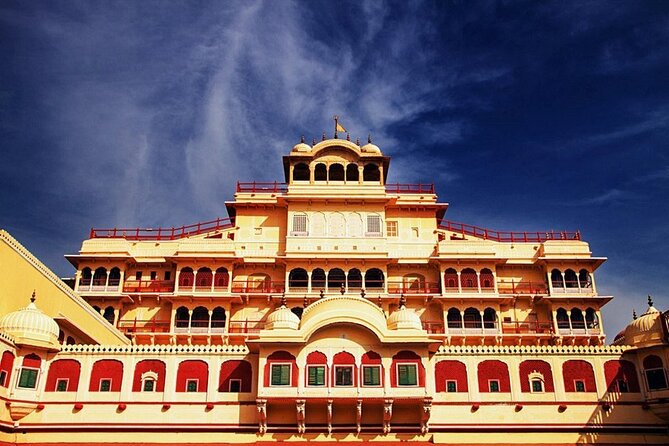
City Palace is the kind of stop that makes Jaipur feel like more than a photo back-wall. You’ll spend about 2 hours here, and the idea is simple: this complex is tied to Maharaja Jai Singh, the ruler and astronomer who helped shape Jaipur’s identity.
The palace includes areas connected to the erstwhile royal family, so it’s not just a pretty building. You’re looking at a place that historically operated like a living center of governance, culture, and status.
Practical considerations:
- City Palace is a ticketed stop, so check the entrance fee at the time you visit.
- Plan for some walking within the complex, plus time to take photos from different vantage points.
- If your group likes context, this is a strong place to ask questions, since the “who built it and why” story ties into the rest of the day.
Jantar Mantar: nineteen instruments and a sundial on stone
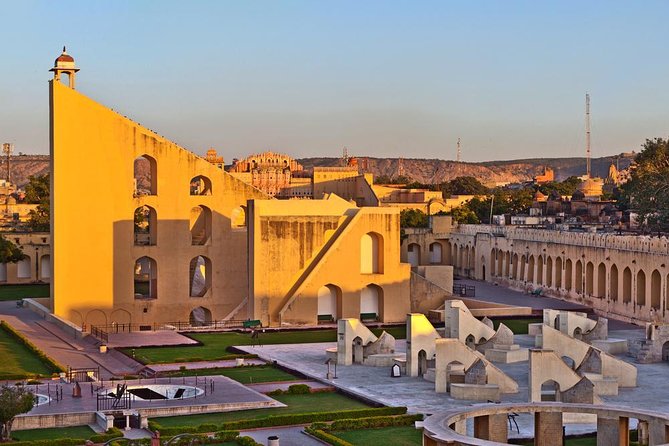
After City Palace, the shift to Jantar Mantar is what makes the day feel like it’s going somewhere new. You’ll have about 1 hour at this UNESCO World Heritage site, which is famous for its set of nineteen astronomical instruments built by Sawai Jai Singh.
The headline is the world’s largest stone sundial, but don’t treat Jantar Mantar like a single-object stop. The value here is walking among the instruments and realizing the site is a whole working “toolbox” for measuring time and the sky. It feels more alive when you stop and take a slower look instead of rushing for photos.
What to expect:
- Ticketed entrance (so you’ll pay extra if you go inside/for access as required).
- A good chance to cool down with shade breaks, especially if the weather is hot.
- It’s outdoors, so bring water and be ready for sun exposure.
Hawa Mahal: the Wind Palace and its designed viewpoint
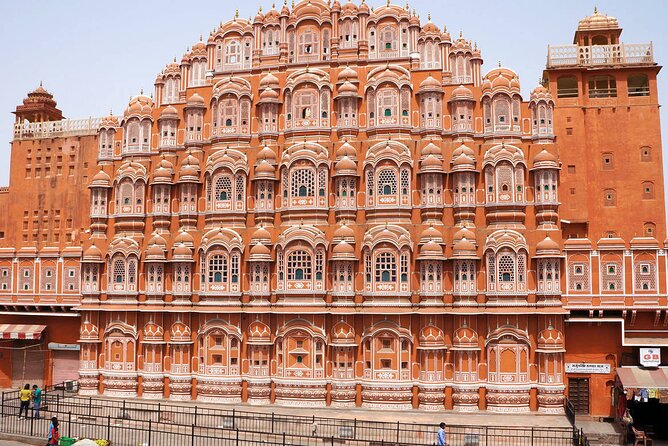
Hawa Mahal is the landmark everyone recognizes, and that’s exactly why it works well in the tour. You’ll get about 1 hour at the Palace of Wind, and the tour framing helps you see it differently than just a skyline wallpaper.
This building was planned by Sawai Pratap Singh for the royal household to observe everyday city life. So the “why” behind the famous façade is about viewing the street—almost like a visual lookout box for royal observation.
Practical tips:
- It’s a ticketed stop, so budget for entry if you want the full experience.
- The exterior is obviously what draws you in, but you’ll likely get more out of it if you take a moment to imagine how people used those windows to watch the city.
- The route timing is helpful here: you’re seeing it in the middle of a long day, not at the end when everyone is tired and cranky.





Jal Mahal: the Water Palace quick stop on Man Sagar Lake
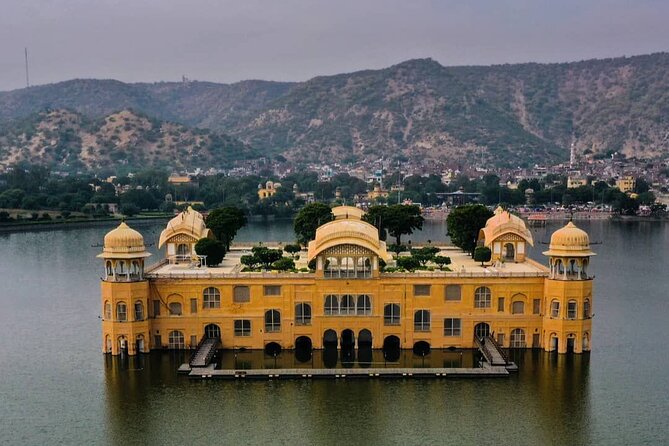
Jal Mahal is short and sweet on purpose: about 30 minutes, and admission is free according to the tour info. It sits in the middle of Man Sagar Lake, and the whole point is the visual contrast—palace silhouette against water.
This stop is ideal if you want a breath of calm without losing momentum. It’s also a good photo window when light hits the lake surface nicely. Don’t expect a long museum-style experience. Instead, treat it like a scenic reset before you head back into more structured sightseeing.
One more thing: if your day is already packed, this is a smart place to do quick photos, look around for a moment, and then move on while you still have energy.
Albert Hall Museum: a break with architectural style
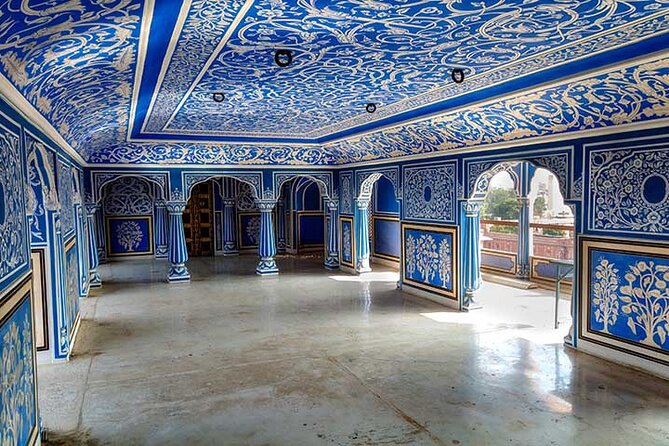
The Albert Hall Museum stop gives you a chance to slow down. You’ll have about 1 hour here, and the tour describes it as the oldest museum in the state and the Rajasthan state museum.
The building is known for Indo-Saracenic architecture, which means it’s not just “museum inside.” The exterior and layout matter, and it’s a nice change of pace from forts and open-air monuments.
What to plan for:
- It’s a ticketed stop, so again, entrance fees may apply.
- Museums work best when you don’t try to see everything. Focus on what grabs you: displays that connect to Rajasthan’s crafts, kingdoms, or daily life.
- It’s a good time to take a water break and regroup, especially if you’ve been out in the sun.
Royal Gaitor Tumbas: peaceful maharaja graves, less crowded
This is the kind of stop that feels like a local secret, even though it’s listed. The Royal Gaitor Tumbas are exactly what the name suggests: tombs of maharajas, including Pratap Singh, Madho Singh II, and Jai Singh II. You’ll spend about 30 minutes here.
The tour info notes it’s peaceful and not as famous, which is the whole point. In a full day where you’ll hit major “must-see” sites, a quieter stop helps your brain rest. You’re also getting a different side of the story: not palaces and monuments for visitors, but memorial spaces tied to rulership and legacy.
Practical angle:
- It’s ticketed, so entrance fees may apply.
- The stop is shorter, so don’t expect a deep, hour-long wander. It’s designed as a calm intermission.
- If you like photography, this is often a better place for atmospheric shots than the busiest landmarks.
Amer: the fort-town near Jaipur and why it’s worth the time
Amer is one of those stops that can make the whole day feel “real.” You’ll have about 2 hours there, and the tour notes admission is free for this stop.
Amer is described as a historic town with a Rajput Fort and Palace, and it’s known for Rajput architecture. It was once the capital for the rulers of Amber, so you get that “power center” feeling that helps explain why Jaipur’s monuments are so tied to rulers and planning.
What makes it strong for a tuk-tuk tour:
- You’re not just driving past; you’re spending actual time in the area.
- The day’s pacing works. Amer is a major highlight, and placing it after the museum and tombs helps you arrive with enough energy to appreciate it.
Things to watch:
- Even if admission is free, you’ll likely still encounter walking, stairs, and uneven ground.
- If it’s hot, plan shade breaks and keep water handy.
Panna Meena ka Kund: stepwell calm and cool geometry
Finish with a totally different kind of Rajasthan landmark: Panna Meena ka Kund, a 16th-century stepwell. You’ll get about 30 minutes, and the tour lists admission is free here too.
This stepwell is known for symmetrical staircases and intricate carvings. It’s also described as a water reservoir and a place for locals to gather. That combination is what makes it feel more than a “pretty structure.” It connects you to everyday life, not only royalty or big monuments.
Why I like this stop late in the day:
- It gives you a quieter, more reflective moment.
- The visuals are strong, and it often feels cooler than open monuments once you get inside the stepped area.
- It’s a good way to end with something different, especially after you’ve seen forts, palaces, and astronomical instruments.
Comfort, shoes, and heat-smart planning for a full day
This is a full-day route, so your comfort choices matter. The tour info calls for a smart casual dress code, and it specifically notes that short shorts or sleeveless tops are not recommended in temple areas. If you want one simple rule, pack something that covers shoulders and knees.
Shoes are also important. The tour notes moderate walking, so wear comfortable shoes you trust on steps and slightly uneven surfaces.
Packing tips that fit this exact kind of itinerary:
- Bring a hat and sunscreen, because you’ll have outdoor time around open-air sights.
- Since bottled water is included, you’re set for the day, but I still suggest planning water breaks at your stops.
- Think about timing: long days in Jaipur can feel longer if you’re underfed, so consider a meal plan even though meals are extra.
One more practical note: your day includes pickup and drop, and the tour limits luggage to one suitcase and one carry-on per traveler. If you’re traveling with oversized gear, you may need to ask ahead.
Who should book this tuk-tuk loop
This tour is a good fit if you want to:
- See a lot of Jaipur highlights without renting a car.
- Get around in a more flexible way than a big-group bus.
- Prefer private attention and a pace that can handle photos and quick questions.
- Mix major landmarks with a couple of quieter stops.
It’s also a smart choice for first-timers who want the “best of” sights—City Palace, Jantar Mantar, Hawa Mahal, Amer—without turning the day into an airport-style navigation problem.
If you’re the kind of traveler who hates paying extra for tickets, just know that entry fees and meals are not included and the tour estimates a monument budget around $30 USD. Build that into your decision.
Should you book Ultimate Jaipur Tuk Tuk Tour with Pickup?
If you’re trying to maximize value in Jaipur and you don’t want to fight transit logistics all day, I’d say this is a strong booking. For the money, you get the big pieces right: pickup and drop, a full-day itinerary centered on major sights, and the tuk-tuk format that keeps the experience feeling personal instead of bus-style.
I’d pass or rethink if you’re trying to avoid extra costs for museum and monument entries. Also, if your trip timing might land you in poor weather, remember this is weather-dependent.
My decision rule: if you’re comfortable paying entrance fees on-site and you want a focused day that’s still flexible, book it. If you’re trying to keep spending ultra-tight and you hate ticket add-ons, consider building a different plan where you choose only the paid sites you care about most.
FAQ
What’s the duration of the Ultimate Jaipur tuk-tuk tour?
It runs for approximately 9 hours.
What’s included in the price?
Pickup and drop from your hotel or the airport/bus/railway station, bottled water, fuel and parking/toll costs, and a sightseeing tour of Jaipur by tuk-tuk.
Are monument entrance fees included?
No. Monument entrance fees are listed as not included (with an approximate additional cost of around $30 USD).
Does the tour include meals?
Meals are not included.
Is there free admission at any stops?
Yes. Jal Mahal, Amer, and Panna Meena ka Kund are listed as admission free on this tour.
Is pickup from my hotel included?
Yes. The tour includes round-trip pickup and drop from hotels, airports, or bus/railway stations.
Do I need a passport?
Yes. A current valid passport is required on the day of travel for all participants.
What is the cancellation policy?
Free cancellation is allowed. You can cancel up to 24 hours in advance for a full refund, and cancellations less than 24 hours before start time aren’t refunded.