REVIEW · JAIPUR
Temple tour of Jaipur with ropeway ride
Book on GetYourGuide →Operated by Ultimate Urban Adventures Pvt. Ltd. · Bookable on GetYourGuide
Dawn makes Jaipur’s temples feel different. This tour mixes early Ganesh temple rituals with a ropeway ride for big views, all in one smooth half-day loop. I like that it’s not just sightseeing from the car, either—you get short guided moments inside multiple places of worship.
Two of my favorite parts are the order of the stops and the way the guide turns names into meaning. Starting early helps you catch morning worship and fewer crowds, and guides like Harshit and Ansh are the type who answer questions in plain language. The other win is the variety: Hindu, Jain, and Sikh sites in one run, plus Galta Ji’s sacred water tanks and a hilltop temple reachable by cable car.
One drawback to plan around: it’s religion-focused and walking-heavy, so strict dress rules and temple etiquette are non-negotiable. Also, the ropeway ticket is not included, even though you’ll do the ride as part of the tour.
In This Review
- Key things you’ll notice fast
- A tight 5.5-hour temple circuit that still has breathing room
- Dawn at the 18th-century Ganesh temple: watching devotion before workday rush
- Birla Mandir: white marble, raised platform, and morning worship details
- Jain temple and Sikh Gurudwara: two faiths, two kinds of “how life works”
- Galta Ji (monkey temple): sacred water tanks and ritual watching
- Ropeway up the hill: the ~10-minute ride that changes your perspective
- Oldest Hanuman temple and a calm finish back in town
- Price and value: how $38 adds up for this many sacred stops
- Who should book this tour (and who shouldn’t)
- Practical tips so you don’t stress at the temples
- Should you book the Jaipur temple tour with ropeway ride?
- FAQ
- How long is the Jaipur temple tour with ropeway ride?
- What temples and sites are included on the tour?
- Is the ropeway ticket included in the price?
- Are meals included?
- What’s included for transportation?
- What should I bring with me?
- Are there any dress restrictions?
- Who is the tour not suitable for?
Key things you’ll notice fast
- Early-morning offerings at an 18th-century Ganesh temple you’ll see before the city ramps up
- Birla Mandir’s white marble look and morning worship timing, with details to spot on the pillars
- Jain and Sikh visits that explain faith through philosophy and daily practice (like langar)
- Galta Ji Monkey Temple’s sacred tanks where rituals happen in a very watchable way
- A ~10-minute ropeway up to a hilltop temple with forest-and-temple views from above
A tight 5.5-hour temple circuit that still has breathing room
This tour is built around a morning schedule, with hotel pickup and drop-off in Jaipur. You’ll meet your driver and local guide at your hotel lobby, then head out by car. Expect a mix of guided walking and short stops rather than long marches, but you still need comfortable shoes.
Duration is about 5.5 hours, which is perfect if you want temple depth without losing your whole day to traffic or heat. You also get a safety briefing before the main walking parts, which matters with busy temple areas and uneven ground.
Because it’s designed as a small-group or private-style outing, you should be able to ask questions and get context instead of just hearing a script. In the real-world flow, that’s what turns a list of temples into something you can actually connect to—why each one matters, and what you’re looking at when the doors open.
You can also read our reviews of more tours and experiences in Jaipur.



Dawn at the 18th-century Ganesh temple: watching devotion before workday rush
The day starts at an 18th-century Ganesh temple, where Lord Ganesha is the main focus. The big difference here is timing. You’ll experience early morning offerings—locals bring offerings before they head to work. That small shift changes the whole feel from tourist photos to lived-in ritual.
When you arrive, don’t treat it like a quick photo stop. Pause for the main idol moment, then watch how people move through the space. You’ll see devotion in motion: people arriving, offering, and stepping back with calm routines that feel older than any timetable.
Practical note: temples have rules about what you can wear and what you can take inside. Shorts and sleeveless shirts aren’t allowed, and flash photography and eating/drinking inside are not permitted. If you respect those basics, the experience feels smoother because you won’t be pulled aside or asked to adjust.
Birla Mandir: white marble, raised platform, and morning worship details
Next comes Birla Mandir, famous for its white marble and a raised platform setting. The architectural style is described as modern, and you’ll feel that right away—the look is clean, bright, and structured compared to older stone temples.
This stop also helps that you arrive at a good time for morning worship. That means you’re not just looking at architecture; you’re seeing the temple function as a living place of prayer. In one of the standout details, the columns include engraved names and likenesses of Hindu gods and even saints from other parts of the world. It’s a little moment that rewards slow looking, because it shows the temple isn’t trying to be mysterious—it’s trying to be understood.
For photos: plan on taking your time at Birla. The marble catches light, and you’ll get good angles from the open approach areas. But remember, interior temple rules still apply—no flash, no food or drinks inside.
Jain temple and Sikh Gurudwara: two faiths, two kinds of “how life works”
After Birla, you’ll add two stops that broaden the story beyond Hinduism.
First is a Jain temple—described as one of Jaipur’s most beautiful—and you’ll learn about Jainism philosophy through your guide’s explanation. Jainism can feel abstract until someone ties it to everyday ideas like self-discipline and ethical living. Here, the temple visit becomes a quick, human lesson: you see symbols and structure, then you get plain-language meaning so it clicks.
Then you head to the Sikh temple (Gurudwara). What’s especially practical—and honestly impressive—is the communal kitchen, the langar. You’ll admire religious ceremonies, and you can also try your hand with volunteers in the kitchen area. The point is simple and powerful: meals are served to hundreds of people each day from every religion, caste, and nationality.
If you’ve never seen a langar in person, it can be one of those “oh, this is what community looks like” moments. Just be respectful of where you’re allowed to move and what you’re allowed to do. Also, dress rules still apply since you’re stepping into active worship space.
Galta Ji (monkey temple): sacred water tanks and ritual watching
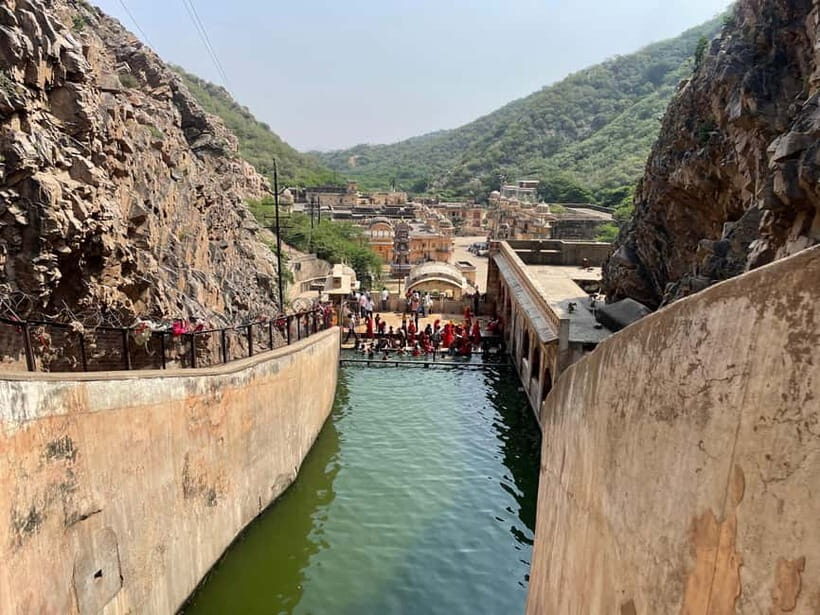
Then comes Galta Ji, known as the monkey temple. The temple complex sits in a heritage setting, and the main thing to focus on here is the sacred water tanks and what happens around them.
Your guide will help you watch rituals and customs at these water tanks, which turns this stop from funny animal photos into something more thoughtful. The tanks are part of the spiritual rhythm of the place. People don’t mill around randomly; there’s a sense of purpose in how they come, pause, and participate.
You’ll also get some free time for photography. That’s a good moment to balance your senses: take a few pictures, then step back and watch quietly for a few minutes. Galta Ji is one of those places where the best photos come after you’ve stopped trying to force them.
A small real-world tip: since it’s a monkey temple, keep your phone and small items secure and be alert where you step. The area is active, and you don’t want a preventable mishap to ruin your photos.






Ropeway up the hill: the ~10-minute ride that changes your perspective
One of the tour’s most memorable parts is the ropeway ride to the hilltop temple. The ride itself is short—about 10 minutes up—so you’re not stuck waiting forever. During the ride, you’ll enjoy aerial views and get a different perspective of the forest and temple complex below.
Two things to know before you go:
- The ropeway ticket is not included, so you’ll need to pay for it separately.
- The tour includes a way to skip the ticket line, which helps you spend less time stuck and more time actually seeing.
At the top, you’ll visit the temple with your local guide and get time to take in the view. This is where your patience pays off: the climb-by-cable makes the scenery feel bigger than it does from ground level, and it’s a nice break in the day’s schedule.
You should also assume there will be some walking at the top and around the viewpoint areas. This tour isn’t for wheelchair users or people with mobility impairments, and you’ll feel that quickly if you’re not comfortable with uneven outdoor ground.
Oldest Hanuman temple and a calm finish back in town
After you ride the ropeway back down, you’ll visit one of the oldest Hanuman temples. This stop works well as a closing chapter, because it shifts from the hilltop view back to a grounded temple setting.
You’ll get the chance to see Hanuman worship up close, then the tour wraps with a drop-off at your hotel or your chosen location within the city. That end timing is helpful—your legs will be tired, but you won’t be too far from dinner plans afterward.
Price and value: how $38 adds up for this many sacred stops
At about $38 per person for a 5.5-hour guided circuit, the value is mostly about what’s included versus what you’ll pay separately.
What’s included:
- Hotel pickup and drop-off
- Guided visits across multiple temples (Ganesh, Birla, Jain, Sikh/Gurudwara, Galta Ji, hilltop temple with a guide, and Hanuman)
- A driver and local guide coordination so you don’t waste time figuring out timing and routes
What’s not included:
- Ropeway ticket
- Meals
- Personal expenses
In other words, you’re paying for the structure: getting to the right places in the right order with a guide who explains what you’re seeing. The ropeway ticket is the one extra that you should budget for in advance, but you still come out ahead versus trying to string together all these sites on your own.
Who should book this tour (and who shouldn’t)
This tour is best for you if you:
- enjoy early mornings and want to see worship, not just buildings
- want a guided explanation across Hindu, Jain, and Sikh sites
- can walk on uneven outdoor ground for a few stretches without trouble
Skip it if:
- you have mobility impairments or need wheelchair access
- you’re over 80 and expect the walking and temple steps to be manageable
- you’re not comfortable following strict dress rules (no shorts/short skirts/sleeveless tops) and temple etiquette
Also, if you’re sensitive to crowds around popular religious sites, this itinerary may feel intense. It’s not designed as a slow, private contemplation walk—it’s a well-paced morning circuit.
Practical tips so you don’t stress at the temples
Here’s how to set yourself up for an easy morning:
- Wear comfortable shoes. You’ll walk.
- Bring a hat, sunscreen, and water for warm-weather comfort.
- Pack a camera if you want photos, since you’ll have at least one photography window around Galta Ji.
- Keep an eye on temple rules: flash photography and eating/drinking inside temples are not allowed.
Dress code matters. Shorts, short skirts, and sleeveless shirts are not allowed, and religious sites expect respectful behavior. Also, drones aren’t allowed, so don’t plan on filming from above.
If you keep these points in mind, you’ll spend less time adjusting and more time seeing.
Should you book the Jaipur temple tour with ropeway ride?
I’d book it if you want one morning in Jaipur that mixes faith, architecture, and perspective without turning into a long day. The early Ganesh temple stop plus the hilltop ropeway views make it feel like more than a standard temple checklist. The Sikh Gurudwara communal kitchen is also a standout because it shows a side of religion that’s practical, social, and welcoming.
I wouldn’t book it if you need full accessibility or you’d rather take temples at a slower pace with fewer rules. This tour is structured, it requires walking, and religious etiquette is part of the experience, not an optional add-on.
FAQ
How long is the Jaipur temple tour with ropeway ride?
The tour lasts about 5.5 hours.
What temples and sites are included on the tour?
You’ll visit the 18th-century Ganesh temple, Birla temple, a Jain temple, a Sikh temple (Gurudwara), the monkey temple (Galta Ji), a hilltop temple reached by ropeway, and an older Hanuman temple.
Is the ropeway ticket included in the price?
No. The ropeway ticket is not included.
Are meals included?
No. Meals are not included.
What’s included for transportation?
Hotel pickup and drop-off are included, and you’ll travel with a driver as part of the tour.
What should I bring with me?
Bring comfortable shoes, a hat, a camera, and sunscreen.
Are there any dress restrictions?
Yes. Shorts, short skirts, and sleeveless shirts are not allowed. Alcohol and drugs are also not allowed.
Who is the tour not suitable for?
It’s not suitable for people with mobility impairments, wheelchair users, or people over 80 years.