REVIEW · MATHURA
Same Day Mathura and Vrindavan Tour From Delhi Or Agra
Book on GetYourGuide →Operated by Orhan Tour · Bookable on GetYourGuide
Mathura and Vrindavan in one day feels intense—in the best way. You’ll start with key Krishna sites around Shri Krishna Janmabhoomi Temple in Mathura, then move to the Vrindavan temples people come back to for years. I especially like how the route hits both the sacred birthplace story and the big, iconic Krishna shrine at Dwarkadhish Temple—so you get meaning, not just marble.
Two things really make this trip feel worth your time: the private AC car with hotel pickup/drop-off (so you’re not wrestling with schedules), and a live guide in several languages who can connect what you’re seeing to the traditions behind it. One possible drawback: this is temple country, and you may run into situations where people try to steer you toward extra spending or make you feel uncomfortable—especially if you’re not expecting that kind of pressure.
In This Review
- Quick hits you’ll actually care about
- Entering Mathura and Vrindavan in a single 12-hour day
- Price and logistics: what your $49 actually buys
- Shri Krishna Janmabhoomi Temple: the birthplace stop
- Dwarkadhish Temple: Krishna in stone and devotion
- Vishram Ghat on the Yamuna: why you pause here
- Banke Bihari Temple in Vrindavan: the most famous chanting moment
- ISKCON Krishna Balaram Mandir: international devotion and steady calm
- Prem Mandir and its white-marble show
- Optional quiet corners: Radha Raman Temple and Nidhivan
- Lunch timing and extra costs you should plan for
- The guide makes the difference: multilingual private service
- Who this tour is best for (and who should skip it)
- Should you book this same-day Mathura and Vrindavan tour?
- FAQ
- How long is the Mathura and Vrindavan tour?
- Where do you get picked up from?
- What are the main stops on the tour?
- Is lunch included?
- Are entry tickets included?
- What languages are available for the guide?
- Is there free cancellation or a reserve-now, pay-later option?
Quick hits you’ll actually care about
- 12 hours door-to-door feel, with a long-but-manageable drive from Delhi or a shorter one from Agra
- Krishna Janmabhoomi + Dwarkadhish in Mathura, then the Vrindavan temple circuit
- Vishram Ghat on the Yamuna for a slower, reflective moment
- Banke Bihari, ISKCON (Krishna Balaram Mandir), and Prem Mandir as the main Vrindavan highlights
- Skip-the-line entry handling is included, but entry tickets and lunch are not
- Optional add-ons like Radha Raman Temple and Nidhivan if you want more stops
Entering Mathura and Vrindavan in a single 12-hour day
This is a straight-up spiritual day trip: lots of temple time, a little road time, and just enough variety that you don’t feel stuck in one neighborhood. I like that the itinerary is structured around major Krishna landmarks—birthplace, major temple worship, then Vrindavan’s devotional rhythm.
From Delhi, you’re looking at about a 3–4 hour drive to Mathura (around 145 km). From Agra, it’s closer to 1–1.5 hours (about 60 km). That difference matters. If you start in Agra, you’ll feel less rushed and have an easier time staying focused once you arrive.
You can also read our reviews of more tours and experiences in Mathura.



Price and logistics: what your $49 actually buys
At $49 per person, the value mostly comes from what’s included for the day: a private AC car for sightseeing, pickup and drop-off, a live guide, tolls, parking, and a mineral water bottle. If you’ve ever tried to stitch together transport plus a guide plus entry planning in India on a tight schedule, you know those pieces add up fast.
What’s not included is also important. Entry tickets and lunch are not part of the price. There’s time built in for a vegetarian lunch break, but you’ll need to pay for your meal separately. Also, while the tour advertises skip-the-line handling, tickets still aren’t included, so budget for that.
So, the real bargain is this: you’re paying for time management and a guide-controlled flow. If you’re okay handling things on your own, it might not feel like a steal. If you want a smooth, temple-focused day with someone organizing the sequence, it’s a solid deal.
Shri Krishna Janmabhoomi Temple: the birthplace stop
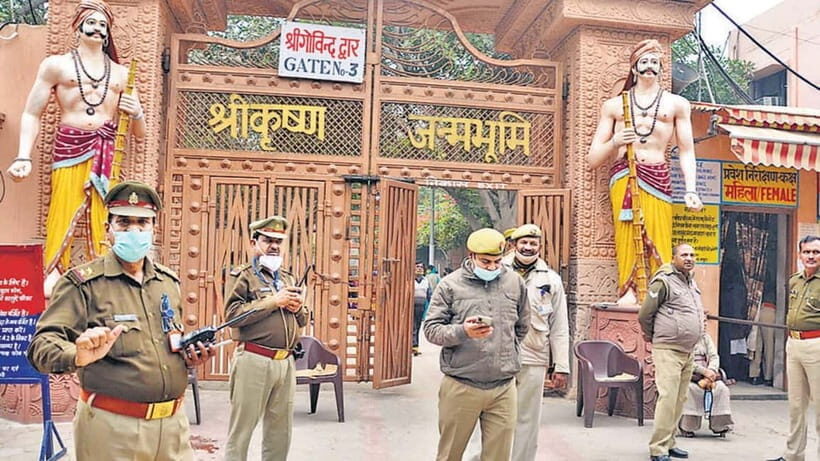
The day begins with the Shri Krishna Janmabhoomi Temple complex in Mathura. This is the centerpiece for a reason: it’s associated with the birthplace of Lord Krishna, and the complex includes multiple shrines and a small enclosed area described as the birth chamber.
This stop is powerful partly because it’s not just a single room or single statue. You’re moving through a temple complex where different parts point to different aspects of the story. That gives your visit structure, so you’re not left wondering what you’re looking at.
One practical note: this is a high-interest religious site, so expect crowds and lots of foot traffic. The value of having a guide here shows up fast—they can help you follow the order of what to see and what to pay attention to.
Dwarkadhish Temple: Krishna in stone and devotion
Next up is the Dwarkadhish Temple, one of the most important temples in Mathura and dedicated to Lord Krishna. This is a classic temple experience: strong architecture, devotional energy, and a sense that worship here is continuous, not just for tourists.
I like how this stop complements Janmabhoomi. Janmabhoomi gives you the origin story. Dwarkadhish gives you the grand, established form of devotion—so your brain can shift from origins to ongoing worship.
If you’re the type who likes watching how people pray—hands folded, chanting, offerings, small rituals—this temple fits that style. Go with a calm pace. Try to look beyond taking photos. Let the sound and movement do some of the work.
Vishram Ghat on the Yamuna: why you pause here
After the heavier temple stops, you head to Vishram Ghat on the Yamuna River. This is where the story says Krishna rested after defeating Kansa. The point of this ghat visit is the change of pace.
You get a quieter atmosphere compared to temple interiors, and the river setting helps you reset. I find this kind of stop essential on a packed day trip. Without it, the temples start to blend together and you lose the emotional rhythm of the journey.
The guide’s role matters again: the meaning of the spot is clearer when you understand why people treat a simple riverside landing as a sacred pause.

Banke Bihari Temple in Vrindavan: the most famous chanting moment
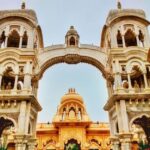
Vrindavan is the next leg, reached by a short drive from Mathura. Your main early hit is Banke Bihari Temple, one of the most famous Krishna temples in the city.
This is where you feel the devotional momentum. The temple is always drawing devotees, and the chanting atmosphere tends to be intense. If you’re looking for a “big moment” temple stop, this is it.
The only caution I’ll give is patience. When a place is popular, your personal space shrinks. If you don’t like crowds, plan to stay flexible and accept that you’ll see the site in the middle of worship, not as a private viewing.
ISKCON Krishna Balaram Mandir: international devotion and steady calm
After Banke Bihari, the tour includes ISKCON Temple, also known as the Krishna Balaram Mandir. This stop often feels different from the older Mathura/Vrindavan temple style. It’s a major destination for international devotees, and you’ll notice chanting and a more structured worship vibe.
I like this contrast. It helps if you want to see Krishna devotion through different lenses—traditional temple worship on one side, and the ISKCON community’s global presence on the other. The atmosphere here can feel calmer for some people, mainly because the flow of rituals is easy to recognize.
Again, the guide helps you focus on what you’re seeing instead of just following the crowd.
Prem Mandir and its white-marble show
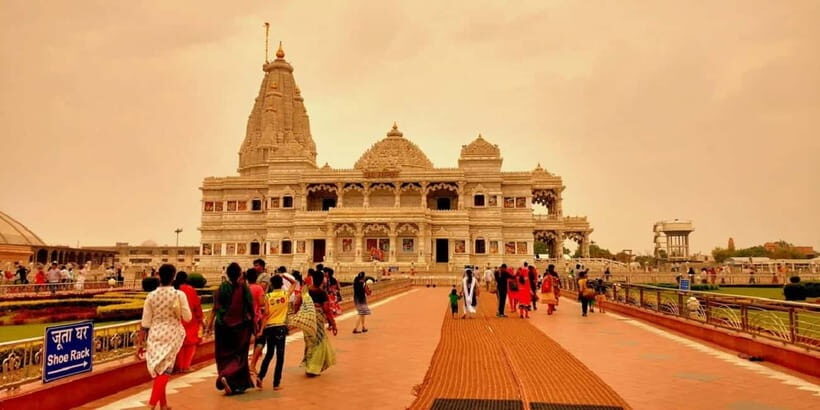
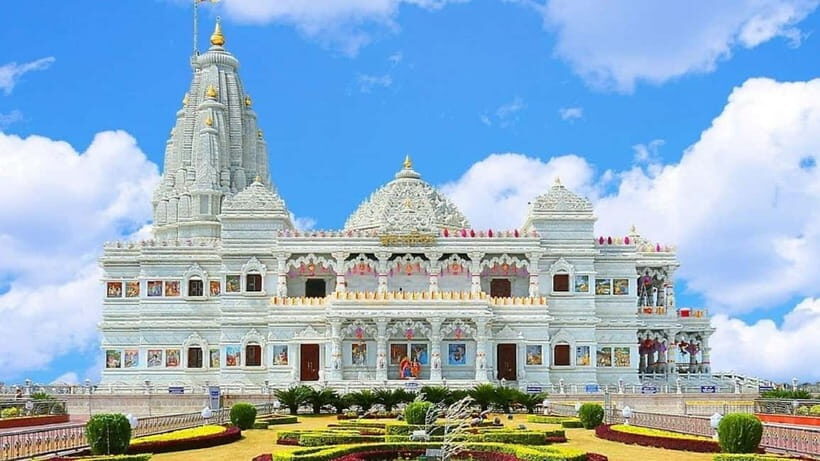
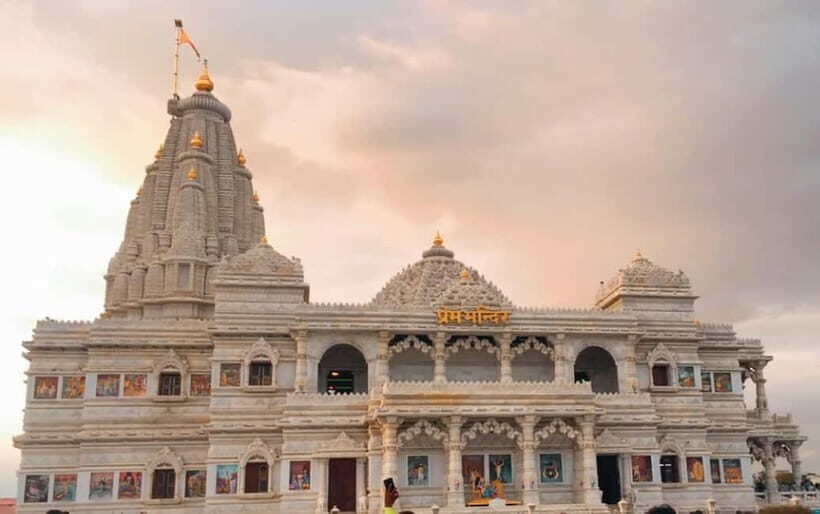
One of the most photogenic stops on the day is Prem Mandir. It’s a modern temple built with white marble and dedicated to Krishna and Radha. The standout detail is the evening light show, which adds a whole new layer to the temple.
If you’re the type who enjoys atmosphere—music, lights, and a temple space that changes as the evening darkens—this is a great inclusion. It also breaks the day up visually and emotionally. After several temple interiors and chanting moments, Prem Mandir gives you a different kind of experience.
If you’re visiting and you only have time for one “later-day” temple moment, this is the one I’d keep an eye on.
Optional quiet corners: Radha Raman Temple and Nidhivan
You’ll also have optional time for more stops, depending on your pace and group flow. Two of the named add-ons are Radha Raman Temple and Nidhivan.
Radha Raman Temple is described as ancient and peaceful, which makes it a nice choice if you want something less crowded than the headline shrines. Nidhivan is different—it’s described as a mysterious sacred forest where Lord Krishna is believed to perform Ras Leela with Radha and the gopis every night.
Here’s the useful way to think about the options: keep them only if you still have energy. On a 12-hour day, it’s easy to say yes to everything and then rush. If you want one optional stop, pick the one that matches your mood—peaceful and calm for Radha Raman, or spiritual mystery for Nidhivan.
Lunch timing and extra costs you should plan for
You’ll have a lunch break after the morning temple sequence. The tour format includes a traditional vegetarian lunch at a local restaurant in Mathura or Vrindavan, but lunch is not included in the price.
So plan your budget accordingly. Also, don’t expect a long sit-down meal. This is a time-optimized tour, meaning lunch is fuel, not a culinary adventure.
If you’re sensitive to long lines or packed indoor areas, a good lunch strategy helps: eat quickly, drink water, and use the break to rest your feet before the afternoon temples.
The guide makes the difference: multilingual private service
This is a private group experience with a live guide available in English, French, German, Russian, and Spanish. That matters because temple visits are easier and more meaningful when the guide can explain what you’re seeing, not just where to stand for pictures.
One of the strongest positives mentioned in the experiences I saw was a guide named Harsh, praised for local knowledge and being easy to get along with. That’s exactly the kind of guide you want here—someone who helps you understand each stop without turning it into a lecture.
On the other side, there’s a caution from a lower-rating experience: the guide did what he could, but the day still included an uncomfortable feeling around money requests. That’s not something you can fully control. What you can control is your mindset: set your budget ahead of time, keep your decisions firm, and don’t let extra side conversations derail your day.
Who this tour is best for (and who should skip it)
This tour is best for first-timers who want the highlights of Mathura and Vrindavan in one go. It’s also a good fit if you want a private vehicle and guide handling the route and timing.
It’s less ideal if you dislike crowds or if you’re easily stressed by temple environments that feel busy. Also pay attention to accessibility info. The details say wheelchair accessible, but they also list it as not suitable for people with mobility impairments. If that affects you, you should double-check specifics with the operator before booking.
Should you book this same-day Mathura and Vrindavan tour?
I’d book it if you want a structured, guided Krishna-focused day with major stops packed into 12 hours, starting from either Delhi or Agra. The included private transport, guide, tolls/parking, and water are the big value drivers, and the temple lineup is strong from start to finish.
I’d hesitate only if you’re very sensitive to unexpected spending pressure around religious sites, or if you need a slow, uncrowded itinerary. In that case, you might prefer a more flexible plan with fewer stops.
If your goal is meaning over downtime and you’re happy to move through a temple circuit, this is a practical way to experience Mathura and Vrindavan without getting bogged down in logistics.
FAQ
How long is the Mathura and Vrindavan tour?
The tour duration is 12 hours.
Where do you get picked up from?
Pick-up is offered from your hotel or residence in Delhi or Agra.
What are the main stops on the tour?
You’ll visit Shri Krishna Janmabhoomi Temple, Dwarkadhish Temple, Vishram Ghat, Banke Bihari Temple, ISKCON Temple (Krishna Balaram Mandir), and Prem Mandir. Radha Raman Temple and Nidhivan are optional.
Is lunch included?
Lunch is not included in the price, even though there is a lunch break during the day.
Are entry tickets included?
No. Entry tickets are not included.
What languages are available for the guide?
The live guide is available in English, French, German, Russian, and Spanish.
Is there free cancellation or a reserve-now, pay-later option?
Yes. You can cancel up to 24 hours in advance for a full refund, and you can reserve now and pay later.