REVIEW · NEW DELHI
Private Full Day Tour in Delhi
Book on Viator →Operated by Perfect India Trip · Bookable on Viator
Delhi in one guided day can be a win. This full-day private tour strings together major sights in both Old and New Delhi, with a live guide and air-conditioned comfort between stops. I especially like the clear, time-boxed plan across heavyweights like Jama Masjid, Qutub Minar, and Humayun’s Tomb—and the fact that pickup and drop-off are handled for you.
The day also works because you get more than photo stops. The guide is expected to explain what you’re looking at, and there’s praise for guides like Nikhil (fluent English and clear explanations) plus smooth driving from Vimal. One thing to consider: with a 7–8 hour pace, you’ll want to be ready to move through each site rather than linger for hours.
In This Review
- Key Highlights to Expect
- How This Private Delhi Day Works (Pickup, Schedule, and Comfort)
- Jama Masjid: Start in Old Delhi’s Most Important Courtyard
- Agrasen Ki Baoli: The 103-Step Stepwell Break You’ll Feel
- India Gate: Lutyens’ Memorial and a Needed Breather
- Qutub Minar: The 73-Metre Minaret That Holds Your Gaze
- Lotus Temple: Bahai Architecture for a Calm Reset
- Humayun’s Tomb: Symmetry, Gardens, and the Feeling of Time Travel
- Swaminarayan Akshardham: A Temple Campus Built for Culture and Spiritual Life
- The Real Value: A Private Guide Who Explains What You See
- Price and Entrance Fees: Getting Value From $11.35 Per Person
- Weather, Pace, and Practical Tips for a Smooth Day
- Who This Tour Suits Best
- Should You Book This Private Full Day Tour?
- FAQ
- What locations do you pick up from?
- How long is the tour?
- Is this a private tour?
- What’s included in the tour price?
- Are entrance fees included?
- Is lunch included?
- Will I get a mobile ticket?
- Do you need good weather?
- Is free cancellation available?
- Does the tour end back where it starts?
Key Highlights to Expect
- Private air-conditioned vehicle plus a live guide for a smooth, low-stress day across Delhi.
- Old Delhi and New Delhi in one loop, so you see more than just one neighborhood.
- UNESCO World Heritage stops built into the schedule (Qutub Minar and Humayun’s Tomb).
- Entrance costs included if you choose the option, so you’re not scrambling at ticket counters.
- A spiritual mix of monuments, from Jama Masjid to Lotus Temple to Akshardham.
How This Private Delhi Day Works (Pickup, Schedule, and Comfort)
The tour is built as a full-day circuit, roughly 7 to 8 hours, with pickup from your hotel, the airport, the railway station, or another chosen spot in Delhi, Noida, or Gurugram. The big practical win here is that you don’t spend your trip negotiating rides, routing, or meeting points mid-day.
You’ll travel in a private air-conditioned car, and you have a private live guide following the day’s order. That combination matters in Delhi because traffic and distance can turn a “simple sightseeing day” into a time sink fast—having transport sorted keeps the day fun instead of stressful.
Also note the pace: the schedule is structured, with about an hour at most stops. You can absolutely enjoy each place, but if you’re the type who wants to sit and read every inscription for hours, you may feel slightly rushed. (Still, one hour is often the sweet spot for seeing the highlights with context.)
You can also read our reviews of more tours and experiences in New Delhi.



Jama Masjid: Start in Old Delhi’s Most Important Courtyard
Jama Masjid is a strong way to begin because it instantly gives you scale and atmosphere. This is described as the largest mosque in India, and you’ll get time to stroll through the red-sandstone courtyard and take in the space.
The construction story is part of what makes it memorable: it’s noted that 5000 workmen helped build it. A guided hour here gives you time to orient yourself before you hop to smaller, more intimate sights later in the day.
Practical tip: plan to look up as well as around. Places like this reward quick visual scanning—arches, courtyards, and the way the architecture frames people and movement.
Agrasen Ki Baoli: The 103-Step Stepwell Break You’ll Feel
After the big ceremonial feel of Jama Masjid, Agrasen Ki Baoli offers a quieter, more grounded kind of wonder. It’s a stepwell dating back to the 14th century, and it’s known for those 103 steps descending toward the bottom.
What I like about including this stop is the contrast. Instead of another monument that’s mostly about grandeur from street level, this one is about geometry, depth, and the way the space pulls your attention downward. It’s also a nice pause point in a long day of major landmarks.
Admission is included, so you can spend your time looking rather than budgeting time for ticketing. Just wear shoes that feel reliable—stepwells involve real stairs, and you’ll likely want steady footing.
India Gate: Lutyens’ Memorial and a Needed Breather
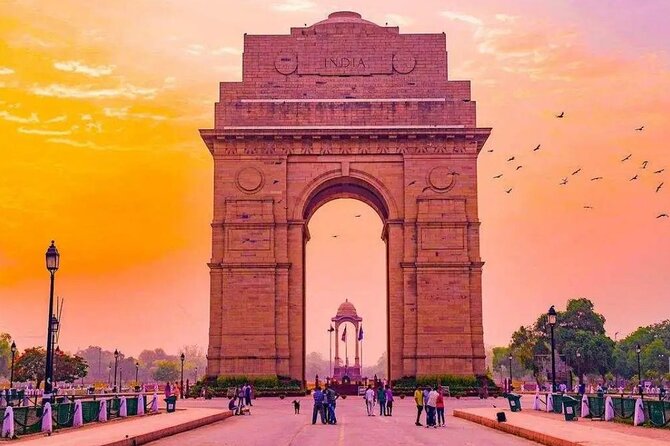
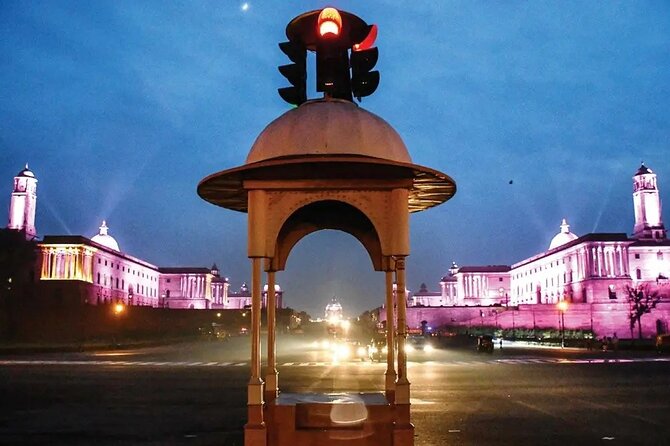
India Gate is the kind of place where the architecture and meaning come together quickly. You’ll see the monumental arch-shaped memorial made of stone, designed by Lutyens, at about 42 metres high, and you’ll learn it was erected in honour of roughly 90,000 Indian Army personnel.
This stop works as a breathing break between dense sights. One hour here gives you time to reset your attention before you move into the more vertical, detailed experiences like Qutub Minar.
If you like photo stops, this is a classic one. If you don’t, it still helps to see it because it’s a major landmark that connects Delhi’s past and modern city planning.
Qutub Minar: The 73-Metre Minaret That Holds Your Gaze
Qutub Minar is the UNESCO-grade highlight that many people come to Delhi specifically for, and the scale is the whole point. It’s described as an Afghan-style victory minaret, and the tower reaches 73 metres, with details that add structure to your viewing like five storeys.
What makes it even better with a guide is the context around why it was built. The story here includes Sultan Qutb-ud-din proclaiming supremacy over defeated rulers, and that background changes the tower from a tall landmark into a statement tied to a specific moment in time.
Admission is included, and the tour gives you about an hour, so you can take in the full form first, then shift to smaller details. If you’re the type who likes “what am I looking at and why does it matter,” this is one of the best stops on the route.



Lotus Temple: Bahai Architecture for a Calm Reset

Lotus Temple is the kind of contrast stop that can save your day. It’s also known as the Bahai House of Worship, built to resemble a lotus blossom, with an architect named Fariborz Sahba credited for the design.
One detail that sticks: it was created in 1986. That makes it feel less like a museum artifact and more like living architecture—something built for modern worship, not just as a relic.
With about an hour here and admission included, you can take it at an easy pace. I like this moment because it slows down your brain after the intensity of Old Delhi and the historical weight of earlier monuments.
Humayun’s Tomb: Symmetry, Gardens, and the Feeling of Time Travel
Humayun’s Tomb is special because it brings order to the story. It was erected for Emperor Humayun by his wife Haji Begum, and the standout note is the symmetrical gardens—a design choice that helps the whole place feel carefully composed.
If you’ve visited other major tombs in India, you may recognize the pattern of grand planning. Still, this one is described as standing out from other monuments because of the symmetry and how that regularity shapes your experience as you move through the space.
Admission is included, and you get roughly an hour. That’s enough time to look across the gardens, notice the layout, and absorb the scale without turning it into a marathon.
Swaminarayan Akshardham: A Temple Campus Built for Culture and Spiritual Life
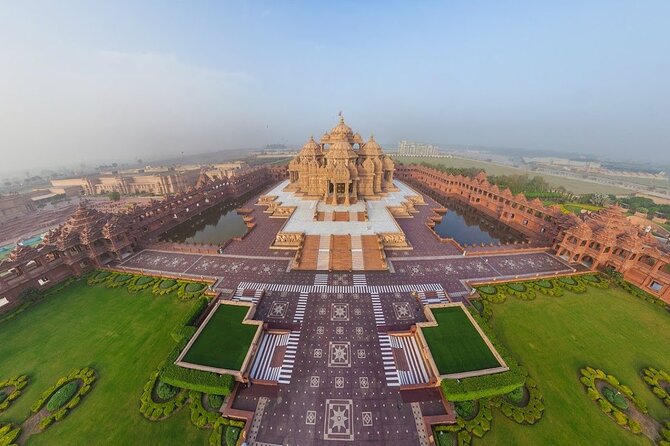
Akshardham is a different kind of stop. Instead of focusing only on one monument, it’s a spiritual-cultural campus described as featuring both traditional and modern Hindu culture, spirituality, and architecture.
The value of placing it late in the day is that your senses are already tuned to landmarks, and now you can switch to a more themed experience. It’s listed as a Hindu temple and spiritual-cultural campus in Delhi, and admission is included for your visit.
The tour summary also hints you may have choices for how to spend your time there (it mentions you may either visit A… but the detail isn’t fully specified). So it’s smart to arrive ready to follow your guide’s suggestion for what’s best for your interests and timing.
The Real Value: A Private Guide Who Explains What You See
This kind of itinerary lives or dies by the guide. The schedule includes multiple major sites, and a good guide helps you turn a set of buildings into a story—what’s happening, why it matters, and how to notice what you’d otherwise miss.
In the feedback tied to this experience, Nikhil is specifically praised for fluent English and for explaining places clearly, while the driver Vimal is praised for being a great driver. I can’t promise those exact people will be your team, but it does tell you something important: the experience is set up to be explanation-heavy, not just drop-and-look.
Here’s how to get more out of it: ask at each stop for one key thing to watch for before you walk away. Whether it’s architecture, a historical detail, or the meaning behind a layout, your hour becomes more focused—and less like running from landmark to landmark.
Price and Entrance Fees: Getting Value From $11.35 Per Person
At $11.35 per person, the price is a big part of the appeal—especially because the experience includes a private air-conditioned vehicle, a private guide, hotel/airport pickup and drop-off, and monument tickets depending on the option you choose.
Two things to check when you’re looking at value:
- Entrance costs are included only if you choose the option that includes entrance fees.
- Lunch is included only if you choose the option that includes lunch.
So, the best way to judge value is to compare what you’d pay on your own: private transport, a guide, and entry tickets add up fast in many cities. Since this tour bundles those pieces (and lets you decide on entrances and lunch), it’s likely a strong deal if you want structure and minimal hassle.
There are also group discounts listed, which can make it even better if you’re traveling with friends or family.
Weather, Pace, and Practical Tips for a Smooth Day
This experience requires good weather. That matters because you’re moving between multiple outdoor or open-air landmark areas, and the schedule is time-boxed.
You’ll also benefit from basic Delhi-day prep: light clothing, sun protection, and staying hydrated. That’s not tour-specific advice—it’s just smart city travel. The good part: since you’ll have AC transport between stops, you’re not stuck overheating while waiting.
Finally, remember the pace. With about an hour at each major stop, you’ll want to decide in advance if you care more about photos or understanding. If you want both, aim to do a quick scan at the start of each site, then spend the last part letting your guide point out the details that make it click.
Who This Tour Suits Best
This private full-day route makes the most sense if you want:
- A guided day that covers both Old and New Delhi
- Major UNESCO-linked sights like Qutub Minar and Humayun’s Tomb
- A mix of mosques, memorials, and temples without planning separate days
It’s also a strong fit if you prefer not to organize transport between locations. You get pickup and drop-off, plus the day is run from start to finish for your group only.
Most travelers can participate, and because it’s private, you can set a comfortable tone for your pace with your guide—within the tour’s overall time structure.
Should You Book This Private Full Day Tour?
If your goal is to see a lot of Delhi’s most meaningful highlights in one day, this is an easy yes. The big winners are the private AC transport, the live guide-led explanations, and the smart mix of iconic places across the city.
I’d skip (or at least rethink) if you’re the type who needs long, slow hours at just one site. The itinerary is designed for coverage, not endless wandering. And because it needs good weather, plan to keep flexibility in mind if conditions are questionable.
If your schedule allows and you like guided structure, you’ll probably come away feeling like you understand Delhi better—not just that you walked past impressive buildings.
FAQ
What locations do you pick up from?
Pickup is offered from your hotel, the airport, or the train station in Delhi (and also from other desired locations in Delhi, Noida, or Gurugram).
How long is the tour?
The duration is approximately 7 to 8 hours.
Is this a private tour?
Yes. It’s a private tour/activity, so only your group participates.
What’s included in the tour price?
Included items are sightseeing by a private air-conditioned car, a private live tour guide following the itinerary, monument tickets if the entrance-fee option is chosen, hotel/airport pick-up and drop-off, and lunch if the lunch option is chosen.
Are entrance fees included?
Tickets to the monuments are included if you choose the option that includes entrance fees. If you choose not to, entrance costs are not guaranteed included.
Is lunch included?
Lunch is included only if you choose the option that includes lunch. Meals are listed as not included otherwise.
Will I get a mobile ticket?
Yes, the tour includes a mobile ticket.
Do you need good weather?
Yes. The experience requires good weather. If it’s canceled due to poor weather, you’ll be offered a different date or a full refund.
Is free cancellation available?
Yes, free cancellation is available. You can cancel up to 24 hours in advance for a full refund.
Does the tour end back where it starts?
The activity ends back at the meeting point in Delhi.