REVIEW · NEW DELHI
Private Full Day Old Delhi and New Delhi City Tour
Book on Viator →Operated by AZAAN TRAVELS · Bookable on Viator
Delhi feels like two cities.
This private full-day plan ties together Old Delhi bazaars and New Delhi landmarks without the usual solo-stress of traffic, tickets, and figuring out routes. I like that you get a private live guide who can explain what you’re seeing as you move, plus a tuk-tuk ride that gets you into the thick of Old Delhi’s street-level life. One thing to think about: entrance fees are not automatically included for every major stop, so your total cost depends on whether you choose the entrance-fee option for the day.
What makes it practical is the pacing. It runs about 8 hours, uses an air-conditioned car with a chauffeur, and includes small comfort touches like bottled water and umbrellas. Also, the service names Nikhil and Sanju as standouts, with praise for detailed explanations and keeping things from feeling rushed—exactly what you want when you’re stacking monuments.
In This Review
- Key highlights at a glance
- Why this Old-to-New Delhi route fits an 8-hour day
- Sunheri Masjid meetup and the tuk-tuk run through Old Delhi
- Jama Masjid: scale, calligraphy, and the lived-in feeling
- Red Fort and the Mughal-to-colonial contrast you can actually see
- Raj Ghat, India Gate, and the government-geometry photo stops
- Humayun’s Tomb and Qutub Minar: two UNESCO-grade monuments in sequence
- Lotus Temple: a free, peaceful finale when you need a breather
- Private car, water, umbrellas, and how the timing feels in real life
- Price and value: what $35 covers and what to budget for
- Should you book this private Old and New Delhi day tour?
- FAQ
- How long is the private Old and New Delhi city tour?
- Is pickup and drop-off included?
- Where do I meet the guide?
- Is this a private tour or shared with other groups?
- Is the tuk-tuk ride included?
- Are entrance fees included for all monuments?
- Is Raj Ghat part of the tour, or can I skip it?
- Are water bottles and umbrellas provided?
- Do I need a photo ID?
- What is the cancellation window?
Key highlights at a glance
- Tuk-tuk time in Old Delhi: a quick ride that helps you see bazaars up close instead of only from a car window
- UNESCO-style monument mix: Jama Masjid, Humayun’s Tomb, and Qutub Minar are built for big “wow, scale!” moments
- Photo-friendly New Delhi drive-bys: Parliament House and President’s House are included as stops you can actually frame in a short window
- Flexible stop at Raj Ghat: a brief, free option that gives context to modern India without eating your whole day
- Lotus Temple to end with calm: a free, easy finale at a Bahá’í House of Worship
- Entrance fees may vary by stop: Jama Masjid is included, but other top sights may require extra ticket purchase depending on your option
Why this Old-to-New Delhi route fits an 8-hour day
Old Delhi and New Delhi sit in the same metro area, but they feel like separate worlds: one is tight, loud, and trade-driven; the other is wide roads, memorials, and government architecture. This tour works because it gives you both in one go, with a private guide steering the story so it doesn’t turn into a checklist.
You start in Old Delhi, where the energy is at street level. Then you move toward New Delhi’s bigger monuments—arches, forts, gardens, tombs, and temple architecture—where you can slow down enough to actually see details. The private vehicle also matters because Delhi traffic can turn even a short hop into a time sink. With a chauffeur handling driving and parking, you get to spend your brainpower on the sights.
One more value point: the tour ends with a complimentary drop-off to places across Delhi and nearby areas (Noida, Gurugram, Ghaziabad, Faridabad). That’s useful if your hotel is outside central New Delhi and you don’t want to scramble for one last ride.
You can also read our reviews of more tours and experiences in New Delhi.



Sunheri Masjid meetup and the tuk-tuk run through Old Delhi
The day kicks off with you meeting your guide at Sunheri Masjid. From there, you don’t just begin with a car ride—you get a tuk-tuk segment that’s designed for visibility and storytelling. The guide points out how the bazaars work for locals, not just how they look in photos. That’s the difference between seeing Old Delhi and understanding it.
As you ride past the colorful market streets, you’ll get an easy introduction to the pace of the area: dense foot traffic, constant activity, and shops built around daily needs. This is where a private guide really earns their pay. Without one, you can easily spend time walking in circles or feeling like you missed the point.
Practical tip: wear comfortable shoes and keep your camera accessible. You’ll want quick shots as the streets open up and the buildings reveal their layers. Also, keep an eye on where you’re stepping—Old Delhi sidewalks can be uneven and busy.
Jama Masjid: scale, calligraphy, and the lived-in feeling
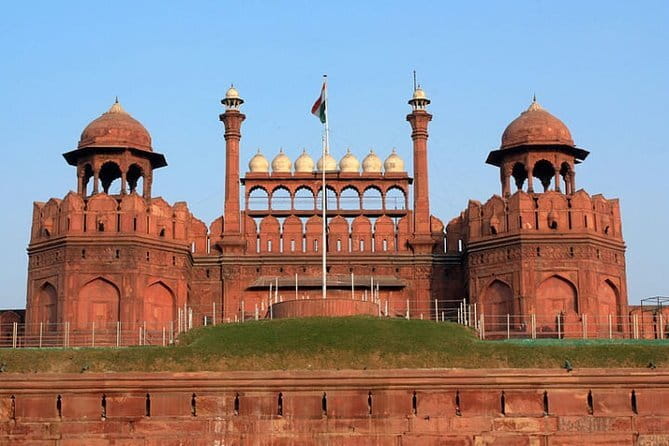
Your first major monument stop is Jama Masjid, one of the largest mosques in India. It was inaugurated by an imam from Bukhara and built in 1656 by Emperor Shah Jahan. The entrance is included, and the stop is planned for about an hour, which is long enough to look up at the façade and still take in the courtyard atmosphere.
Jama Masjid is powerful because it’s not a museum piece. It’s a place people use. That changes how you experience it: you notice the flow of worshippers, the rhythm of movement, and the way architecture guides where your eyes go. With a good guide, you’ll also catch details that don’t pop out instantly—like how the space is organized for large crowds.
What to watch for: this is an active religious site. Plan to dress respectfully and keep behavior calm. If you want the best photos, you’ll likely need to be patient and time your shots around foot traffic.
Red Fort and the Mughal-to-colonial contrast you can actually see
Next up is Red Fort, an hour-long stop. It was built by Mughal Emperor Shah Jahan in 1639. Here’s the interesting part: the fort lets you compare architectural ideas across eras. Mughal design sets the tone, but you also get hints of later layers, which makes the fort feel like a timeline you can walk through.
The tour includes the stop time, but the Red Fort admission ticket is not included unless you’re on the entrance-fee option for the day. That’s a key planning detail. If you’re aiming to see several ticketed monuments, picking the entrance-fee option can save you from paying on-site one-by-one.
How to enjoy this stop: don’t sprint for the biggest view. Use the time to look for structure and pattern—arches, walls, and the way the fort holds the light. If you like architecture, this is one of the strongest “slow down” moments in the day.
Raj Ghat, India Gate, and the government-geometry photo stops
After Old Delhi, the tour shifts to modern landmarks and memorials. Raj Ghat is included as a free, optional stop with about 30 minutes. It’s a memorial dedicated to Mahatma Gandhi in Delhi. Even with a quick visit, it gives you context for India’s political story and helps break up the day so you don’t feel like you’re only walking through monuments.
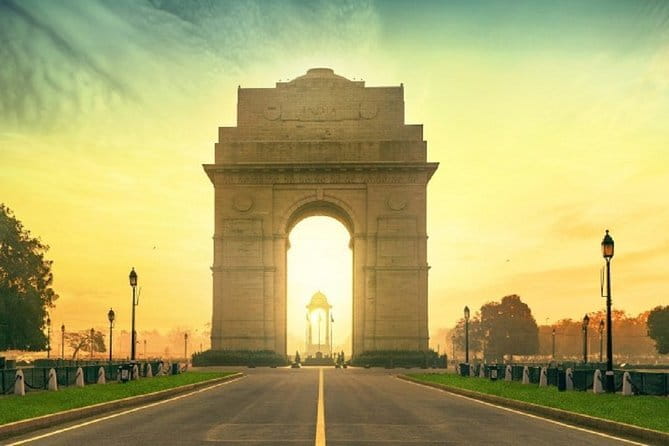
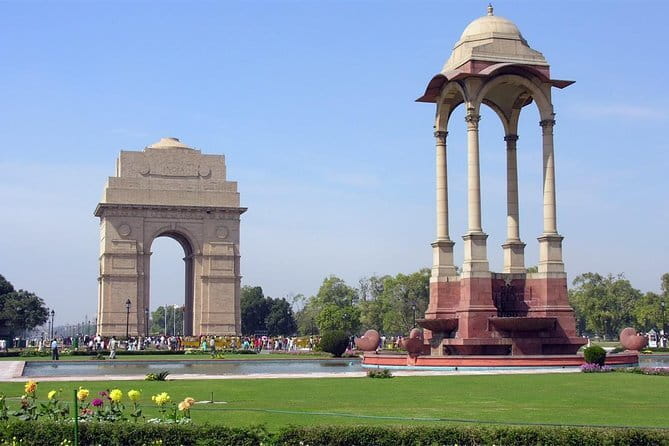
Then you head to India Gate, planned for about an hour. It’s a war memorial built in the style of a triumphal arch and associated with soldiers who died between 1914 and 1921 during the first World War and the Third Anglo-Afghan War. Like Red Fort, the India Gate ticket is not listed as included, so it may fall under your entrance-fee choice depending on what you booked.
You’ll also drive past Parliament House for pictures after India Gate. There’s also mention of visiting President’s House. These are the kinds of stops that can be quick, but they’re worth it if you want the feel of New Delhi’s official axis and the contrast with Old Delhi’s markets.
Tip for this stretch: expect photos, not long museum-style wandering. Delhi’s streets between these sights can be busy, so the timing is designed for seeing the most important angles without burning half the day in transit.



Humayun’s Tomb and Qutub Minar: two UNESCO-grade monuments in sequence
Two of the strongest cultural anchors of the day are Humayun’s Tomb and Qutub Minar.
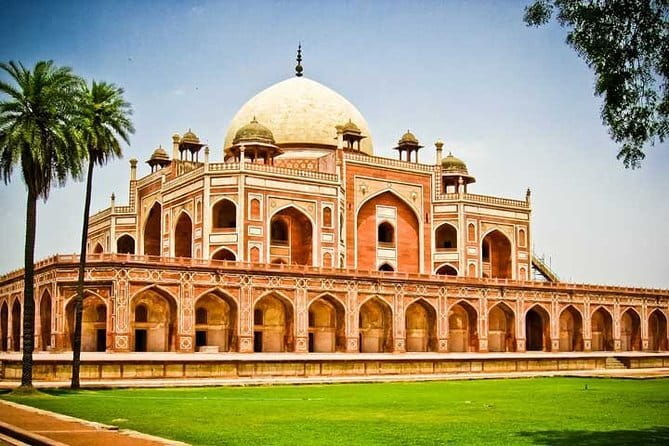
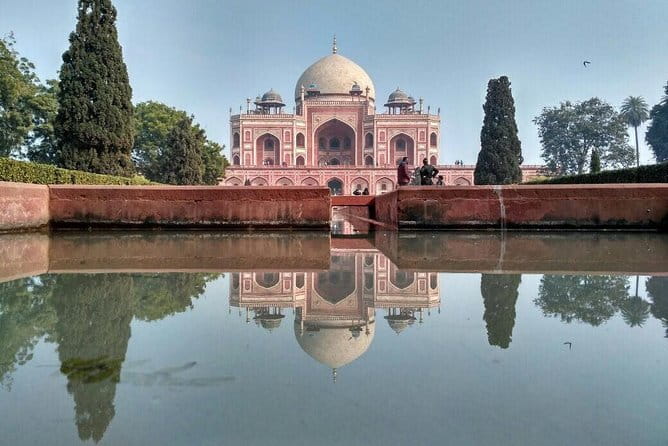
Humayun’s Tomb gets about an hour. It’s the tomb of Mughal Emperor Humayun, built by his first wife and chief consort Empress Bega Begum. It’s also described as the first garden tomb on the Indian subcontinent. This stop tends to reward you if you like symmetry and atmosphere: garden-tomb architecture is meant to be experienced slowly, with time to notice how the space frames the monument.
From there you continue to Qutub Minar, another UNESCO site, famous for its red sandstone minaret and calligraphy inscriptions, built around 1192. The stop is about an hour, but the admission ticket is not listed as included. As with other major sights, budget a bit for ticketing unless you selected the entrance-fee option.
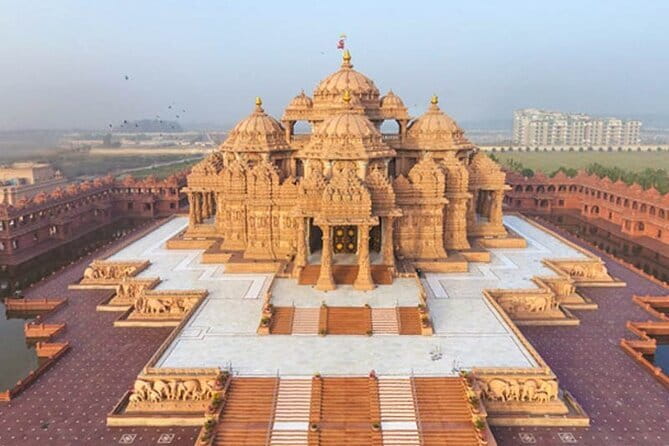
Small but helpful note: on Mondays, Akshardham is closed in this plan, and the schedule adjusts so you still get Humayun’s Tomb. So if you had Akshardham on your must-see list, check your calendar day before booking.
If you’re thinking about logistics, this pair of stops is smart. You get the garden tomb mood first, then the vertical drama of the minaret. It’s a good rhythm for a full-day route that could otherwise feel repetitive.
Lotus Temple: a free, peaceful finale when you need a breather
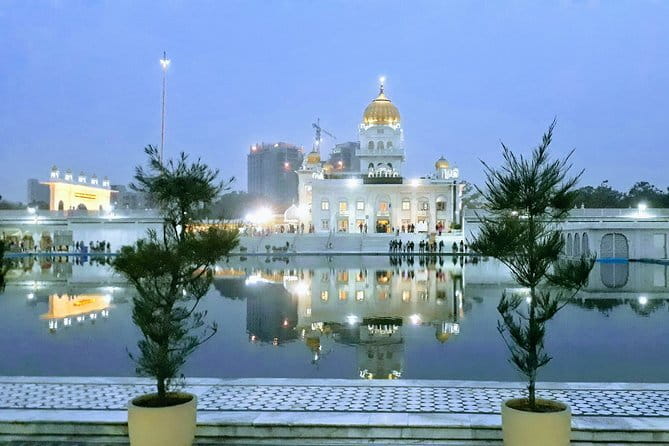
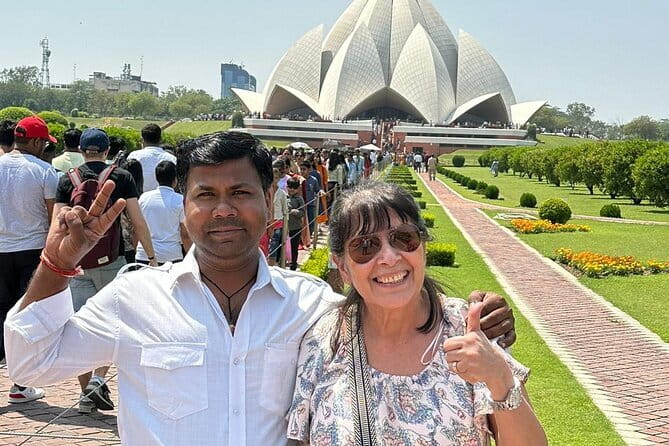
The last stop is Lotus Temple, planned for about an hour. Admission is listed as free. It’s a Bahá’í House of Worship dedicated in December 1986, known for its flower-like shape. Even if you’re not religious, it’s a strong architectural reset after the harder edges of forts and tombs.
This is also a good choice for pacing. By the end of the day, you want a place where you can sit, look around, and let your feet recover a little. The tour design gives you that: a calmer ending that still feels like a real destination.
Keep in mind: since it’s a House of Worship, you’ll want respectful behavior and a quiet tone. If you’re aiming for photos, you may need to work with people in the space. The reward is worth it.
Private car, water, umbrellas, and how the timing feels in real life
The tour includes sightseeing by a private air-conditioned car with chauffeur, plus parking fees, tolls, fuel, and taxes. That matters more than it sounds. When you’re covering Old and New Delhi in one day, costs add up quickly if you’re paying separately for rides, drivers waiting time, and entry handling.
It also includes complimentary water bottles and umbrellas, which can be genuinely useful when weather shifts. Delhi conditions can change fast, and having umbrellas without having to hunt for them is one of those quiet wins.
Vehicle type depends on group size:
- 1 to 2 people: four-seater sedan
- 3 to 5 people: six-seater wagon
- 6 to 9 people: nine-seater van
- 10 to 12 people: twelve-seater van
That flexibility helps if you’re traveling as a family or small group and want everyone together. The tour is also fully private, meaning only your group participates.
One more practical detail: carry a valid photo ID for checks at monuments. If you forget, it can slow things down at the gates.
Price and value: what $35 covers and what to budget for
At $35 per person for about 8 hours, this tour is built around value: you’re paying for a private guide, a chauffeur-driven car, monument planning, and comfort basics. That can be a better deal than piecing it together yourself—especially if you’re short on time.
Here’s the important value logic: some entries are covered, others may not be. Jama Masjid is listed with admission included, but stops like Red Fort, Humayun’s Tomb, and Qutub Minar are marked as ticket not included. Lotus Temple is free, and Raj Ghat is free. India Gate is not listed as included.
So before you pay, do a quick check: did you book the option that includes entrance fees for the ticketed monuments? If yes, you’ll likely spend less time thinking about money during the day. If not, plan to carry extra cash/card for on-site entry.
Also remember tips aren’t included. Tipping is optional, but it’s smart to have some small notes set aside if you feel the guide and driver went above and beyond.
Should you book this private Old and New Delhi day tour?
I’d book this if you want:
- a single, organized day that connects Old Delhi and New Delhi without wasting hours on transport
- a guide who can explain what you’re seeing and keep the day moving at a human pace
- a mix of monuments: mosque, fort, memorials, tomb/garden, minaret, and an easy finale at Lotus Temple
I might hesitate if:
- you’re very cost-sensitive and don’t want to pay extra for ticketed monuments (unless you choose the entrance-fee option)
- you prefer long, slow museum-style time at just one or two sites (this route is designed for coverage, not deep specialization)
- you’re traveling on a Monday and care specifically about Akshardham, since the schedule adjusts when it’s closed
Overall, it’s a strong pick for first-timers who want the highlights, plus enough structure that you don’t feel lost in the middle of the city.
FAQ
How long is the private Old and New Delhi city tour?
It runs about 8 hours, approximately.
Is pickup and drop-off included?
Yes. The tour includes round-trip transfers from your Delhi hotel, airport, or train station, plus a complimentary drop-off at the end to your chosen place in Delhi/Noida/Gurugram/Ghaziabad/Faridabad.
Where do I meet the guide?
You meet your guide at Sunheri Masjid.
Is this a private tour or shared with other groups?
It’s private. Only your group participates.
Is the tuk-tuk ride included?
Yes. There’s a tuk-tuk ride in Old Delhi.
Are entrance fees included for all monuments?
Not all. Jama Masjid and Lotus Temple are listed with admission free/included, while other major stops such as Red Fort, Humayun’s Tomb, Qutub Minar, and India Gate are marked as not included unless you chose the entrance-fee option.
Is Raj Ghat part of the tour, or can I skip it?
Raj Ghat is included as a free stop and is described as optional, with about 30 minutes.
Are water bottles and umbrellas provided?
Yes. Complimentary water bottles and umbrellas are included.
Do I need a photo ID?
Yes. The tour notes that you should carry a valid photo ID for monument checking.
What is the cancellation window?
You can cancel for a full refund up to 24 hours in advance. If you cancel less than 24 hours before the start time, you won’t get a refund.