REVIEW · NEW DELHI
Private Customized Tour Of Old/New Delhi Spiritual Sites
Book on Viator →Operated by Fearless Tours and Travels · Bookable on Viator
One day in Delhi can feel like a month. This private, customized Old/New Delhi spiritual tour packs the big names with a guide who adjusts to your interests, plus a smooth pickup-and-drop setup. I like that the plan mixes classic sights with quieter stops, and I also like the private guide angle—so you’re not stuck listening to the loudest person in the group. One thing to consider: you’ll do a fair bit of walking, and shorts aren’t allowed at some monuments, so plan your outfit before you go.
What really makes this work is the pacing and the mix. You’ll start in the New Delhi area, slide into Old Delhi for a Chandni Chowk rickshaw ride, then hit major spiritual landmarks like Jama Masjid, Akshardham, and Bangla Sahib, with time to move at a human pace. I also like the practical inclusions—transport, parking/tolls/fuel, and a little comfort help like a free water bottle and umbrella (depending on your option). The possible drawback is that the itinerary can include places with security checks and rules, so if you’re hoping for a totally relaxed, no-rules kind of day, you may feel a little constrained.
In This Review
- Key things that make this tour worth your time
- Why this spiritual day runs so efficiently
- Pickup timing, where you start, and how the day is paced
- New Delhi pass-by stops that still teach you something
- Old Delhi on two wheels: Chandni Chowk to Jama Masjid
- Akshardham: modern temple design with gardens and exhibits
- Bangla Sahib: the calm stop, plus langar and hymns
- Agrasen Ki Baoli: the rain-storage steps story
- India Gate, Rajpath, and the government-bulding photo moments
- Lotus Temple and Birla Mandir: closing with calm, design, and devotion
- Dress code and walking tips that prevent stress
- Value for money: analyzing the very low listed price
- Who this tour fits best, and who should rethink it
- Should you book this private Delhi spiritual tour?
- FAQ
- How long is the private customized tour of Old/New Delhi spiritual sites?
- What time can I schedule pickup?
- Where does the tour start and end?
- Does the tour include admission tickets?
- Are meals included?
- Is this tour private?
- Is there free cancellation?
Key things that make this tour worth your time
- Private, interest-based routing so the day fits your pace and curiosity
- Chandni Chowk rickshaw ride for a real-feeling Old Delhi street moment
- Major spiritual stops across multiple faiths: mosque, temples, Sikh gurdwara, and more
- Guide support in busy areas, including helpful context on what you’re seeing
- Comfort add-ons like water and an umbrella depending on the option you select
Why this spiritual day runs so efficiently
Delhi’s religious sites are spread out. Getting from one to the next on your own can turn into constant directions, waiting, and catching the wrong bus in traffic. This tour solves that with private transport and a guide who keeps the day moving.
You’re also not locked into one rigid script. The tour is described as customizable based on what you want to focus on, and that matters because Old Delhi and New Delhi each have their own rhythm. With a private setup, you can spend a little longer on what clicks and pass more quickly over what doesn’t.
This isn’t a silent, photo-only tour either. The guide is there to explain history and significance while you’re standing in front of it, which helps the monuments make sense instead of feeling like random stops you already forgot the next day.
You can also read our reviews of more private tours in New Delhi



Pickup timing, where you start, and how the day is paced
You can get picked up anywhere within Delhi, Noida, Gurugram, Ghaziabad, or Faridabad. Pickup time can be chosen between 7:00 AM and 3:00 PM, and the total tour time is about 6–7 hours.
The whole thing ends back at the meeting point, and the stated start location is Sunehri Masjid, Nishad Raj Marg, Lal Qila, Old Delhi, New Delhi. That’s a smart anchor point if you plan to explore nearby on your own afterward, because you’re already dropped close to the Old Delhi core.
Expect a day that alternates between short drives and site visits. Some stops are only about 30 minutes, while a couple take around an hour, so you get variety without losing the whole afternoon.
New Delhi pass-by stops that still teach you something
The tour begins with New Delhi, including a pass-by of key areas. You’ll get a sense of the city layout before you plunge into Old Delhi’s streets.
Along the drive, you’ll see India Gate and Rajpath. India Gate is a war memorial, and Rajpath is the grand boulevard vibe that helps you understand why New Delhi is built the way it is—wide avenues, open sight lines, and a strong center axis feel.
You’ll also pass Rashtrapati Bhavan (President’s House) and Parliament House. Even as pass-by stops, these aren’t just scenery. If you’ve ever wondered what “democracy in stone” looks like, these buildings give you an easy first glimpse without turning the day into a bureaucracy lesson.
These drive moments matter because they break up the heavier, rule-based sites later. You get orientation, photos, and context before you reach the places where you’ll slow down and follow temple or mosque entry guidance.
Old Delhi on two wheels: Chandni Chowk to Jama Masjid
The Old Delhi highlight here is the Chandni Chowk rickshaw ride. It’s scheduled for about 30 minutes, and that’s a good length: long enough to feel the street life and see storefronts up close, but not so long you feel cooked before you even reach the monuments.
Chandni Chowk is old-city energy in motion. You’ll be in the middle of the area where people shop, eat, and navigate daily life, which is exactly why a rickshaw works better than walking the whole route. It also helps you avoid the constant stop-start feeling that comes from traffic and tight lanes.
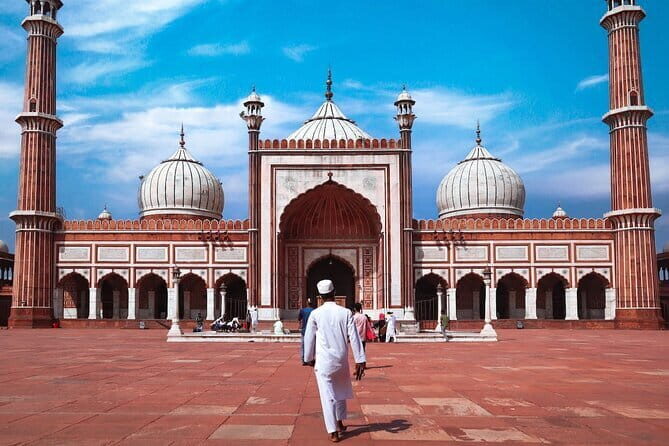
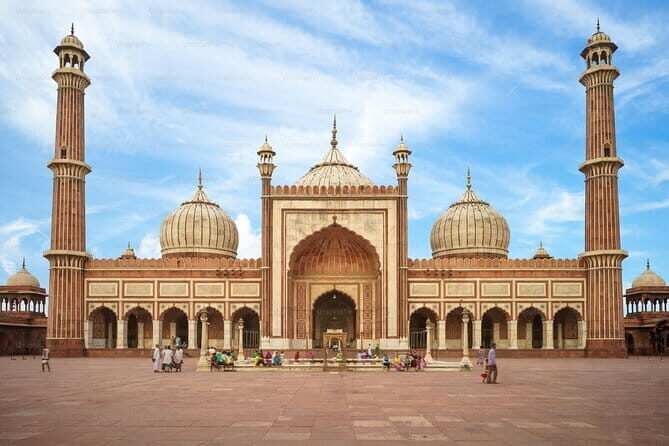
After that, you’ll visit Jama Masjid, one of India’s largest and most renowned mosques. The time is about 30 minutes, and admission is listed as included for this stop. The emphasis is on architecture and the spiritual atmosphere—so don’t expect a rushed photo stop. Even in a limited window, you’ll want to take in the scale and the symmetry before you move on.
Practical note: mosques can have dress expectations and rules around where you can stand or how you cover. You won’t want to show up underdressed, and you especially don’t want to risk shorts being an issue. If you’re traveling with extra fabric (like a light scarf), you’ll usually be able to adapt fast.
Akshardham: modern temple design with gardens and exhibits
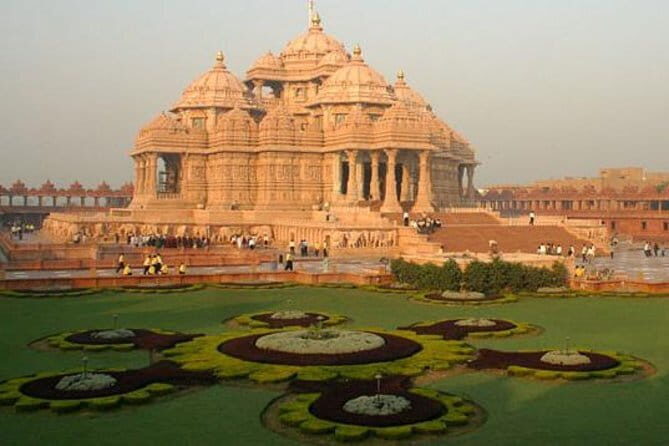
Next up is Swaminarayan Akshardham, listed as an about 1-hour stop. Admission is shown as free in the tour details, which is a big deal for value—temple complexes of this size often have paid entry elsewhere.
Akshardham has a modern architectural feel compared with older sites, with intricately carved walls, gardens, and exhibits related to Indian culture and spirituality. Even if you don’t read every label, the design itself does some of the teaching. It’s the kind of place where you can look up, walk the grounds, and still feel like you got something meaningful without a long religious service.
One practical consideration: because the complex is designed for visitors, you may encounter lines and security checks. The good news is the tour gives you a full hour here, so you’re less likely to feel like you spent your time waiting.
If you like structured, visually driven places—where the art and layout do the storytelling—this is often the stop that sticks with people.





Bangla Sahib: the calm stop, plus langar and hymns
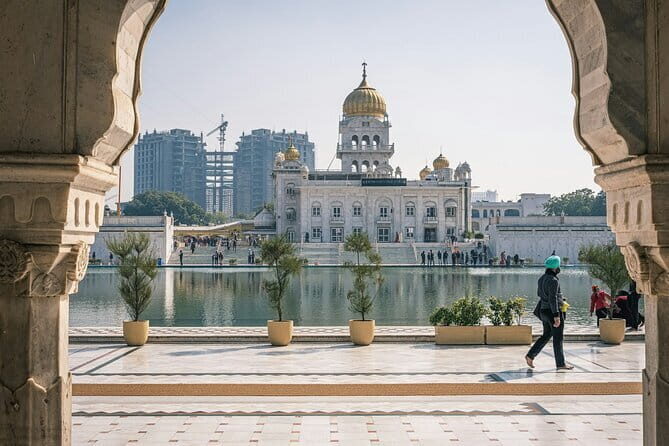
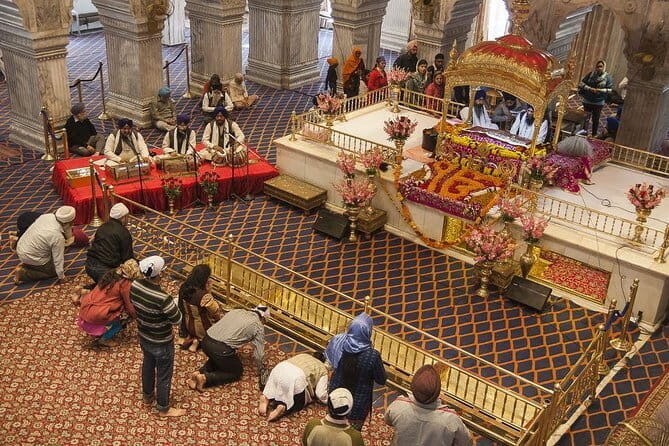
Gurudwara Bangla Sahib is another about 1-hour stop, and it’s listed with free admission. This is one of those places where the atmosphere shifts quickly. Instead of chasing landmarks, you’re more likely to slow your body down and let the space do its work.
A key part of the experience here is the langar—the community kitchen—and the chance to observe or participate as it runs. The tour description also mentions sacred hymns, which adds a spiritual layer beyond just sightseeing.
This is also a nice contrast to Jama Masjid and the more “move fast” feeling of markets. Gurudwara spaces usually encourage respectful calm, and having a guide nearby helps you understand what you’re seeing without guessing.
If you’re someone who likes your faith travel to be both respectful and human (food, ritual, voices), this stop is a highlight.
Agrasen Ki Baoli: the rain-storage steps story
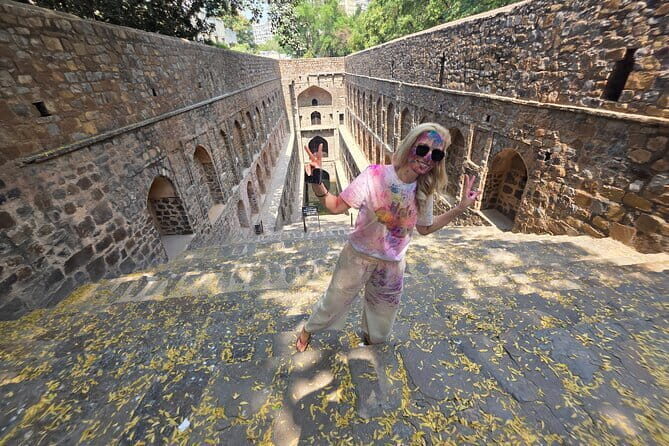
Then you reach Agrasen Ki Baoli, a stepwell known as a rain-storage structure dating back to the 14th century. The visit is only about 30 minutes, but it’s a fascinating stop because it’s not just about worship—it’s about engineering and daily survival in older Delhi.
The description calls out the steps built for collecting rain storage. That detail is important: you’re not only looking at an old stone structure. You’re seeing a practical solution that shaped how people lived with water.
It’s also the kind of place where photos make sense. The geometry of steps gives you natural lines, and even short visits feel visually complete. Just be prepared for uneven stone and steps—this is one of the stops that can feel more physically demanding than a flat garden.
India Gate, Rajpath, and the government-bulding photo moments
After Old Delhi, you’ll get a more open-air feel as you pass India Gate and stroll briefly along Rajpath. This part is about 15 minutes total, with free admission noted for the stop.
India Gate is a memorial dedicated to Indian soldiers who died during World War I. Even with a short time window, it’s worth stepping out of the car and walking a bit so the scale lands. The surrounding grounds and boulevard layout also help you understand the “New Delhi” idea of long sight lines and civic space.
The pass-by of Rashtrapati Bhavan and Parliament House continues that theme. Again, these are mostly views from the route, but they give you context for Delhi as a capital city, not just a temple-and-market destination.
These stops are also useful for energy management. After hours of religious sites and walking, a short drive-and-brief-stroll rhythm can keep the day enjoyable instead of exhausting.
Lotus Temple and Birla Mandir: closing with calm, design, and devotion
Your tour ends with two strong finishing spiritual stops.
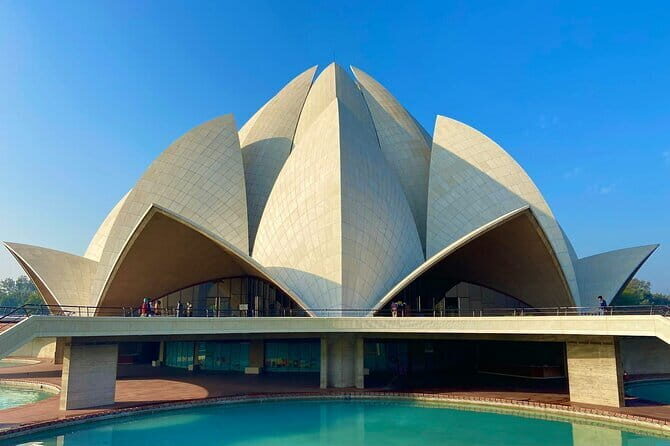
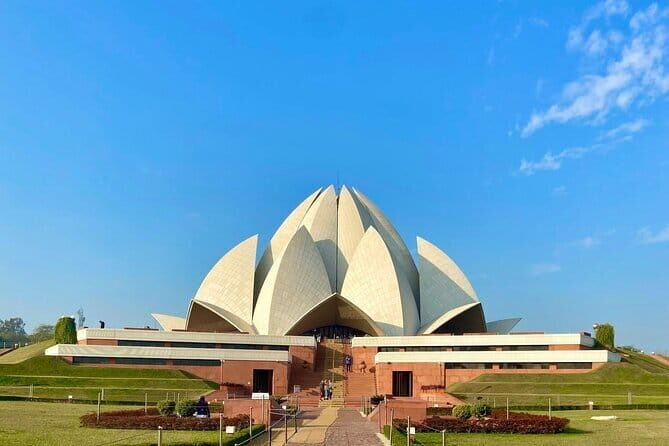
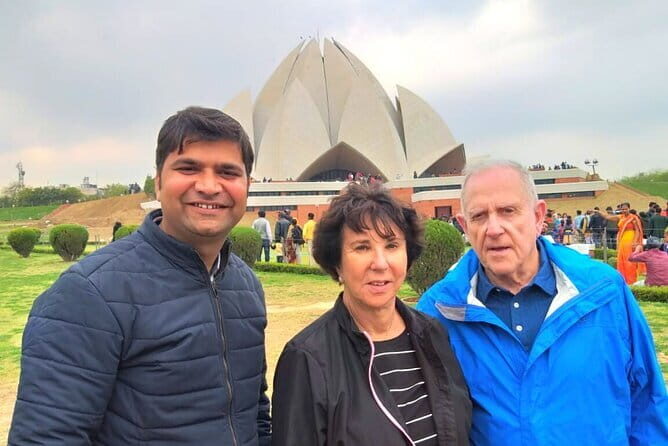
First is the Lotus Temple, a Bahá’í House of Worship known for its lotus-shaped architecture. You’ll have about 30 minutes here. The big draw is the peaceful ambiance and the clean, recognizable shape that makes the place easy to take in even if you’re not familiar with the Bahá’í faith.
Next is Birla Mandir Temple (Lakshmi Narayan), about 30 minutes, also listed with free admission. The tour notes the temple was constructed in 1998 by the Birla Group of Industries. So, while it’s a traditional temple environment, it’s also a newer build in Delhi terms, which can be interesting if you’re comparing old structures against newer ones.
By the time you reach these two, you’ll likely feel the day’s rhythm in your feet. These are good closing stops because they’re more about atmosphere and space than urgent route-chasing.
Dress code and walking tips that prevent stress
Delhi temple and monument rules are not uniform, and the tour specifically warns that shorts are not permitted at some monuments. That one detail can save your entire day. Bring something comfortable that covers appropriately, especially for mosque and temple entries.
You’ll also do a lot of walking, including at places with steps. Comfortable footwear is not optional here. If your shoes aren’t made for uneven stone or long temple walks, your “spiritual day” can turn into “foot pain day.”
Weather can change quickly, so it’s smart to pack a light layer. The tour may provide a free umbrella depending on your option, and that helps. Still, having your own small backup is wise when you’re out for most of the daylight window.
And one small but important mindset tip: in religious places, move with patience. Security checks and site rules can add time, but they’re usually easy if you’re prepared and calm.
Value for money: analyzing the very low listed price
The price shown here is $5.00 per person, and that’s almost too good to ignore—so I’d treat it as a “check the fine print” situation. In the tour details, key value items are included: a personalized live tour guide, transportation for pickup and drop-off, and coverage of parking charges, tolls, fuel, and taxes. A mobile ticket is also included.
Meals and gratuities are not included, so you still need to plan food and drinks on your own. But the big cost drivers—guide and transport—are covered, which is where many Delhi tours get expensive fast.
One more note: the tour says some inclusions like water bottle and umbrella depend on the option you select. That means $5 can be the base, but your total comfort package may vary. Before you pay, confirm what your option includes so you don’t get surprised.
If you want a private guide day that covers major Old and New Delhi spiritual sites, this can be strong value—just make sure you’re getting exactly the level of pickup coverage and add-ons you expect.
Who this tour fits best, and who should rethink it
This tour is a great match if you want a first-time Delhi day that’s easy to follow and includes sites from multiple faiths without you researching each one. It also fits well if you care about explanations—your guide is there to share the meaning behind monuments while you’re seeing them.
It’s also ideal for people who like flexibility. The route is described as based on your interests, and the private setup means you’re not forced to rush through stops that don’t grab you.
Consider rethinking if you have mobility limits or if you dislike stairs. Agrasen Ki Baoli involves steps, and temples and mosques can require slow walking and rule-following. Also, if your clothing won’t meet entry rules, you’ll need to adjust or bring a cover.
Finally, if you hate sharing public spaces with crowds at all, you may find some stops more intense than expected. This is Delhi, after all. Even the calm places have a steady flow of visitors.
Should you book this private Delhi spiritual tour?
If your goal is a guided, no-planning day across Old and New Delhi’s most recognizable spiritual sites, I’d say it’s worth booking. The private guide, pickup/drop coverage, and the mix of Jama Masjid, Akshardham, Bangla Sahib, the Lotus Temple, and Birla Mandir is a strong lineup for one outing.
Book it if you:
- want a route that covers both Old Delhi streets and New Delhi landmarks
- like learning what you’re seeing instead of just collecting photos
- can handle some walking and you’ll dress with no shorts in mind
Skip it (or choose a different format) if you:
- need a very low-step day
- want meals included in the price
- hate rules at religious sites and would rather plan a more open-ended day
If you do book, come prepared with respectful clothing, comfy shoes, and a little patience. Then you’ll get the best kind of day in Delhi: one where the sights connect, and the stories make sense as you move.
FAQ
How long is the private customized tour of Old/New Delhi spiritual sites?
It lasts about 6 to 7 hours.
What time can I schedule pickup?
Pickup time can be chosen between 7:00 AM and 3:00 PM.
Where does the tour start and end?
The tour starts at Sunehri Masjid, Nishad Raj Marg, Lal Qila, Old Delhi, New Delhi and ends back at the meeting point.
Does the tour include admission tickets?
Admission is listed as free for several stops, and Jama Masjid is listed as included. Other stops are marked as free in the tour details.
Are meals included?
No. Meals are not included, and gratuities are not included either.
Is this tour private?
Yes. It’s described as a private tour/activity, meaning only your group participates.
Is there free cancellation?
Yes. You can cancel for a full refund if you cancel at least 24 hours before the experience start time, with changes and refunds not allowed within 24 hours.