REVIEW · NEW DELHI
Private 3-Day Golden Triangle Tour: Delhi, Agra & Jaipur by Car
Book on Viator →Operated by Golden Triangle Tours Of India · Bookable on Viator
Three cities, one smooth plan.
This private Golden Triangle tour is built for people who hate rigid group timing: you can choose guide-only, private car, or a higher-comfort hotel option. You’ll travel with licensed local guides, so the big sights in Delhi, Agra, and Jaipur come with context, not just camera stops.
I particularly like the mix of major monuments and real neighborhood street time. The Old Delhi block pairs a rickshaw ride with iconic places like Chandni Chowk, Jama Masjid, and Khari Baoli spice market. I also like the way the Taj Mahal visit is handled with early timing and on-ground logistics, including the shuttle from the parking area.
One thing to plan around: entrance tickets cost extra (about $70 per person), and a couple of monuments close on set days (Taj Mahal Fridays; Red Fort and Lotus Temple Mondays), which can shift the route. If you’re expecting a budget trip where everything is included, you’ll want to factor those ticket days in early.
In This Review
- Key highlights worth your attention
- Private Golden Triangle by Car: What You’re Really Buying
- Getting to the Highlights: Pickup Windows and Vehicle Comfort
- Day 1 in Delhi: Qutub Minar, Lotus Temple, and the Old Delhi Circuit
- Old Delhi by Rickshaw: The Small Ride That Makes It Click
- Day 2 in Agra: Taj Mahal Sunrise and the Fort-and-Tomb Trio
- Day 3 in Jaipur: Forts, Windows, Palaces, and Jantar Mantar
- Entrance Fees, Closing Days, and What to Bring
- Price and Value: The Real Math Behind $56.74
- Who This Tour Suits (and Who Might Want a Different Plan)
- Should You Book This Golden Triangle Tour?
- FAQ
- Is this tour private?
- What is included in the tour price besides entrances?
- Are hotel stays included?
- Are monument entrance fees included?
- What if I travel on a Friday or Monday?
- Can the itinerary be changed?
- Can I get dropped off somewhere other than Delhi?
- Do I need cash for tickets?
- If I cancel, will I get a refund?
Key highlights worth your attention
- Flexible tour format: choose guide-only, private car, or hotel levels without being locked into one schedule style
- Sunrise Taj Mahal setup: guided visit plus battery shuttle from the Taj parking area
- Old Delhi lane time: rickshaw ride through historic streets plus stops like Jama Masjid and Khari Baoli
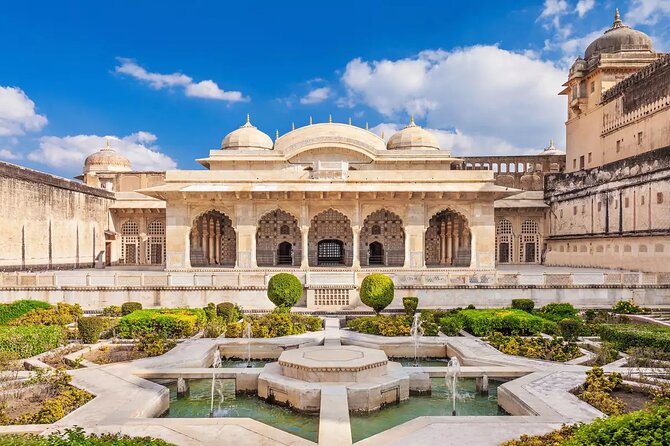
- Mughal-to-Rajput contrast: Qutub Minar, Agra Fort, Jaigarh Fort, Hawa Mahal, City Palace
- Comfort on the road: air-conditioned vehicle, bottled water, and private transportation for your group
- Costs you should expect: entrance fees are not included, but parking, fuel, tolls, and taxes are
Private Golden Triangle by Car: What You’re Really Buying
You’re paying for three things that matter in India: time, comfort, and someone who can steer you. Between Delhi, Agra, and Jaipur, the driving is long enough that a private car genuinely changes your day. Instead of losing hours to logistics, you use that time for the sights you came for.
The other win is the guide setup. You’ll have a government-approved local guide who explains what you’re seeing in plain language and helps you understand why these places look the way they do. Even better, the tour is described as fully customizable, so if you want more museum time in a single city or want to skip one stop, you can usually adjust.
Finally, you’re buying stress reduction. This is private, so you’re not negotiating pace with a large group. That also helps if you’re moving slower, photo-hunting, or traveling as a solo visitor who wants a sense of calm and control.
You can also read our reviews of more tours and experiences in New Delhi.



Getting to the Highlights: Pickup Windows and Vehicle Comfort
Your day starts with pickup in Delhi and the surrounding areas, with a wide window (typically 8 AM to 11 AM). Then the day flows city to city with a driver who handles routing and traffic decisions while your guide handles the story and timing of stops.
Vehicle choice depends on your group size. For 1–2 guests, you’ll use an air-conditioned sedan like a Toyota Etios or similar. For 3–5 guests, it’s an air-conditioned SUV like a Toyota Innova or similar. For 6–10 guests, you’ll use a Tempo Traveler van.
You also get small practical extras that add up. Bottled mineral water is complimentary during journeys. Parking fees, tolls, fuel charges, and service charges are included, so you’re not constantly trying to figure out what costs extra.
Day 1 in Delhi: Qutub Minar, Lotus Temple, and the Old Delhi Circuit
Delhi Day 1 is a smart mix of landmarks and street energy, without rushing you through everything.
Start with Qutub Minar, a UNESCO site that’s worth your attention right away. You’ll spend about an hour here, with the ticket cost not included. It’s a good first stop because it sets the “deep time” tone for Mughal and pre-Mughal layers before you move into the city’s markets.
Next comes Lotus Temple, a Baháʼí House of Worship. This stop is free, and the time is short (around 30 minutes), which is perfect after the monument focus. It also gives you a calm break—simple, clean, and easy to appreciate even if your brain is still waking up.
Then you slide into central Delhi with classic drive-past sights. You’ll pass major Mughal-era landmarks like the Red Fort from the road, plus the Tomb of the Unknown Soldier, and the grand governmental layout created in the late 1920s by Sir Edwin Lutyens and Herbert Baker. You’ll also pass Parliament House as the drive keeps moving.
After that, you shift to Old Delhi, and the day gets real. Your guide lines up lunch options for you and recommends hygienic local places. Then you head into Chandni Chowk, where the markets are the point—spices, dry fruits, silver jewelry, saris, and sweets. You’ll have about an hour here.
From there, you visit Jama Masjid, India’s largest mosque, built in 1656. The visit is around an hour, and the admission ticket is not included. Because it sits in the heart of Chandni Chowk and faces the Red Fort area, it’s a strong “big picture” stop when you’re trying to understand how power and city life were planned.
You close Day 1 at Khari Baoli, Asia’s largest wholesale spice market. This is free and short (about 30 minutes), but it hits the senses fast—aromas, stacks, and the sheer scale of trade. It’s also a great time to pick up small edible souvenirs if you’re the kind of traveler who actually uses spices at home.
Old Delhi by Rickshaw: The Small Ride That Makes It Click
One of the best parts of this tour is that you don’t just walk through Old Delhi—you get a rickshaw ride through the historic lanes. That matters because it changes how you experience the city. You move at a human pace, and your eyes can track the details you’d miss if you were stuck on a longer road.
In practice, it also helps with fatigue. Old Delhi streets can feel endless when you’re walking nonstop, and the rickshaw breaks that rhythm without removing you from the action. If you’re traveling with kids, parents, or anyone who gets tired fast, this little feature turns a long day into something more manageable.
The guide component keeps it from feeling like a theme-park loop. A good guide will tell you what you’re looking at—religious sites, trading corners, and how the market layout connects to the larger city plan. On trips with guides such as Sanjiv (noted for adding humor and steering guests to a solid lunch spot), the storytelling can make the lanes feel like a living map.
Day 2 in Agra: Taj Mahal Sunrise and the Fort-and-Tomb Trio
Agra is where the route earns its Golden Triangle name.
You’ll drive from Delhi to Agra, with the transfer time listed at about 3 hours. Then you’re dropped at your hotel to reset for the next day.
Day 2 begins with the Taj Mahal sunrise visit. You’ll spend about two hours at the UNESCO site with a guide, and entrance isn’t included. Sunrise works because the light is softer and the crowds can be easier to manage compared with later hours. It also sets up the photos you want without needing to fight the midday heat.
The tour includes a battery-operated shuttle from the Taj parking area to the monument and back. That’s a big quality-of-life detail. You arrive less worn out, and you don’t have to worry about figuring out transport at the busiest part of the day.
After the Taj, you move to Agra Fort, another UNESCO site. This stop takes about an hour, with tickets also not included. Agra Fort is a great follow-up because it gives you the broader Mughal power story around the same ruler-era world.
Then comes Itmad-ud-Daulah, often called the Baby Taj. Your guide helps you notice why it’s famous, and you’ll have about 30 minutes here. It’s shorter, but it’s a strong “contrast” stop: smaller scale than the Taj, detailed and focused.
You’ll also get time for lunch recommendations in Agra, and you’ll have about an hour for it. Then you drive to Jaipur, with transfer time listed at about 4 hours. Arrival includes transfer to your pre-booked hotel for your overnight stay.



Day 3 in Jaipur: Forts, Windows, Palaces, and Jantar Mantar
Jaipur Day 3 is a classic mix of viewpoints, ceremonial architecture, and observatory science.
You start at Jaigarh Fort, built in 1726 by Maharaja Sawai Jai Singh II. The visit is about two hours, and it’s ticketed (not included). Jaigarh’s location gives you a feeling for the city’s defensive thinking and topography. Even if you’re not a “fort person,” this stop helps your understanding of how rulers controlled views and access.
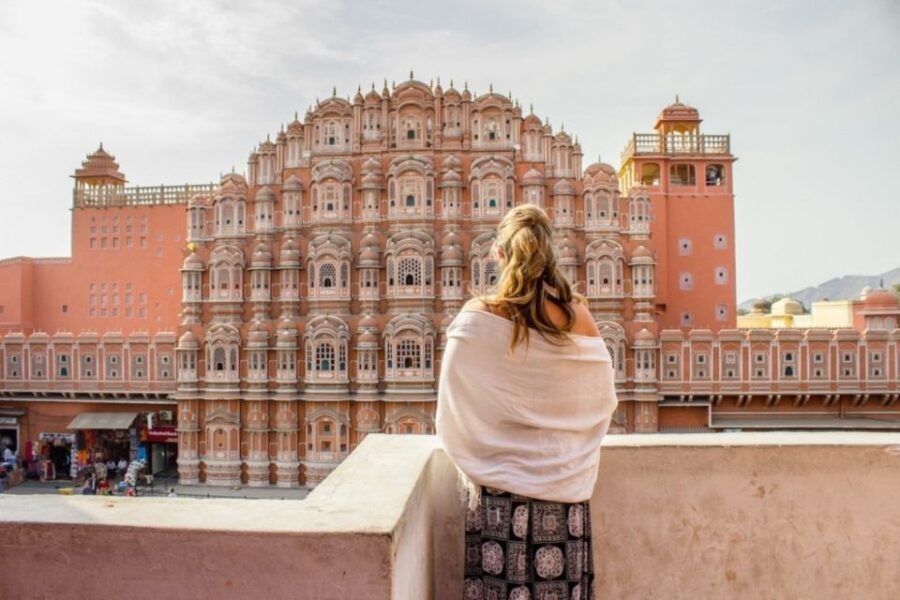
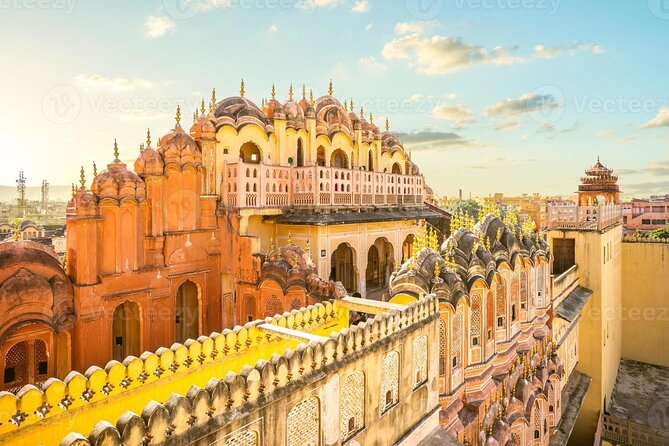
Next is Hawa Mahal, the Palace of Wind. You’ll spend about 30 minutes here with tickets not included. The famous feature is the 953 carved windows (jharokhas). It’s a quick stop, but it’s one of those places where the architecture is the whole story, and your guide can explain why it was designed the way it was.
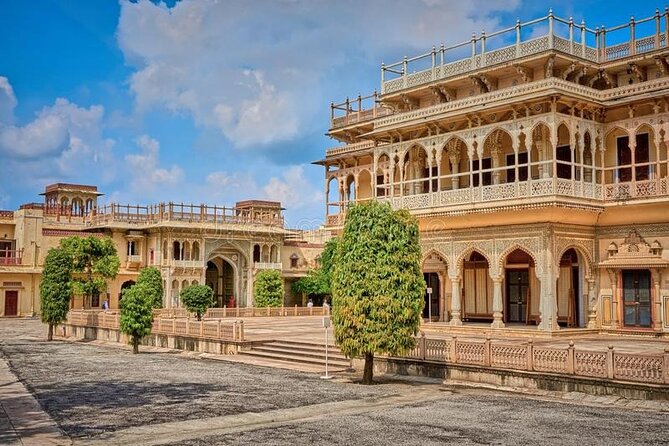
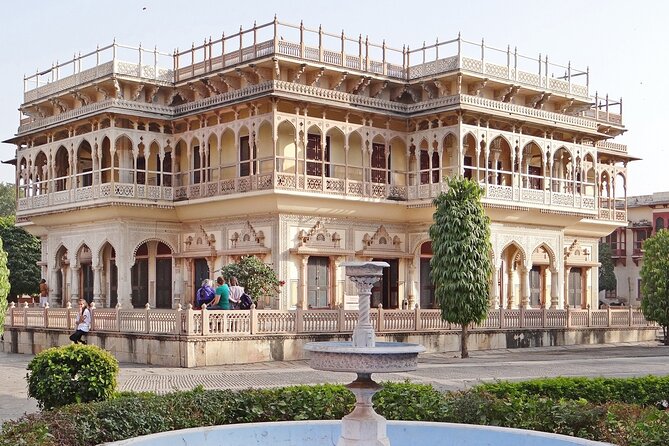
Then you visit City Palace in the heart of Jaipur. Your time here is about one hour, and tickets aren’t included. This is the place to connect the dots between royal spaces and what’s displayed today. Think of it as the “center of gravity” stop for the day.
You also get a scenic break at Jal Mahal, the palace set in Man Sagar Lake. The visit is about 30 minutes, and it’s listed as free. Even if you keep your expectations realistic for what you can see from outside, it’s a photo-friendly pause that stops the day from being only forts and buildings.
After lunch time (about an hour for recommendations), you finish with Jantar Mantar, a UNESCO World Heritage site and an ancient observatory. Your visit is about 30 minutes, with tickets not included. It’s a great closing stop because it shifts the focus from royal aesthetics to how rulers measured the sky.
At the end of the day, you drive back to Delhi (listed at about 4 hours). If your plans fit better, you can also arrange drop-off at Jaipur Airport instead of returning to Delhi.
Entrance Fees, Closing Days, and What to Bring
This tour includes a lot, but not all. Entrance fees for monuments are not included, and they’re listed at about $70 per person. Also note that some monuments don’t accept credit cards, so you should carry cash in INR for entrance payments. Your guide can help you find nearby ATMs if needed.
Timing matters because a few key closures affect the route:
- The Taj Mahal is closed on Fridays. If your dates land on a Friday, the route is adjusted to Delhi – Jaipur – Agra – Delhi.
- Red Fort and Lotus Temple are closed on Mondays. If your day hits Monday, Gurudwara Bangla Sahib is visited instead.
What should you pack? Bring comfortable shoes for markets and mosque courtyards, sun protection for open areas, and enough cash for ticket days. If you prefer smooth logistics, you’ll also appreciate having cash ready before you reach each entrance.
Price and Value: The Real Math Behind $56.74
The headline price is $56.74 per person, but the actual trip cost has two layers: what’s included in the tour price, and what comes from ticketed monuments.
On the included side, you’re getting:
- Private air-conditioned transport between cities (with parking, fuel, tolls, and taxes handled)
- Private, government-approved local guides
- Hotel pickup and drop-off in Delhi, Agra, and Jaipur
- Two nights of accommodation if you choose the hotel option (with daily breakfast when that option is selected)
- Daily conveniences like bottled water
- Old Delhi rickshaw ride and the Taj shuttle
On the extra side, you’re paying monument entrance fees (about $70 per person). So the best way to judge value is to compare this setup to paying for separate guides, separate transfers, and last-minute taxi runs between sites.
If you care about having one plan that moves you smoothly across three cities, this price can feel fair. If you’d rather spend your days hopping under your own steam with no guide, then you’ll likely prefer paying less upfront—but you’ll lose the convenience and explanation that make these places click.
Who This Tour Suits (and Who Might Want a Different Plan)
This is a strong fit for:
- Couples and families who want private time in Delhi, Agra, and Jaipur
- First-time Golden Triangle visitors who want clear sequencing and licensed guidance
- Solo travelers who appreciate safety and structure—especially since guides and drivers have been described as professional and the experience as safe
- Anyone who hates the hassle of planning separate transportation and guide bookings
It may be less ideal if:
- You’re trying to keep costs ultra-low and you resent paying entrance fees separately
- You’re flexible about seeing fewer sites (because this tour is built around specific big-name stops and their ticket windows)
Should You Book This Golden Triangle Tour?
I’d book it if you want the Golden Triangle route with a private pace and fewer headaches. The combination of licensed local guides, air-conditioned private car travel, Old Delhi rickshaw time, and Taj Mahal logistics (including the shuttle) is exactly the kind of value that saves energy for actually seeing the places.
You should think twice if your dates hit Monday or Friday, since closures can change the route and you’ll need to be ready for tickets to be separate. Also, if you prefer spending money on hotels and would rather skip guides, this might not feel like your best match.
If you like structure but still want flexibility, this tour hits the sweet spot.
FAQ
Is this tour private?
Yes. It’s a private tour/activity, meaning only your group participates.
What is included in the tour price besides entrances?
The tour includes hotel or airport pickup and drop-off in Delhi, Agra, and Jaipur, private air-conditioned transportation, private government-approved local guides, two nights of accommodation when you choose the hotel option, daily breakfast with the hotel option, a rickshaw ride through Old Delhi, the Taj Mahal battery shuttle, bottled mineral water, and all parking fees, tolls, fuel charges, taxes, and service charges.
Are hotel stays included?
Two nights of accommodation are included based on the option you select. Daily breakfast is included when the hotel option is chosen.
Are monument entrance fees included?
No. Entrance fees are not included, and they are listed as about $70.00 per person.
What if I travel on a Friday or Monday?
The Taj Mahal is closed on Fridays, and the route is adjusted (Delhi – Jaipur – Agra – Delhi). Red Fort and Lotus Temple are closed on Mondays, and Gurudwara Bangla Sahib will be visited instead.
Can the itinerary be changed?
Yes. The tour is fully customizable, and you can request itinerary changes, add or remove monuments, or modify sightseeing even after booking.
Can I get dropped off somewhere other than Delhi?
Yes. If it better suits your travel plans, you can choose a convenient drop-off at Jaipur Airport.
Do I need cash for tickets?
You should carry cash in INR because some monuments do not accept credit card payments. Your guide can assist in finding nearby ATMs if needed.
If I cancel, will I get a refund?
No. The experience is non-refundable and cannot be changed for any reason. If you cancel or ask for an amendment, the amount you paid will not be refunded.