REVIEW · NEW DELHI
Old & New Delhi City Tour-Half Or Full Day with Options Available
Book on Viator →Operated by Satkartar Tourist Taxi Service · Bookable on Viator
One day in Delhi can feel like ten.
This private Old & New Delhi city tour strings together the must-sees without making you wrestle with traffic or confusing directions. I like the door-to-door pickup and drop-off and the air-conditioned vehicle that keeps the day sane, even when the streets get chaotic. I also appreciate how the route balances Old Delhi intensity (rickshaw, markets, mosques) with New Delhi monuments (India Gate, Qutub Minar, Lotus Temple). One consideration: some sites swap or close, like Lotus Temple and Swaminarayan Akshardham on Mondays, or a market might be affected by a holiday, so your guide may adjust stops.
The best part is how the day feels planned but not rigid. You’ll see major landmarks, yes, but you’ll also catch the everyday Delhi vibe: spice stalls at Khari Baoli, sweet shops during the rickshaw ride (Ghantewala and Jalebiwala from the late 1800s), and community food at Bangla Sahib. In past pairings, drivers such as Paramjeet Singh and Mr Santosh have been singled out for handling traffic smoothly, while guides like Ajay, Naresh, and Mr Singh have focused on explaining what you’re actually looking at.
If you’re short on time, this is a strong first taste of the city. If you love slow museum hours and deep ticket lines, you may want a second day later for anything that sparks your curiosity. Either way, this is a practical way to get your bearings fast and leave Delhi with a real mental map.
In This Review
- Key highlights worth caring about
- Old Delhi meets New Delhi without the stress
- Getting picked up: AC sedan or MPV that matters in Delhi traffic
- Jama Masjid: the red-sandstone scale shock
- Rickshaw ride in Old Delhi: Ghantewala and Jalebiwala in motion
- Khari Baoli spice market: a sensory shortcut to Old Delhi
- The UNESCO-listed Mughal fort stop: big stone with imperial meaning
- Bangla Sahib: peace, pond views, and the community kitchen
- Agarsen Ki Baoli: 103 steps and a hidden quiet pause
- India Gate and the Lutyens government zone: big monuments, quick looks
- Qutub Minar: the tall moment you’ll remember
- Lotus Temple: the calm stop, and what changes on Mondays
- Swaminarayan Akshardham: the spiritual-cultural complex
- Humayun’s Tomb: symmetry, gardens, and Mughal-era architecture
- Lunch: when the vegetarian option saves your day
- Time planning: half day or full day, and how to choose
- Value check: how $28 can work for you
- The one behavior to be ready for: shopping stops
- Should you book this Old and New Delhi private tour?
- FAQ
- How long is the Old & New Delhi city tour?
- Is pickup and drop-off included?
- Do I get a private guide?
- Are entrance fees included?
- Is lunch included?
- What happens if I visit on a Monday?
- Is there free cancellation?
Key highlights worth caring about

- Private, door-to-door transport in an AC sedan or MPV so you spend less energy figuring out routes
- Old Delhi rickshaw time plus spice-market stops like Khari Baoli, often the first thing people want to see
- Major monuments with included admissions on select stops such as Jama Masjid, Qutub Minar, and Humayun’s Tomb
- Optional vegetarian lunch if you want one less thing to plan mid-day
- Monday reshuffle built in when Lotus Temple and Akshardham are closed, so you don’t lose the day
- Guide add-on available for deeper context, and you can match it to your style of travel
Old Delhi meets New Delhi without the stress
Delhi has two faces, and this tour shows both in one shot. You start in the older lanes of Old Delhi, then move toward the grand stone architecture of New Delhi. The shift is not subtle. Old Delhi is all crowds, mosques, markets, and close-up encounters. New Delhi is cleaner lines, big open spaces, and monuments you can understand just by looking at them.
This is where I think the tour earns its place: it doesn’t just list landmarks. It connects them by time of day and geography. You’re not hopping all over the city randomly. You’re moving in a logical arc from religious Old Delhi highlights (Jama Masjid and the Sikh sites) toward government-and-imperial era New Delhi (India Gate and the Lutyens-designed buildings). Then you finish with the big-ticket architecture again in the Humayun’s Tomb and Qutub Minar zone.
You can also read our reviews of more city tours in New Delhi


Getting picked up: AC sedan or MPV that matters in Delhi traffic
You’ll get hotel or airport pickup in an air-conditioned vehicle. The vehicle choice is tied to group size: a four-seater sedan for one to two people, or a six-seater MPV for three to five people. That matters more than it sounds. Delhi traffic can be stop-and-go, and the AC is the difference between tolerating a long day and counting minutes until you melt.
In the feedback patterns, drivers like Paramjeet Singh have been noted for keeping things smooth through heavy traffic. Even if you don’t care about the driving style, you should care about the result: fewer rushed moments, fewer missed turns, and more time at stops where you actually want to look around.
Practical tip: plan to stay flexible with timing. Some stops are quick by design (like India Gate), but others are longer (like a full hour at Jama Masjid or Qutub Minar). Traffic will influence how much you feel rushed, so your biggest win is that you’re not navigating alone.
Jama Masjid: the red-sandstone scale shock
The tour’s Old Delhi anchor is Jama Masjid, the Friday Mosque. It’s built from red sandstone and can hold around 25,000 people at a time. The scale lands fast. Even if you’ve seen big mosques before, this one is hard to forget because you can sense how it functions at crowd level.
You’ll spend about an hour here, with admission included. The mosque is associated with Emperor Shahjahan, and that imperial link is part of what you’ll notice as you look: Delhi’s religious architecture is tied to power, not just piety.
What to expect: this is a major place of worship, so keep your pace respectful. You’ll likely get more out of the hour if your guide explains what to look for—arches, layout, and the way the building sits in its surroundings.
Rickshaw ride in Old Delhi: Ghantewala and Jalebiwala in motion
Next comes a rickshaw ride for about an hour, designed to show you Old Delhi at street level instead of on a static map. You’ll pass through the areas known for sweets and snacks, including Halwai shops like Ghantewala and Jalebiwala, which is listed as established in 1884.
During this ride, you’ll also see Gurudwara Shish Ganj mentioned as part of what the route typically covers. This is the value of the rickshaw format: you’re not just visiting religious sites, you’re moving through the neighborhood that supports them.
A heads-up for your comfort: rickshaws can feel bumpy, and you’ll likely be focused on sights rather than sitting back. If you’re sensitive to noise or tight streets, consider whether you’ll enjoy an hour of motion. For many people, though, it’s the most fun part of the Old Delhi segment.
Khari Baoli spice market: a sensory shortcut to Old Delhi
After the rickshaw, you’ll head to Khari Baoli, one of Old Delhi’s most famous spice markets. It’s described as Asia’s biggest spice market, and it dates back around the 17th century.
This is the type of stop that gives you more than photos. You get a fast sense of the city’s trade life and the scale of small-business retail. You’ll see hundreds of shops selling spices and related goods, and you’ll understand why this area matters economically, not only aesthetically.
Time here is about 30 minutes, and it’s usually long enough to get oriented and buy a small souvenir or two if you’re into that. If you don’t like shopping pressure, decide your budget before you arrive and keep your wallet closed until you’ve already chosen.
You can also read our reviews of more tours and experiences in New Delhi




The UNESCO-listed Mughal fort stop: big stone with imperial meaning
The itinerary includes a major UNESCO-listed sandstone fort linked to Mughal rule. The description says the Mughals housed themselves here for nearly two centuries, and that it took almost ten years to build.
Even without learning every detail on the spot, you can feel why this is a signature stop. Mughal forts were meant to project authority through architecture and fortification. In Delhi, that theme shows up again and again, especially when you compare these older stone forms to the more formal New Delhi layouts later in the day.
If you’re short on energy, focus on the exterior and the main architectural elements your guide points out. You’ll get enough context to recognize why this site is a cornerstone of Delhi’s story.
Bangla Sahib: peace, pond views, and the community kitchen
Then you pivot to Gurudwara Bangla Sahib, a historic Sikh temple. It’s described as tied to the memory of the eighth master of Sikh religion and is known for two things you can’t miss: a large pond and a kitchen that supports community feeding.
This stop changes the tempo again. Old Delhi can feel urgent; then Bangla Sahib brings calm. You’ll typically spend about one hour, and it’s a good counterbalance to the earlier market intensity.
If you’re traveling with parents or anyone who prefers steady pacing, this is often a helpful choice because it’s not a “run from doorway to doorway” stop. You can sit, look, and let the place do some of the work for you.
Agarsen Ki Baoli: 103 steps and a hidden quiet pause
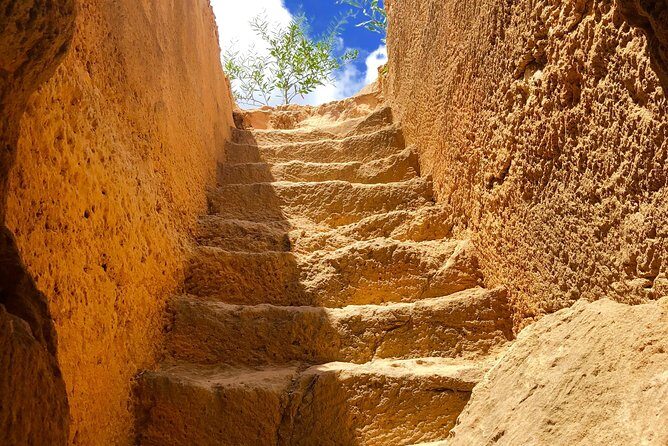
Next is Agarsen Ki Baoli, a stepwell from the 14th century. The key detail here is physical: it has around 103 steps descending to the bottom. That’s what makes it more than a quick photo stop. You’ll likely notice how the geometry shapes sound and light as you go.
Time here is listed as about 15 minutes, so it’s quick by design. Still, it’s an excellent break in the day because you can reset your legs after the morning’s movement and crowd flow.
India Gate and the Lutyens government zone: big monuments, quick looks
Now you shift into New Delhi’s monumental style with India Gate. This is a 42-meter-high arch designed by Sir Edwin Lutyens in 1921, built as a memorial to around 90,000 Indian Army soldiers.
You’ll only have about 15 minutes here, so treat it like a “read the building” stop rather than a long linger. Look at proportions, the memorial purpose, and how the gate acts like a visual spine for the area.
After India Gate, the route typically includes exterior views of Parliament House (Sansad Bhavan) and President House (Rashtrapati Bhavan). The description notes it was designed by Lutyens and houses more than 300 independent rooms. Even from outside, these stops help you understand how New Delhi was built to represent state power and order.
Qutub Minar: the tall moment you’ll remember
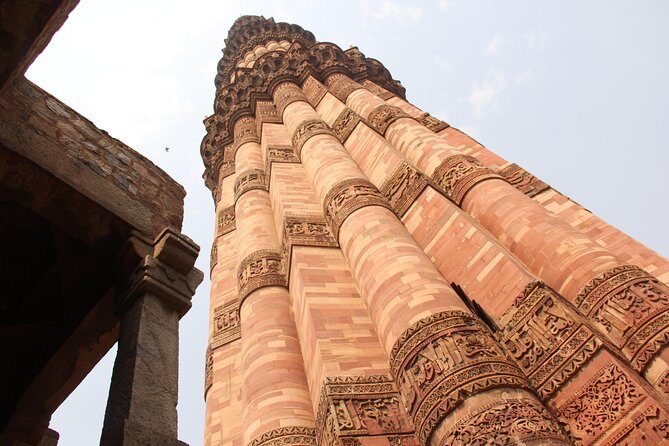
Qutub Minar is one of those Delhi sights that clicks immediately because of its height. It’s described as an unmissable victory minaret: about 73 meters high, with five stories. It’s linked to Sultan Qutub-din Aibek, who proclaimed supremacy after the defeat of Qila Rai Pithora.
Time is about one hour, and admission is included. This is a great stop for anyone who wants one “wow” moment with clear visual payoff. Even if you’re not a history person, the structure is obvious. It’s tall, it’s dramatic, and it gives you a feeling for how monumental Delhi once was.
Lotus Temple: the calm stop, and what changes on Mondays
Lotus Temple is popularly known as the Bahá’í House of Worship. The tour description emphasizes its lotus-flower shape and its purpose as a place intended to bring different faiths together.
You’ll have around 30 minutes, and admission is listed as free. The best way to use this time is simple: slow down. Even if you’re on a schedule, this stop is your chance to breathe and let the day’s noise fade.
Here’s the key operational detail: Lotus Temple and Swaminarayan Akshardham are closed every Monday. When that happens, the itinerary swaps in Lodhi Tomb and Birla Temple instead. So if your dates land on a Monday, you won’t lose the New Delhi segment—you’ll just change which landmarks you see.
Swaminarayan Akshardham: the spiritual-cultural complex
Swaminarayan Akshardham is described as a Hindu temple and spiritual-cultural complex. The tour highlights its mix of “millennia of traditions” with modern Hindu culture and its architecture.
You’ll typically spend about one hour and admission is listed as free. If you love seeing how living religion and public design meet, this stop is a good one. If you prefer only minimal walking inside complexes, ask your guide to help you choose what to focus on during that hour.
Humayun’s Tomb: symmetry, gardens, and Mughal-era architecture
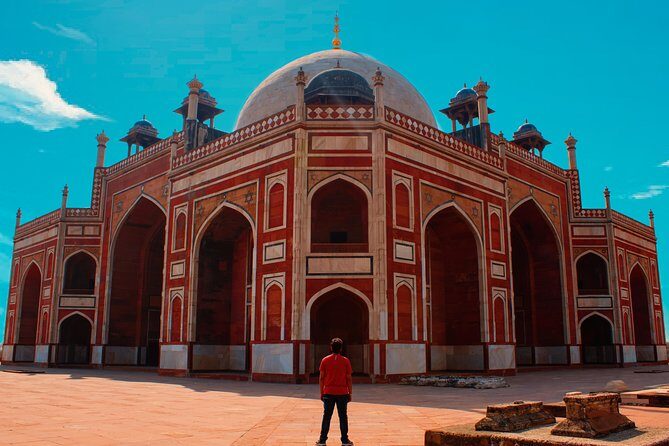
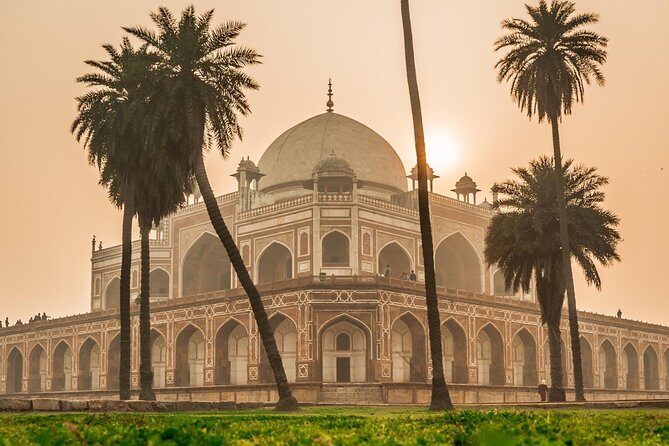
The tour ends with Humayun’s Tomb, described as world famous and built for Emperor Humayon by his wife. The description calls out the garden setting, symmetrical layout, arched facades, and Persian and Mughal elements.
Time is about one hour, with admission included. If Qutub Minar is the tall vertical statement, Humayun’s Tomb is the controlled, intentional layout. It’s the kind of stop where the more you look, the more you’ll see: how the building frames space, how the garden supports the architecture, and how the tomb design communicates permanence.
When the day wraps, you’ll be dropped at your desired location in Delhi, Noida, or Gurugram.
Lunch: when the vegetarian option saves your day
The tour includes a vegetarian lunch if you choose the lunch upgrade. Non-vegetarian food and any alcohol are not included in the tour price.
If you’re aiming for a clean, low-effort day, that lunch option is a practical value. Delhi is full of tempting food stops, but adding restaurant scouting to your schedule can turn a good itinerary into a stressful one. If you know you’ll get hungry mid-route, choosing the lunch upgrade is often the easiest way to stay on pace.
If you skip the lunch option, you’ll still have structured sightseeing time—but you’ll need your own plan for where and when to eat.
Time planning: half day or full day, and how to choose
The tour is offered in 4 to 8 hours depending on the option. The “half day” version is usually best when you’re staying central and already know you want only the essentials. The “full day” version makes sense if you want both halves of Delhi: Old Delhi street intensity plus New Delhi’s monuments without cutting corners.
My rule of thumb: if this is your first day in Delhi, pick the longer option unless you have strong constraints on walking time. The itinerary mixes short stops (like India Gate) with longer blocks (like Jama Masjid and Qutub Minar). That balance is what makes it feel like a complete introduction.
Value check: how $28 can work for you
At $28 per person, the big value is not just “cheap sightseeing.” It’s that you’re paying for three things that cost money and effort in Delhi: an AC private vehicle, door-to-door transfers, and structured stops across both old and new districts.
Admission is included selectively. In particular, the itinerary lists admission included for Jama Masjid, Qutub Minar, and Humayun’s Tomb. Some other stops are listed with free admission. And you also get bottled water during the tour.
What’s not included: non-vegetarian food and alcohol, plus any meal that isn’t the optional vegetarian lunch upgrade.
The main thing I’d watch is whether you expect a deep, museum-style experience at every stop. This tour is built for seeing. If you want extra time at a single site, plan a follow-up day afterward.
The one behavior to be ready for: shopping stops
One detail from earlier experiences is that there can be a shopping stop where sales pressure might feel heavy. I’m not saying every tour includes that mood, but the risk is real enough to plan for it.
If shopping is your thing, great. If it’s not, handle it like this: be polite, browse quickly if you want, and set a firm boundary early. You can also tell your driver or guide you prefer to keep it brief.
Should you book this Old and New Delhi private tour?
I’d book this if you want an efficient, guided-feeling introduction that covers the classic Delhi highlights without making you fight traffic. The AC private vehicle, the mix of Old and New Delhi, and the inclusion of major sights like Jama Masjid, Qutub Minar, and Humayun’s Tomb make it a solid value.
I wouldn’t book it as your only Delhi plan if you want long stays inside museums, deep ticketed interiors at every stop, or a very slow pace. In those cases, you’ll likely want to add another day later where you can linger.
FAQ
How long is the Old & New Delhi city tour?
It runs for about 4 to 8 hours depending on the option you choose and how the day flows.
Is pickup and drop-off included?
Yes. You get hotel or airport pickup and drop-off, and the pickup can also be arranged from places like a railway station. Your drop-off can be in Delhi, Noida, or Gurugram.
Do I get a private guide?
A private local professional guide is available if you choose that option. Otherwise, you still have a private exclusive tour with the included vehicle and driver.
Are entrance fees included?
Admission is listed as included for some stops like Jama Masjid, Qutub Minar, and Humayun’s Tomb. Other stops are listed as free admission.
Is lunch included?
A vegetarian lunch is included if you choose the vegetarian lunch option. Non-vegetarian food and alcohol are not included.
What happens if I visit on a Monday?
Lotus Temple and Swaminarayan Akshardham are closed every Monday, and the tour takes you to Lodhi Tomb and Birla Temple instead.
Is there free cancellation?
Yes. You can cancel up to 24 hours in advance for a full refund. If weather is poor and the tour is canceled, you’ll be offered a different date or a full refund.