REVIEW · NEW DELHI
Old Delhi Tour with Tuk-Tuk/Rickshaw Ride
Book on Viator →Operated by Vivek Handa, Tour Guide Delhi-Agra-Jaipur · Bookable on Viator
Traffic, then history—fast.
This Old Delhi tour is built for getting your bearings quickly, with a tuk-tuk/rickshaw ride that keeps you moving without nonstop weaving through crowds. You’ll start with an iconic red-sandstone landmark at Jama Masjid, then swing into the market lanes around Chandni Chowk, Kinari Bazaar, and Khari Baoli. The payoff is real-world Delhi: busy lanes, hands-on spice talk, and a Sikh community kitchen stop where you see how people eat and welcome strangers.
I like the mix of big landmarks and everyday streets. You get the scale of India’s largest mosque, then you also ride through narrow trading corridors where the whole point is the sights, sounds, and commerce—without spending your entire day walking. I also really appreciate the Bangla Sahib Gurudwara component, because the Langar setup is more than a photo stop; it’s a functioning community meal experience.
One drawback to consider: the tuk-tuk portion can feel stressful for some people, especially if you’re hoping for a perfectly smooth ride. In one reported case, the guide involved the group in paying extra cash for the tuk-tuk drivers, which may not feel comfortable for everyone—so it helps to go in with your own plan for any optional extra requests.
In This Review
- Key highlights worth your time
- Old Delhi by tuk-tuk: the smart way to handle the chaos
- Pickup timing and how the tour avoids wasting your morning
- Jama Masjid: a giant mosque and a practical “stop first” strategy
- Chandni Chowk by rickshaw: you see the trade lanes without sprinting
- Kinari Bazaar: a focused detour for wedding and craft lovers
- Khari Baoli spice market: sensory shopping plus practical info
- Bangla Sahib Gurudwara: where the tour slows down on purpose
- Time on the ground: how 4–5 hours really feels
- Price and value: what you get for $99 per person
- The one thing to prepare for: tuk-tuk extras and cash comfort
- Who this tour suits best (and who should think twice)
- Should you book this Old Delhi tour?
- FAQ
- How long is the Old Delhi tour?
- Where does pickup happen?
- What time does the tour start?
- What are the main stops on the tour?
- Do I need to buy tickets to enter Jama Masjid?
- Are other admissions included?
- What’s included in the price?
- Is the tour private?
- What should I do at Gurudwara Bangla Sahib?
- Can I cancel for a full refund?
- Is a mobile ticket provided?
Key highlights worth your time
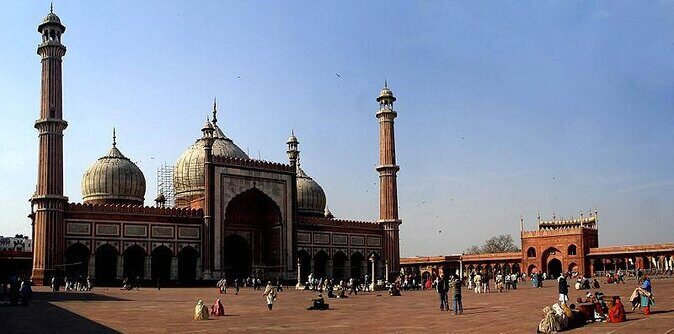
- Jama Masjid views option: you can walk the courtyard and, if you want, climb a minaret for a look over Old Delhi.
- Market riding instead of marathon walking: you’ll move by tuk-tuk/cycle rickshaw through Chandni Chowk and side streets.
- Chandni Chowk backstory: the name comes from the old canal concept linked to moonlight, explained along the route.
- Kinari Bazaar shopping lanes: a focused run through fabric, lace, trims, and wedding-style finds.
- Khari Baoli spice stop: a guided look at Asia’s largest spice market plus practical spice-and-health info.
- Langar at Bangla Sahib: head covering and no shoes at the shrine, then a real community kitchen rhythm.
Old Delhi by tuk-tuk: the smart way to handle the chaos
Old Delhi is not subtle. It’s loud, crowded, and full of sudden turns—sometimes literal ones. That’s exactly why this tour format works. Instead of treating Old Delhi like a one-person walking marathon, you use a tuk-tuk/cycle rickshaw to cover the tight lanes while your guide coordinates timing and movement.
You’ll also get a private air-conditioned car for the parts that need it. The road approach matters because Old Delhi is easiest when you’re dropped close, then taken forward in planned segments. This tour is designed that way: a car to reposition you, and the rickshaw to keep you close to the street-level action.
And yes, there’s also a built-in pacing element: the stops are short enough that you don’t feel trapped, but long enough to actually look around. That balance is the difference between seeing Old Delhi and just surviving a checklist.
You can also read our reviews of more tours and experiences in New Delhi.



Pickup timing and how the tour avoids wasting your morning
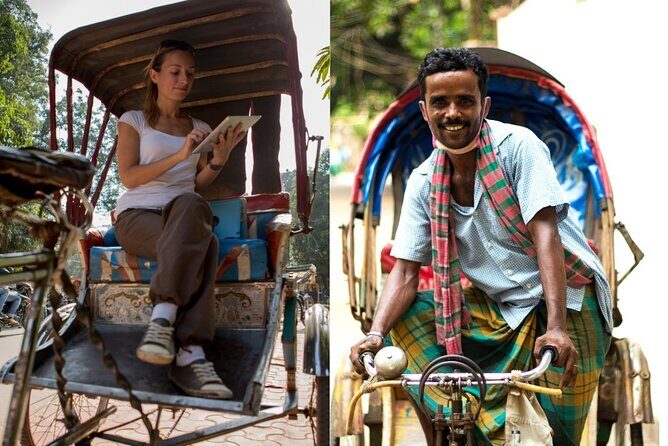
The tour starts at 09:00 AM or your provided pickup time from Delhi, Gurugram, or Noida. Your driver comes to receive you from your chosen location, and your guide meets you along the way to start shaping the day.
That pickup-and-guide structure matters more than it sounds. In Delhi, the hardest part is often the first hour—finding the meeting point, figuring out traffic, and getting oriented. Here, you avoid the awkward stand-around time. It’s also a private group, so your experience stays focused on your schedule rather than a slow shuffle through multiple pickup addresses.
You’ll travel with bottled water that’s cold and unlimited, which is a genuine comfort win when you’re in markets and religious sites under daytime heat.
Jama Masjid: a giant mosque and a practical “stop first” strategy
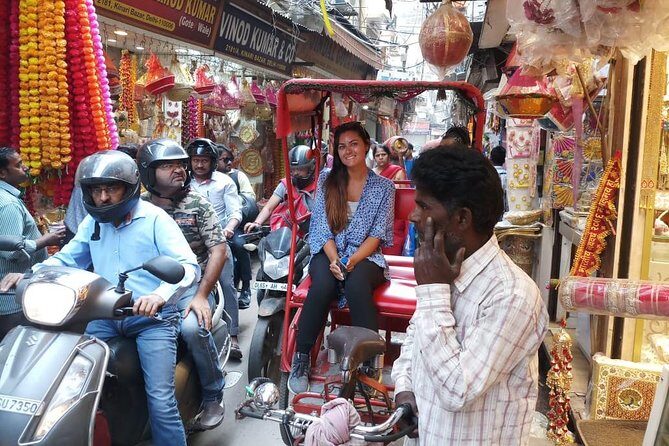
Your first major site is Jama Masjid, described as India’s largest mosque. The plan is to spend about 30 minutes here, which is a good length for two reasons. First, you get the scale immediately: red sandstone courtyard space, strong visual geometry, and crowds that make it feel like a living place. Second, you’re not stuck there long enough for fatigue to steal your attention.
If you want to add even more perspective, you can climb up a minaret for views. That option is a classic Old Delhi move: height gives you the whole sense of the area, including where the lanes funnel and how the density changes block to block.
One important note: the Jama Masjid admission ticket is not included. So while the tour covers guide and transport, you should plan for that extra cost at the mosque.
Chandni Chowk by rickshaw: you see the trade lanes without sprinting
After Jama Masjid, you switch to a tuk-tuk or cycle rickshaw to ride through Chandni Chowk. This is where the tour earns its keep.
Chandni Chowk is Old Delhi’s main thoroughfare, a wholesale market lined with hawkers and porters. If you’ve ever tried to walk through a market street at speed, you know what happens: you spend energy dodging people and staring at the ground to avoid collisions. Riding changes the whole feel. You can look forward, take in storefronts, and absorb the scene without turning your legs into useless noodles.
You’ll also get a short cultural explanation while you ride. Chandni Chowk’s name is tied to a historic tree-lined canal concept during Shah Jahan’s reign—the canal reflecting moonlight, hence moonlight place. It’s the kind of detail that makes the street feel like more than just a busy corridor.
This stop is planned for about 30 minutes, and that’s about right for photos, quick browsing, and just watching how people move through the space.
Kinari Bazaar: a focused detour for wedding and craft lovers
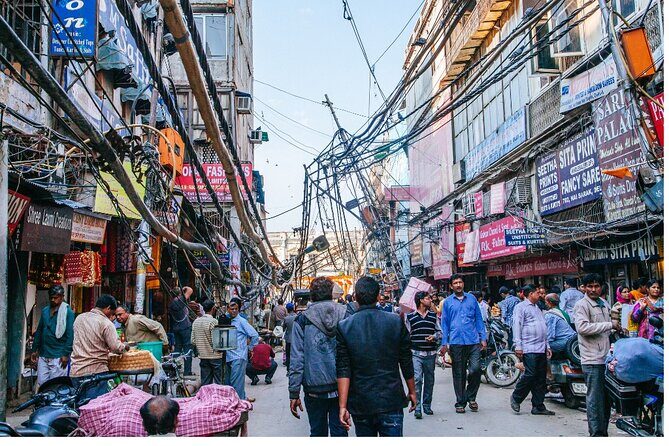
Next up is Kinari Bazaar, a side-market area known for bright materials—fabric, silver trims, delicate lace, sparkly borders, and sequins. If your idea of shopping is more craft and detail than mass-market, you’ll likely enjoy this.
You’ll ride and learn about the historic walled city as you go, then spend roughly 30 minutes soaking up street-level everyday life. This isn’t the place for slow museum-style wandering. It’s a “find what you came for, talk to shop owners, and keep moving” type of market—exactly the sort of stop that fits this tour’s pacing.
It’s also a good counterbalance to Chandni Chowk. Instead of the broad main lane, Kinari feels more targeted: narrower streets, more specific merchandise, and an obvious focus on celebration-related textiles.


Khari Baoli spice market: sensory shopping plus practical info
Then comes Khari Baoli, described as Asia’s largest spice market and one that has existed since the 17th century. It’s a great stop because it’s not just visual—it’s sensory.
The tour uses this as an information-rich moment. You’ll get hands-on guidance about spices and even hear about medicinal and health benefits. The “hands-on information” part is key: you’re not just walking past piles of goods. You’re learning how people think about spices in everyday life.
Another plus: Khari Baoli is handled in a 30-minute window. Spice markets can tempt you into overspending if you let yourself wander too long. This keeps it fun and educational without turning into hours of decision fatigue.
Bangla Sahib Gurudwara: where the tour slows down on purpose
At Gurudwara Bangla Sahib, the tour shifts from street markets to a shrine that feels more grounded. The stop is about 1 hour, and that extra time makes sense because you’re dealing with both spiritual practice and visitor etiquette.
Here’s what matters for your comfort:
- You’ll need to cover your head.
- You should not wear shoes inside areas where visitors are expected to remove them.
- You’ll see the holy pond, plus parts of the grounds like the kitchen, school, and an art gallery.
The most meaningful part is the Langar—Sikh community kitchen. The core idea is that people of all backgrounds can eat there, regardless of race or religion. Volunteers and gursikhs prepare the food, and visitors are simply part of the rhythm.
Even if you’re not especially religious, Langar is the kind of stop that changes your understanding of a place. It’s not staged. It’s a working system—food moving, people welcoming, and a visible sense of shared responsibility.
One helpful detail: the admission is free. So the only “cost” is following the visitor rules and being ready for a calmer pace.
Time on the ground: how 4–5 hours really feels
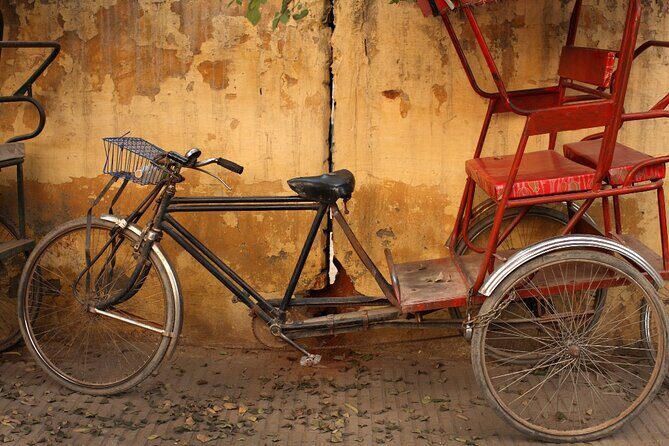
The whole tour runs about 4 to 5 hours. The structure is tight: roughly 30 minutes at most stops, with the Gurudwara giving you a longer block.
That schedule is ideal if:
- you want Old Delhi highlights without losing a full day,
- you prefer a guided flow when streets get confusing,
- you’d rather see more variety than linger too long in one spot.
It can feel crowded at the mosque and in the market lanes—Old Delhi is crowded by nature. But because you’re moving via car and rickshaw between points, the congestion feels like atmosphere rather than a wall stopping you.
Price and value: what you get for $99 per person
At $99.00 per person, you’re buying more than a driver. You’re getting a full package: licensed guide, private air-conditioned car sightseeing, a tuk-tuk/rickshaw ride in Old Delhi, bottled water (cold and unlimited), parking, tolls, taxes, allowances, fuel, and pickup/drop-off to your hotel or airport.
That combination can be good value because Old Delhi logistics are expensive in time, stress, and missteps. When you add in a guide who can steer you through crowded areas and translate what you’re looking at, $99 starts to make sense—especially for a 4–5 hour day.
Just remember the one clear cost exception in the plan: Jama Masjid admission is not included.
The one thing to prepare for: tuk-tuk extras and cash comfort
Here’s the practical consideration: the tuk-tuk ride can sometimes come with extra cash requests tied to the drivers. In one case, a guide asked for 200 rupees from the group to be given to the tuk-tuk driver, which felt unprofessional to the customer.
Not every group will experience that same exact situation, but it does happen in the real world of street transport economies. My advice is simple: if you’re comfortable with it, carry some small cash for any unexpected local driver support request. If you’re not comfortable, be polite and firm when it’s brought up.
A tour should feel transparent and respectful. If it doesn’t, you should decide in the moment based on your comfort level.
Who this tour suits best (and who should think twice)
This tour is a strong fit for you if you:
- want a guided sampler of Old Delhi highlights,
- prefer riding to walking through dense areas,
- like mixing landmark sights with market browsing,
- want an actually meaningful stop at Langar, not just a quick glance.
It may be less ideal if you:
- strongly dislike rickshaw/tuk-tuk movement,
- need a totally quiet, controlled environment,
- prefer zero chance of any cash request beyond the stated inclusions.
Should you book this Old Delhi tour?
I’d book it if your goal is maximum Old Delhi in half a day with fewer headaches. Jama Masjid sets the tone, the ride through Chandni Chowk and the stop in Kinari Bazaar give you the street energy, Khari Baoli adds a hands-on sensory learning moment, and Bangla Sahib gives you a calmer, human experience with Langar.
Also, you’ll get support from Vivek Handa, a Delhi-Agra-Jaipur tour guide (as listed for the experience), and the tour is structured as a private group activity. That combination usually means smoother communication and a better day flow.
Just go in prepared for two realities: Old Delhi crowds and the possibility of small local financial expectations during the tuk-tuk part. Handle that, and this becomes a very efficient way to understand the city’s layers.
FAQ
How long is the Old Delhi tour?
It runs about 4 to 5 hours.
Where does pickup happen?
Pickup is offered from your preferred location in Delhi, Gurugram, or Noida.
What time does the tour start?
Start time is 09:00 AM or at the time you select/request.
What are the main stops on the tour?
The tour includes Jama Masjid, Chandni Chowk, Kinari Bazaar, Khari Baoli, and Gurudwara Bangla Sahib, then you’re returned to your hotel/airport/railway station.
Do I need to buy tickets to enter Jama Masjid?
Yes. The Jama Masjid admission ticket is not included.
Are other admissions included?
Most other stops in the plan list admission as free, and the tour includes them without extra admission fees. Anything not specifically mentioned as included would follow the tour’s not-included terms.
What’s included in the price?
Included items are a professional licensed tour guide, tuk-tuk/rickshaw ride, sightseeing by private air-conditioned car, cold and unlimited bottled water, and hotel/airport pickup and drop-off, plus parking and related fees.
Is the tour private?
Yes. It’s listed as private, meaning only your group participates.
What should I do at Gurudwara Bangla Sahib?
You’ll be asked to cover your head and remove shoes where required. Visitors can also participate in the community kitchen experience (Langar).
Can I cancel for a full refund?
Yes. Free cancellation is allowed up to 24 hours in advance for a full refund.
Is a mobile ticket provided?
Yes. The tour includes a mobile ticket.