REVIEW · JAIPUR
Jaipur Half-Day City Tour By E-Rickshaw with Female Driver
Book on GetYourGuide →Operated by Rajasthan India Tour Driver · Bookable on GetYourGuide
Jaipur looks better when you move slowly. This half-day ride ties together the big-name sights with a local feel, and the standout is traveling with a female e-rickshaw driver and an on-the-ground guide (people have been with guides like Ali). I like how you get multiple photo stops without racing, and I also like the ending at Albert Hall Museum, where you can shift from monuments to objects like coins and carvings. One thing to watch: the tour includes workshop-style stops, and those can turn into hard selling if you want zero shopping pressure.
You’re in a private group for about 5 hours, with hotel pickup and drop-off around the Pink City area. The ride is also intentionally slow (there’s a mention of a 30 km/h speed limit), which means smoother photo moments and calmer traffic navigation, especially around busy streets. Bring comfy shoes, expect short walks, and treat this as a mix of sightseeing plus cultural stops—not just a straight line from monument to monument.
In This Review
- Key highlights worth your time
- Why an e-rickshaw makes Jaipur feel easier
- Hotel pickup and how the “private” part plays out
- Flower Market in the morning: what to notice and how to shoot it
- Hawa Mahal: the photo stop that actually helps
- Jantar Mantar and the giant stone sundial
- City Palace: courtyards, temples, and ticket strategy
- Jal Mahal (Water Palace) on Man Sagar Lake: quick but memorable
- Ramgarhmode class time: use it as a break from monuments
- Workshop-style stops and the women-artisan angle
- Albert Hall Museum: where the day turns from stones to objects
- Price and value: is $22 per group a good deal?
- Who should book this Jaipur e-rickshaw tour
- Quick practical tips before you go
- FAQ
- How long is the Jaipur Half-Day City Tour?
- What does the price include for a group?
- Which major sights are included?
- Are monument entrance fees included?
- What food or drinks do you get during the tour?
- Do they pick you up from hotels and stations?
- What’s the dress code?
- Should you book this tour
Key highlights worth your time
- Flower market at dawn: bright stalls and a real sense of morning energy before crowds thicken
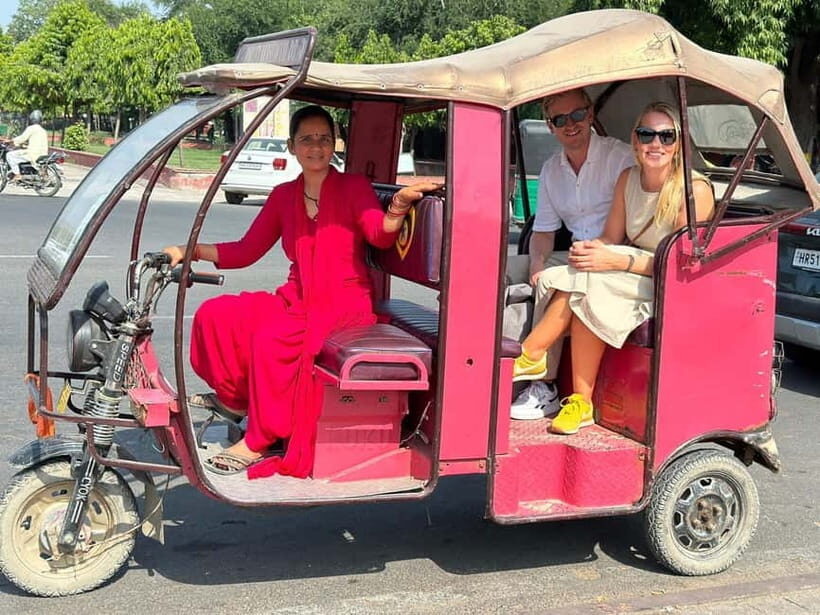
- Female-driven pink e-rickshaw: adds comfort, safety, and that extra local connection as you roll through the walled city
- Hawa Mahal + Jantar Mantar: iconic facades plus the world’s largest stone sundial in one smooth run
- City Palace courtyards: multiple pavilions, temples, and museum space within one complex
- Jal Mahal on Man Sagar Lake: quick scenic stop for the Water Palace setting
- Albert Hall Museum: plan your time for coins from eras like Gupta, Kushan, Mughal, and British
Why an e-rickshaw makes Jaipur feel easier
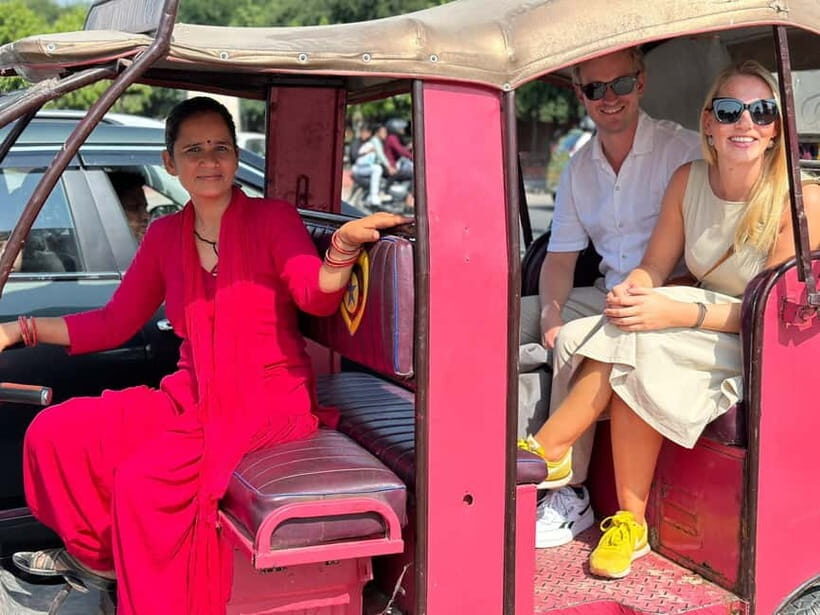
Jaipur can feel like a lot at once. The lanes are busy, the sights are spread out, and getting your bearings can eat your energy. A small e-rickshaw helps you move with fewer logistics headaches, and the slow pace means you can actually look at what’s around you—doorways, walls, street life, and the transitions between neighborhoods.
This tour is built for exactly that style of travel: short walks, frequent photo stops, and a guide who fills in the meaning behind what you’re seeing. Add the fact that the driver is a woman, and it changes the vibe. It feels more personal and grounded, not just like sitting in a vehicle while someone else runs your day.
You can also read our reviews of more city tours in Jaipur

Hotel pickup and how the “private” part plays out
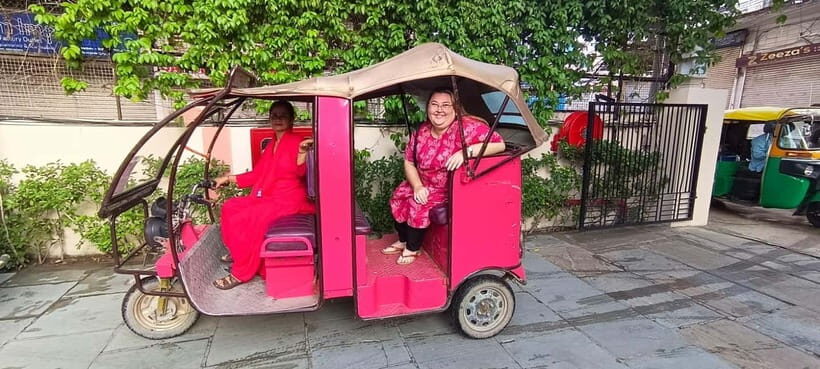
You’ll get pickup and drop-off, starting from the Pink City area (or your hotel/airport/rail station, depending on where you’re staying). If you’re within 5 km of the city center, pickup may use an e-rickshaw; if you’re within 10 km, they arrange a car and then the driver drops you at the starting point. That structure matters because it keeps the morning efficient.
Since this is a private group, you’re not stuck with strangers who want a different pace. The ride also fits roughly 3 to 4 people comfortably, while the pricing is described for a group up to 3—so it tends to work best for couples or small friend groups who want attention from the guide.
Flower Market in the morning: what to notice and how to shoot it
Your day starts at the Jaipur Flower Market, when vendors set up their stalls and the colors show up fast. The best part isn’t just the photos—it’s the way the market changes as morning light hits the blooms. You’ll see stalls lined with flowers, and it’s the kind of place where you can slow down without losing time, because it’s inherently visual.
Plan for a little walking and standing for pictures during the visit. If you’re doing smartphone photos, aim for one steady shot from the lane end, then move closer for detail. If you want less chaos in your photos, use the first stretch of time when the market is still getting going.
You also get a break included as part of the morning flow, plus the tour includes tea or coffee or lassi with samosa. That’s a practical bonus in Jaipur, since getting a snack early keeps you from turning cranky mid-morning.
Hawa Mahal: the photo stop that actually helps
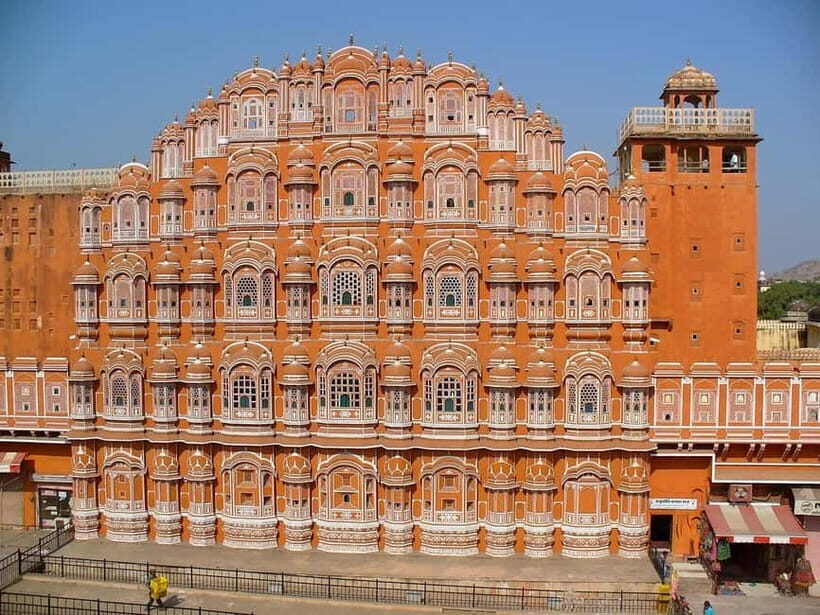
Hawa Mahal is the kind of sight you think you know from photos. Seeing it in person is different because you notice the scale and the detailing. You’ll get a photo stop and guided visit here, with about 30 minutes on the clock.
Here’s how to make the most of that short time: before you start shooting, look for one good angle that shows the front facade clearly. Then let the guide explain what you’re looking at—Hawa Mahal is tied to Jaipur’s architectural style and the way light and design were used. Once you understand that, your photos stop being random and start being meaningful.
If you’re wearing temple-inappropriate clothes, you may get pushed toward covering up. Smart casual is the stated dress code, and short shorts or sleeveless tops aren’t recommended for temple areas.
Jantar Mantar and the giant stone sundial
Then you roll to Jantar Mantar, the ancient astronomical observatory. The headline feature is the world’s largest stone sundial, and the real value of the visit is that it’s not just a pile of old structures. With a guide, you can connect the shapes to how people tracked the sky long before electricity and apps.
You’ll have about 30 minutes, including a guided tour and sightseeing time. That’s enough to understand the core ideas if you listen closely at the main instruments and ask a couple of questions. If you want to slow down and inspect markings, keep your camera ready and be selective with shots—you’re timed.
Also: the area has open spaces, so wear shoes you can trust. Even short sightseeing walks add up.
You can also read our reviews of more tours and experiences in Jaipur






City Palace: courtyards, temples, and ticket strategy
City Palace is a complex, not a single building. You’ll see key sections such as Chandra Mahal, Mubarak Mahal, the Shri Govind Dev Temple, and the City Palace Museum. You’ll get about 1 hour, with a photo stop plus guided time.
The draw here is the layout: courtyards, buildings, pavilions, gardens, and temples inside one walled complex. That makes City Palace a good middle stop between street scenery and museum time. You’re not just viewing an exterior landmark—you’re walking through layers of royal and religious spaces.
One practical note: monuments entrance fees are not included. In real-world terms, that means you’ll still need tickets on site. Door pricing can be higher than online in many places in India, so if you’re the type who likes controlling cost, consider buying online where possible before you arrive.
If you’re sensitive to time management, use your guide here. Ask them to keep you focused on the highlights that match your interests, because City Palace can expand quickly if you drift into every side area.
Jal Mahal (Water Palace) on Man Sagar Lake: quick but memorable
Jal Mahal, also called the Water Palace, sits in the middle of Man Sagar Lake. It’s a short stop—about 15 minutes—but it works because the placement is dramatic. Even from a roadside viewpoint, you can appreciate the idea: a palace conceptually preserved by water, set into the lake’s frame.
This isn’t a full walking visit in the way City Palace is. It’s more of a scenic reset, and it’s useful if you want a break from dense crowds and stone interiors. If your photos matter, watch the light and pick a side that gives you the cleanest reflection or skyline view.
Ramgarhmode class time: use it as a break from monuments
After the big monuments, you go to Ramgarhmode, where the plan includes visit, sightseeing, and a class for about 1 hour. The specific topic of the class isn’t detailed in the info you have, so think of this segment as a structured cultural pause rather than a predictable museum-style lesson.
This portion can be valuable if you want something more interactive than monuments. It also helps balance the day: after architecture and astronomical stones, you get human-scale learning time.
If you prefer purely visual sightseeing, treat this as your chance to rest your feet and still get something different from the standard Jaipur checklist.
Workshop-style stops and the women-artisan angle
One of the tour’s major themes is women’s work—both as drivers and as artisans. You’ll spend time in factories and warehouses with handcrafted goods such as carpets and embroidered fabrics, plus other items made by hand. The idea is that you’ll witness the skill behind the products while learning about the women’s lives and craft.
This is also the one area where you need to go in with your eyes open. A workshop stop can be informative, but it can also tilt into sales pressure. The best way to handle it is simple: decide before you start what you want from the stop.
- If you want to watch and learn, tell the guide you’re not planning to buy anything.
- If you do want to buy, ask what’s handmade vs. machine-made, and stick to a firm budget.
- If someone tries to steer you toward custom clothing or quick transactions, slow the conversation down and ask for time to think.
The women-artisan element can be meaningful, but it should never feel like a trap. If at any point the tour momentum feels too commercial, keep the focus on the craft demonstration and move on.
Albert Hall Museum: where the day turns from stones to objects
The tour ends at Albert Hall Museum, and this is a smart way to finish. Monuments teach you how Jaipur looks. A museum helps you understand how Jaipur was shaped—through artifacts, materials, and art objects.
You’ll have about 45 minutes of photo stop, visit, and guided time. The museum collection described includes paintings, jewelry, carpets, ivory carvings, stone sculptures, metal works, and crystal pieces. The coin collection is specifically noted as covering multiple periods, including Gupta, Kushan, Delhi Sultanate, Mughal, and British eras. That’s a lot of time-travel packed into one room.
To get value in under an hour, pick your lane. If you love history, focus on the coins and big timeline categories. If you prefer art and technique, spend extra time on metalwork, stone sculpture, and the decorative crafts. Your guide will be able to point you toward what’s most relevant to what you like.
This last stop also benefits from the earlier pace. By the time you arrive, you’ve already seen Jaipur’s signature architecture, so the museum feels like a natural follow-up rather than a random detour.
Price and value: is $22 per group a good deal?
The price is listed as $22 per group up to 3, for a 5-hour private e-rickshaw tour with a female driver, a professional guide, and hotel pickup/drop-off. That price is attractive because the included extras carry real weight in Jaipur: transport, guiding, and a snack/drink.
Here’s what you should factor in:
- Entrance fees aren’t included, so your total cost will rise once you add monument tickets.
- You should also budget your time for those workshop-style stops. If you enjoy shopping, great. If not, you may want to set boundaries early so you get the sightseeing you paid for.
Where this tour shines is in combining multiple “headline” stops in one smooth half-day while still giving you time to pause and take photos. If you’re short on time and want a guided run that still feels human, this can be good value.
If you’re a traveler who dislikes any structured stops beyond monuments, then this might feel like a mixed bag. In that case, the key is communication on day one: tell your guide what you want to prioritize and what you want to skip.
Who should book this Jaipur e-rickshaw tour
Book it if:
- You want the core Jaipur sights in one morning or afternoon without wrestling with traffic.
- You care about supporting local women working as drivers and artisans.
- You like a guided day with photo stops that don’t feel rushed.
Consider skipping or switching plans if:
- You’re pregnant or have a pre-existing medical condition, since the tour is listed as not suitable for these needs.
- You dislike shopping pressure and prefer strict sightseeing with no workshop segments.
- You need a guaranteed, rigid schedule without any flexibility—this format can include variable time spent at stops.
The e-rickshaw format also means you should expect some walking and standing. Comfortable shoes are not optional.
Quick practical tips before you go
- Wear smart casual. Avoid short shorts and sleeveless tops for temple areas.
- Bring a passport or ID card (you’ll need it on the day of travel).
- Bring your camera, and expect lots of photo opportunities from street angles.
- Don’t bring luggage or large bags. Pets are not allowed.
- Have a plan for money: monument entrance fees are not included.
FAQ
How long is the Jaipur Half-Day City Tour?
It’s listed as about 5 hours.
What does the price include for a group?
The price is listed as $22 per group up to 3, and it includes hotel pickup and drop-off, a private e-rickshaw driven by women, a professional tour guide, and tea or coffee or lassi with samosa.
Which major sights are included?
You’ll visit the flower market, Hawa Mahal, Jantar Mantar, City Palace, Jal Mahal (Water Palace), and Albert Hall Museum.
Are monument entrance fees included?
No. Monument entrance fees are not included.
What food or drinks do you get during the tour?
You get complementary tea or coffee or lassi with samosa.
Do they pick you up from hotels and stations?
Yes. Pickup is included, with e-rickshaw pickup within 5 km of the city center. If you’re within 10 km, they arrange a car pickup and then drop you at the tour starting point.
What’s the dress code?
Smart casual is recommended, and short shorts or sleeveless tops are not recommended in temple areas.
Should you book this tour
Yes, if you want a guided Jaipur half-day that mixes major landmarks with women-led driving and artisan-focused stops, without needing to solve logistics on your own. It’s especially strong for couples or small groups who like slow, photo-friendly pacing and a museum finish.
If your priority is only monuments, and you don’t want any chance of workshop-style selling, book with clear boundaries at the start—tell your guide what you want to see and what you want to skip. That one move can turn the day from mixed to excellent.