REVIEW · JAIPUR
Jaipur: 2-Day City Sightseeing Tour with Cab & Guide
Book on GetYourGuide →Operated by Rajasthan India Tour Driver · Bookable on GetYourGuide
Two days in Jaipur can feel like a rush.
This tour is built to keep the day moving without skipping the big stuff. I like the mix of UNESCO stops (Jantar Mantar and Amber Fort) with classic Jaipur landmarks, all handled by a private driver and guide. And because your guide can adjust in real time, the route feels less like a checklist and more like a smooth story of the city.
What I like most is the hands-on feel you get at places you usually just rush through. The City Palace and Hawa Mahal aren’t treated as quick photo targets only; you’ll get a guided walk through the key features, then keep rolling. Still, there is a trade-off: this is sightseeing with real walking, plus serious steps at Panna Meena ka Kund, so wear shoes you trust.
If you want a relaxed sit-everywhere style tour, this may not be it. You’re also doing a lot of cultural highlights across two days, and Day 2 stacks forts, temple areas, and a sunset finale. As a consideration, it’s also listed as not suitable for pregnant women.
In This Review
- Quick hits before you go
- Entering Jaipur by Private Cab: Why This Feels Easier Than DIY
- Day 1: Hawa Mahal, City Palace, Jantar Mantar, Albert Hall, Birla Mandir, Patrika Gate
- Hawa Mahal: a quick photo stop with architectural payoff
- City Palace: the royal center you can actually read
- Jantar Mantar: science that looks like stone sculpture
- Lunch break: you’re on your own for food
- Albert Hall Museum: the “collections day” after forts and courtyards
- Birla Mandir: a quieter break from the crowds and stone
- Patrika Gate: color and craft at Jawahar Circle
- Day 2: Jal Mahal, Amber Fort, Stepwell Depths, Royal Gaitor Tumbas, and the Sun Temple Sunset
- Royal Gaitor Tumbas: royal cremation chhatri-style monuments
- Jal Mahal: the water palace you can see from the right angle
- Amber Fort: hilltop grandeur and the view over Maota Lake
- Panna Meena ka Kund: 1800 steps and a real sense of scale
- Jagat Shiromani Temple: the Meera Bai link near the fort
- Galta Ji Monkey Temple: spring-fed tanks and temple atmosphere
- Sunset at the Sun Temple: the day’s best payoff
- The Private Guide and Driver: What You’ll Actually Notice Day After Day
- Price and Value: What $25 Per Person Really Means in Practice
- Logistics That Matter: Timing, walking, cash, and what to pack
- Expect real walking
- Some cards might fail
- What to bring
- What not to bring
- Who This Tour Fits Best (and Who Should Skip It)
- Should You Book This Jaipur 2-Day Tour?
- FAQ
- Where can I be picked up and dropped off?
- What’s included in the tour price?
- Is food included?
- Can I choose which language the driver/guide uses?
- Are monument entry tickets handled for you?
- What should I bring for the tour?
- Is this tour suitable if I’m pregnant?
Quick hits before you go
- Two UNESCO hits: Jantar Mantar and Amber Fort, with a guided explanation at each stop
- Strong landmark flow: Hawa Mahal, City Palace, Albert Hall Museum, Birla Mandir, and Patrika Gate in a logical loop
- Day 2 includes the dramatic stuff: Jal Mahal, Amber Fort viewpoints, stepwell steps, and Sun Temple sunset
- Private comfort: air-conditioned vehicle, bottled water, and a guide who can work your pace
- Cash may be needed: some monuments might not take credit cards, so plan for it
Entering Jaipur by Private Cab: Why This Feels Easier Than DIY

The biggest value here is simple: you don’t spend your morning negotiating transport, routes, or meeting points. You get hotel (or airport/railway) pickup, an English-speaking driver in a private air-conditioned vehicle, and a guide who keeps things organized as you bounce between Old City sites and the hillside forts.
A private setup also changes how you experience Jaipur. At major attractions, it’s not just about seeing the famous front view. Your guide helps you move through the right sections, points out architectural details, and keeps you from getting stuck in decision-making moments. In recent bookings, guides like Kalhed, Davinder, KK, Manoj, Raghuvir, Narendra, and others are repeatedly praised for being patient, prompt, and able to answer questions without rushing people.
One note: this isn’t framed as a slow cultural stroll. The itinerary includes guided time plus walking blocks for each major stop, so you’ll want to plan your energy like a two-day hike with a museum break.
You can also read our reviews of more guided tours in Jaipur


Day 1: Hawa Mahal, City Palace, Jantar Mantar, Albert Hall, Birla Mandir, Patrika Gate
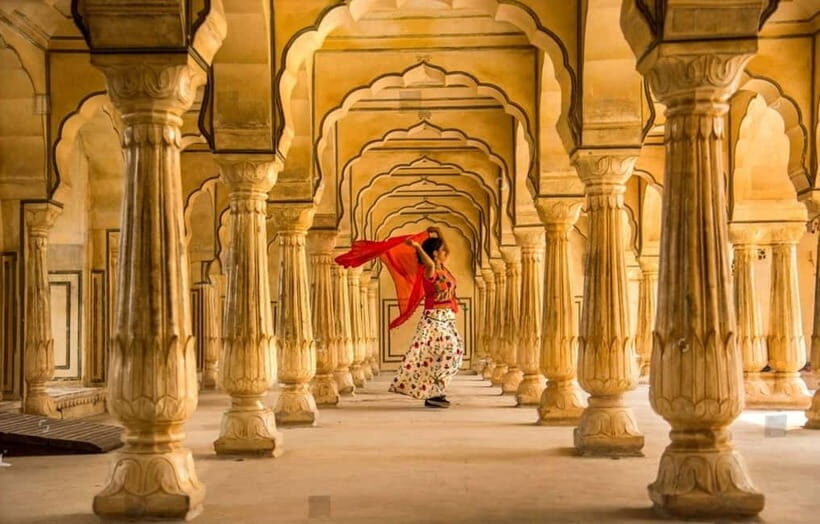
Day 1 is all about Jaipur’s “signature hits” around the Old City and central areas. It’s a strong first day if you want orientation fast, because the sites are packed close enough to feel efficient, yet distinct enough to understand the city’s mix of royal power, science, and modern religion.
Hawa Mahal: a quick photo stop with architectural payoff
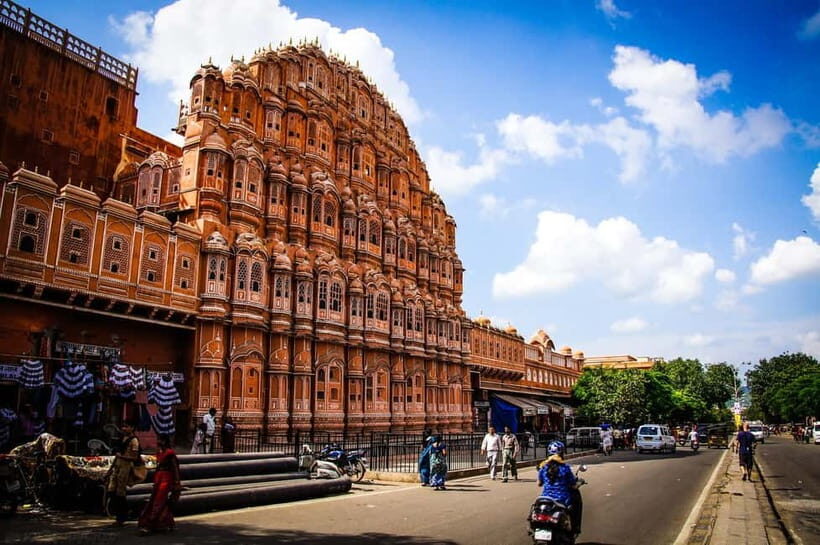
You’ll start with Hawa Mahal, with time for a photo stop and a guided look plus walking. Even if you’ve seen it in postcards, the real value is learning what you’re looking at—how the facade is designed for visibility and airflow, and why it became such an iconic silhouette in Jaipur’s skyline.
Practical tip: treat this stop as a place for angles. Spend a few minutes repositioning for photos rather than trying to “see everything at once.”
City Palace: the royal center you can actually read
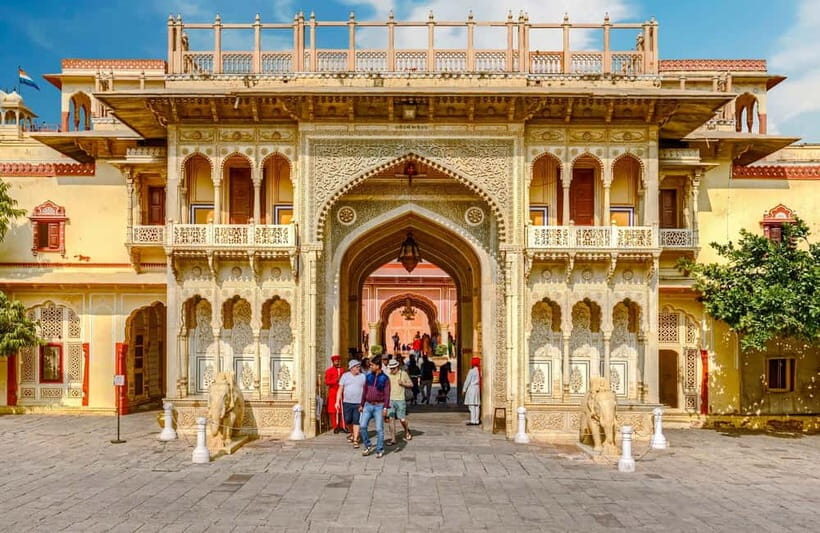
Next is City Palace, right in the heart of the Old City. This is scheduled as a photo stop plus guided tour with about two hours total time, including walking. The palace isn’t just big; it’s intricate, with grand halls and architectural details that make it easier to understand how the royal household worked and how power was displayed.
The drawback: palace interiors can involve uneven flooring and lots of looking up. If you’re prone to back strain or heat discomfort, take short pauses and hydrate.
Jantar Mantar: science that looks like stone sculpture
After City Palace you’ll go to Jantar Mantar, a UNESCO World Heritage site with 19 astronomical instruments used for centuries to track celestial movements. This stop gets about an hour, with guided explanation and sightseeing time.
What makes it special for you is that it turns observation into something physical. Instead of reading about the sky, you see instruments made to measure it. A good guide will help you connect the instrument shapes to what they were built to do.
You can also read our reviews of more city tours in Jaipur





Lunch break: you’re on your own for food
There’s a lunch break built into the day, but food and drinks are not included. This is where a guide matters: you can ask for a lunch spot that fits your taste and timing so you don’t lose the afternoon momentum.
Albert Hall Museum: the “collections day” after forts and courtyards
Post-lunch, you’ll visit the Albert Hall Museum. It’s described as housing collections of metal objects, wood crafts, carpets, stone and metal sculptures, arms and weapons, natural stones, and ivory goods. You’ll have guided time here, around an hour.
If you like your sightseeing mixed with museums, this is a smart balance after outdoor monuments. If museums aren’t your thing, don’t worry—you’re not stuck all afternoon. It’s a focused stop, then you keep going.
Birla Mandir: a quieter break from the crowds and stone
Then comes Birla Mandir (Birla Mandir Jaipur), dedicated to Lord Vishnu and Goddess Laxmi. The guide-led part focuses on carvings and sculptures, and the time is listed as about 30 minutes.
This is the kind of stop that resets your pace. It’s still sightseeing, but it’s more about atmosphere and details than scale.
Patrika Gate: color and craft at Jawahar Circle
Finally on Day 1 you’ll reach Patrika Gate, the grand entrance to Jawahar Circle. You’ll have time for photo stops, a visit, and guided sightseeing, plus about an hour of time.
This is a good “ending note” for the first day because it feels lighter than fort and palace stops. It also gives you a modern view of Rajasthan’s art forms through frescoes and decorative design.
Day 2: Jal Mahal, Amber Fort, Stepwell Depths, Royal Gaitor Tumbas, and the Sun Temple Sunset

Day 2 is the dramatic leg: water palace views, hilltop forts, a serious stepwell, and a sunset finish. It also includes temple areas tied to specific figures and devotion—so the day feels both scenic and spiritual.
Royal Gaitor Tumbas: royal cremation chhatri-style monuments
You’ll visit Gaitor Ki Chhatriyan (Royal Gaitor Tumbas). It’s described as a royal crematory with intricately carved stone monuments.
If you usually skip this kind of site, don’t. It’s a reminder that Jaipur’s architecture wasn’t only built for living rulers—it also shaped how memory and status were honored. Expect stonework detail and a quieter feel than the busiest icons.
Jal Mahal: the water palace you can see from the right angle
Next is Jal Mahal, the water palace that appears to float on the Man Sagar Lake. Your time is listed at about 30 minutes including photo stop and guided visit.
The value for you: it’s an easy, scenic breather in the middle of a heavy sightseeing day. The drawback is that the stop is short, so it’s best used for photos and quick orientation, not a long sit-and-stare.
Amber Fort: hilltop grandeur and the view over Maota Lake
Then comes Amber Fort (Amer Fort). It’s perched atop a hill and described as the top tourist destination in Jaipur. You’ll have a photo stop and guided tour time of about two hours, with sightseeing and walking.
What makes it feel worth your effort is the combination of fort walls plus the approach: ramparts, multiple gates, and winding cobbled paths leading to viewpoints over Maota Lake, described as a vital water source for Amer Palace.
Real-world consideration: fort walking adds up. Even with a guide, you’ll want comfortable shoes. Go slow at the corners. The best photos often happen when you stop for a minute instead of rushing to the next gate.
Panna Meena ka Kund: 1800 steps and a real sense of scale
After Amber Fort, you’ll visit Panna Meena ka Kund, an eight-story stepwell with 1800 symmetrical steps descending about 200 feet. This stop includes guided time and about 30 minutes allocated.
This is one of the most memorable parts of the whole program because it’s not just architecture. It’s a built solution to water needs, shown through massive geometry and symmetry.
If stairs aren’t your thing, plan for a careful pace. Even if you don’t feel like you need to count every step, the drop-in sense of depth is striking.
Jagat Shiromani Temple: the Meera Bai link near the fort
Then you’ll reach Jagat Shiromani (Meera Bai Temple) near Amer Fort, dedicated to Meera Bai, Krishna, and Vishnu. It’s described as built between 1599 and 1608 AD by Queen Kanakwati in memory of her son, Jagat Singh. The time here is about 1.5 hours with guided tour and walking.
For me, this stop matters because it adds a human thread to the fort day. You’re not only looking at royal architecture—you’re learning how devotion and memorial culture connect to place.
Galta Ji Monkey Temple: spring-fed tanks and temple atmosphere
In the late part of the day you’ll visit Galta Ji (Monkey Temple). It’s described as a temple area with natural springs and peaceful tanks. Your time includes sightseeing and walking, and it’s paired with the sunset experience.
This stop often works best when you treat it as a calm pause. Let the setting slow you down before the big visual payoff later.
Sunset at the Sun Temple: the day’s best payoff
You’ll then end with sunset at the Sun Temple. This final moment is one of the highlights of the entire two days, and it’s scheduled to wrap the day in a golden-light finish.
Value-wise, sunset is the perfect closer because it changes how everything looks. Even if you spend the day in museums and forts, the final light gives you a calmer, more personal memory to take home.
The Private Guide and Driver: What You’ll Actually Notice Day After Day
This tour leans hard on service. You’ll have a private English-speaking driver with an air-conditioned vehicle, bottled water, and a guide. There are also language options listed beyond English: Spanish, Italian, French, and German.
From the strongest reviews, the guide-and-driver pairing is a major reason people rate this so highly. Guides like KK and Davinder/Kalhed are praised for being patient and able to answer questions well. Drivers like Suresh and Abdullah are praised for being professional and attentive, plus for getting people to the best viewing spots and managing the route safely.
I also like the flexibility angle in these reviews. One booking highlights tailoring plans, and another mentions accommodating lunch preferences. That’s important because Jaipur days can break for small reasons—energy levels, weather, or just the urge to linger at a doorway with better light.
Price and Value: What $25 Per Person Really Means in Practice
At $25 per person for 2 days, the pricing is the kind that feels like a bargain in a city where transportation and timed guides can add up quickly. But value depends on one key detail: monument entry fees.
Your tour includes monument entry fees only if you select that option. If entry fees are not included, the guide will help with tickets, but you may need to pay separately. Also, the guidance notes that some monuments may not accept credit cards, so carrying cash is smart.
So here’s the practical way to think about it:
- If monument tickets are included: you’re likely paying less overall for the big sights, and you save time buying and figuring it out.
- If monument tickets aren’t included: you still get the guide and transport value, but you’ll need cash and a bit more coordination.
Also, food is not included. There’s lunch time built into the schedule, but you’ll pay for meals yourself.
Logistics That Matter: Timing, walking, cash, and what to pack

This is the stuff that keeps your day smooth, or turns it annoying.
Expect real walking
The itinerary includes guided tour and walk time at most stops. Some highlights involve stairs and depth, like Panna Meena ka Kund. That makes comfortable shoes non-negotiable.
Some cards might fail
Carry cash for monument tickets. The guide can help you purchase entrances, but if you rely on credit cards that aren’t accepted, it can slow things down.
What to bring
Bring:
- Passport or ID card
- Comfortable shoes
- Camera
- Comfortable clothes
- Goggles
Jaipur can be hot and bright, so goggles and a hat-friendly outfit (comfortable clothes is the official advice) will keep you happier.
What not to bring
Not allowed:
- Pets
- Luggage or large bags
- Alcohol and drugs
If you’re traveling light, you’ll have fewer issues with on-the-ground rules.
Who This Tour Fits Best (and Who Should Skip It)
This fits best if you want a tight, guided sampler of Jaipur’s top sites in two days, without losing time to navigation. It’s also a strong choice if you like having someone explain what you’re seeing, not just point at it.
You might not love it if:
- You want lots of downtime between stops
- You struggle with stairs and steep walking (the stepwell is a big clue)
- You’re not comfortable with a packed two-day itinerary
And yes, it’s explicitly listed as not suitable for pregnant women.
Should You Book This Jaipur 2-Day Tour?
I’d book it if you want a dependable two-day circuit that hits the classics: Amber Fort, Jantar Mantar, City Palace, Hawa Mahal, Albert Hall Museum, and the Day 2 finale with Sun Temple sunset. The private cab and guide setup is the real engine here, and the strong reviews around punctuality, patience, and helpful guiding make it feel like a safe bet.
Skip it if you’re looking for a slow, low-walking plan or you’re not up for stairs at Panna Meena ka Kund. Also, if you hate dealing with cash for tickets, you’ll need to plan ahead since some monuments might not take credit cards.
If your goal is to see Jaipur efficiently while still understanding what you’re looking at, this tour is easy to recommend.
FAQ
Where can I be picked up and dropped off?
Pickup is available from your hotel, Jaipur Airport, or Jaipur Railway Station, and the tour also lists pickup options in Jaipur and Kukas. Drop-off locations include Jaipur and Kukas.
What’s included in the tour price?
Included are hotel/airport pickup and drop off, a private air-conditioned vehicle, an English-speaking driver, a private tour guide, parking/gas/state tax, and bottled water. Monument entry fees are included only if you select that option.
Is food included?
No. Food and drinks are not included, though the schedule includes a lunch break.
Can I choose which language the driver/guide uses?
Yes. The tour lists language options for the driver/experience: English, Spanish, Italian, French, and German.
Are monument entry tickets handled for you?
Yes. The guide will help you buy entrance tickets to the monuments, and ticket-line skipping is included. You may still need cash if some sites do not accept credit cards.
What should I bring for the tour?
Bring a passport or ID card, comfortable shoes, a camera, comfortable clothes, and goggles.
Is this tour suitable if I’m pregnant?
No. It is listed as not suitable for pregnant women.