REVIEW · JAIPUR
Heritage Culture and History Walking Tour in Jaipur
Book on Viator →Operated by RICH walk ( heritage, culture, history walk ) · Bookable on Viator
Jaipur tells its story best on foot. This Heritage Culture and History Walking Tour strings together astronomy, palaces, temples, and street markets into one easy loop with a guide who explains what you’re actually seeing. It’s priced to be approachable, and the stops are timed so you’re not stuck in museum mode.
Two things I really like: the guide-led walk (English + Spanish written guide support, plus a chance to ask questions) and the way it mixes big landmarks with local markets like Chandi Ki Taksal, Johri Bazar, and Katla Purohit Ji Ka. One possible drawback: several major sights have separate entry fees, so your total cost is lower than it looks only if you plan for those tickets.
In This Review
- Key Highlights You’ll Care About
- Why This Jaipur Walk Works So Well (Even If You’re Short on Time)
- Start at Jantar Mantar: Astronomy With a Real Purpose
- City Palace: Royal Architecture Without the Museum Fatigue
- Govind Devji Temple and Aarti: The Spiritual Part You Can Actually Watch
- Chandi Ki Taksal and the Art of Browsing Without Buying
- Mandir Shri Ram Chandra Ji: A Quiet Pause Built for Meaning
- Hawa Mahal From the Outside: The Design Lesson Pays Off
- Mandir Shree Laxminarayan Ji: Vishnu and Laxmi in Practice
- Johri Bazar and Katla Purohit Ji Ka: Shopping Street as Cultural Story
- Isarlat Sargasooli: The Ending View That Makes the Walk Feel Worth It
- Price and Value: What You Pay vs. What You Gain
- The Guide Factor: Expect Friendly, Question-Driven Storytelling
- Best Fit: Who Should Book This Walk
- Quick Practical Tips Before You Go
- Should You Book This Jaipur Heritage Walk?
Key Highlights You’ll Care About

- A route that connects astronomy, royal Jaipur, and daily religious life in one flow
- English and Spanish written guide to help you follow along at each stop
- Temple experiences you can feel, including aarti at Govind Devji Temple
- Market walking without pressure, with time to browse on your own
- Photo-friendly ending at Isarlat Sargasooli’s elevated views
Why This Jaipur Walk Works So Well (Even If You’re Short on Time)

I like tours that help me understand a place faster than just sightseeing. This one does that by moving you through Jaipur’s “layers”: science (Jantar Mantar), monarchy (City Palace), devotion (temples and aarti), and commerce (the bazaars that locals actually use).
You’ll walk a sensible distance across a concentrated area, with a clear stop-by-stop rhythm. Most of the experience is about noticing details and getting context, not rushing to check boxes.
Also, it’s private for your group, so you can ask questions without the awkward pause-and-wait that happens in crowded tours. And because it uses a mobile ticket, you’re not scrambling for paper right before you meet.
You can also read our reviews of more tours and experiences in Jaipur.



Start at Jantar Mantar: Astronomy With a Real Purpose

Your walk begins at Jantar Mantar, where your guide meets you at the ticket counter and sets the tone fast. This is not just a pretty set of stone structures—it’s a working-style vision of astronomy tied to Raja Sawai Jai Singh II. You’ll get the story of why these instruments were made and how people used them to measure the sky.
You’ll spend about 20 minutes here, which is perfect for first-time visitors. You’ll have enough time to look closely, ask what the shapes mean, and understand how the whole site fits together.
One practical note: entry is not included here (Jantar Mantar: 200 INR). It’s worth paying because the explanations are specific to what you’re seeing in front of you, not generic “history talk.”
City Palace: Royal Architecture Without the Museum Fatigue
Next you head to the City Palace complex. This is where Jaipur’s royal presence becomes physical—through layout, architectural choices, and the way the palace functions as more than one building. Your guide shares stories about the royal family and what the space meant in daily life, not just how it looks in photos.
You’ll get around 20 minutes in the area. That’s a smart length because City Palace can sprawl, and long visits often turn into wandering. Here, you’re guided to the highlights so you leave with understanding, not just screenshots.
City Palace does have an entry fee (1000 INR). If you’re trying to keep your day budget-controlled, this is the biggest ticket on the route—so treat it like the main “paid” moment of the tour.
Govind Devji Temple and Aarti: The Spiritual Part You Can Actually Watch

After the palace, you shift from royal time to devotional time at Govind Devji Temple. This stop is designed around atmosphere, and you’ll see the aarti ceremony if timing lines up.
Plan for about 20 minutes at the temple. In practical terms, that’s just long enough to find a respectful viewing spot, understand what’s happening, and feel why people come here. You don’t need a deep theology background to enjoy it—you just need calm attention, and the guide helps you read the moment.
Also, this stop is listed as entry not included, so you may be able to participate without extra ticketing. The key here is that the experience isn’t about rushing through—your time is for watching and listening.
Chandi Ki Taksal and the Art of Browsing Without Buying
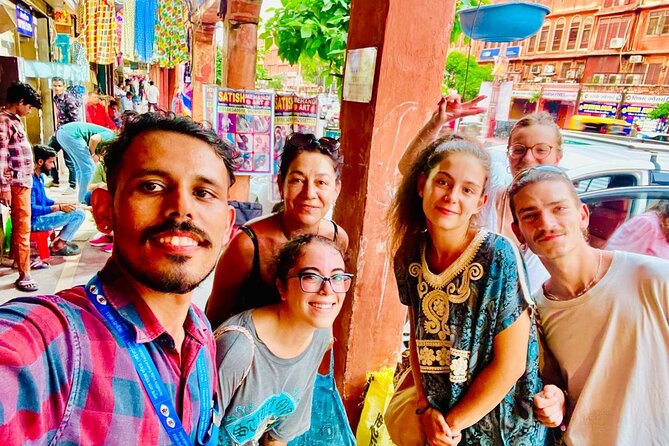
Then you stroll through Chandi Ki Taksal, a local bazaar with roots going back to the 17th century. This is one of those places where the city’s everyday life is happening alongside history. Your guide encourages you to explore at your own discretion, and the tour doesn’t push purchases.
You’ll likely notice the contrast: sacred stops focus on ritual and space, while the bazaar focuses on craft, trade, and noise. The way this walk mixes them helps you understand Jaipur as a living city, not a staged postcard.
If you enjoy people-watching and you like seeing how goods are displayed, you’ll appreciate this section. If you’re shopping-averse, you can still enjoy it fully by using it as a sensory break between bigger sights.






Mandir Shri Ram Chandra Ji: A Quiet Pause Built for Meaning

Next comes Mandir Shri Ram Chandra Ji, dedicated to Lord Rama. This is another about 20 minutes stop and it functions like a reset button. Temples can feel similar at first glance, but your guide explains what makes this one distinctive in spiritual tone and architecture.
This stop is listed as admission free, which is nice because it gives you time for calm observation without adding ticket costs.
If you’re traveling with kids, this is one of the stops that tends to land well—because there’s structure, ritual, and visuals to focus on without the need for technical museum knowledge.
Hawa Mahal From the Outside: The Design Lesson Pays Off
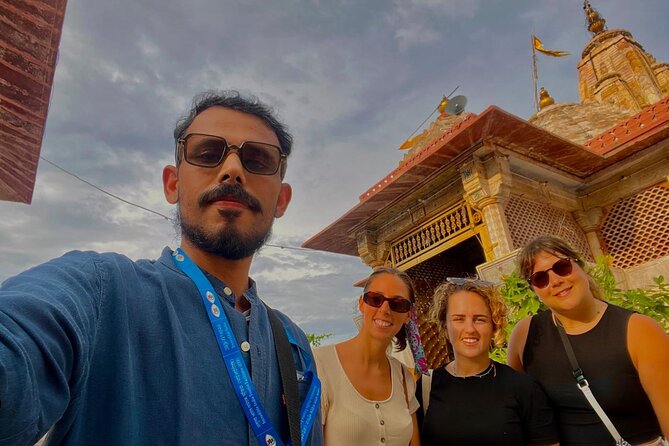
Hawa Mahal, or the Palace of Winds, is a must-see Jaipur icon. Here, you’ll admire the facade and learn the design logic behind it rather than spending time trying to fit an extra indoor visit into the schedule.
You’ll have around 15 minutes for this, which is enough to understand why it’s memorable. Even if you’ve seen pictures already, seeing the scale up close changes your sense of it.
Entry is not included (200 INR), and the tour notes you won’t be going inside. That can feel limiting if you want everything open-access, but the trade-off is you’ll keep moving through temples and markets instead of getting stuck in one site.
Mandir Shree Laxminarayan Ji: Vishnu and Laxmi in Practice

After Hawa Mahal, you visit Mandir Shree Laxminarayan Ji, dedicated to Lord Vishnu and Goddess Laxmi. You’ll spend about 25 minutes, which gives you room to slow down. The atmosphere tends to be different than the earlier temple stop, and your guide walks you through why the space matters in Hindu culture.
This one is also admission free, so it’s a value win. You’ll get more time without another payment point.
If you like learning how religion shapes architecture and daily routines, this is a strong segment. The explanations are meant to help you see the “why” behind what you’re looking at.
Johri Bazar and Katla Purohit Ji Ka: Shopping Street as Cultural Story
Once temples are done, you transition back into everyday Jaipur by heading to Johri Bazar, known for jewelry and handicrafts. Your guide gives you the context, and you can explore the shops on your own.
Then you move into the narrow lanes of Katla Purohit Ji Ka, another historic market area where the focus is more local and less showroom-like. The tour doesn’t push buying, but it gives you time to experience the street texture—how people move, how goods are displayed, and how the neighborhood feels.
This section is where the walk becomes genuinely memorable because you’re not just seeing history—you’re walking through it. If you enjoy markets, you’ll probably take photos you wouldn’t have planned. If you don’t love shopping areas, you can still benefit by using the time for orientation and cultural observation.
Isarlat Sargasooli: The Ending View That Makes the Walk Feel Worth It
The tour finishes at Isarlat Sargasooli, a historic 18th-century tower known for panoramic city views. This is where the “walking” part pays off: you get height, perspective, and a last chance to connect everything you saw below.
You’ll spend about 10 minutes at this stop—short, but timed for quick photos and a final look. Entry is listed as not included (200 INR).
It’s a great final stop because it gives your brain a chance to map the city. Seeing streets and landmarks from above can make your next day in Jaipur easier, even if your schedule is tight.
Price and Value: What You Pay vs. What You Gain
The advertised price is $20 for about 2 hours 25 minutes. For that kind of time and guide support, it’s strong value—especially because the route covers multiple major cultural sites plus market areas.
But here’s the part you should plan for: key entries are separate. Based on the tour’s listed fees, you may pay:
- Jantar Mantar: 200 INR
- City Palace: 1000 INR
- Hawa Mahal: 200 INR
- Isarlat Sargasooli: 200 INR
Those add up, so your total cost depends on which entries you choose to take in fully. Still, the value is that you’re not doing these sights solo. Your guide helps you understand what matters at each stop, and that’s where the money-to-memories ratio improves.
The tour includes a water bottle and offers an English and Spanish written guide, which helps if you want to review what you learned during the walk.
The Guide Factor: Expect Friendly, Question-Driven Storytelling
One of the best parts of this tour is the guide style. People describe guides like Adi and Ankit as passionate, with very clear explanations about local history, religion, and daily life. Some have backgrounds that let them answer detailed questions—one guide is described as a PhD student who could handle out-the-blue questions well.
You’ll also appreciate that the guide can adapt. One practical detail I like: the guide asks what topics you’re most interested in and adjusts the stories accordingly. That matters, because Jaipur can feel overwhelming fast, and you want the focus to match your curiosity.
You’re free to ask things, and the pacing is generally built for conversation, not just listening.
Best Fit: Who Should Book This Walk
This tour is a great match if you:
- Want a one-day orientation to Jaipur’s big themes
- Like temples plus markets more than only palace sightseeing
- Prefer a guide who explains meaning, not just facts
- Travel with kids or family members who still enjoy short, varied stops
It’s also a solid choice for solo travelers who want an organized path through busy areas, but don’t want a rigid “hurry up” schedule.
If you only want paid-entry attractions nonstop, you might find the market and temple pacing slower than your ideal. But if you want understanding, the mix is the point.
Quick Practical Tips Before You Go
A few things will make the tour smoother:
- Bring cash for monument entries listed as not included (the INR fees are posted per site).
- Wear comfortable shoes. This is a walking experience that moves through multiple neighborhoods.
- Plan for respect at temples. Keep your voice down and follow the guide’s cues.
- Use the markets for browsing, not only shopping. The best value here is learning how the streets work.
If you’re traveling with a group, the tour being private for your group can also help keep pace comfortable for everyone.
Should You Book This Jaipur Heritage Walk?
I’d book it if you want a well-paced heritage route that connects science, palaces, devotion, and street culture without making you choose only one side of Jaipur. The guide-driven storytelling and the free-standing “walk and understand” structure are the real win.
I would not book it only if you’re trying to minimize monument entry costs at all costs, because several big sites have separate fees. If you’re okay paying those entries, you’ll come away with a clearer sense of how Jaipur’s landmarks connect to religion, royalty, and daily life.
If you want to make your decision quickly: this is a smart, walkable “Jaipur basics” day with enough variation to keep it from feeling repetitive.