Taj Mahal at sunrise sets the tone. This private 4-day loop pairs big-name Mughal sights with a real shot at tigers in Ranthambore, all while your driver and guide stick with you through the day and your sunrise Taj Mahal visit gets guided time inside. I also like that you can tweak the plan after booking, so you are not stuck with a rigid script.
Here is the main catch: you will spend a lot of time in the car. Distances are big, and the schedule moves fast between Delhi, Agra, Ranthambore, and Jaipur, so pack patience along with your camera.
In This Review
- Key highlights worth planning around
- Why the Golden Triangle plus Ranthambore timing works
- Day 1 in Delhi: Jama Masjid, Chandni Chowk, and your rickshaw intro
- The long car day from Delhi to Agra: what to expect and how to handle it
- Day 2: sunrise Taj Mahal plus Agra Fort, then you drive into tiger country
- Ranthambore tiger safari: shared jeep reality and the best way to set expectations
- Day 3: Jaipur arrival with breathing room, not another marathon
- Day 4 Jaipur plan: Panna Meena ka Kund, Amber Fort, Jal Mahal, and the rest
- How this itinerary handles closures like a pro (and how you should react)
- Price and budgeting: $230 plus monument fees that you should plan for
- Who this tour fits best
- Should you book it
- FAQ
- FAQ
- What is the duration of this tour?
- How much does the tour cost?
- Are pickup and private transportation included?
- What hotels are included, and can I choose the quality?
- What is included with the Ranthambore safari?
- Is the safari private for only your group?
- Are monument entrance fees included?
- Is the Taj Mahal open every day?
- How does cancellation work for a full refund?
Key highlights worth planning around
- Private guide time all day: you are not bouncing between strangers or figuring things out alone
- Rickshaw ride in Old Delhi: a built-in, fun way to feel the neighborhood before the big monuments
- Sunrise Taj Mahal, guided inside: early timing plus a guide who helps you make sense of what you are seeing
- Ranthambore safari in a shared jeep or canter: realistic, government-run park logistics are part of the deal
- Jaipur day packed with classics: Amber Fort, City Palace, Jantar Mantar, Hawa Mahal, and more
- Hotel dinner included once: a small budget win after a long safari morning
Why the Golden Triangle plus Ranthambore timing works
This tour is built for people who want maximum variety without doing logistics day-by-day. You cover the Golden Triangle staples—Delhi, Agra, Jaipur—then you swap city streets for jungle roads in Ranthambore. That mix is the point.
I like how the pacing still feels guided. You get private local guides for sightseeing, and your driver stays with you in an air-conditioned car. In the reviews, people kept calling out that the driver and guides made the trip smooth, including named guides like Aamir, Shan, Isha, Ali, and Riyaz, plus drivers like Amar and Bilal.
The trade-off is simple. This is not slow travel. If your idea of a great day is long walks and unhurried stops, you may feel the pressure of the route.
Day 1 in Delhi: Jama Masjid, Chandni Chowk, and your rickshaw intro
Day 1 is Old Delhi plus a quick sweep of central Delhi, then a long push toward Agra.
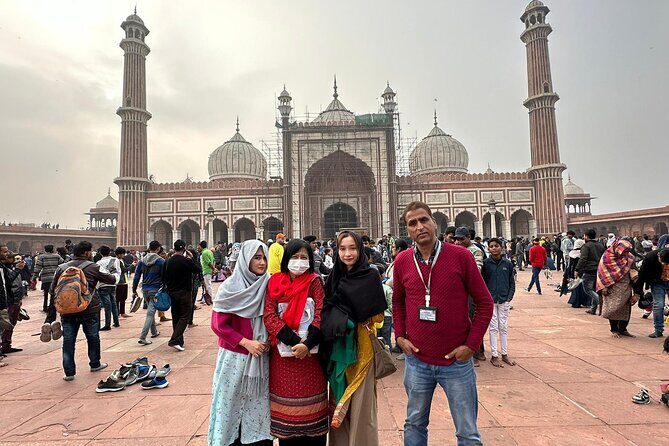
You start at Jama Masjid, one of Delhi’s major Mughal-era mosques (built by Shah Jahan in the 1650s). It is a dramatic opening. Expect to look up, look around, and take your time with the scale, even if you are only there about an hour.
Next comes Chandni Chowk, a classic shopping district where streets fill with spices, dried fruits, silver jewelry, and colorful saris. Even when you are not shopping, it helps you understand how daily life and commerce run side-by-side here. The stop is about an hour.
Then you get the fun part: the included rickshaw ride in historic Old Delhi (about 30 minutes). The tour route links to the area’s Mughal roots, and it is a great way to get your bearings fast without walking the entire maze. This is one of those inclusions that feels like a memory maker, not just another photo stop.
After that, you move to Red Fort (brief stop). It is free on this itinerary and you get a short window, so try not to spend all your time at just one angle. Quick tip: if you want more Red Fort depth, that usually requires extra time and focus beyond what this schedule allows.
You also stop at Qutub Minar, a UNESCO site (spiral staircase tower associated with the early Delhi Sultanate). Plan on about an hour here, but the entrance fee is not included. If you hate adding paperwork or extra costs at the last minute, this is one of the monuments where you should mentally budget early.
Later you head to Lotus Temple (free stop) and India Gate (free). Both are short, but they work as a break from the denser Old Delhi areas. Agrasen Ki Baoli (free) is another quick hit: a historic stepwell you will likely end up walking around slowly because it feels calmer than the shopping streets.
The day ends with lunch near your route and then a drive to Agra via the expressway. That means you are trading late-afternoon rest for getting to the next hotel city on schedule.
The long car day from Delhi to Agra: what to expect and how to handle it
The tour makes it possible to see a lot on Day 1, but it comes with the same theme every Golden Triangle itinerary has: you ride in the car between worlds.
The route from Delhi toward Agra is where your energy can drop. One review summed it up well: distances are big and you spend a lot of time traveling. That is the main drawback to watch for.
So plan your comfort like it is part of the itinerary:
- Wear shoes that work for uneven sidewalks and museum entrances later.
- Bring a light layer. Cars can swing between cool comfort and warm traffic.
- If you get travel-sick, take your usual prevention before you leave.
You will check in to your Agra hotel at the end of Day 1, and your afternoon is free to recover.
Day 2: sunrise Taj Mahal plus Agra Fort, then you drive into tiger country
Day 2 starts with the star: the Taj Mahal. The schedule is built around an early start for a sunrise view, and you do a guided visit inside that lasts about two hours. The entrance fee is not included, but the timing and guidance matter. A good guide helps you notice the details you would otherwise miss—patterns, layout, and how the building is meant to be read like a whole composition.
One key scheduling note: Taj Mahal remains closed on Friday. If your tour starts on Thursday, the itinerary order changes to Delhi – Jaipur – Ranthambore – Agra – Delhi, so you still see the Taj later in the trip.
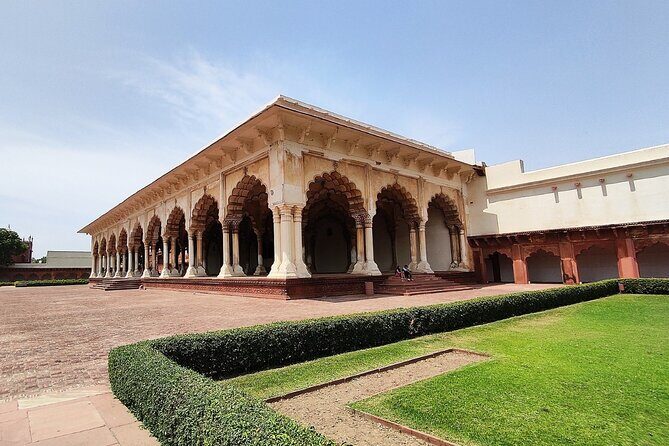
After the Taj, you move to Agra Fort, another UNESCO World Heritage site stop. This is about an hour with a guide, and again the entrance fee is not included. The fort is less about one icon photo and more about structure and history you can follow with someone explaining what you are looking at.
Then comes the pivot. After sightseeing, you continue toward Ranthambore, check in at your hotel, and the rest of the day is free at leisure. In other words: you finish the day with a hotel base near the park and save the tiger moment for tomorrow morning.
Ranthambore tiger safari: shared jeep reality and the best way to set expectations
The safari day starts early with a jungle safari in Ranthambore National Park. The time on the grounds is about 2 to 3 hours. You go out in a shared jeep or canter, and you travel with a trained guide from the park operations.
Here is what I like about how the tour handles this: it does not oversell a private wildlife guarantee. The safari is scheduled, but tiger sightings are never promised.
Vehicle notes matter. The tour aims for a shared jeep, but if jeeps are limited, it can switch to a shared canter, which is larger. In the additional info, the operator also explains that the safari zone is assigned based on availability and government-run operations, so your exact route can vary.
Language expectations are another practical point. The safari guide is described as English speaking, but the operator also warns that English ability may be limited. Translation-wise, you should expect basic-to-clear communication, not a fluent lecture.
Also, your schedule includes dinner at your hotel once. After a safari morning, that is more valuable than it sounds. You will likely want a meal without hunting for a place after the park.
Day 3: Jaipur arrival with breathing room, not another marathon
Day 3 is not just more driving. You get the safari morning first, then you go to Jaipur.
After the safari you should feel ready for a change of scenery, even if you are still carrying some fatigue. The itinerary has you check in to your Jaipur hotel, then you get the rest of the day free. That free time is important because it lets you reset before Day 4’s Jaipur sights.
If you do this trip as a family, this is the day that helps everyone stay patient. If you do it as friends, it is also when you can recover your energy for fort stairs and museum time.
Day 4 Jaipur plan: Panna Meena ka Kund, Amber Fort, Jal Mahal, and the rest
Day 4 is the big Jaipur lineup. You start with Panna Meena ka Kund, a stepwell that is often overlooked compared to the forts. The visit is short (about 20 minutes), but it is a quiet pause between more structured royal sites.
Then comes Amber Fort (about 2 hours). This UNESCO site is where the views and architecture do the heavy lifting. Entrance fee is not included. Amber is also the kind of place where it is easy to rush, so if you want photos and time to look, you may need to move at a steady pace and not linger only at one gate.
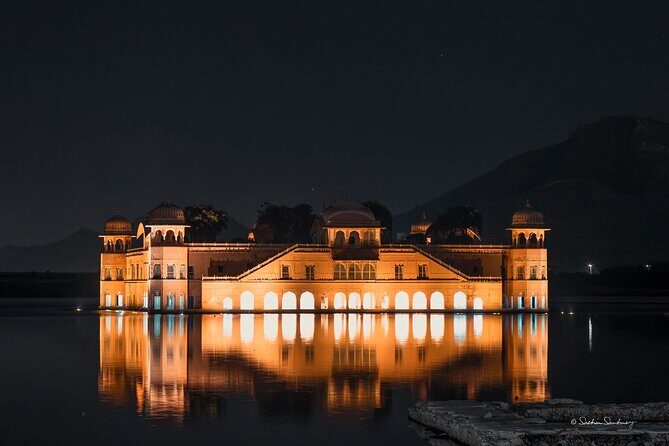
Next is Jal Mahal, the palace in the middle of Man Sagar Lake. The stop is about 30 minutes and the admission is listed as free on the itinerary. You are mostly taking in the exterior and the setting, so keep your expectations realistic.
Then you hit City Palace of Jaipur (about 2 hours). Entrance fee is not included. This place is more than a museum stop; it is a sense of how rulers organized ceremonial life and administration.
After that, Jantar Mantar takes about an hour (UNESCO; entrance fee not included). This site is tied to Rajput astronomy instruments created in the 1700s. If you like seeing how geometry becomes practical design, you will enjoy this more than you might expect.
You also stop at Hawa Mahal, the Palace of Winds (free stop, about 30 minutes). Even in a short visit, it is a good icon for what Jaipur looks like at a glance—pink and red sandstone, with those distinctive windows.
The day ends with Gatore Ki Chhatriyan, the royal crematorium complex (about 30 minutes, free stop). It is an easy way to finish with a quieter mood.
How this itinerary handles closures like a pro (and how you should react)
India’s monument schedules can be the difference between a smooth day and a frustrated one. This tour has built-in notes for two major closures you should keep in mind.
- Taj Mahal closed on Friday. If your start day is Thursday, the order shifts to Delhi – Jaipur – Ranthambore – Agra – Delhi to keep you from losing the Taj completely.
- Red Fort and Lotus Temple closed on Mondays. On those days, you visit Gurudwara Bangla Sahib instead (the tour calls this out explicitly for Monday).
The practical lesson: do not assume the same route every day. If your travel dates fall around those closure days, trust the adjustment and keep your mood flexible. The goal is still the same—see the big highlights without losing the day.
Price and budgeting: $230 plus monument fees that you should plan for
At $230 per person, this tour price sounds like a bargain only if you understand what is included and what is not.
Your price includes:
- 3 nights accommodation with breakfasts (3, 4, or 5-star options depending on what you choose)
- Private transport by air-conditioned vehicle plus your driver
- All sightseeing with private local guides
- Old Delhi rickshaw ride
- Ranthambore tiger safari in a shared jeep/canter
- Fuel and service charges
- One dinner at your hotel
What is not included is the big one: entrance fees for monuments, listed at $180 per person.
That $180 line item is why budgeting matters. Even though the tour covers many stops, several key sites charge entry fees (including Taj Mahal and other major sights). If you hate surprise expenses, it helps to treat the total as tour price plus monument fee from the start.
Also note the tour uses different car types depending on group size. For example, smaller groups use a sedan, while larger groups use a wagon or van. It sounds basic, but it matters in India traffic.
One more money-saver detail: your guides help you with entrance tickets so you are not stuck in queues just to pay. That is not glamorous, but it prevents wasted time.
Who this tour fits best
This is a strong match for:
- First-time India visitors who want structure and clear guidance
- Families and small groups who benefit from private guides but can still handle shared safari vehicles
- People who want a balanced mix: Mughal monuments, forts, geometry/astronomy, and then a tiger safari day
It may be less ideal if you:
- Hate long car hours between cities
- Want a fully private safari vehicle and a more open-ended pace
- Prefer fewer stops with more time per stop
If you fall in the first group, this itinerary is built to keep you moving without feeling lost.
Should you book it
I would book it if your priority is getting the big sights done with expert help, then adding Ranthambore as the wildlife highlight. The combination of private guides, a guided sunrise Taj Mahal, and the included Old Delhi rickshaw ride makes the first half feel like more than a checklist.
Just go in knowing the car time is real. Plan for early mornings, accept that tiger sightings are never guaranteed, and budget for monument entry fees. If you do that, you are set up for a trip that feels full, memorable, and surprisingly well run.
FAQ
FAQ
What is the duration of this tour?
The tour runs for about 4 days, including transfers between Delhi, Agra, Ranthambore, and Jaipur.
How much does the tour cost?
The price is $230 per person.
Are pickup and private transportation included?
Yes. Pickup is offered, and you get transport in an air-conditioned private vehicle with a driver.
What hotels are included, and can I choose the quality?
You get 3 nights of accommodation with breakfasts. You can choose options for 3-, 4-, or 5-star hotels.
What is included with the Ranthambore safari?
You get a tiger safari in Ranthambore National Park in a shared jeep or canter, along with a hotel dinner (listed as dinner at the hotel once).
Is the safari private for only your group?
No. The safari vehicle is shared (either a shared jeep or, if jeeps are not available, a shared canter).
Are monument entrance fees included?
No. Monument entry fees are listed separately at $180 per person.
Is the Taj Mahal open every day?
No. The Taj Mahal remains closed on Fridays.
How does cancellation work for a full refund?
You can cancel up to 24 hours in advance of the experience for a full refund. If you cancel less than 24 hours before the start time, the amount paid is not refunded.