REVIEW · NEW DELHI
Full Day Old and New Delhi City tour
Book on Viator →Operated by Anara India Tours · Bookable on Viator
Delhi hits fast, this route keeps it sane. This private full-day loop covers New Delhi’s big monuments and Old Delhi’s street scenes in one smooth plan, starting with door-to-door pickup and a private air-conditioned car.
What I really liked was the rickshaw ride through Chandni Chowk with the guide steering you toward what matters. The only real catch: entrance fees are extra, and the day is packed enough that timing can feel tight in heavier traffic.
In This Review
- Key highlights to know before you go
- How the 5 to 6 Hours Works: Pickup to Dropoff
- Qutub Minar and the Qutub Complex: Why This Tower Matters
- Lotus Temple: A Quiet Architectural Break (and Easy to Enjoy)
- India Gate: The Simple Stop That Hits Emotionally
- Humayun’s Tomb: Mughal Style with UNESCO Clout
- Gandhi Smriti: More Than a Name on a Map
- Sansad Bhavan (Parliament House): Seeing Modern Power Up Close
- Chandni Chowk by Rickshaw: Old Delhi’s Energy, Without Exhaustion
- Jama Masjid: One of the Big Mughal Mosques in India
- Red Fort: The Mughal Finale You’ll Remember
- Guides and Drivers: What the Best Reviews Pinpoint
- Price and Value: How $10 Fits With Extra Entry Costs
- Who Should Book This New and Old Delhi City Tour
- Should You Book This Old and New Delhi City Tour?
- FAQ
- What is the duration of the tour?
- How much does the tour cost?
- Are entrance fees included?
- Is pickup available?
- Is the transportation private and air-conditioned?
- Do I need to buy tickets for all stops?
- Is there a rickshaw ride?
- Is food included?
- Is the tour guide included?
- What is the cancellation policy?
Key highlights to know before you go

- Door-to-door pickup and drop-off from Delhi, Gurgaon, or Noida, so you waste less time figuring out transport.
- Private, air-conditioned car with a driver for comfortable city-to-city movement.
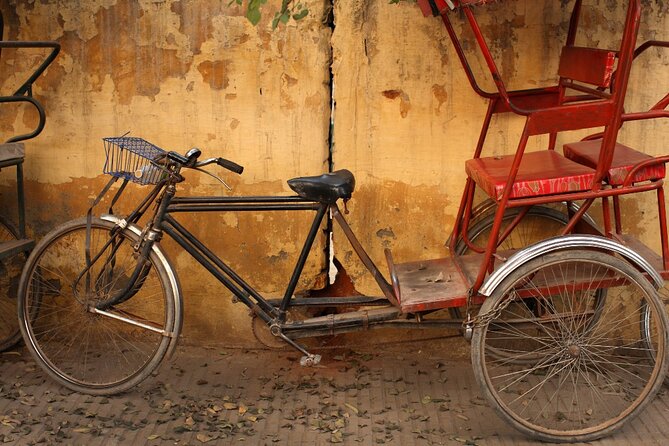
- Chandni Chowk by rickshaw, a great way to see Old Delhi’s market lanes without walking the whole time.
- A live guide at every stop, which turns famous names into real context.
- UNESCO hits plus modern landmarks, so the day shows both the old and the new sides of Delhi.
How the 5 to 6 Hours Works: Pickup to Dropoff
This tour is built for people who want a lot of Delhi in one day, without the stress of self-guided navigation. You get pick-up from your preferred location in Delhi, Gurgaon, or Noida, then you roll in a private car with a driver and a live guide.
Expect a typical 5 to 6 hour schedule. Some stops are short on purpose, which is great for first-timers, but you should still accept that it’s not a slow wander. The plan is designed to move between New Delhi and Old Delhi efficiently, so you can see the variety.
One small practical win: mineral water bottles are included. Delhi days can get hot, and this helps you stay comfortable while you’re out and about.
You can also read our reviews of more city tours in New Delhi


Qutub Minar and the Qutub Complex: Why This Tower Matters
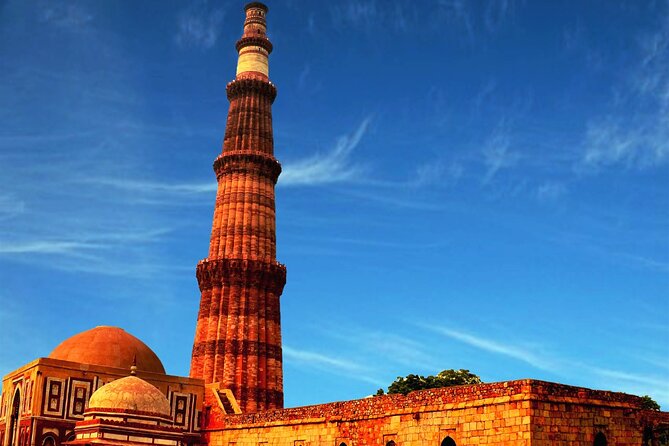
Your day kicks off with Qutub Minar, the tall 12th-century victory tower (about 73 meters) and a UNESCO World Heritage Site. Even if you’ve seen the tower in photos, seeing it in person changes the scale. It’s one of those monuments where your eyes keep traveling upward, then back out to the surrounding complex.
Plan for about 1 hour here. The listing notes that the admission ticket is not included, so factor in entrance cost. Security checks and ticket lines can also add a few minutes, so it helps if you arrive ready to move.
Best way to enjoy Qutub Minar: don’t treat it like just a tall object. Ask your guide what the complex represents historically and how the different buildings in the area connect to each other. That context is exactly why a guided day works so well.
Lotus Temple: A Quiet Architectural Break (and Easy to Enjoy)
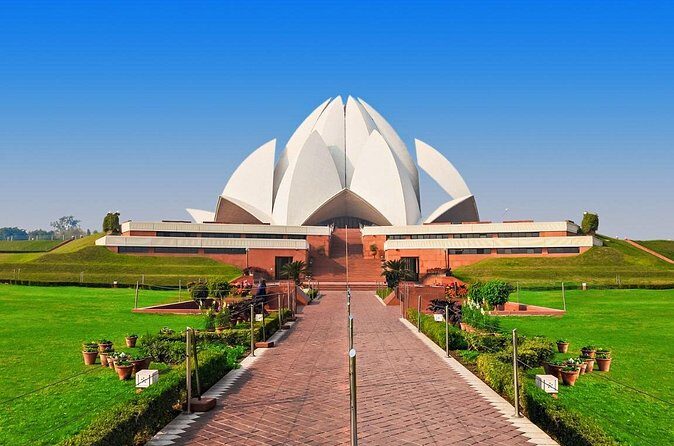
After the busy historic start, the tour slows down at the Lotus Temple. You’re looking at a Bahá’í House of Worship known for its lotus-inspired design, and it’s free to enter with access open to people of all religions.
Time here is about 30 minutes, which is enough to take in the layout and step away from the louder parts of the city. It’s also a good reset point. Old Delhi can feel hectic fast, so a calm architectural stop makes the rest of the day easier to handle.
Dress and behavior matter at places of worship, so keep it respectful. I like that this stop adds variety without demanding a long visit.
India Gate: The Simple Stop That Hits Emotionally
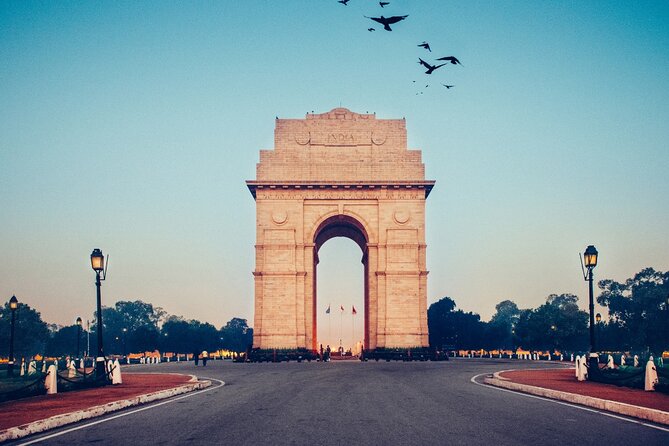
Then you head to India Gate, a war monument in central New Delhi, linked to the Indian troops who lost their lives in World War I. Admission is free, and your time is about 15 minutes.
This isn’t a “spend forever here” sight. It’s more like a moving checkpoint in the day. Even if you only do a quick look around, your guide can connect the monument to how Delhi remembers national events—and how public spaces work in India today.
If you’re the kind of traveler who likes taking in a city’s vibe from its grand public squares, India Gate is a strong fit.
Humayun’s Tomb: Mughal Style with UNESCO Clout
Next up is Humayun’s Tomb, a 16th-century tomb commissioned by Emperor Humayun’s wife, Empress Bega Begum, and also UNESCO-listed. This stop is scheduled for about 1 hour.
Like Qutub Minar, the admission ticket is not included. Still, it’s worth planning for the entry cost because this is one of the places where Mughal design feels both formal and human—symmetry, gardens, and the sense of space all work together.
A guided stop helps here. Without a guide, you might notice the big visual elements and miss the bigger story of how Mughal architecture evolved. With a guide, you can look at details without needing to memorize dates.
You can also read our reviews of more tours and experiences in New Delhi




Gandhi Smriti: More Than a Name on a Map
After the tomb, you’ll visit Gandhi Smriti, a museum and monument in New Delhi honoring Mahatma Gandhi. The listing doesn’t include admission here, and your time is about 30 minutes.
This stop adds something many monument-only itineraries miss: a personal story tied to a specific location. It’s also a useful balance after the grandeur of earlier stops. You’re not only looking at building design; you’re learning how a historical figure’s life connects to modern India.
This part of the day works best if you’re open to a slower kind of attention. It’s still a quick stop, but it tends to land emotionally if you give it your focus.
Sansad Bhavan (Parliament House): Seeing Modern Power Up Close
You also get a look at the circular Parliament House, often called Sansad Bhavan, created by architects Sir Edwin Lutyens and Herbert Baker. The tour mentions it as an architectural wonder representing democratic spirit, and it’s scheduled as a photo-and-look stop after Gandhi Smriti.
Admission specifics aren’t listed here, so treat this as a “see it, understand it” moment rather than a long visit. Still, it’s valuable because Delhi isn’t only ancient monuments. This gives you a sense of how power and planning show up in the city’s layout.
If you like architecture, your guide can point out why the shape and setting matter. If you don’t, you’ll still get a nice change of pace.
Chandni Chowk by Rickshaw: Old Delhi’s Energy, Without Exhaustion
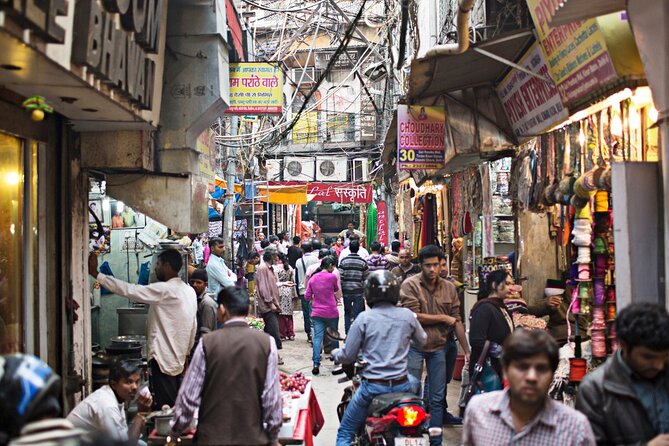
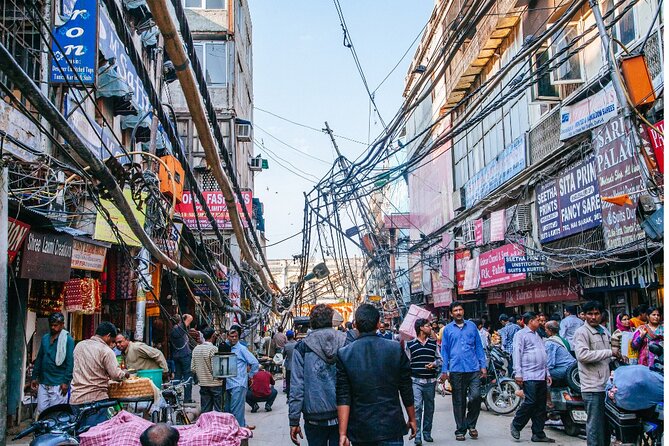
Now the tour shifts into classic Old Delhi mode: Chandni Chowk. Your scheduled time is about 1 hour, and the highlight is a rickshaw ride through the old passageways and market lanes.
This is one of the best values on the itinerary because rickshaws let you experience the lane rhythm without spending your legs all day. You’ll also get a real feel for how dense the area is and how markets spill into everyday life.
Chandni Chowk is also where you’ll notice the smell of spices, the look of fabric stalls, and the constant motion of commerce. The listing hints at a culinary legacy here, and even if you don’t stop to eat, your guide can help you understand what you’re seeing.
One consideration: it’s a market. That means noise, crowds, and a bit of mental overload if you’re tired. This is exactly where a guide makes the difference, because they can steer you through what to pay attention to.
Jama Masjid: One of the Big Mughal Mosques in India
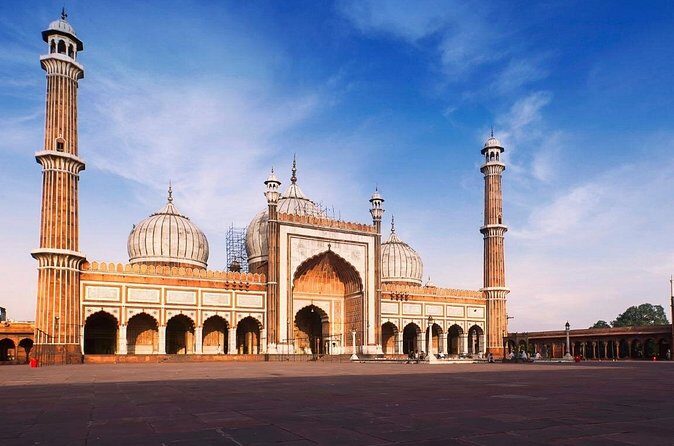
After Chandni Chowk, you go to Jama Masjid, one of India’s largest mosques and a 17th-century Mughal architectural marvel built by Emperor Shah Jahan. Your scheduled time is about 30 minutes.
The listing notes that admission ticket is not included for this stop. Still, it’s a major Delhi landmark, and it’s hard to overstate the visual impact of the domes and minarets.
A good guide helps you see past the obvious photos. Jama Masjid is also a lesson in scale and how religious architecture shapes a whole neighborhood’s identity.
This stop is also a good time to pause and reset your senses before finishing with Red Fort.
Red Fort: The Mughal Finale You’ll Remember
Your final sightseeing stop is the Red Fort, a 17th-century Mughal fort with famous red sandstone walls and imposing gates. The listing describes it as a stunning example of Mughal architecture, and while a specific time isn’t shown in the same way as earlier stops, it’s clearly part of the final stretch.
Like several major sights on the day, entrance fees are extra. Your guide will help you use the time well, focusing on the parts that make the fort so recognizable.
Red Fort can be busy, and it’s a common place to feel like you need to see everything at once. The trick is to let your guide prioritize. That’s one reason private, guided tours are worth paying for when you’re short on time.
Guides and Drivers: What the Best Reviews Pinpoint
A theme that comes through strongly is the human side: friendly, organized guides who make you feel safe and comfortable. People specifically name guides such as Nazish, Sanjay, Khalid, Anuj, and Vinay, and they mention strong guide support, smooth driving, and great guidance for photos.
I also appreciate the “quiet competence” angle. One guide is described as quite reserved but joking, another as a Delhi resident who knows the nook and corner of the city. Those details matter because Delhi’s streets aren’t always intuitive. A guide helps you avoid that awkward moment of wondering where to go next.
If you care about photography, it helps when someone knows where to stand and when to move. Several comments highlight strong photo help and an overall organized pace.
Price and Value: How $10 Fits With Extra Entry Costs
The tour price is $10 per person, and that’s the headline number. But you also need to plan for entrance fees of about $20 per person, since tickets for key stops are not included.
So what are you really paying for? You’re paying for:
- Private door-to-door transport
- A live guide across multiple major sites
- Mineral water
- Parking, tolls, and taxes
- A rickshaw ride in Old Delhi
That package matters because Delhi’s sights are spread out, and travel time can eat your day quickly. The private air-conditioned car can turn a stressful logistics day into a manageable one.
If you’re traveling with someone who also wants value (not just “cheapest”), this is a good option. If you’re the type who plans to skip some ticketed sites and only wants free ones, your total might feel less efficient once the $20 entrance fee is added.
Who Should Book This New and Old Delhi City Tour
I think this tour is a great fit if you:
- Want a first-time Delhi overview that covers both New Delhi and Old Delhi
- Prefer a private car over constant rides and walking
- Like having a guide connect monuments to stories
- Don’t want to negotiate street-level logistics on your own
It’s also solid for groups, because the tour is private and only your group participates. That can make the timing smoother, especially around crowded sites.
If you’re looking for a slow, deep, long-form exploration of one neighborhood, you might feel rushed. This is a highlights day—very good at variety, less built for lingering.
Should You Book This Old and New Delhi City Tour?
Yes, if you want a fast, structured day that hits major Delhi landmarks and still gives you Old Delhi’s street texture through the Chandni Chowk rickshaw. I like that it mixes big famous names (like Qutub Minar and Red Fort) with calmer breaks (like Lotus Temple) and a meaningful stop (Gandhi Smriti).
If you’re sensitive to entrance costs or hate tight scheduling between stops, then consider doing a smaller set of sights on separate days. But for many visitors, the private car, the guide, and the efficient route make this one of the more practical ways to see Delhi in a single shot.
FAQ
What is the duration of the tour?
The tour runs about 5 to 6 hours.
How much does the tour cost?
The price is $10.00 per person, and there is an additional $20.00 per person entrance fee not included in the tour price.
Are entrance fees included?
No. Entrance fees are not included, and the listing notes an entrance fee of $20 per person.
Is pickup available?
Yes. Airport / Hotel pick-up & drop is included, and pickup is offered from Delhi, Gurgaon, or Noida.
Is the transportation private and air-conditioned?
Yes. You get a private air-conditioned car with a driver.
Do I need to buy tickets for all stops?
Admission is listed as not included for some stops (like Qutub Minar and Humayun’s Tomb). Admission is free for others, such as Lotus Temple and India Gate.
Is there a rickshaw ride?
Yes. A rickshaw ride in Old Delhi (Chandni Chowk) is included.
Is food included?
No. Food and drinks are not included.
Is the tour guide included?
Yes. The tour includes live tour guide services at all places.
What is the cancellation policy?
You can cancel for a full refund up to 24 hours in advance of the experience start time. If you cancel less than 24 hours before, the amount is not refunded.