REVIEW · NEW DELHI
Full Day Delhi Temple Tour
Book on Viator →Operated by Deejohn Holidays India Tours · Bookable on Viator
Temples in Delhi start early and end in chant. This full-day circuit is interesting because you move through two faith cities at once: Hindu and Sikh landmarks in the morning, then the sound-and-light rhythm of ISKCON in the evening. I especially loved the private guide for just your party and the fact that lunch is included, so you’re not hunting for food between temples. One possible drawback: the schedule is tight, so it can feel a bit rushed if you want extra add-ons inside the big sites.
Over roughly 11 hours, you’ll get smooth A/C transport and a guided route that’s designed to keep you moving without turning your day into a scavenger hunt. Just be ready for worship rules: modest clothing, shoes off in many places, and at Swaminarayan Akshardham, you’ll deal with a phone/camera check at entry.
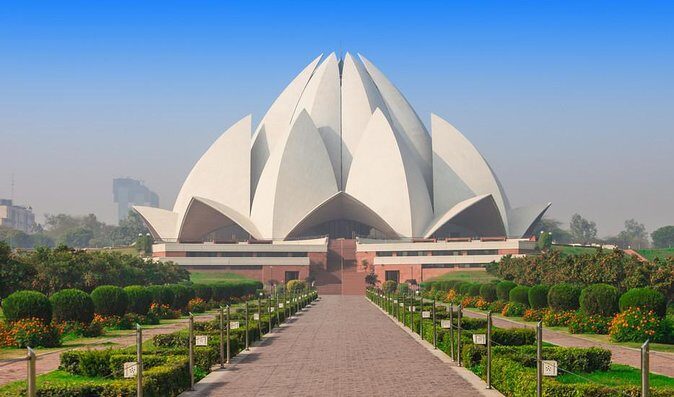
Plan around closures too. The Swaminarayan Akshardham Temple is closed on Mondays, and the Bahá’í Lotus Temple is also closed on Mondays, which can shift what you see. If you’re visiting on a Monday, treat this as a tour that may change shape.
In This Review
- Key highlights worth your attention
- A private Delhi temple day: how the timing really works
- Akshardham Temple at 10:00 am: rules first, then wow
- Dress and shoe rules at Akshardham
- Monday closure note (this affects your plan)
- Around noon at Gurudwara Bangla Sahib: calmer, meaningful, and very welcoming
- What makes this stop “worth it”
- Practical tip
- ISKCON Temple and the evening aarti: where the day turns sonic
- Why I like ending here
- Old and New Delhi from the road: don’t underestimate the drive time
- Lunch at Akshardham: timing matters more than you think
- How to make lunch work for you
- What the entrance fees and guide actually buy you
- Price and value: is $57 a smart deal?
- Clothing, shoes, and phone-free temples: your day’s hidden checklist
- Who this tour suits best (and who should choose differently)
- Should you book this Delhi Temple Tour?
- FAQ
- What is the duration of the Full Day Delhi Temple Tour?
- What does the price include for $57 per person?
- Which temples are visited on this tour?
- Is the Swaminarayan Akshardham Temple open every day?
- Are cameras and phones allowed inside Akshardham Temple?
- Can I get a vegetarian lunch?
Key highlights worth your attention
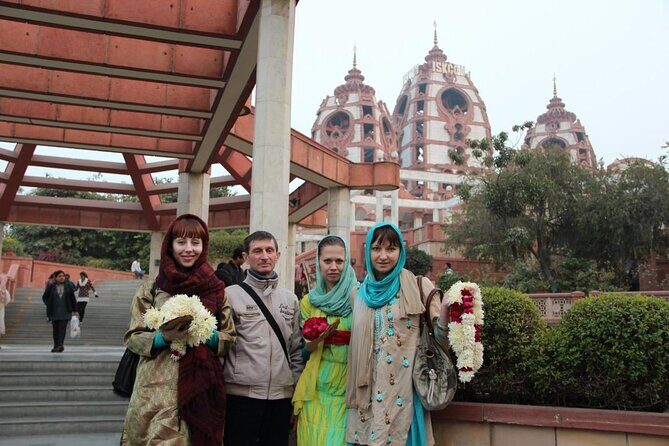
- Private vehicle + hotel pickup/drop-off so you can focus on temples, not traffic anxiety
- Akshardham Temple (world-record scale) and strict no-phone/no-camera rules inside
- Gurudwara Bangla Sahib with a sacred pond and an open welcome to all faiths
- ISKCON evening aarti that adds a real religious soundtrack to the day
- Lunch included with a vegetarian option available if you request it ahead of time
A private Delhi temple day: how the timing really works
This tour is built for one thing: seeing major Delhi worship sites in a single go, without wasting half your day on logistics. Pickup happens at 9:00 am from your hotel, then you’re taken by private A/C vehicle with a local guide handling the commentary and the route.
The day then stretches across two temple-heavy blocks: a morning run aimed at the biggest draw (Swaminarayan Akshardham), followed by Gurudwara Bangla Sahib around 12:30 pm, then evening time for an aarti ceremony at the ISKCON Temple as the light changes.
That timing is a good fit if you want structure. It’s also where you should set expectations: you’re packing a lot of sacred places into one day, so you’ll have to choose between a “see everything briefly” pace and spending extra time on deeper exploration.
You can also read our reviews of more tours and experiences in New Delhi



Akshardham Temple at 10:00 am: rules first, then wow
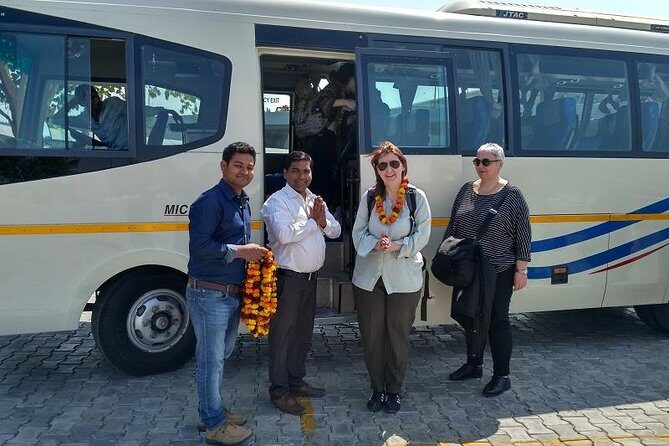
Swaminarayan Akshardham is scheduled for around 10:00 am. The complex is known as the Guinness World Record holder (world’s largest comprehensive Hindu temple, as announced in 2005), and you feel that scale immediately when you enter the grounds. Even if you’re not a serious temple person, the layout is designed to move your attention—path by path—so you understand why people come here as both worshippers and sightseers.
Before you walk in, know the entry rules. At Akshardham, cameras and mobile phones are not allowed inside, and you’ll hand them to staff at a cloakroom before entry. This matters because it changes how you experience the place. You can’t rely on quick photos for the memory. Instead, you pay more attention to the carvings, the water-and-stone features, and the way the complex flows.
Dress and shoe rules at Akshardham
You’ll also want to dress modestly: arms and legs covered. And like many places of worship in India, shoes must be removed in most temple areas. I recommend comfortable walking shoes because you’re on your feet for a while. If your shoes are even slightly uncomfortable, you’ll feel it by the time you reach the deeper parts of the complex.
Monday closure note (this affects your plan)
Akshardham is closed on Mondays. If you’re traveling then, you should go in knowing your morning stop may shift or be substituted. The good news: your guide will be managing these transitions in real time, so you’re not left guessing alone.
Around noon at Gurudwara Bangla Sahib: calmer, meaningful, and very welcoming
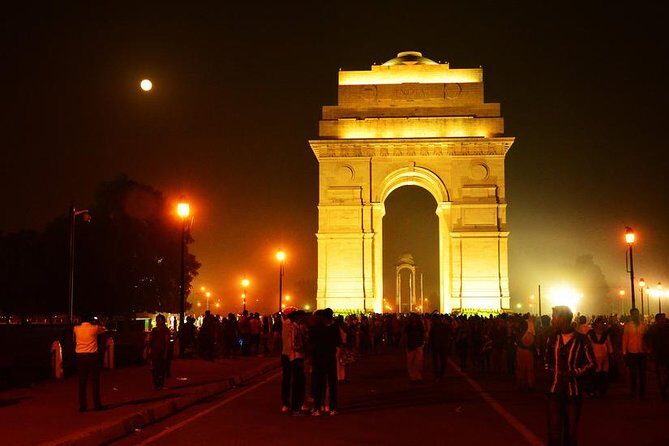
Next comes Gurudwara Bangla Sahib at around 12:30 pm. This is one of Delhi’s most prominent Sikh gurdwaras, and it has a strong reputation for welcoming people regardless of background—open to people of all castes, creeds, and faiths.
One detail I think many visitors will appreciate is the sacred pond inside the complex, where devotees take baths. You may see people washing with a calm focus that feels separate from the outside world. The pond isn’t just a photo stop. It’s part of a living practice, so I suggest you watch respectfully and keep your pace slow while you’re near it.





What makes this stop “worth it”
Gurudwara Bangla Sahib works well in the middle of the day because it’s a different emotional tone than Hindu temple sightseeing. Your senses shift from stonework and architecture to atmosphere and devotion. If you’ve been rushing in the morning, this stop is a good chance to slow down.
Practical tip
Expect the complex to feel busy. Even with a guide, you’ll want to follow signs and staff instructions closely. And again, modest dress and shoe rules apply here too.
ISKCON Temple and the evening aarti: where the day turns sonic
Late day brings the ISKCON Temple experience. The tour’s evening highlight is participating in an aarti ceremony at ISKCON as the night settles in. Aarti is where the day stops feeling like sightseeing and starts feeling like ritual. Lights, chants, and the rhythm of devotion make it easy to understand why people keep returning.
One thing to know from how this kind of tour plays out: access can depend on the time of day and the temple’s internal schedule. On some schedules, you might not be able to go everywhere inside before the ceremony, even if you can still join the aarti. If you’re the type who cares a lot about seeing every room, you might need a little flexibility.
Why I like ending here
Swapping your morning temples for an evening ceremony is smart pacing. Your brain has had time to process architecture earlier, and then you get sound and motion later. It also helps with daylight crowds—getting the ceremony when the atmosphere is set can feel more meaningful than ticking boxes.
Old and New Delhi from the road: don’t underestimate the drive time
Between stops, you’ll be in the car with your guide, including a guided look at highlights around Old and New Delhi. This part is often overlooked by travelers who just want the temple doors. But the drive time gives you context: where things sit relative to each other, how Delhi’s neighborhoods layer on top of each other, and why your route makes sense.
Also, the tour uses private transport (not shared buses), which helps a lot. You’re not waiting for strangers to find the right entrance. You’re not playing guessing games with timing. That’s not glamorous, but it’s part of why this day feels smoother than DIY temple hopping.
Lunch at Akshardham: timing matters more than you think
Lunch is included, and it’s described as a highlight for many visitors. Since you’re packing two major stops around late morning and early afternoon, having lunch slotted in takes pressure off your day. You’re not searching for food right when you’re ready to crash.
There’s also a vegetarian option available if you request it at booking. This is useful if you know you’ll want a straightforward meal without having to negotiate options while you’re already tired.
How to make lunch work for you
Don’t plan to use lunch to “catch up” on sightseeing. It’s there to reset your energy so you can handle the afternoon and evening with fewer regrets. If you’re wearing new shoes, this is a good time to let your feet breathe.
What the entrance fees and guide actually buy you
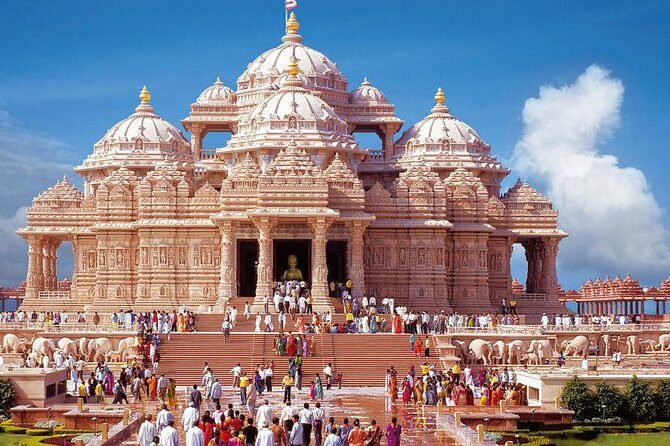
This tour includes entrance fees to temples and a professional local tour guide, plus the transport and lunch. That combination is the core value: you’re paying for less time spent on logistics and more time with a guide who can interpret what you’re seeing.
A local guide matters most at big complexes like Akshardham. You’ll hear the significance and context behind what you’re looking at, which makes the carvings and ceremonies feel less like decorative noise. At Gurudwara Bangla Sahib and ISKCON, the guide can also help you understand what’s going on without turning the experience into a rushed checklist.
And because it’s a private tour/activity, you’re not squeezed into a huge group where you can’t hear, can’t move, and can’t ask questions.
Price and value: is $57 a smart deal?
At $57 per person, the value comes from bundling. You’re not just paying for entry tickets. You’re also paying for:
- Hotel pickup and drop-off
- A/C private vehicle transport
- Professional local guide
- Lunch
- Monument fees/entrance fees
For Delhi, that kind of bundle can be hard to recreate cheaply on your own once you add transport and guided time. If you’re traveling with someone and you’d otherwise pay for taxis plus separate entry tickets, the price starts looking more reasonable.
One more value angle: your time. Temple days can eat hours if you’re coordinating rides, finding the right entrances, and figuring out shoe/phone rules. This tour handles that for you—so you buy back time, and time is where good travel days are won.
Clothing, shoes, and phone-free temples: your day’s hidden checklist
This tour has clear rules, and they’re there for a reason: respect and smooth entry. The most important ones:
- Dress modestly with arms and legs covered
- Shoes are removed in most worship areas
- At Akshardham, no cameras or mobiles inside; you store them at a cloakroom
If you want my practical advice: wear clothing that’s easy to move in and won’t make you tug at yourself constantly. And if you’re the kind of person who likes taking quick snapshots, remember that Akshardham is phone-free inside. Plan to rely on memory and what you can view from allowed areas rather than a thousand pictures.
Who this tour suits best (and who should choose differently)
This is a great fit if you:
- Want a structured Delhi temple day with a guide and transport
- Prefer less planning and fewer “where do we go next?” moments
- Like religious architecture and ceremonies, not just one big photo stop
- Travel as a pair or small group and want a more personal pace than a big group tour
It’s less ideal if you:
- Want lots of free time at each site to wander deeply on your own
- Get frustrated by fast transitions between stops
- Are traveling on a Monday and strongly need specific Monday-open attractions
Should you book this Delhi Temple Tour?
I’d book it if your goal is a well-run, all-in-one Delhi temple circuit—especially if you care about getting the context and not dealing with the day’s logistics. The biggest reasons to choose it are the private guide, entrance fees included, and the fact that lunch is handled.
Skip it or rethink the plan if you’re the type who needs long stays at major sites. Akshardham is famously more than a single quick walk-through, and a tight schedule can limit extra activities you might want. Also, if you’re visiting on a Monday, closures can change what you see, so you’ll want to be flexible about the day’s flow.
FAQ
What is the duration of the Full Day Delhi Temple Tour?
The tour lasts about 11 hours.
What does the price include for $57 per person?
It includes hotel pickup and drop-off, A/C transport by private vehicle, a professional local tour guide, lunch, and monument/entrance fees.
Which temples are visited on this tour?
The tour includes the Swaminarayan Akshardham Temple, Gurudwara Bangla Sahib, and the ISKCON Temple experience with an evening aarti ceremony.
Is the Swaminarayan Akshardham Temple open every day?
No. Swaminarayan Akshardham Temple is closed on Mondays.
Are cameras and phones allowed inside Akshardham Temple?
No. Cameras and mobile phones are not allowed inside Akshardham Temple. You can hold them for you at the cloakroom before entry.
Can I get a vegetarian lunch?
Yes. A vegetarian option is available if you advise at booking.
If you want, tell me your travel dates and whether you’re visiting on a Monday. I can help you sanity-check how the closures might affect the day’s stops.