REVIEW · AGRA
Full-Day City Tour of Agra visit The Taj Mahal, Agra Fort & Fatehpur Sikri
Book on Viator →Operated by Hire Taxi India · Bookable on Viator
Three UNESCO sites in one long day.
This full-day Agra city tour keeps the focus on the big Mughal names, with the Taj Mahal plus Agra Fort and Fatehpur Sikri, all handled with pickup and a private air-conditioned car. I especially like the built-in time savers, including golf cart rides, which help you see more without turning your morning into a leg workout.
I also like that the day includes an actual break: a buffet-style lunch at a local restaurant, not just a quick snack stop between monuments. One thing to keep in mind is the Taj Mahal closure—if your day falls on a Friday, you’ll need to plan around that since the tour notes the site is closed then.
In This Review
- Key things to know before you go
- The 8am-to-evening rhythm (and how it affects your day)
- Taj Mahal: golf cart timing and the Friday closure reality
- Agra Fort’s red sandstone and Akbar-era mix of styles
- Fatehpur Sikri: the ghost town and why your guide matters
- Buffet lunch: a needed reset between three monuments
- Shopping in Agra: marble inlay, leather, embroidery, and what to watch
- About the guide and why the explanations matter
- Price and value: is $96 a good deal for this route?
- Who this tour suits best (and who should reconsider)
- Should you book this full-day Agra tour?
- FAQ
- FAQ
- What time does the tour start?
- How long is the full-day tour?
- Which UNESCO sites are included?
- Are entrance fees included?
- Are golf cart rides included?
- Is lunch included, and can I request vegetarian food?
- What is the shopping part like?
- When does the tour end and where do you get dropped off?
- Is the Taj Mahal open every day?
Key things to know before you go
- Golf carts help you cover the Taj Mahal faster so you can spend more time looking, not waiting.
- You’ll hit all three UNESCO stops: Taj Mahal, Agra Fort, and Fatehpur Sikri.
- Akbar’s building program is the thread connecting the fort and the ghost town.
- Entrance fees are included, so you’re not scrambling at each gate.
- You get shopping time in Agra for marble inlay, leather, embroidery, and brass items.
- Lunch is included, with a vegetarian option available if you book ahead.
The 8am-to-evening rhythm (and how it affects your day)

The tour runs about 9 hours, starting with an 8:00am pickup from either your Agra hotel or Agra Cantt Railway Station. You ride in a private, air-conditioned vehicle with your guide, moving between stops as traffic and timing allow. It’s a practical setup for a day that includes three major sites—without this kind of scheduling, you’d spend extra energy coordinating rickshaws, entry lines, and routes.
The day is structured with an early monument push, a lunch break, then an afternoon drive to Fatehpur Sikri. You wrap up around 6:00pm, with drop-off back to your hotel or the railway station. If you’re the type who hates rushing, the pacing still works, because the tour builds in help where it counts—like using golf carts at the biggest walking areas.
You can also read our reviews of more city tours in Agra



Taj Mahal: golf cart timing and the Friday closure reality
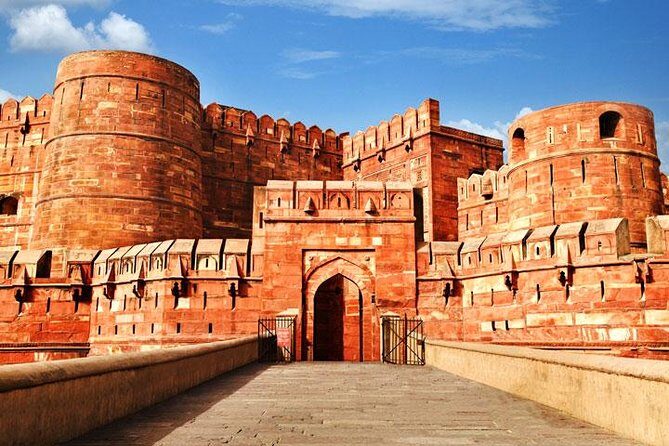
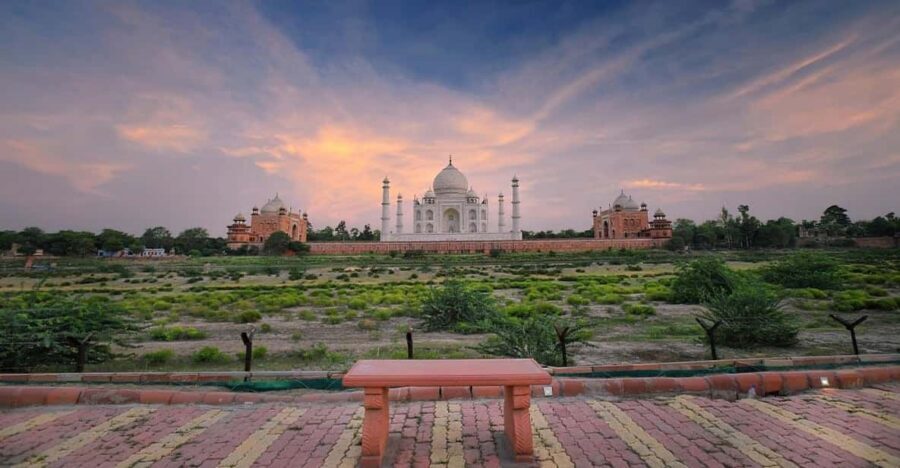
Your first big stop is the Taj Mahal, the UNESCO World Heritage site that most people picture the moment Agra comes up. This tour typically starts here in the morning, which matters because light and heat both play a role in how enjoyable the visit feels. You’ll be moved around the sprawling complex by golf cart, a real advantage when you’re dealing with long distances inside the grounds.
The visit is about 2 hours with entry included. That’s usually enough time to see the main viewpoints, take photos from different angles, and still have time to read what your guide points out about the monument’s design and meaning. The golf cart doesn’t remove the need for walking, but it removes the pointless walking that can drain your energy before you even get to the best views.
One heads-up: the Taj Mahal is closed on Fridays. The tour specifically flags this, so don’t ignore it. If you’re traveling on a Friday, confirm what your operator plans to do with that day’s itinerary before you commit—because you can’t reliably count on seeing the Taj in full.
Agra Fort’s red sandstone and Akbar-era mix of styles
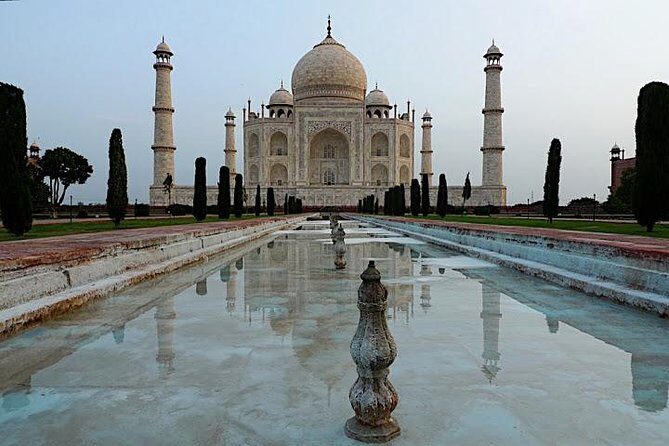
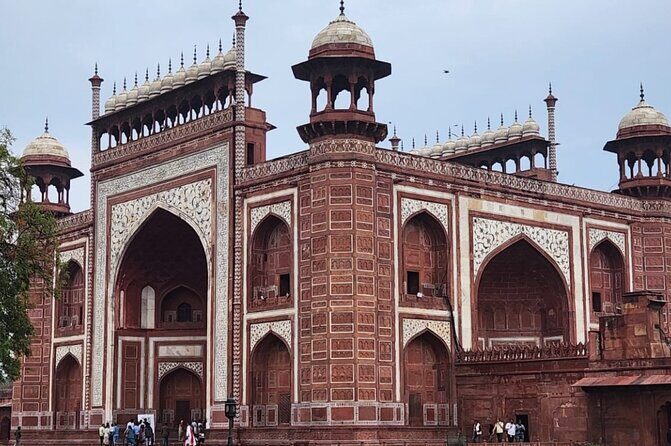
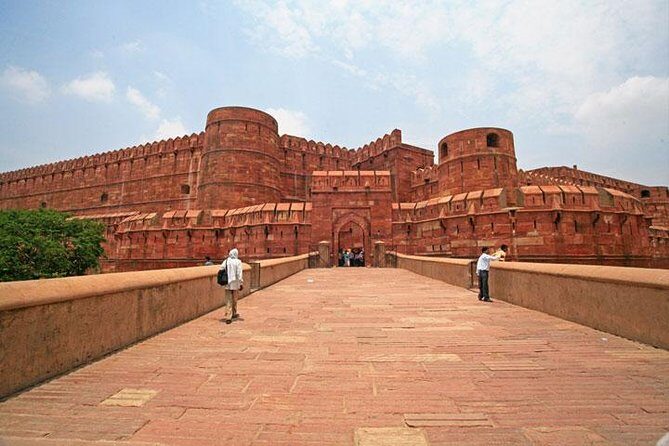
After the Taj Mahal, you move to Agra Fort, another UNESCO site with a very different feel. Instead of white marble drama, you get red sandstone, courtyards, and a fortress built to hold power. This stop lasts about 1 hour, with admission included.
Here’s why this part is worth your time: Agra Fort connects directly to the 16th-century Mughal story, especially through Emperor Akbar. Your guide explains the fort’s significance and the way its architecture reflects a blend of Central Asian and Hindu influences. That blend isn’t just academic—it changes what you notice. You start seeing details like how spaces are arranged for defense and ceremony, not just how beautiful the buildings look from the outside.
Because your time inside is capped, go in with a “best effort” mindset. Pick a couple of areas to focus on, ask your guide to point out the most important viewpoints, and don’t get stuck trying to photograph everything from every possible angle. Agra Fort rewards attention, not speed.
Fatehpur Sikri: the ghost town and why your guide matters
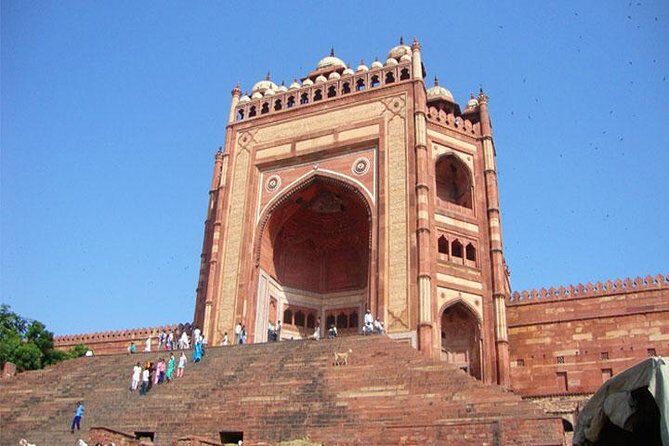
Next comes the third UNESCO site: Fatehpur Sikri, often described as a perfectly preserved ghost town. You head there after lunch, with the drive scheduled in the afternoon. The time on-site is about 3 hours, and this is the place where the day really becomes more than sightseeing.
This tour includes a guide-led look at how Fatehpur Sikri was built and why it was abandoned after a relatively short period. The key connection is the same Mughal ruler again—Akbar—who is linked to both Agra Fort and Fatehpur Sikri. That repetition is helpful: you get to compare styles and purpose, and you start to understand how Mughal architecture functioned as both politics and design.
You also get a golf cart ride at Fatehpur Sikri, which makes a big difference here. The “ghost town” layout means you can walk between clusters of buildings, and without transport help you’d burn too much time just moving. With the cart support, you can spend more time learning what each section is for and where to focus your attention.
This stop is also where the architecture details start to feel practical. You’ll likely notice how the structures relate to each other—courtyards, halls, and religious spaces—so it doesn’t feel like you’re looking at random ruins. It feels like a planned site, even in its quiet, abandoned state.
Buffet lunch: a needed reset between three monuments
You’ll stop for buffet-style lunch at a local restaurant between Agra Fort and Fatehpur Sikri. This is one of the best inclusions on the whole tour because it prevents the most common Agra mistake: trying to “grab something quick” near a major site, then paying more and getting less.
The tour notes that vegetarian options are available if you book ahead. If you have strong dietary needs beyond vegetarian, the safest move is to message the operator in advance—your food situation can change quickly in busy, tourist-heavy areas.
Even if you’re not a picky eater, keep your expectations grounded. This is not a luxury dining experience. It’s a functional, filling break that helps you keep your energy for Fatehpur Sikri’s longer walking routes and photo stops.
You can also read our reviews of more tours and experiences in Agra





Shopping in Agra: marble inlay, leather, embroidery, and what to watch
By early evening, you get time for souvenir shopping in Agra. One stop is listed at Sanskriti’s Imperial Gems, with the tour giving you a chance to browse local handicrafts tied to Mughal-era tastes. You might see items like marble and soft stone inlay work, plus leatherwork, Zari-style embroidery, brass objects, jewelry, carpets, and more.
This is a high-interest part of the day, but it can also be where visitors get uneasy. Here’s how to approach it without stress:
- Treat it like browsing first, buying second.
- Ask what the item is made of and how it’s finished.
- If you bargain, do it calmly and keep it friendly. You’re negotiating, not starting a debate.
Also, remember this shopping time is scheduled into a full-day route. You’re not likely to have unlimited hours. If you care about one category—say marble inlay—prioritize it early and don’t let decision fatigue eat your time.
About the guide and why the explanations matter
A strong guide can turn “I saw the place” into “I get it.” One tour write-up praises a guide named Mahesh for detailed knowledge about the historical sites. That’s exactly the kind of guiding style that helps at UNESCO locations, because the monuments are layered. Without context, you might focus only on what’s obvious; with it, you notice how the design, politics, and religious purpose connect.
On this route, the guide’s job is especially important because the day spans three different kinds of power:
- the Taj Mahal as a statement of love and imperial design,
- Agra Fort as fortified authority and architecture,
- Fatehpur Sikri as a planned Mughal city complex.
When those get explained in plain language, you’ll walk away with a clearer mental map of what you saw.
Price and value: is $96 a good deal for this route?
At $96, this tour is priced for a full, structured day that usually costs more when you arrange it piece by piece. The value comes from several bundled items:
- Monument entrance fees included (so you’re not adding surprises at each gate)
- A professional private guide
- An AC vehicle for all transfers
- Buffet lunch
- Water bottles throughout
- Mobile ticket
The “private group only” setup also matters. You’re not stuck in a big bus crowd where your schedule and pace feel out of your control. On a day like this—hot sun, long sites, and three UNESCO locations—private pacing is a big part of the comfort.
That said, the main drawback for some budgets is that it’s not designed as a bargain-hunt day. If you only want one or two monuments, you might spend more than you need. But if you want all three, this kind of package usually saves time and friction more than it saves money.
Who this tour suits best (and who should reconsider)
This tour is a great fit if you:
- want a first-time introduction to Agra’s Mughal highlights,
- prefer guided context over wandering alone,
- value time savers like golf carts,
- like the idea of a fixed route with hotel/rail pickup.
You might reconsider if:
- you’re traveling on a Friday and can’t flex dates (Taj Mahal closure is a real factor),
- you enjoy totally free-form browsing with no scheduled shopping stop,
- you only care deeply about one site and would rather spend more time there than move between monuments.
Should you book this full-day Agra tour?
If you want the big three—Taj Mahal, Agra Fort, and Fatehpur Sikri—in one day with transport, tickets, a guide, lunch, and built-in time savers, I’d say this is a sensible booking. The golf cart support at the major areas is the kind of practical inclusion that makes the day feel smoother, especially under heat and time pressure.
Just double-check your travel date for the Friday Taj Mahal closure, and if you have dietary needs, request the vegetarian option early. Do that, and you’ll get a well-organized day that shows you Agra at the level most people wish they could do in their first visit.
FAQ
FAQ
What time does the tour start?
Pickup starts at 8:00am from your Agra hotel or Agra Cantt Railway Station.
How long is the full-day tour?
The duration is about 9 hours, though transfer times can vary with traffic.
Which UNESCO sites are included?
You visit the Taj Mahal, Agra Fort, and Fatehpur Sikri.
Are entrance fees included?
Yes. Monument entrance fees are included in the tour.
Are golf cart rides included?
Yes. Golf cart rides are included at the Taj Mahal and at Fatehpur Sikri.
Is lunch included, and can I request vegetarian food?
Yes. Lunch is included as a buffet-style meal. A vegetarian option is available if you advise at booking.
What is the shopping part like?
You get time for souvenir shopping in Agra, including items such as marble handicrafts, Zari-style embroidery, leatherwork, brass objects, jewelry, and carpets.
When does the tour end and where do you get dropped off?
You return to the meeting point around 6pm, either to Agra Cantt Railway Station or back to your hotel.
Is the Taj Mahal open every day?
No. The tour notes that the Taj Mahal is closed on Fridays.