REVIEW · NEW DELHI
Exclusive Full-Day Guided Tour of Old and New Delhi
Book on Viator →Operated by Tourinza India · Bookable on Viator
Delhi can be a full-contact day.
This tour is interesting because it keeps you moving through Old and New Delhi with a private guide and air-conditioned car, so the long distances don’t feel like a slog. I particularly like the Old Delhi beginning with the tuk-tuk ride and the straightforward guidance at major sights like Jama Masjid and Qutub Minar. One possible drawback: it’s still an all-day plan, so you’ll want comfortable shoes and a calm attitude about crowds and traffic.
What makes it work is the pacing. You pick your pickup time between 8:00 and 10:00, you’re met by the guide at Sunheri Masjid, then you get carried along to the next stop with minimal decision-making. The day mixes big-ticket monuments with everyday Delhi moments like the spice market, so you come away with both the landmarks and the street-level feel.
In This Review
- Key things to know before you go
- How the private guide and AC car make Delhi manageable
- Old Delhi start: Jama Masjid and the tuk-tuk ride past busy bazaars
- Chandni Chowk spices: learning what you’re actually looking at
- Red Fort, Gurudwara Bangla Sahib, and India Gate photo moments
- Humayun’s Tomb and Akshardham timing: two very different Delhi icons
- Qutub Minar’s UNESCO complex and the Lotus Temple finish
- Timing and comfort in an 8-hour Delhi sprint
- Price and value: what $22.03 covers (and what doesn’t)
- Who this tour is best for (and who should plan something else)
- Small but important tips that make the day smoother
- Should you book this Old and New Delhi tour?
- FAQ
- What time does pickup happen?
- Where can I be picked up from?
- How long is the tour?
- Is this tour private or shared?
- Are entrance fees included?
- What happens on Monday if Akshardham is closed?
- What vehicle will I ride in?
- Do I need a photo ID?
Key things to know before you go
- Private guide + private vehicle: you’re not sharing your day with strangers.
- Old Delhi tuk-tuk ride from Sunheri Masjid: it’s a fun way to see the bazaars before you start sightseeing on foot.
- Entrance fees are an option: monument tickets are included only if you choose the entrance-fees bundle.
- Akshardham swap on Monday: if Akshardham is closed, your plan adjusts to Humayun’s Tomb instead.
- Bring a photo ID: it’s needed for monument entry checks.
- Car size matches your group: sedan for 1–2, wagon for 3–5, van for larger groups.
How the private guide and AC car make Delhi manageable
Delhi’s the kind of city where you can see a lot in a day, but only if you keep logistics simple. This tour does that with pickup anywhere in Delhi, Noida, Gurugram, Ghaziabad, or Faridabad, and a schedule that’s built around getting you from one “anchor” sight to the next without you having to plan routes or figure out transport.
The air-conditioned vehicle matters more than it sounds. Even on milder days, afternoons can feel hot and bright, and your time indoors at monuments is only a slice of the total. With the chauffeur-driven car, you get real recovery time between stops, plus an easier rhythm for photos, timing, and bathroom breaks.
The guide is also doing more than reciting facts. A big part of the value is helping you understand what you’re looking at quickly—why Jama Masjid is where it is, what Qutub Minar represents, and how New Delhi’s broad government spaces contrast with Old Delhi’s dense streets. You’re not stuck reading signage while crowds swirl around you.
You can also read our reviews of more guided tours in New Delhi



Old Delhi start: Jama Masjid and the tuk-tuk ride past busy bazaars
Your day begins with pickup, then you meet your guide at Sunheri Masjid. From there, you sit back in a tuk-tuk and ride through Old Delhi’s colorful, busy market lanes while your guide explains the role these bazaars play in locals’ daily life.
This is a smart start. You ease into the chaos instead of being dropped in the middle of it. It also sets the tone: Old Delhi isn’t just “historic buildings.” It’s people buying spices, using narrow streets, and living around centuries-old landmarks.
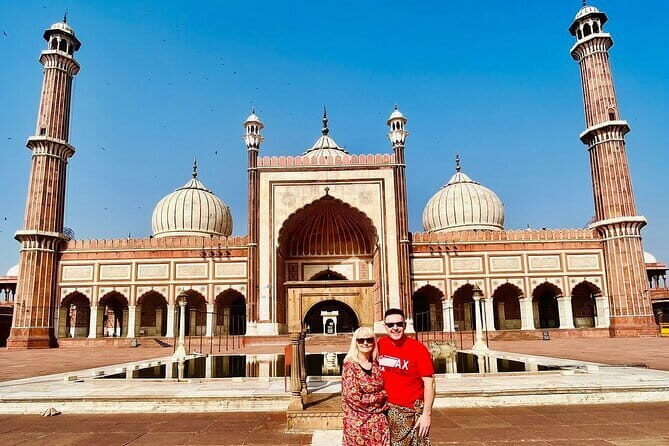
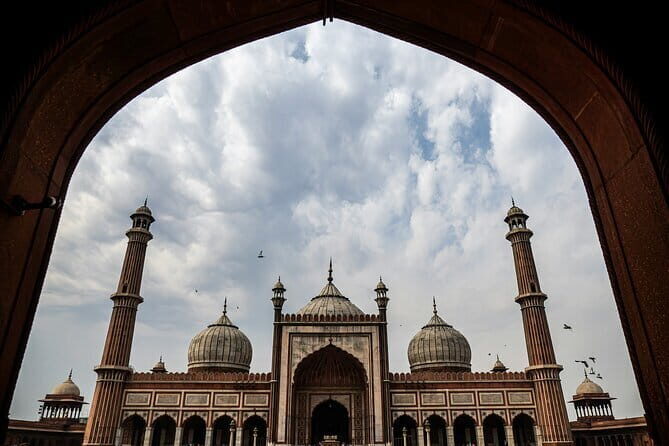
Jama Masjid is the first major stop. It’s India’s largest mosque, built in 1656 with the help of 5,000 workers. You’ll spend about an hour walking the red sandstone courtyard and soaking in the scale. If you’ve never visited a big working mosque before, expect a place with activity and strong visual impact—architecture, symmetry, and people moving through the space like it’s part of everyday life.
Practical note: dress and behavior matter at religious sites. Bring clothing that covers appropriately and plan to go a bit slower than you think you’ll need.
Chandni Chowk spices: learning what you’re actually looking at
After Jama Masjid, you move to Chandni Chowk, one of Delhi’s most famous markets. This is where the tour switches from monuments to senses. You’ll spend time at the spice market and let the smells and colors do the work.
The best part here is the way the guide frames spices: not just name-dropping, but talking through interesting facts and uses of common spices. That turns “shopping time” into “understand what’s in your hand” time. If you’re the type who likes to buy small gifts—tea blends, spice mixes, or household staples—this stop gives you real context.
You don’t need to become a spice expert to enjoy it, though. Just remember the market can be busy. If you want photos, be ready for people in your shots and keep your pace steady.
Red Fort, Gurudwara Bangla Sahib, and India Gate photo moments
Next comes a chain of landmarks that cover three different slices of Delhi’s identity.
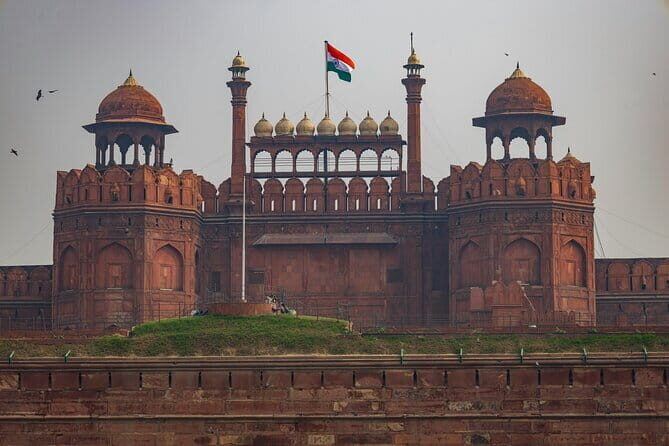
At Red Fort, you’ll see a massive Mughal-era structure built by Shah Jahan between 1639 and 1648. As the main residence of Mughal emperors, it carries that Indo-Islamic and Mughal architectural language across its walls and layout. You’ll get enough time (about an hour in the full-day flow) to appreciate it without feeling rushed like a drive-by postcard.
Then you head to Gurudwara Bangla Sahib. Entry is free, and your stop is shorter—around 30 minutes. This stop is worth it because it adds a different faith tradition and a calmer feeling than you might expect in a big city. It’s also tied to an important story about the eighth Sikh Guru visiting in 1664 and curing people during a smallpox and cholera epidemic by distributing water from the tank. Whether you come for the story, the architecture, or the atmosphere, it gives the day a human center.
India Gate follows. You’ll spend around 15 minutes here, and the focus is on the 1921 Tomb of the Unknown Soldier concept, with names carved on the wall of 13,300 Indian army servicemen who died during the First World War. This is another “big scale” stop, but it works well because it’s brief and reflective.
Between India Gate and the next monument, you also drive past Parliament House and stop for photo opportunities, plus a drive-by of the President’s House. You don’t get a long walk-through of government buildings here. Still, the chance to photograph these landmarks from the road is a nice way to connect Old Delhi energy to New Delhi’s official geometry.
Humayun’s Tomb and Akshardham timing: two very different Delhi icons
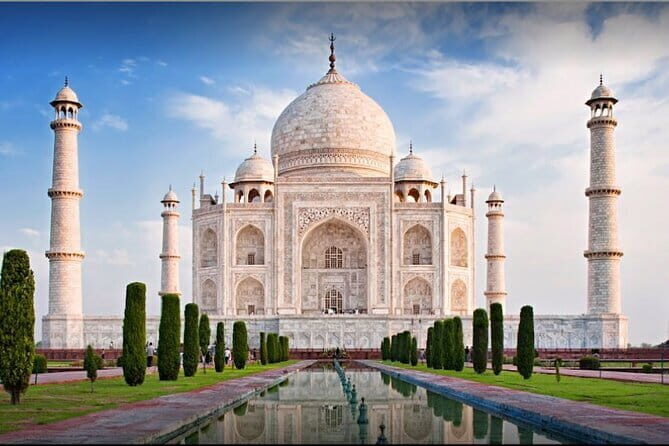
Humayun’s Tomb is a UNESCO World Heritage Site and often one of the highlights for first-timers. It’s considered the first garden tomb of India, built after the death of Humayun—prompted by his wife’s desire to honor him. You’ll typically have about 30 minutes for your visit in the full-day itinerary.
Then comes the choice point: Akshardham Temple or Humayun’s Tomb depending on the day. Akshardham is closed on Monday, so on Mondays you’ll be taken to Humayun’s Tomb instead. In the normal flow, you can also visit Swaminarayan Akshardham, which is one of the biggest Hindu temples in the city. It was constructed in 2005, but its architecture is designed to look like it spans centuries.
Both stops feel different. Humayun’s Tomb is more about gardens and layered history. Akshardham is more about scale, detail, and temple craftsmanship. If you’re choosing between the two in your own mind, pick the mood you want: quiet reflection versus a spectacle of design.
One more practical tip: your day will feel tight if you try to do everything at “maximum depth” at each site. Stick to a sensible rhythm—look, walk, take photos, then move on.
You can also read our reviews of more tours and experiences in New Delhi






Qutub Minar’s UNESCO complex and the Lotus Temple finish
Qutub Minar is next, and it’s a serious payoff. You’ll have about 45 minutes, and entry fees apply here. The minaret is the tallest in its category, built around 1192 using bricks, and it’s part of the UNESCO Qutub complex in Mehrauli.
Even if you’re not a monument-nerd, you’ll feel why this matters. It’s tall, old, and visually dominating. The complex context helps too: this isn’t one isolated photo spot. It’s an area where several historical elements sit together, giving you a sense of what the landscape looked like long before the city expanded around it.
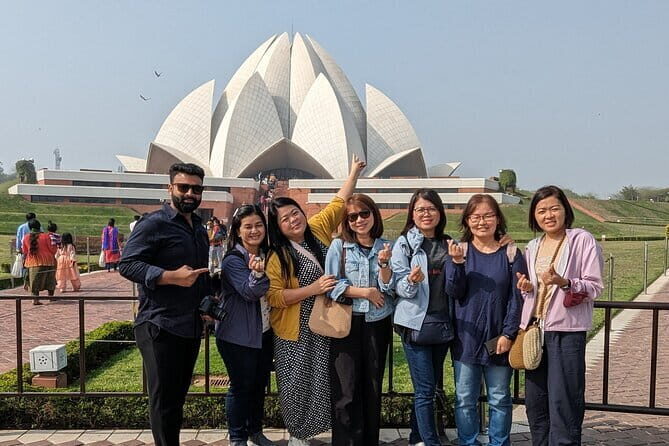
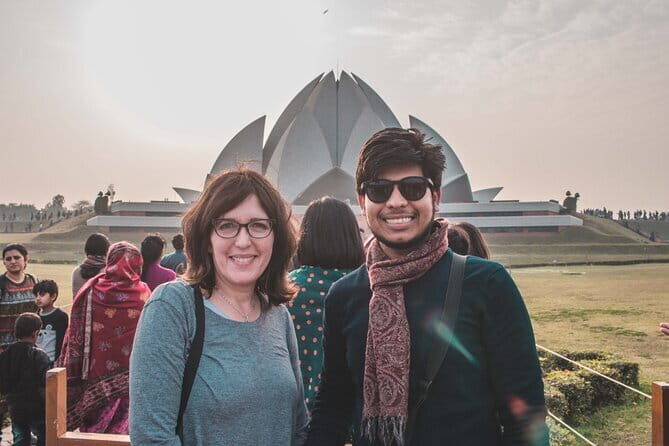
From there, your day closes with Lotus Temple. The stop is about one hour in the usual flow, and it’s free to enter. The Lotus Temple is a Bahá’í House of Worship dedicated in December 1986, known for its flower-like shape. It’s the kind of place where Delhi noise feels farther away. If you want a soft landing after intense sightseeing, this is it.
Raj Ghat is optional and usually comes near the end. It’s a memorial dedicated to Mahatma Gandhi. You’ll have about 30 minutes if you choose it. Even if you don’t know every detail of Gandhi’s life, it’s a meaningful stop because it’s simple and direct.
Timing and comfort in an 8-hour Delhi sprint
This tour is listed at about 8 hours for the full-day experience, with remaining time used for travel between places. That matters because you’ll likely spend more time “between” sights than you imagine—especially if your pickup is toward the start of the 8:00–10:00 window.
The good news: you’re in an AC car with a chauffeur, and you get complimentary water bottles. The less fun news: you’re still going to walk at several major sites, including courtyard areas and market areas. Wear shoes you can trust.
Also, make sure you’re ready for photo opportunities. The plan includes drive-by photography moments for places like Parliament House and President’s House, and there’s enough flexibility to take pictures at the monument stops. One of the best things about a private guided day is not having to fight your way into the right spot at the right time.
Price and value: what $22.03 covers (and what doesn’t)

At about $22.03 per person, this tour is priced like a budget-friendly full-day option, but the real value comes from what’s included.
What you get:
- Private air-conditioned vehicle with a chauffeur
- Private live guide
- Tuk-tuk ride in Old Delhi
- Parking fees, tolls, fuel, and taxes
- Entrance tickets if you select the entrance-fees bundle
- Round-trip transfers from your Delhi hotel, airport, or train station
- Complimentary water bottles
What you don’t get:
- Tips and gratuities
- Meals
The biggest decision point is the entrance-fees choice. If you want the “less thinking, less paying later” style, choose the option that includes monument tickets. If you’re comfortable paying at sites, you can leave that piece out—just know some of the key stops involve admissions.
In plain terms: you’re not paying for a driver who drops you off. You’re paying for a guide-led route that compresses a lot into one day without you wrestling with Delhi logistics. For many first-timers, that’s the difference between a trip that feels possible and one that feels exhausting.
Who this tour is best for (and who should plan something else)
This tour fits best if you:
- Want a first-timer’s route across the Old and New Delhi highlights
- Prefer private guiding over group tours
- Like having a plan but still want some time at major monuments
- Would rather sit in a comfortable car than negotiate traffic to get between neighborhoods
You might consider a different approach if you:
- Hate long days or don’t handle crowds well
- Want slow travel and lots of unstructured wandering
- Are determined to spend extended hours at one monument and ignore the rest
Small but important tips that make the day smoother
- Bring a valid photo ID for monument entry checks.
- Dress for religious sites when you visit Jama Masjid and the Gurudwara.
- Plan for walking in sun and shade. Even with breaks, you’ll move between stops.
- If you’re sensitive to heat, aim to start early within the pickup window.
- Keep small cash for snacks or last-minute purchases in markets like Chandni Chowk, since meals aren’t included.
Should you book this Old and New Delhi tour?
Yes—if your goal is to see major Old and New Delhi landmarks in one organized day, this is a good value bet. The private vehicle, live guide, and the mix of monumental sites plus everyday market life help you understand the city without turning the day into a navigation project.
I’d especially recommend it for first-time visitors who want a clear route, clean logistics, and a guide who helps you make sense of what you’re standing in front of—without draining time on indecision.
FAQ
What time does pickup happen?
Pickup is offered any time between 8:00 AM and 10:00 AM. You can choose your pickup time during that window.
Where can I be picked up from?
You can be picked up from anywhere in Delhi, Noida, Gurugram, Ghaziabad, or Faridabad.
How long is the tour?
The exclusive full-day guided experience runs about 8 hours (approx.).
Is this tour private or shared?
It’s a private tour/activity, and only your group participates.
Are entrance fees included?
Tickets to monuments are included only if you choose the tour option that includes entrance fees. Some stops list admission tickets as included or free, but the entrance-fees bundle choice is the key point.
What happens on Monday if Akshardham is closed?
Akshardham is closed on Monday, so you’ll be taken to Humayun’s Tomb instead.
What vehicle will I ride in?
The car depends on your group size: a four-seater sedan for 1–2 people, a six-seater wagon for 3–5, a nine-seater van for 6–9, and a twelve-seater van for 10–12.
Do I need a photo ID?
Yes. You should carry a valid photo ID for monument checking.