REVIEW · NEW DELHI
Delhi: Half day Old and New Delhi Tour on Iconic Landmarks
Book on Viator →Operated by Namastes India · Bookable on Viator
Old and New Delhi in a tidy half-day.
What makes this tour work is the fast route and the practical skip-the-line approach, plus a live guide and organized transport so you’re not stuck figuring out streets and timing on your own.
I like two things most: first, you get meaning with the monuments, not just photos—Jama Masjid and the Mughal-era sites come with context. Second, the Old Delhi side is sensory in a good way, with a short tuk-tuk ride straight into the Chandni Chowk scene and a stop at Khari Baoli to learn about the spice world.
One thing to watch: this is 4 to 5 hours that packs in a lot. Some stops are brief, so if you want long, slow wandering (or you hate crowds), you’ll need to manage expectations and pace yourself—especially because the guide effort is focused on the Old Delhi portion.
In This Review
- Key things to know before you go
- How this Old-to-New Delhi route really saves you time
- Pickup, private transport, and what your “private” day means
- Jama Masjid: one mosque, big scale, and clear takeaways
- Chandni Chowk on the move: from Sunehri Masjid to the bazaars
- Khari Baoli spices: smell history and practical uses
- Red Fort: Mughal power, Indo-Islamic style, and a brief look
- India Gate and the Unknown Soldier: one monument, big numbers
- Parliament area viewpoint: connecting governance to the city
- Gurudwara Bangla Sahib: a calmer hour with historical weight
- Lotus Temple: modern architecture as a contrast point
- Price and value: what you’re really paying for
- Who should book this tour (and who should skip it)
- Practical tips to make your 4–5 hours go smoothly
- Should you book this Old and New Delhi landmark tour?
- FAQ
- How long is the tour?
- What does pickup cover, and what areas are included?
- Where do I meet the guide?
- Is this a private tour?
- Are monument entrance fees included?
- Are meals included?
- What’s included in the price besides guidance?
- Can I cancel for free?
- Is tipping required?
Key things to know before you go
- Private group feel: it’s just your group, so you can ask questions without the usual pressure.
- Pickup window around Delhi: pickup is offered between 8 AM and 3 PM from Delhi and nearby cities like Noida, Gurugram, Ghaziabad, and Faridabad.
- Old Delhi built in: Jama Masjid plus Chandni Chowk access from Sunehri Masjid, including a tuk-tuk hop.
- Spice market stop: Khari Baoli is designed for a hands-on, smell-it-and-learn-it moment.
- Modern Delhi included: Lotus Temple and New Delhi landmarks round out the day beyond Mughal history.
- Comfort touches: water bottles are provided, and umbrellas are available based on the weather.
How this Old-to-New Delhi route really saves you time
Delhi can be a full-day commitment if you’re trying to plan and bounce between Old Delhi and New Delhi on your own. This tour compresses that problem into one organized circuit, with a guide who helps you connect the dots while the driver handles the traffic.
You’ll start on the Old Delhi side near Sunehri Masjid (Nishad Raj Marg area, near Lal Qila). From there, you do the most intense-feeling sights first—mosques, bazaars, and busy market streets—when you’re still fresh. Then you shift to the New Delhi monuments and government-area landmarks, which feel more spaced out and easier to frame with big architecture shots.
The other practical win is that your time inside key spots is pre-set. That matters because Delhi’s “popular” places often involve waiting, crowd flow, and last-minute changes. With organized timing, you get to see more without turning your day into logistics.
You can also read our reviews of more tours and experiences in New Delhi.



Pickup, private transport, and what your “private” day means
This is sold as a private activity, so only your group participates. That’s not a small difference in Delhi, where getting pulled into the wrong shared group can slow you down and limit your questions.
You can also arrange pickup from Delhi and nearby areas—Noida, Gurugram, Ghaziabad, and Faridabad—between 8 AM and 3 PM. If you’re not picked up, the meeting point is Sunehri Masjid (Nishad Raj Marg, Lal Qila, Old Delhi). Either way, you’re anchored to a real location in Old Delhi rather than wandering until you spot your guide.
The transport piece is where value shows. The trip includes parking charges, tolls, fuel, and taxes, so you’re not stuck paying for “extra driving.” Plus, the experience is set up around a driver who’s used to getting around crowded streets safely and efficiently. In Delhi, that’s worth real money.
Jama Masjid: one mosque, big scale, and clear takeaways
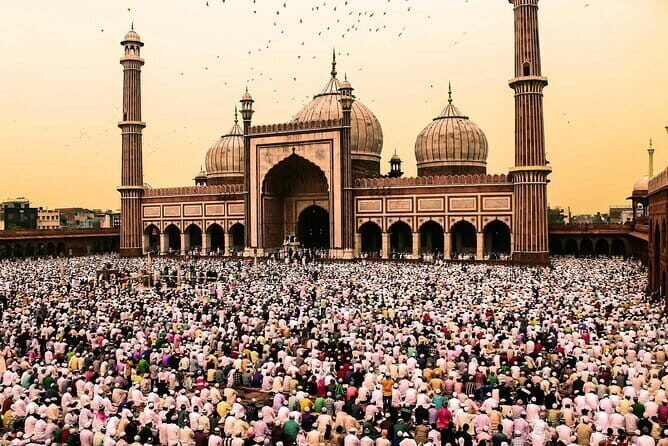
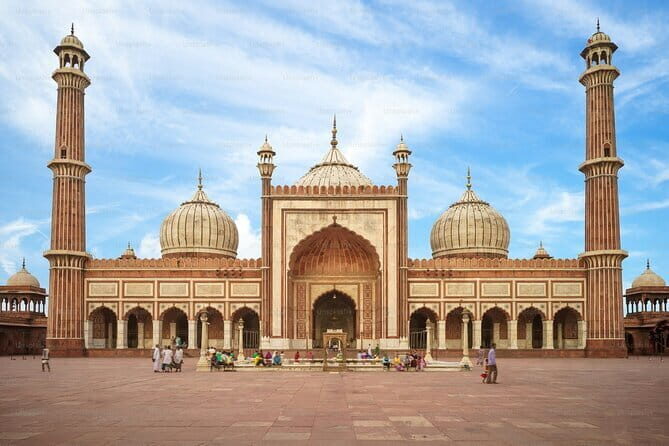
You’ll spend about an hour at Jama Masjid, described as India’s largest mosque. The focus here is the red sandstone courtyard, which is the kind of space that makes you pause even if you’re not a mosque expert.
Here’s what you should look for during your hour: the sheer scale of the courtyard and the way the mosque reads from different angles. With a guide, you also get help understanding what you’re seeing so it doesn’t become just walls and arches.
This stop also sets the tone for Old Delhi. Jama Masjid isn’t a quiet, museum-style experience. It’s active and intense, so the earlier timing in the day helps. If you’re sensitive to crowds or noise, this is where you’ll feel it most—plan for that.
Chandni Chowk on the move: from Sunehri Masjid to the bazaars
After Jama Masjid, your guide meets you at Sunehri Masjid. Then you’re transported by tuk-tuk to the Chandni Chowk bazaar area.
That short ride is more than convenience. Chandni Chowk is a place where moving on foot can feel slow once crowds thicken. A tuk-tuk hop gets you into the action faster, without making you fight your way through every tight lane from the start.
Chandni Chowk is also the place where your senses do the sightseeing. Even if you don’t plan to buy anything, you’ll see how Delhi’s market life works—street energy, small stalls, and the constant motion. The guide’s job here is to keep you oriented, so you don’t feel like you’re just trapped in the noise.
Khari Baoli spices: smell history and practical uses

Your next stop is Khari Baoli, the spice market inside the Chandni Chowk area. You’ll get around 30 minutes, but the intention is clear: learn how spices are used and why they matter, not just walk past colorful piles.
What I like about this stop is that it’s educational in a real-world way. Spices in Delhi aren’t just souvenirs. They’re part of how people cook every day, and the guide’s explanation helps you connect what you’re smelling with what you’ll eat later.
Quick practical note: Khari Baoli is a working market. If you’re prone to allergies or strong scents bother you, keep that in mind. Bring a light layer if you want it, but otherwise plan for a high-scent, high-activity environment.



Red Fort: Mughal power, Indo-Islamic style, and a brief look
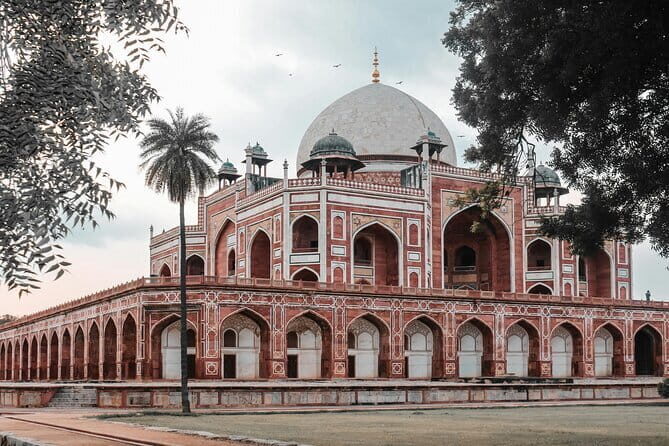
The Red Fort is part of the route and it’s a major Mughal landmark. It was built by Shah Jahan between 1639 and 1648 and served as the main residence of the Mughal emperors. Architecturally, it’s known for Indo-Islamic and Mughal styles.
Your visit time here isn’t explicitly long in the plan you’re choosing, so think of this as a structured look rather than a deep, hours-long exploration. The best way to make the most of a short stop is to focus on the “big reads”:
- What the fort signals about power and ceremony
- How the architecture changes as you shift angles
- How this place links Old Delhi to later British and modern-era Delhi symbolism nearby
If you want a longer Red Fort visit, this tour still gives you the essential orientation. Then you can build a bigger visit on your own later, if you’re the type who likes to linger.
India Gate and the Unknown Soldier: one monument, big numbers
Next is India Gate, with around 15 minutes. The Tomb of the Unknown Soldier was dedicated in 1921 and lists the names of 13,300 Indian Army servicemen who died in the First World War.
This is one of those stops where a short time can still feel meaningful because the scale of remembrance is hard to miss. With a guide, you’ll understand what the names represent and why the monument is treated like a national space, not just a landmark to photograph.
If you’re visiting Delhi for the first time, India Gate is also a good “pause” between the intensity of Old Delhi and the more political architecture you see later.
Parliament area viewpoint: connecting governance to the city
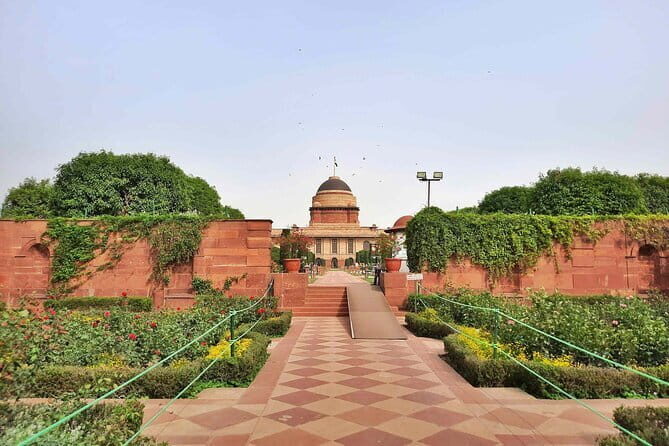
You’ll head toward the Parliament House, part of the New Delhi government area. It houses the Lok Sabha (lower house) and Rajya Sabha (upper house) of India’s bicameral legislature.
This stop is about perspective. Even if you don’t go inside (and time is limited), seeing the setting helps you understand Delhi’s layout: how monuments, institutions, and broad avenues fit together.
It’s brief by design, so keep it as a quick architectural and civic checkpoint. The guide’s explanations are what turn it into more than a drive-by.
Gurudwara Bangla Sahib: a calmer hour with historical weight
The route includes Gurudwara Bangla Sahib, with about an hour. It’s historically connected to the eighth Sikh Guru, who lived here in 1664 and provided medical care to people during a cholera outbreak.
This stop often feels like relief compared to market streets. You get time to slow down, look around, and absorb the place as a living site of worship and community—not just a photo stop.
If you like when history connects to human stories, this is the moment. Medical care during an outbreak is a reminder that religious sites often have deep community roles, not only ceremonial ones.
Lotus Temple: modern architecture as a contrast point
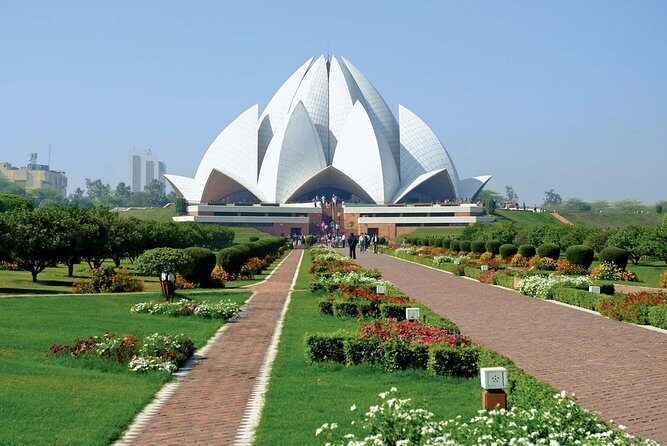
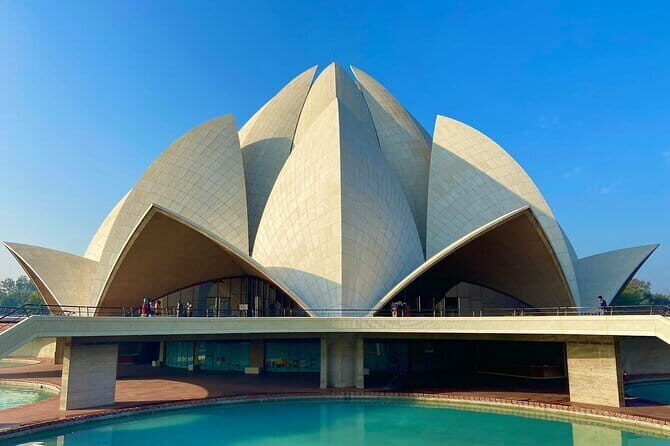
The last major sightseeing stop is the Lotus Temple, a Bahá’í House of Worship inaugurated in December 1986. Its floral lotus-like design is the headline feature, and the contrast with older Delhi styles is striking.
You’ll have about 30 minutes here, which is enough time for the main viewpoints and some quiet moments to reset your senses after the busier parts of the day. This is also a good stop if you want Delhi that feels designed for people to slow down.
Dress and behavior still matter here as a place of worship. You might find expectations for respectful conduct at all religious sites, so go in with a calm attitude.
Price and value: what you’re really paying for
On paper, the price is listed as $5.00 per person. That’s unusually low, so treat it as a starting point and check what’s included in your selected option. In the details you’ll also see additional amounts listed for meals/gratuities and tips, plus a note about entrance fees depending on the option you choose.
Here’s how I’d judge value using what’s explicitly included:
- Included: personalized live tour guide, transport for pickup and drop-off (within the Delhi/Noida area depending on option), and coverage for parking, tolls, fuel, and taxes.
- Provided: water bottles and umbrellas when weather calls for it.
- Admission: the stop details are marked free for the monuments listed, but there’s also a note that entrance fees may be included if an option is selected, priced at €10 per person. That means your total cost can vary based on the exact package.
Also note an important nuance: the company states that guided services are currently limited to Old Delhi tours. So if you expect the same depth of commentary at every New Delhi stop, you might want to confirm what guidance is included for those portions.
Finally, tips aren’t included, and meals/gratuities aren’t included in the base pricing. The details list €10 per person for tips and €30 per person for meals/gratuities. Those are the numbers to budget for if you want a smooth end to the day without surprises.
If you’re coming to Delhi for the first time and you don’t want to fight traffic or figure out routes, the biggest value is the combination of guidance plus organized driving. In a city like this, that saves energy.
Who should book this tour (and who should skip it)
This tour is a strong fit if:
- You want Old Delhi icons plus New Delhi landmarks in one half-day block
- You prefer a guide to explain what you’re seeing, especially the Mughal and British-era connections
- You like structured sightseeing without building a plan street by street
It may be less ideal if:
- You want long time inside every monument
- You hate crowds and want a quieter, slower pace
- You’re hoping for fully guided, deep storytelling at every New Delhi stop (since guidance is noted as limited to Old Delhi)
If you’re traveling with a group and want everyone to move together efficiently, the private format helps a lot.
Practical tips to make your 4–5 hours go smoothly
A few things will make your day easier, based on how the route is designed:
- Wear shoes you can walk in comfortably. Old Delhi plus market lanes adds up fast.
- Keep an eye on weather. Water and umbrellas are provided, but you’ll still feel heat and sun.
- If religious sites are part of your expectations, go prepared to be respectful and follow any on-site rules.
- Bring a simple plan for snacks. Meals aren’t included, so decide where you’ll grab food after the tour.
One more smart move: treat this as orientation. The places are big, and even with a guide, your short time at each stop is a tasting menu. If a specific site grabs you—Jama Masjid, Red Fort, or Lotus Temple—you can always build a longer follow-up visit on another day.
Should you book this Old and New Delhi landmark tour?
If your goal is a first-time Delhi hit list—Jama Masjid, Chandni Chowk vibes, spice market context, Mughal architecture, India Gate remembrance, Parliament area viewpoints, and the Lotus Temple contrast—this is a solid way to do it without drowning in planning.
I’d book it when you want practical help: pickup coordination, guided stops where it counts, and transport that handles Delhi’s street chaos. I’d pass or adjust your expectations if you’re the type who wants hours at each monument, or if you only want deeply guided commentary throughout the whole route.
FAQ
How long is the tour?
It runs about 4 to 5 hours.
What does pickup cover, and what areas are included?
Pickup is offered from Delhi and nearby areas including Noida, Gurugram, Ghaziabad, and Faridabad, between 8 AM and 3 PM.
Where do I meet the guide?
The meeting point is Sunehri Masjid, Nishad Raj Marg, Lal Qila area, Old Delhi, New Delhi.
Is this a private tour?
Yes. Only your group participates.
Are monument entrance fees included?
The stop details list admission tickets as free for the sites mentioned, but there is also a note that entrance fees may be included if an option is selected at €10 per person. Check the exact package you book.
Are meals included?
No. Meals and gratuities are not included, and €30 per person is listed for those items.
What’s included in the price besides guidance?
Transportation for pickup and drop-off (within Delhi/Noida depending on option), parking charges, tolls, fuel, and taxes are included. Water bottles are provided, and umbrellas are available based on weather.
Can I cancel for free?
Yes. You can cancel up to 24 hours in advance for a full refund.
Is tipping required?
Tips are not included, and €10 per person is listed.