REVIEW · FATEHPUR SIKRI
Book Official Tour Guide for Fatehpur Sikri.
Book on GetYourGuide →Operated by Taj Tour Guide · Bookable on GetYourGuide
Akbar’s lost city feels ghostly and real. I especially like the skip-the-line entry plan, and I’m a big fan of the moment where you hear Qawwali at the white mosque. One thing to consider: entrance tickets aren’t included, so you’ll need to sort that cost separately before you go.
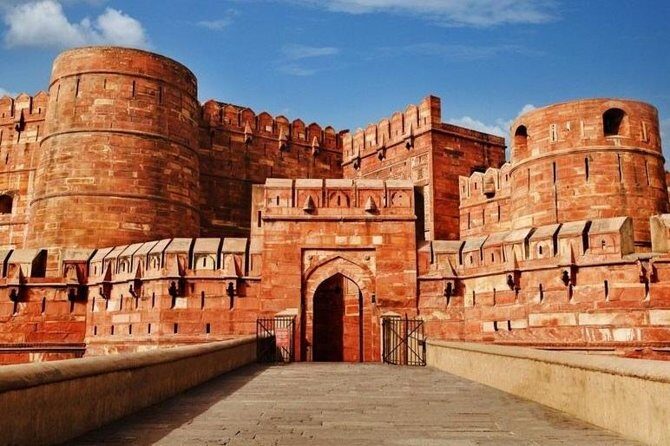
You meet your guide at Agra Gate, then get a clear route through Fatehpur Sikri’s red sandstone buildings—without wandering in circles. The tour is built for understanding, not just photos, and it’s guided in English, Italian, Spanish, or French depending on what you book.
Because it’s a private group for up to 5, the pacing tends to feel relaxed and you can ask questions without the usual crowd pressure. It’s also wheelchair accessible, which is a big practical plus at a site that can involve uneven stone.
In This Review
- Key things to know before you book
- Why Fatehpur Sikri still feels eerie in a good way
- The entrance plan: skip the line, meet at Agra Gate
- What you’ll learn while walking the “deserted capital”
- Panch Mahal: the courtly structure with a different feel
- Dewan-i-Aam and Dewan-i-Khas: public authority vs. private power
- Rang Mahal and Harem Sara: where the city feels more personal
- The mosque complex and the famous spiritual axis
- Buland Darwaza: the scale shock you didn’t expect
- Qawwali at the white mosque: a cultural moment, not a spectacle
- Skip the tickets problem: plan for entrance costs
- How long is enough: the real meaning of 2 hours
- Private group value: pacing you can control
- Language and meeting: a tour that meets you where you are
- Should you book this Fatehpur Sikri guide?
- FAQ
- How long is the Fatehpur Sikri guided tour?
- Where do I meet the tour guide?
- Does this tour include skip-the-line entry?
- Are entrance tickets included?
- What is the price?
- What languages are available for the live tour guide?
- Is this tour private?
- Is the tour wheelchair accessible?
- What should I bring for entry?
- What is the cancellation policy?
Key things to know before you book
- Meet at Agra Gate with a local guide who keeps you moving
- Skip-the-line entry using a separate entrance
- Government-approved local guiding (Ministry of Tourism, Govt of India)
- Red sandstone highlights like Panch Mahal, Dewan-i-Aam, and Dewan-i-Khas
- Buland Darwaza and the Tomb of Salim Chishti for the main spiritual pull
- Qawwali at the mosque for a cultural break from the monuments
Why Fatehpur Sikri still feels eerie in a good way
Fatehpur Sikri isn’t a “one-building” kind of place. It’s a whole city plan—thick walls, stacked courtyards, layered halls, and a sense of scale that makes you stop pretending it’s just another stop on the map. You’re looking at Mughal design choices made in red sandstone, with Indo-Islamic architecture that connects politics and prayer in the same space.
A guided approach matters here. Without someone explaining the purpose of each building, it’s easy to treat it like a set of pretty facades. With a guide, the site starts to act like a story: what Akbar built, why he built it, and what each monument’s role was.
I also like the tone of this kind of tour: you get structure, but you still spend time on the details that make Fatehpur Sikri feel different from Agra’s monuments nearby. It’s not only about grand architecture—it’s about how the city functioned day to day.
You can also read our reviews of more guided tours in Fatehpur Sikri

The entrance plan: skip the line, meet at Agra Gate
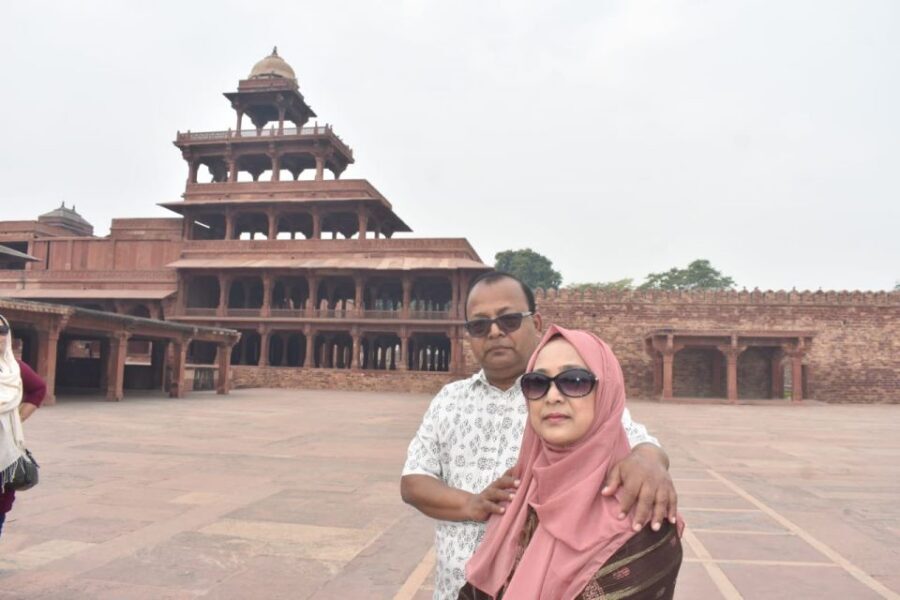
This is one of the best practical parts of the experience. You’re guided in from Agra Gate, and you get skip-the-line entry through a separate entrance. That saves time and helps you start the walk with less stress, which matters at a site where you’ll likely feel the sun.
Also, the fact that the guide is government-approved is reassuring. You’re not hunting for someone unofficial on the spot. You’re meeting a planned person at the planned time, which makes the whole visit easier—especially if you’re on a tight schedule.
A small note: tours here move at monument pace, not museum pace. Two hours is enough to hit the highlights, but it’s not enough to linger everywhere for long breaks. If you want to slow down for extra photos or a long pause in one courtyard, consider that upfront.
What you’ll learn while walking the “deserted capital”
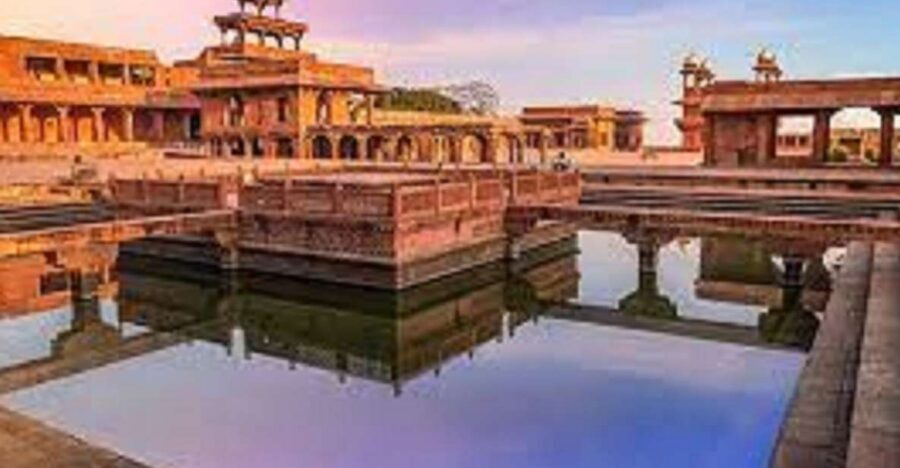
You’ll explore Fatehpur Sikri as the deserted capital of Emperor Akbar—linked to the shift of power from Agra to this city. The tour frames the site as a political and religious complex, and the buildings start to make sense as parts of one system: audience halls for public power, private spaces for court life, and a major religious axis anchored by the tomb of a revered Sufi saint.
You’ll also hear the meaning behind the architecture. The main features are Indo-Islamic in design language, and your guide helps you connect “form” to “function.” That’s the difference between looking at red stone and understanding why it’s arranged the way it is.
Two more practical things I appreciate:
- It’s a guided walkthrough, so you’re less likely to miss the key structures.
- It stays focused on what you can actually see in a 2-hour window without rushing so hard you forget what you just saw.
Panch Mahal: the courtly structure with a different feel
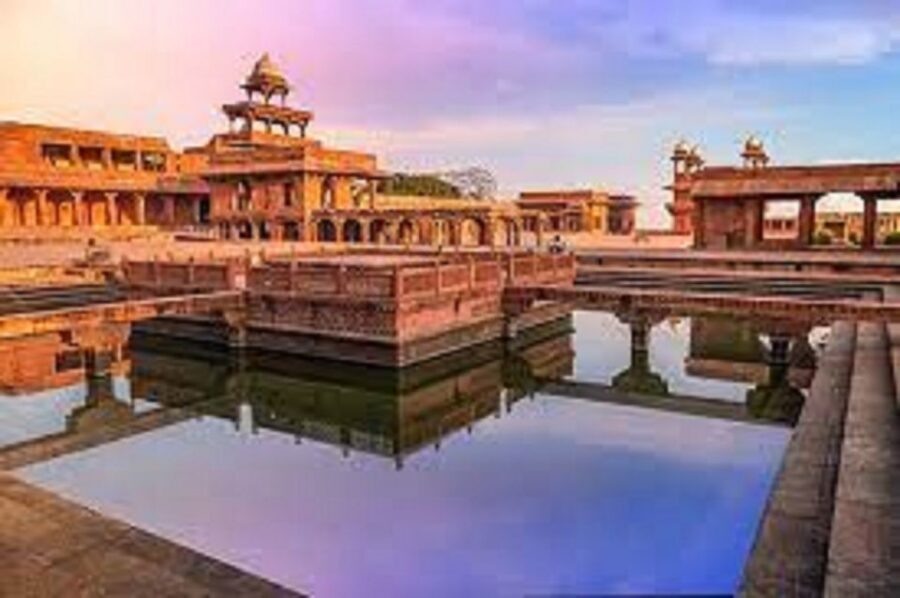
Panch Mahal is one of those places where your eye naturally goes upward. The name hints at the “five levels,” and the building’s shape gives you that stepped, ceremonial presence that’s hard to capture fully in a single photo.
In a short guided visit, Panch Mahal works well because it teaches you something fast: Mughal architecture often used vertical play and layered courtyards to signal importance. Even if you’re not studying architecture, you’ll feel the intent—this is a place designed to impress.
A potential drawback: like many Fatehpur Sikri features, this kind of viewing depends on where you stand and how the crowd moves. If you’re sensitive to standing and short walks on uneven ground, plan for brief pauses rather than expecting long rests between stops.
Dewan-i-Aam and Dewan-i-Khas: public authority vs. private power
These two halls are the backbone of the Akbar “court” idea. You’ll visit both, and that contrast is the point.
- Dewan-i-Aam is the public-facing space—where rulers connect with the wider world.
- Dewan-i-Khas is the private audience hall—more controlled, more intimate, and meant for select audiences.
A good guide helps you “read” the space. When you’re in the right spot, you start noticing how the building channels movement and attention. That’s what makes a guided tour worth paying for here: you don’t just see a hall, you understand what kind of power it represents.
If you like history but hate long lectures, this is still a good fit. The explanations here are tied directly to what you’re standing in front of, so it feels practical rather than abstract.





Rang Mahal and Harem Sara: where the city feels more personal
After the audience halls, you shift into spaces associated with lived experience at court. Rang Mahal and Harem Sara give the visit a more human angle, even though you’re still looking at stone structures.
Rang Mahal is linked with color and aesthetic life—so it’s a natural moment to slow down a bit and notice surfaces and design. Harem Sara is often described in connection with the private quarters of the palace area, which changes the mood: the tour becomes less about power projection and more about court routine and domestic scale.
The only “consideration” here is mental, not physical. If you go in expecting modern explanations, you may want to keep an open mind about how interpretive labels work for historic palace areas. Your guide can help you understand the context, but the city is still open to interpretation where records are limited.
The mosque complex and the famous spiritual axis
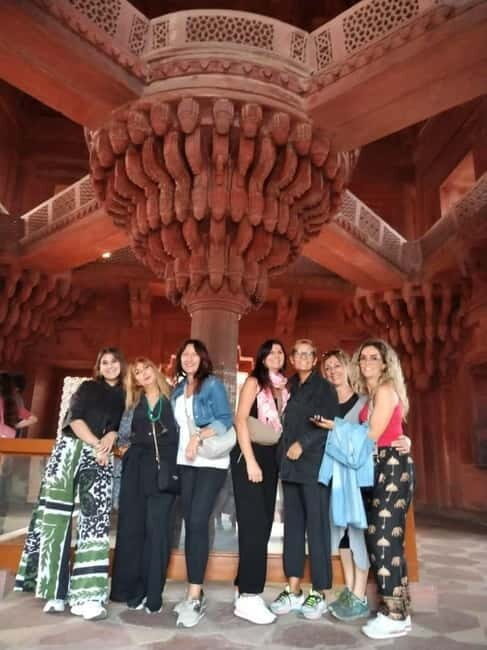
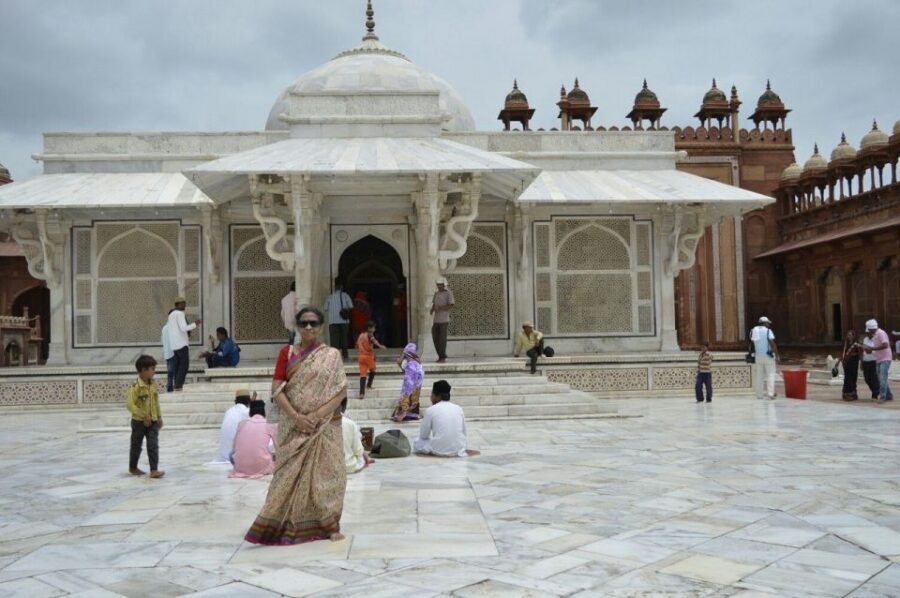
One of Fatehpur Sikri’s biggest attractions is the religious centerpiece. In your guided walk, you’ll reach the main mosque area and then continue toward one of the site’s most renowned names: the Tomb of Sufi Seikh Saleem Chisti.
This is where the visit stops feeling purely architectural. The tomb and its connection to Sufi tradition bring a different kind of attention—devotional, not only touristic. If you’re looking for an experience that blends culture and place in a way that’s more than sightseeing, this part is the strongest pull of the whole tour.
I’d also say: keep your pace steady here. People tend to get slower around spiritual sites. That’s normal, but if you’ve got a tight schedule after the 2-hour walk, it’s smart to let the guide guide how long you linger.
Buland Darwaza: the scale shock you didn’t expect
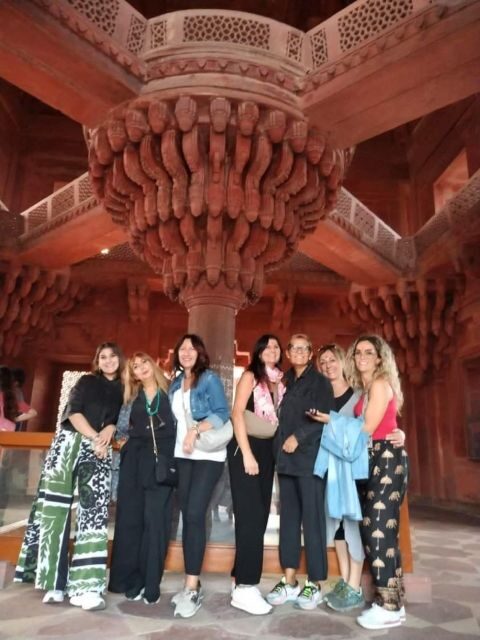
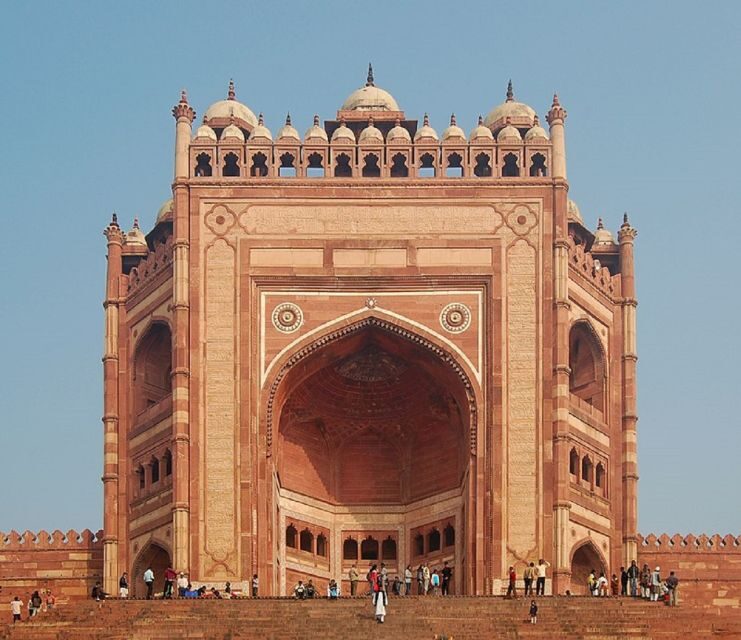
Buland Derwaza (often spelled Buland Darwaza) is the monument that makes you look up and then keep looking. Even if you’ve seen big gates elsewhere, this one has a “statement” feel. It’s not subtle.
This is a high-value stop because it anchors your understanding of the site’s grandeur. When you connect it to the surrounding complex, you get a sense of hierarchy—how entrance design, religious focus, and imperial ambition all tie together.
Practical tip: expect bright light and shadows that move quickly. If you want photos, use the guided pace to position yourself before the sun angle changes.
Qawwali at the white mosque: a cultural moment, not a spectacle
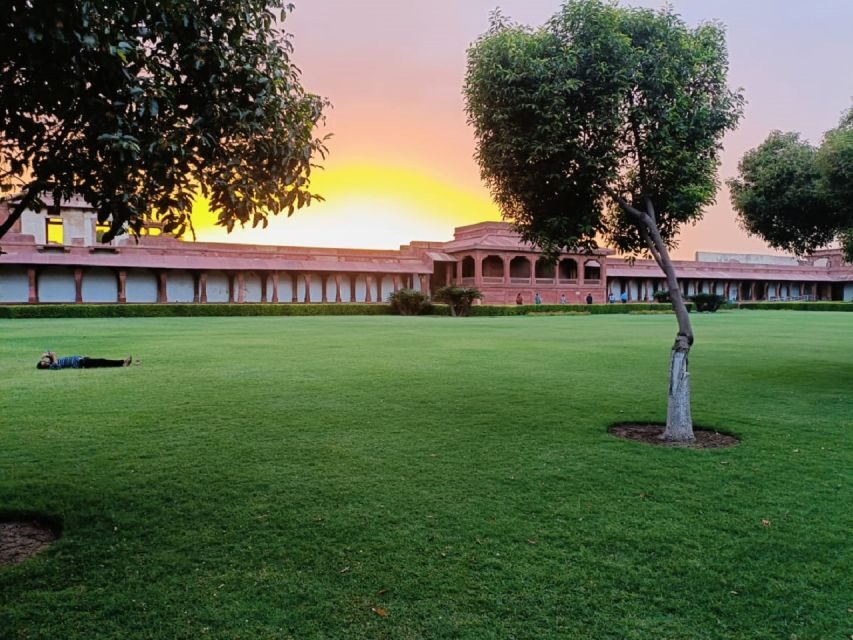
The tour includes a moment at the white mosque where you can enjoy classical sufi Indian song known as Qawwali. This is a big reason the experience feels more alive than a standard monument walk.
Here’s why it works: Qawwali isn’t an add-on that distracts from the site. It fits the spiritual tone around the Sufi connection, so it feels like part of the place rather than a random performance stop. Even if you don’t understand every lyric, you can feel the atmosphere shift.
The only watch-out: audio and timing depend on what’s happening on-site. The tour sets up the chance to experience Qawwali, but historic sites are not movie sets with guaranteed perfect conditions.
Skip the tickets problem: plan for entrance costs
Entrance tickets are not included. That’s common, but it affects value.
If you’re booking this tour, consider the total cost as: guide + skip-the-line convenience + cultural stops + explanation, plus your entrance tickets on top. For many people, the math works because you’re buying time savings and clarity—not just access.
Also, it’s listed as $17 per group up to 5. That’s a friendly rate if you’re traveling with friends or family. If you’re traveling solo, the per-person value depends on whether you can split the group cost with someone else.
How long is enough: the real meaning of 2 hours
Two hours is right for a highlights-focused visit. You’ll cover the core buildings and the main tomb area without turning the day into a full endurance mission.
But be honest with yourself:
- If you’re the type who wants to sit and read every inscription, two hours may feel quick.
- If you want a strong orientation and then freedom to return later on your own, two hours is a sweet spot.
Since you’re skipping some delays through the separate entrance, you get more useful time inside.
Private group value: pacing you can control
This is a private group format, which changes the whole feel. You’re not stuck listening through headsets over everyone else’s background noise. You can ask direct questions, and the guide can adjust the pace.
Names you may see from the guide team include Mr Imam and Tony/Toni. In particular, guides like these are noted for being enthusiastic and patient, which matters when you have questions or you want a slower explanation of how the buildings connect.
If you’re traveling with kids, older relatives, or anyone who doesn’t enjoy crowded group tours, the private setup is often worth it on its own.
Language and meeting: a tour that meets you where you are
Your live guide can work in English, Italian, Spanish, or French. That’s practical if you’re traveling with mixed language preferences or you don’t want to rely on basic translation apps.
Before you arrive, remember the guidance to carry your IDs or passport. Historic sites can require verification at entry points, and it’s not worth being stuck at the start.
Finally, the meeting point is clearly stated: you’ll be welcomed at Agra Gate. Having that anchor reduces the “where do we meet” stress that can derail a smooth arrival.
Should you book this Fatehpur Sikri guide?
I think you should book this tour if you want:
- A focused highlights route through Fatehpur Sikri in a short window
- Skip-the-line entry and a guide-led plan that reduces confusion
- A mix of monuments plus a cultural stop with Qawwali
- A local, government-approved English-language capable guide experience
I’d skip or reconsider if:
- You’re already the kind of traveler who loves slow, self-guided wandering with lots of reading time
- You’re not comfortable adding entrance ticket costs on top of the guide rate
- Your schedule is so tight that even a 2-hour visit could stress you (two hours here is efficient, but it’s still outdoors and it still moves)
If you’re trying to make Fatehpur Sikri feel understandable instead of overwhelming, this is a strong value way to do it.
FAQ
How long is the Fatehpur Sikri guided tour?
The tour duration is 2 hours.
Where do I meet the tour guide?
You meet your tour guide at Agra Gate.
Does this tour include skip-the-line entry?
Yes. You get skip-the-line entry through a separate entrance.
Are entrance tickets included?
No. Entrance tickets are not included.
What is the price?
It is $17 per group up to 5 people.
What languages are available for the live tour guide?
The live tour guide is available in English, Italian, Spanish, and French.
Is this tour private?
Yes. It is a private group.
Is the tour wheelchair accessible?
Yes. The tour is wheelchair accessible.
What should I bring for entry?
Please carry your IDs or passport.
What is the cancellation policy?
Free cancellation is available up to 24 hours in advance for a full refund.