REVIEW · NEW DELHI
Authentic Afghan Meal with Refugee Family: A Unique Experience
Book on Viator →Operated by Delhi Daily Life · Bookable on Viator
Afghan hospitality has a way of making you slow down. Here, in New Delhi, you get a home-cooked meal shared with an Afghan refugee family who rebuilt life after war.
I especially like that the food comes with context. You’ll hear about the family’s journey to Delhi, the tough parts of starting over, and what day-to-day resilience looks like now.
One thing to plan for: this visit involves 75 steps with no lift, so it’s not a smart pick if you have knee issues or limited mobility.
In This Review
- Key highlights to look for
- A real home meal in Hauz Rani, not a performance
- What you’ll eat: Afghan comfort food with strong veg options
- The family part: Zareen’s hospitality, Fara’s role, and real conversation
- Helping in the kitchen: what you can expect (and what you might not)
- The 75 steps problem: plan your body, and the experience gets easier
- Price and value: why $30 can feel fair here
- Who this suits best (and who should skip it)
- A realistic timeline for a smooth 2 hours
- Tips to get the most from the meal
- Should you book this Afghan home meal in Delhi?
- FAQ
- How long is the Afghan meal experience?
- What time does the experience start in New Delhi?
- Where do I meet the group?
- Are vegetarian or vegan dishes available?
- Is the home accessible if there’s no lift?
- Can I bring a service animal?
- What’s the cancellation and refund rule?
Key highlights to look for
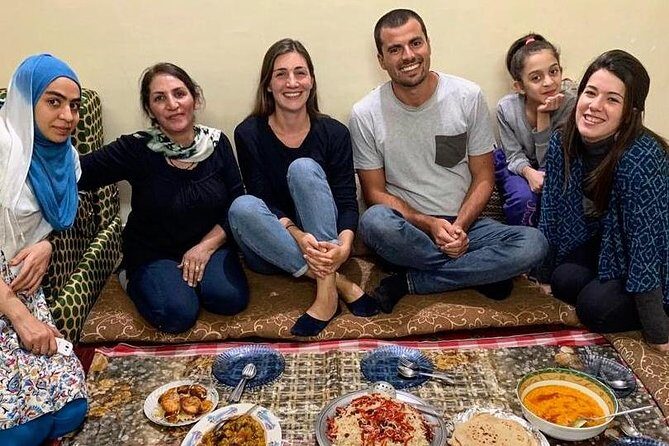
- Kabuli Pulao and other classic Afghan favorites served family-style
- Zareen (matriarch) known for her cooking and warm Persian roots
- Stories from an Afghan refugee family, including the move to Delhi
- Vegetarian and vegan choices, including Bolani Banjan and other veg-friendly Afghan dishes
- A meal that directly supports the refugee community you’re sitting with
- No lift, so 75 steps can be the deal-breaker for some visitors
A real home meal in Hauz Rani, not a performance
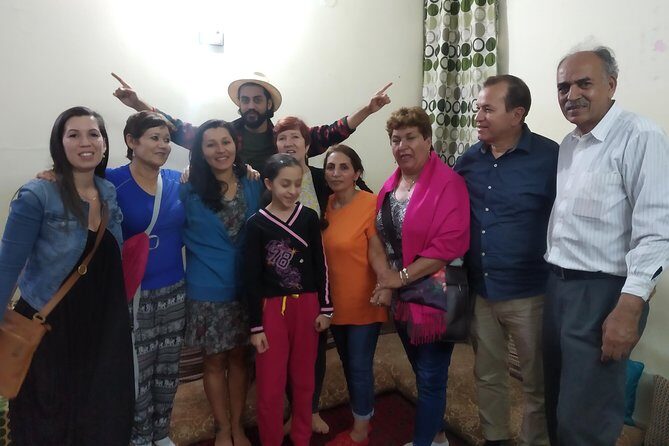
This isn’t a “taste and run” food stop. You’re visiting a family home, where the point isn’t to impress you with tricks. It’s to feed you well, answer your questions, and let you see what Afghan life looks like in Delhi now.
The setting matters. You meet at Curry Mucher Vishnu Park area in Hauz Rani, Malviya Nagar. From there, the day moves into a quieter rhythm: greeting, settling in, and then the long, satisfying part—food and conversation.
For me, the biggest value is the human scale. A tour like this stays grounded. You’re not just consuming culture; you’re spending time with people who lived it. And since you’re also supporting a refugee family directly, the meal feels purposeful, not like a themed attraction.
You can also read our reviews of more tours and experiences in New Delhi.



What you’ll eat: Afghan comfort food with strong veg options
The menu is built around Afghan classics, and the flavors are the main event. You can expect dishes such as Kabuli Pulao, Bolani Banjan, and kebabs as part of the spread.
The great news for non-meat eaters: the experience offers vegetarian and vegan options. Afghan cuisine is often known for meat-heavy meals, so having a well-planned veg table makes the experience feel thoughtful rather than like a compromise.
Here’s what to look for when you’re sitting down:
- Kabuli Pulao: Expect a comforting rice dish with Afghan-style seasoning and flavors. It’s typically the kind of food that makes you pause between bites because it’s that familiar-but-not.
- Bolani Banjan: This is the Afghan stuffed flatbread experience. You get that contrast of tender dough with a savory filling.
- Kebabs: If you eat meat, this is one of the easiest ways to understand Afghan cooking style—spiced, grilled, and built to be shared.
Dessert also shows up as a highlight. At least a few people have called out how the dessert felt different in the best way, which usually means it’s homemade and not something “tour-shop sweet.”
The family part: Zareen’s hospitality, Fara’s role, and real conversation
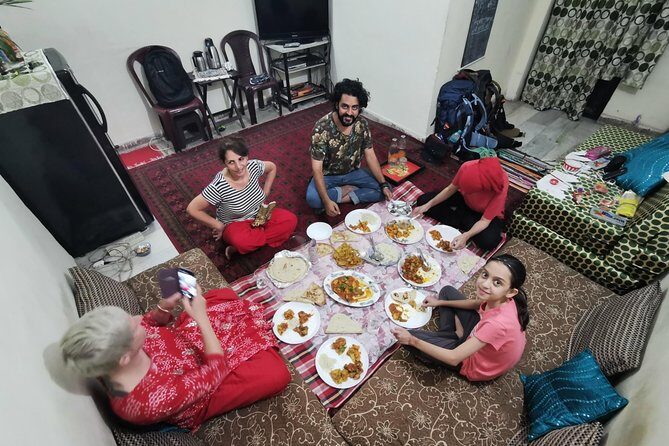
At the center of this experience is Zareen, the matriarch. She’s known in New Delhi not only for her cooking but for her hospitality. The family traces back to Persian roots, and you’ll likely feel that in the way meals are hosted—warm, patient, and guided by tradition.
You’ll also spend time with Zareen’s husband and their children, including two daughters and a son. That’s a big part of why the meal lands so well: you’re not just meeting one person. You’re getting a fuller picture of the household.
One detail that makes this feel especially easy is how communication works. In at least one account, a daughter interpreted for the group, which turns the whole visit from awkward “small talk” into actual conversation. That matters. When someone can translate, you ask better questions and you get better answers.
I also like that the conversation isn’t only about food. People tend to ask about the move to India, how daily life changed, and what challenges remain. You get the kind of stories you don’t get from guidebooks.
Helping in the kitchen: what you can expect (and what you might not)
This is a meal, but it can also turn into a cooking moment. Some people have described helping prepare the meal together, which makes sense with a home setting: if you’re curious, they may invite you into simple tasks or show you how things get made.
That said, you should keep expectations flexible. The provided outline focuses on eating Afghan dishes prepared by the family. So treat “hands-on cooking” as a possible bonus, not a guarantee.
Practical tip: if you’re offered a task, follow their pace and ask questions. This is where you’ll learn the most, fast. Also, don’t be surprised if the kitchen rhythm is chaotic in the normal way—busy, lived-in, and real.
The payoff is worth it. Cooking side-by-side makes the meal taste better, because you’ve shared effort, not just calories.
The 75 steps problem: plan your body, and the experience gets easier

Here’s the logistical reality you need to respect. There is no lift, and the route includes 75 steps. That’s a lot for anyone with knee pain, balance issues, or limited mobility.
The experience is not recommended for an elder with a knee problem. If stairs are a concern for you, be honest when you book—or consider passing. It’s not about “can you manage one stair moment.” It’s about whether you want your time and attention spent on discomfort.
The good news: you’re near public transportation, so you aren’t stuck arranging a private car to get into the right neighborhood.
My advice: if stairs are manageable for you, wear grippy shoes and keep your pace steady. Also, go in with the mindset that the stairs are part of the authenticity. A home isn’t a hotel for a reason.



Price and value: why $30 can feel fair here
At $30 per person, this sits in the low-to-mid range for a private, story-driven home experience in Delhi. The value comes from what’s included: a real Afghan meal, time with the family, and direct support tied to the refugee community you’re meeting.
Food tours can be expensive because you’re paying for branding and overhead. Here, you’re paying mainly for cooking, hosting, and the human time required to make your visit meaningful. When you sit with a family, the cost is buying access to their life—not just a plate.
You also get a small ethical angle that actually matters: by dining with them, you’re helping support their community. That doesn’t erase the fact that you’re the visitor, but it gives the trip weight beyond taste.
If you’re comparing, ask yourself: are you looking for a photo-friendly meal, or are you looking for a story-filled evening that changes how you think about Afghan culture and resilience?
Who this suits best (and who should skip it)
This works best if you fit one or more of these:
- You’re a food person who likes learning through taste and context
- You enjoy meeting families and asking questions
- You want vegetarian or vegan Afghan options that still feel authentic
- You care about supporting refugees in a direct, personal way
It’s also a good fit for small groups since it’s a private tour/activity, meaning only your group participates. That makes it feel less crowded and more conversation-friendly.
Consider skipping if:
- Stairs are a major issue for you
- You want a very structured, timed itinerary with lots of sightseeing stops (this is centered on the home meal)
- You prefer experiences where you never need to interact or ask questions
If you’re traveling with someone who dislikes conversation, this might feel like too much. If you both enjoy people and stories, it’s a strong match.
A realistic timeline for a smooth 2 hours
The experience runs for about 2 hours, starting at 11:00 am, and returning you to the meeting point.
A typical flow looks like this:
- You arrive near the meeting spot and head to the home (expect stairs)
- You’re greeted by the family and seated
- You eat the Afghan spread, including the veg-friendly dishes
- You talk and listen as the family shares life updates and Afghan culture through everyday details
- The meal closes with dessert, which has been noted as a memorable part of the experience
Because the total time is limited, the conversation tends to be focused. You get enough time to connect without turning it into a half-day commitment.
Tips to get the most from the meal
I’d go in ready to be curious, but not pushy. Simple questions usually land best:
- What dishes are easiest to make at home day to day
- What changed after moving to Delhi
- What they miss about life in Afghanistan, and what they’re building now
A few practical notes from the basics you’re given:
- You can bring service animals
- Confirmation happens at booking
- You can participate even if you’re not a hardcore walker, as long as the steps work for you
- Vegetarian and vegan needs are supported
And if you’re worried about being an outsider, don’t. Hospitality here is part of the design. People are there to feed you and talk.
Should you book this Afghan home meal in Delhi?
Book it if you want an experience that mixes great Afghan cooking with real conversation and a genuine connection to a refugee family. At $30, the math works because the meal is substantial, the hosting is personal, and your visit supports their community directly.
Skip it if stairs are a deal-breaker. The 75-step setup is the one clear constraint that can ruin the mood fast.
If you’re on the fence, I’d choose the option that matches your pace and your curiosity. This is the kind of trip where you remember the warmth long after you forget what you paid.
FAQ
How long is the Afghan meal experience?
It lasts about 2 hours.
What time does the experience start in New Delhi?
The start time is 11:00 am.
Where do I meet the group?
You start at Curry Mucher Vishnu Park, 278G, Gandhi Park, Hauz Rani, Malviya Nagar, New Delhi, Delhi 110017, India.
Are vegetarian or vegan dishes available?
Yes. Vegetarian and vegan options are available.
Is the home accessible if there’s no lift?
There is no lift, and there are about 75 steps. It’s not recommended for an elder who has knee problems.
Can I bring a service animal?
Yes, service animals are allowed.
What’s the cancellation and refund rule?
Free cancellation is available if you cancel up to 24 hours in advance for a full refund. If you cancel less than 24 hours before the experience starts, the amount paid is not refunded.