REVIEW · NEW DELHI
8 Days Golden Triangle Tour with Ranthambore Tiger Tour
Book on Viator →Operated by Tour Guide Delhi · Bookable on Viator
First, big dreams meet early mornings. This 8-day Golden Triangle with Ranthambore mixes major sights—like a sunrise Taj Mahal—with real wildlife time in tiger country. I like how it keeps things structured: city days with professional guides, then fast, focused transfers into the next stop.
Two things I really like: the private driver/vehicle with hotel pickup (so you’re not hunting taxis all day), and the built-in two Ranthambore safaris that give you a better shot at seeing the animals. One consideration: the monument entrance fees are extra (listed as $79 per person), so your final budget depends on what you plan to visit each day.
In This Review
- Key highlights worth your attention
- Golden Triangle with Ranthambore: a smart mix of cities and wildlife
- Day 1 in Delhi: arrival without the stress tax
- Delhi essentials: Jama Masjid, Chandni Chowk, and the UNESCO hitters
- Agra Day 1: Forts, gardens, and a sunset view setup
- Taj Mahal at sunrise: why this tour timing is the whole point
- Fatehpur Sikri on the way to Ranthambore: a pause before tiger country
- Ranthambore National Park: two safaris, two chances, one rule
- Jaipur from Sawai Madhopur: temples and royal leftovers
- Jaipur Day 7: Jaipur Fort, City Palace, and the astronomy stop
- Guides and drivers: the human difference in a packed schedule
- Price and value: what $749 covers, and what it doesn’t
- Who should book this tour
- Should you book this 8-day Golden Triangle with Ranthambore?
- FAQ
- Is pickup included on this tour?
- How many safari drives happen in Ranthambore?
- What’s included in the tour price?
- Are monument entrance fees included?
- Where does the tour end?
- Can I cancel and get a refund?
Key highlights worth your attention
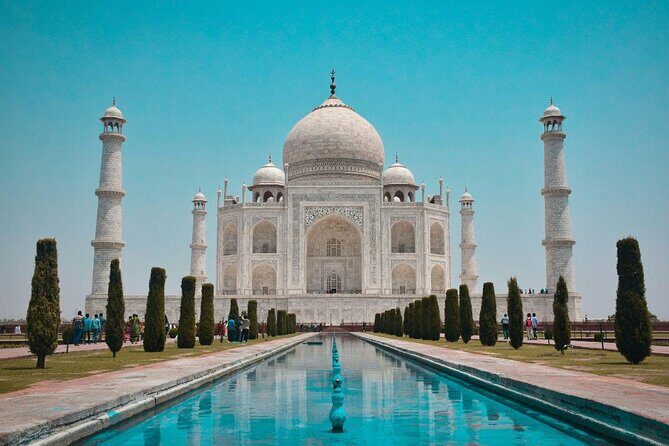
- Sunrise Taj Mahal timed to catch the marble at its best
- Two Ranthambore game drives (morning + late afternoon) in shared jeeps/canters
- Delhi by local rhythm: Jama Masjid, Chandni Chowk rickshaw ride, Raj Ghat, and major UNESCO sites
- Rajasthan temple options in Jaipur: Galta Ji Monkey Temple or Birla Mandir
- A driver who keeps the day moving with hotel/airport/railway pickup and drop-off
Golden Triangle with Ranthambore: a smart mix of cities and wildlife

This tour works because it respects two different moods. Days one through three are about India’s big cultural hits—Delhi’s monuments and markets, Agra’s Mughal icons, Jaipur’s palace-and-temple look. Then the trip changes gears: you trade traffic noise for the quiet hunt-and-wait routine of a safari.
The “value” part is the logistics. You’re not piecing together transfers between cities. A private air-conditioned vehicle handles pickup and rides, and you get professional guides in each city so you’re not wandering through famous places wondering what to look for.
Price-wise, $749 per person is in the mid-range for an 8-day package that includes multiple city guides, hotel stays (3–5 star options), breakfast, and two safaris. The one thing you’ll want to plan for is the add-on entrance fees for monuments.
You can also read our reviews of more tours and experiences in New Delhi.



Day 1 in Delhi: arrival without the stress tax

On arrival, you meet your chauffeur and get pushed straight into the day’s real goal: check in, rest, and get ready. It’s a simple start, but that matters. Delhi is a big city, and starting with a calm landing helps you handle the early days ahead.
Also note the tour format: you’re with your group only, not wandering in a giant mix of strangers. That makes the first day feel less like “tour bus theater” and more like a real schedule built around your time.
Delhi essentials: Jama Masjid, Chandni Chowk, and the UNESCO hitters
Delhi day is packed, but it’s packed with stops that each teach you something different. You start with Jama Masjid (built in 1656 by Shah Jahan), one of India’s largest mosques, able to hold around 25,000 worshippers. Even if you’re not a history buff, standing there helps you feel how serious Mughal-era architecture was about scale and community.
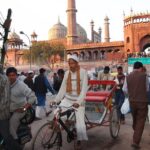
Next comes Chandni Chowk, where you do a rickshaw ride. This is one of those moments that’s short on the clock but long on impressions: dense lanes, market energy, and daily life moving past you at street speed.
Then you hit the big memory markers: Raj Ghat, the simple black marble memorial for Mahatma Gandhi; and India Gate, the war memorial built in 1931 (designed by Sir Edwin Lutyens, and echoing the Arc de Triomphe). You also get photo stops at Parliament House and Rashtrapati Bhavan.
The day finishes with major architecture stops: Humayun’s Tomb (a key early garden-tomb influence in Mughal design) and Qutub Minar (UNESCO, and famous for its height—about 73 meters). Qutub Minar’s tall, layered form is one of those “how is this still standing” sights that makes your camera work harder.
Two practical notes from how the day is set up:
- Some monument entrances aren’t included, so you’ll want to have the entrance-fee budget ready.
- You’ll be outdoors for parts of the day—Delhi weather and sun can be real, even when the schedule is smooth.
Agra Day 1: Forts, gardens, and a sunset view setup
You head to Agra after breakfast and land with enough time to check in and explore. Agra is Mughal-focused, and this tour leans into that with stops designed around iconic viewpoints.
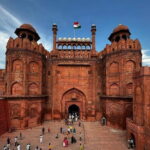
You explore Agra Fort (UNESCO). The fort is an important former residence of Mughal emperors, and it frames Taj-area history from a different angle than the marble mausoleum.
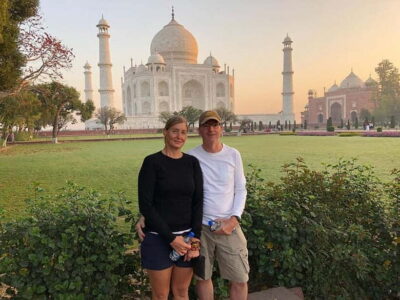
Then comes Mehtab Bagh, the Moonlight Garden, timed for sunset views of the Taj Mahal. Even with clouds or haze, the idea works: you’re watching the Taj from across the Yamuna landscape instead of only in the “walk right up to it” way. That change of perspective is worth it.
Taj Mahal at sunrise: why this tour timing is the whole point
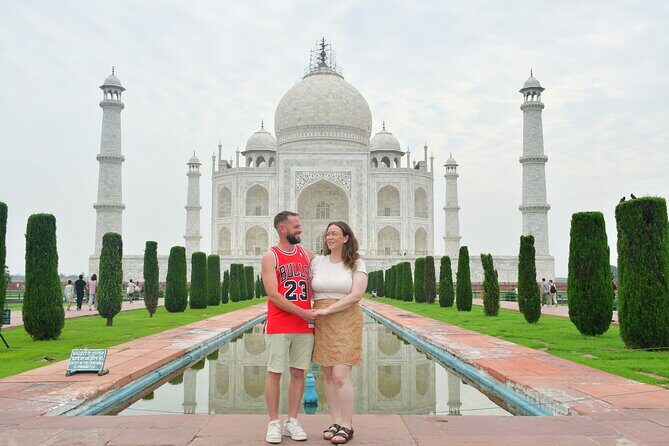
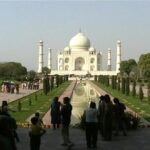
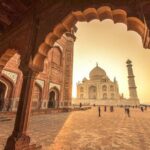
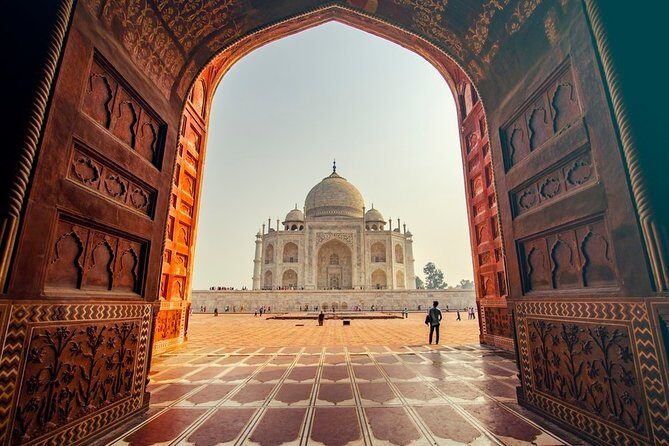
Day 4 is built around the 5:45 AM sunrise visit to the Taj Mahal. You meet your guide at the hotel lobby and go straight in. Sunrise visits are popular for a reason: the light shifts fast, the crowds can be different from later in the day, and the marble can look almost warm even though it’s pale stone.
The tour includes time for you to experience the complex with your private guide. It’s not just the view—your guide’s job is to translate the place: who built it (Shah Jahan), why it was made, and what the design is trying to communicate.
Afterward, you return for breakfast, then you shift gears again—this is where you start driving toward Ranthambore. In practice, this is a relief. Agra-to-wildlife is a great “mental reset,” and it keeps the trip from turning into constant monument fatigue.

Fatehpur Sikri on the way to Ranthambore: a pause before tiger country
Between Agra and Sawai Madhopur, you stop at Fatehpur Sikri, the abandoned Mughal capital built by Emperor Akbar (UNESCO). It’s about 35 km west of Agra, and the stop gives you a break from the drive without going so long you lose your momentum.
Why it’s a good inclusion: it connects the dots. Taj Mahal is Mughal power in marble form; Fatehpur Sikri shows the earlier administrative and architectural ambition behind it. It’s like you’re watching one empire think bigger over time.
Then you continue on to Sawai Madhopur, check in, and settle for the wildlife program.
Ranthambore National Park: two safaris, two chances, one rule
This is the “wild” part of the tour, and it runs on a simple rhythm: early start, then another outing later.
On safari day, you’re picked up around 6:00 AM for the first game drive lasting about 2–3 hours. In Ranthambore National Park, Bengal tigers are the main attraction. The broader wildlife list is important too: you might spot leopards, deer, and exotic birds.
After breakfast and a midday break, you go out again at 2:30 PM for the evening safari, typically 3–4 hours. Two drives matter because wildlife sightings are never guaranteed—what you can control is how often you’re out there looking.
The tour uses shared jeeps/canters for safaris. That’s normal for Ranthambore. The practical upside is value (shared vehicles are less expensive), and the tradeoff is you follow the group’s pace rather than having your own vehicle.
One more real-world point: you don’t want to treat this part like a photo shoot with endless time. It’s more about being alert, staying patient, and letting the forest do its thing.
Jaipur from Sawai Madhopur: temples and royal leftovers
Leaving Ranthambore for Jaipur is a long-ish change in scenery. You drive to Jaipur after breakfast and check in, then you get an evening temple option.
You can choose between:
- Galta Ji Monkey Temple: known for seven sacred water tanks (kunds) and a large population of rhesus macaque and langur monkeys
- Birla Mandir: a modern white-marble Hindu temple dedicated to Vishnu and Lakshmi
The fact that you can pick one is more than convenience. It helps you match your mood: Gaaltaji leans spiritual-plus-slightly-chaotic (in a fun, alive way), while Birla Mandir is cleaner and more structured visually.
Jaipur Day 7: Jaipur Fort, City Palace, and the astronomy stop
Your Jaipur exploration day is classic Rajasthan, done in an order that keeps you moving while still giving you breaks.
Highlights include:
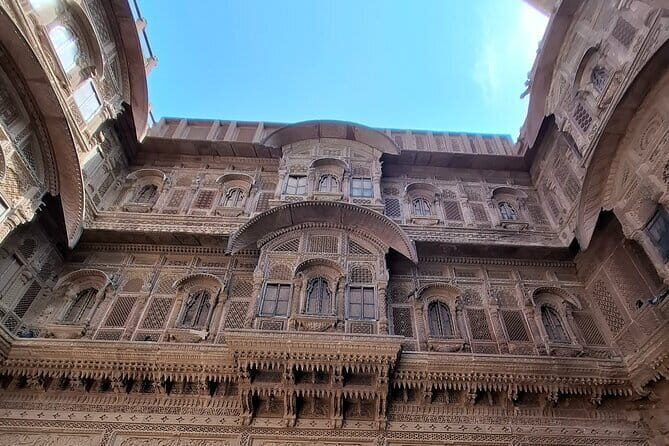
- Jaipur Fort (UNESCO): a palace complex of pale yellow/pink sandstone with white marble, built by Raja Man Singh I and expanded under Jai Singh I
- Jal Mahal: a photo stop at the Water Palace in Man Sagar Lake, where you see the palace rising as the water level changes
- City Palace of Jaipur: a royal residence built by Maharaja Sawai Jai Singh II
- Jantar Mantar: UNESCO astronomical observatory with 19 instruments, including the world’s largest stone sundial
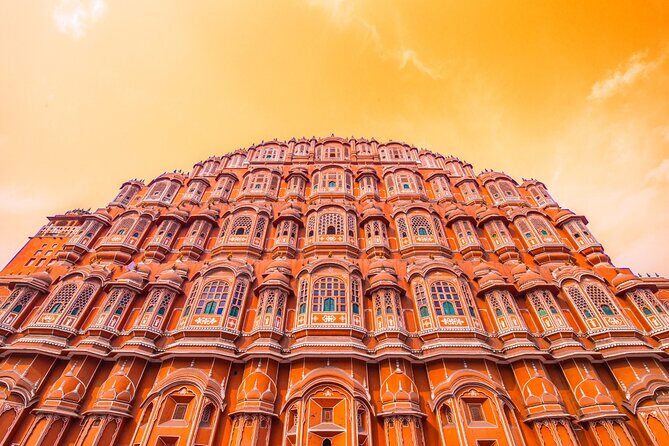
- Hawa Mahal: the Palace of Winds photo stop, built for royal women to observe street life without being seen
If you care about architecture details, you’ll enjoy this day. Even if you don’t, it works because each stop has a clear visual hook: fort walls, a lake-based palace silhouette, and the strange math-and-stone feeling of Jantar Mantar.
You also get time for local markets for handicrafts, jewelry, textiles, and typical Rajasthani souvenirs—useful if you want something beyond photos and postcards.
Guides and drivers: the human difference in a packed schedule
This tour leans on planning, but the real quality shows up in the people doing the work. In real experiences shared by past guests, the guides were praised as professional and knowledgeable—especially names like Sonia and Vivek for the city instruction part.
Drivers also matter here because the schedule is tight. Past guests highlighted safety and comfort with drivers such as Mr. Rajendra Sharma and Ajay. That’s not small talk. In a trip that mixes long drives with early pickups and safari timing, a steady, competent driver helps you relax instead of constantly monitoring the route.
Price and value: what $749 covers, and what it doesn’t
The big inclusions are what most people actually feel day to day:
- 3–5 star hotels (based on option selection)
- Private air-conditioned vehicle with water
- 2 jungle safaris in shared jeeps/canters
- Professional tour guides in each city
- Hotel/airport/railway station pickup and drop-off
- Breakfast (7)
Monument entrance fees are the main extra: listed as $79.00 per person. That means your final cost can shift depending on how many ticketed stops you choose to enter.
So is it good value? For me, yes—mainly because it combines two usually separate trips. Golden Triangle city touring is one type of vacation. Ranthambore safaris are another. You’re getting both with a driver-led schedule and guide support, which is often where costs jump if you try to do it all yourself.
Who should book this tour
This works best if you:
- Want a structured first trip to India’s Golden Triangle
- Like seeing famous places with a guide instead of random wandering
- Really care about getting to Ranthambore and going out twice rather than once
It’s also a decent choice for multigenerational trips because the pace is guided and transfers are handled. One note: the early Taj Mahal morning and the safari pickup mean you’ll be up earlier than a typical vacation.
Should you book this 8-day Golden Triangle with Ranthambore?
If your idea of a great trip is history in the morning and wildlife in the afternoon, book it. The itinerary gives you a logical flow: Delhi’s monuments and markets, Agra’s Taj timing plus sunset garden views, then a switch to Ranthambore with two safari outings and hotel breaks that keep you from burning out.
Hold off if you hate early starts or if you’re trying to keep costs ultra-tight. The entrance fees add a chunk, and the early pickup schedule is not negotiable on safari and Taj sunrise days.
FAQ
Is pickup included on this tour?
Yes. The package includes hotel/airport/railway station pickup and drop-off, along with a private air-conditioned vehicle with water.
How many safari drives happen in Ranthambore?
You get two jungle safaris in Ranthambore: an early morning drive (around 6:00 AM) and an afternoon/evening drive (around 2:30 PM). Safari duration is listed as about 2–3 hours in the morning and 3–4 hours later.
What’s included in the tour price?
The tour includes 3–5 star hotels (option selection), private air-conditioned vehicle with water, two safaris, professional guides in each city, pickup/drop-off, and breakfast for 7 days.
Are monument entrance fees included?
No. Monument entrance fees are not included and are listed as $79.00 per person.
Where does the tour end?
On the last day, you can choose to depart from Jaipur (drive to Jaipur International Airport) or depart from New Delhi (driver drop-off at Delhi International Airport or a preferred location in Delhi).
Can I cancel and get a refund?
Yes, based on the provided cancellation policy: you can cancel up to 6 days in advance for a full refund, 2–6 days for a 50% refund, and within 2 days no refund.