REVIEW · NEW DELHI
7 – Days Private Golden Triangle Tour with Pushkar
Book on Viator →Operated by World Travel Experiences · Bookable on Viator
Seven days, three icons, one desert-town detour. This private Golden Triangle tour links Delhi–Agra–Jaipur with a day in Pushkar, the holy lake town in Rajasthan, so you get both major sights and a calmer, more spiritual stop. You travel in a chauffeur-driven vehicle, and you get a tour guide in each main city, which helps a lot when you’re juggling big places, busy streets, and ticket lines.
I like two big things right away. First, the format is genuinely flexible: you’re not stuck with a rigid bus schedule, and the guides help you move at a human pace. Second, the trip includes handy transport touches that make the main sights easier, including a rickshaw ride in Old Delhi, a battery van ride at the Taj Mahal, and a jeep safari toward Amer Fort.
One thing to plan for: monument entrance fees are not included (the tour lists $100 per person for entry charges), and you’ll also have built-in factory and shopping stops that may not be everyone’s idea of fun.
In This Review
- Key highlights I’d bet on
- Price and value: what you’re paying for
- Delhi arrival (Day 1): get settled before you start running
- Delhi sightseeing (Day 2): Red Fort, Chandni Chowk, Humayun’s Tomb, and the big monuments
- Red Fort and the Mughal-style monuments vibe
- Chandni Chowk with a rickshaw ride
- Humayun’s Tomb: Mughal architecture that still feels calm
- Rashtrapati Bhavan, India Gate, and Qutub Minar
- Agra (Days 3): Taj Mahal logistics made easier
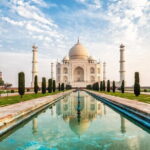
- Taj Mahal with a battery van ride
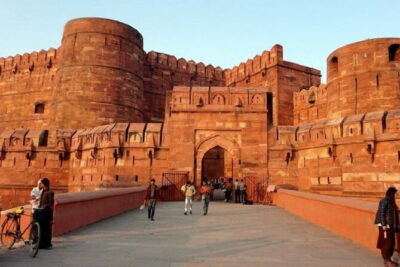
- Agra Fort: scale and stonework
- The travel between cities (Days 3–4–5): the chauffeur-driven advantage
- Fatehpur Sikri en-route to Jaipur (Day 4): a Mughal detour that breaks up the drive
- Jaipur highlights (Day 5): Amer by jeep, plus the Pink City icons
- Amer Palace and a jeep safari angle
- Jal Mahal, Hawa Mahal, and quick iconic views
- City Palace and Jantar Mantar for depth
- Factory and shopping stops: useful, not mandatory to love
- Pushkar (Day 6): the holy lake town you didn’t get in the Golden Triangle textbooks
- Brahma Temple: the one Brahma temple in India
- Pushkar Lake and the ghats
- Returning to Delhi (Day 7): don’t overpack your last day
- What I’d ask before you go (small but important)
- Should you book this Golden Triangle with Pushkar?
- FAQ
- How long is the Golden Triangle tour with Pushkar?
- What is included for accommodation?
- Do I have transportation during the trip?
- Are airport transfers included?
- Are monument entrance fees included in the price?
- Do you include guided tours at each destination?
- Are there any special transport or rides at major sites?
- Can I cancel for a full refund?
Key highlights I’d bet on
- English-speaking guides in Delhi, Agra, Jaipur, and Pushkar, so you’re not just sightseeing on mute
- Chauffeur-driven private car for the full route, which turns a long journey into something manageable
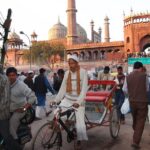
- Old Delhi rickshaw ride for a quick, practical hit of Chandni Chowk without getting lost
- Battery van at the Taj Mahal plus time to see Agra’s sights without rushing every step
- Jeep safari to Amer Fort area to get up the hill in a low-effort way
- Pushkar lake and Brahma Temple visit, adding a distinct spiritual stop after the big cities
Price and value: what you’re paying for
At $512 per person for about 7 days, this is priced as a private tour that covers the heavy logistics: chauffeur, guides, and 6 nights with breakfast. That matters because the Golden Triangle route is long, and the hassle is usually the real cost—getting from city to city, finding the right guides, and coordinating timing. Here, your transport and daily guiding are already lined up.
What you should also know is what pushes the total cost up. Entrance fees are not included, and the tour lists $100 per person for those charges. Tips for drivers and guides aren’t included either, and you’ll want to budget for a bit of personal spending. Airfare is also not included, so if you’re flying in, you’ll still need to handle that separately.
In return, you get multiple included extras that save time and energy at the exact moments they matter. The included rickshaw ride in Old Delhi is a smart way to experience Chandni Chowk’s energy without spending hours trying to find a safe route through traffic. The battery van at the Taj Mahal reduces the walking drain, and the jeep safari in Jaipur helps you tackle the Amer Fort area without feeling like your day is one long uphill hike.
You can also read our reviews of more private tours in New Delhi
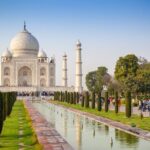

Delhi arrival (Day 1): get settled before you start running
Day 1 is built for sanity. You’re met at New Delhi International Airport and transferred to your hotel in an air-conditioned vehicle, then you check in and have the rest of the day free. That free time is useful, especially if your flight lands in a way that throws off your energy level.
This is also one of the underrated parts of a Golden Triangle trip: Delhi can feel like an assault on the senses when you’re jet-lagged. Starting with a calm arrival day helps you get your bearings fast, figure out where to get water, and plan an easy dinner without rushing.
Delhi sightseeing (Day 2): Red Fort, Chandni Chowk, Humayun’s Tomb, and the big monuments
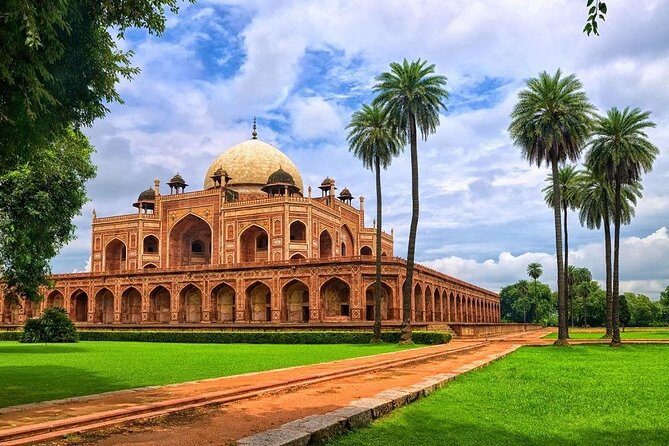
Your second day is a mix of Mughal-era landmarks and classic Delhi street life. Expect a local sightseeing block in the morning, then time in Old Delhi around Chandni Chowk—the famous, old market area near Old Delhi Railway Station.
Red Fort and the Mughal-style monuments vibe
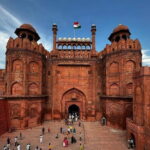
One major stop is the Red Fort area, known for its red sandstone Mughal construction. Even if you’re not going full museum-mode, this is where the scale of imperial Delhi hits you—massive walls, ceremonial grandeur, and the sense that power once lived here.
Chandni Chowk with a rickshaw ride
Then comes Old Delhi, and you get a rickshaw ride to explore the hustle of Chandni Chowk. This is a good compromise for first-timers: you experience the street texture, but you’re not stuck navigating every turn. You also get the advantage of a guide to keep you oriented on what matters most.



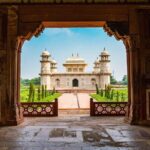

Humayun’s Tomb: Mughal architecture that still feels calm
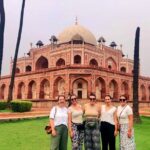
Later, you visit Humayun’s Tomb, a garden tomb and an early cornerstone of Mughal architecture. It’s not just a photo stop; it’s also a break from traffic noise. The garden setting makes it feel slower and more breathable than many Delhi monuments.
Rashtrapati Bhavan, India Gate, and Qutub Minar
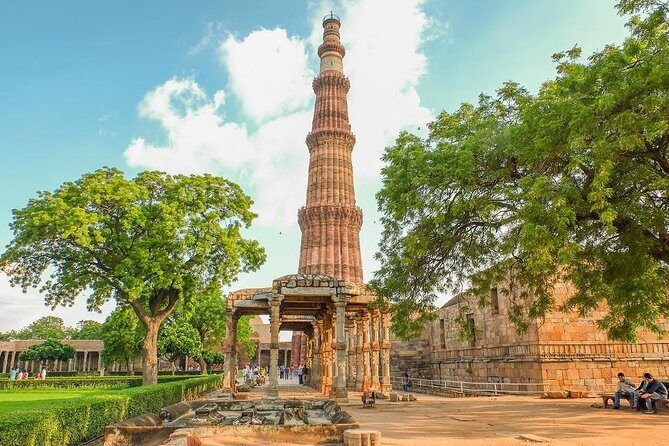
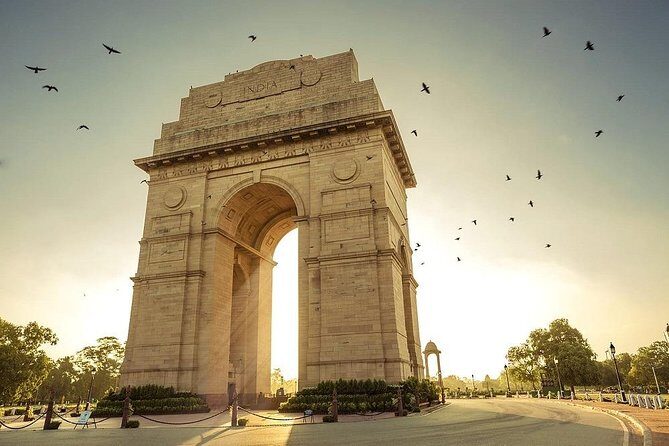
Your day also includes the big New Delhi landmarks: the grand government-area views around Rashtrapati Bhavan and India Gate, plus Qutub Minar. Qutub Minar is tall and instantly recognizable, and it gives you a different architectural flavor than the tomb-and-fort route.
A practical note: the day includes multiple sites, and some tickets are marked as not included. So it’s worth being ready to pay separate entrance fees on the spot (or at the times your guide arranges). The upside is that you’re not repeating yourself—you get Delhi’s most important contrasts in one organized loop.
Agra (Days 3): Taj Mahal logistics made easier
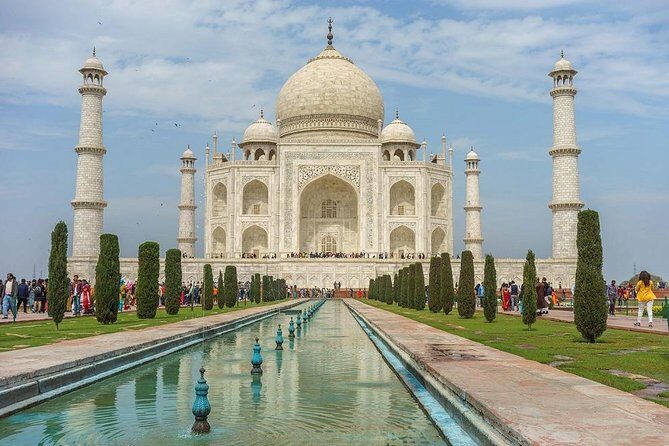
On Day 3 you check out of your Delhi hotel and head to Agra, with check-in at a pre-booked hotel after arrival. Your afternoon sightseeing is focused, not chaotic, and it’s built around the big two: Taj Mahal and Agra Fort.
Taj Mahal with a battery van ride
The Taj Mahal portion is where this tour quietly earns its keep. You get a battery van ride at the Taj Mahal, which reduces the walking burden and helps keep your time from evaporating in transport. You still get a couple hours on-site, so you’re not just doing a quick peak-and-go.
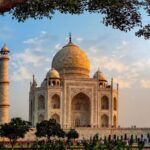
The Taj is famous for a reason, but the real value is pacing. When you arrive with transport handled and a guide helping you plan your route, you spend more energy noticing details—views, symmetry, and how light shifts—rather than figuring out which gate to use.
Agra Fort: scale and stonework
Then you head to Agra Fort, built under Akbar and dominating the Yamuna riverbank. This is where you see the defensive and administrative side of Mughal power. If you enjoy architecture and fort layouts, this stop gives you a satisfying counterpoint to the Taj’s romance.
Also, like many Golden Triangle itineraries, expect a mix of included and excluded admissions. The Taj and Fort entries are listed as not included, so factor that into your budget.
The travel between cities (Days 3–4–5): the chauffeur-driven advantage
A chauffeur-driven private car is more than comfort. It’s how you keep the days from turning into logistics marathons.
Between Delhi and Agra, and then Agra to Jaipur, you’re spending real hours in transit. Here, that time is converted into a planned route with bottled water and parking/toll handling included. And because it’s private, you avoid the slow drag of waiting for strangers or re-grouping when someone misses the meeting point.
If you’ve ever dealt with Indian traffic stress, you’ll appreciate this part. One past guest specifically noted feeling safe and secure throughout the drive, and that’s a big deal when you’re tired and trying not to think too hard.
Fatehpur Sikri en-route to Jaipur (Day 4): a Mughal detour that breaks up the drive
Day 4 starts with breakfast, then checkout, and a drive toward Jaipur. En-route, you visit Fatehpur Sikri for about 120 minutes.
This is an old deserted Mughal city built in red sandstone, tied to the saint Salim Chishti and Akbar’s legends around the birth of his sons. Even with limited time, Fatehpur Sikri works as a reset between the heavy hitter cities. It also gives you a break from modern sprawl and puts you in a more atmospheric, stone-and-history mood.
If you want one improvement to ask for: give your guide permission to help you prioritize what you see there. Even within two hours, the key is choosing the right stops so you don’t feel like you rushed it.
Jaipur highlights (Day 5): Amer by jeep, plus the Pink City icons
Your Jaipur day is packed with the classic highlights, but the pacing is still manageable because you’re not changing hotels mid-day.
Amer Palace and a jeep safari angle
You visit Amber Palace, and the trip includes a jeep safari to climb toward the Amer Fort area. That’s a practical inclusion. Amer is on a slope, and stairs and foot travel can eat time, especially in heat. The jeep helps you get up there with less fatigue so your palace time stays meaningful.
Amber also brings a Hindu-Muslim blend in architecture, which is a nice change from the Taj-and-fort world of Agra. If you like how styles overlap and evolve, Jaipur is where that becomes visible fast.
Jal Mahal, Hawa Mahal, and quick iconic views
Then you hit the postcard highlights:
- Jal Mahal (Water Palace): brief but scenic, seen as it appears to float in water
- Hawa Mahal (Palace of Winds): another quick hit near the Pink City commercial center
These stops are short in the itinerary, and that’s okay. They function like visual landmarks that keep the day feeling like Jaipur, not just a checklist of big buildings.
City Palace and Jantar Mantar for depth
Your time includes City Palace of Jaipur, a complex of courtyards and buildings that once served as the royal seat. Then you visit Jantar Mantar, a set of astronomical instruments built by Sawai Jai Singh II, completed in 1734. It includes the world’s largest stone sundial, and it’s a chance to see science built into everyday, public architecture.
This is one of the reasons Jaipur day feels like more than just buildings. You’re not only seeing imperial aesthetics; you’re also seeing how people measured the sky.
Factory and shopping stops: useful, not mandatory to love
The tour includes a handmade jewels / stone cutting factory visit in Jaipur and also mentions exclusive shopping tours in local markets. This can be genuinely interesting if you like crafts and want to understand how items are made. If you’d rather spend every minute on monuments, consider setting boundaries early with your guide so you’re not surprised by how long these stops run.
Pushkar (Day 6): the holy lake town you didn’t get in the Golden Triangle textbooks
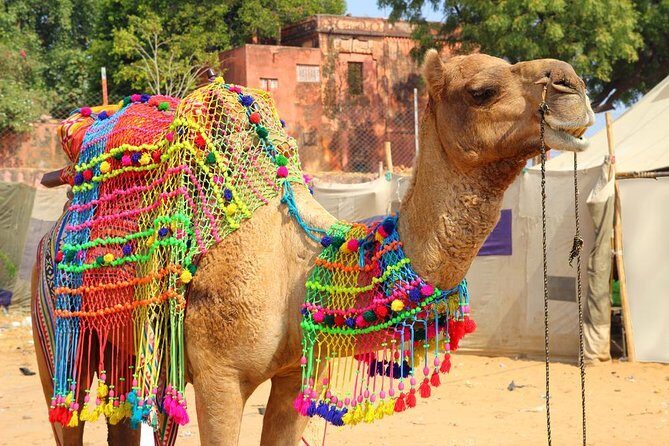
Day 6 is the tonal shift. After breakfast, you head to Pushkar, about 15 km from Ajmer. Pushkar is a small temple town, and it’s known for its holy lake and pilgrimage energy. (In November, it also hosts the Pushkar Mela, one of the biggest camel fairs, though your experience will depend on timing.)
Brahma Temple: the one Brahma temple in India
You visit the Brahma Temple, noted as the only Brahma temple in India where Brahma is worshipped according to Hindu mythology. It’s an important pilgrimage stop, and it changes the rhythm of the trip from sightseeing mode to something more reflective.
Pushkar Lake and the ghats
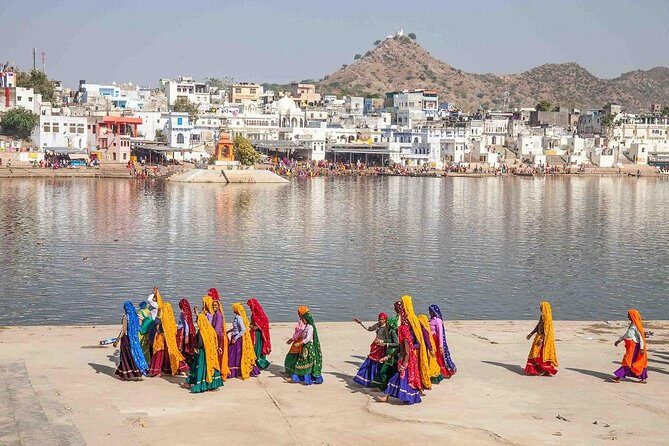
Then you visit Pushkar Lake, set in the Aravalli ranges and surrounded by dozens of bathing ghats and many temples. The lake setting makes this an easier day emotionally after busy cities.
Even if you’re not religious, the lake-and-ghats atmosphere tends to be the kind of place where you slow down without trying. And with a guide, you get context so it feels like more than just a pretty waterfront.
Returning to Delhi (Day 7): don’t overpack your last day
On Day 7, you check out after breakfast and drive back to New Delhi for transfer to the airport. It’s a clean, straightforward ending. Keeping your last day simple is smart because you’ll likely be tired after the previous days’ walking and heat, and you don’t want to squeeze in extra stops right before flying.
What I’d ask before you go (small but important)
If you want this to feel smooth, ask these things in advance:
- Which monument entrance fees are likely to be charged for your exact route and entry timing? The tour lists $100 per person for entrance fees not included.
- How long do the marble factory and jewels/stone cutting visits usually take in practice? They are included, but exact pacing isn’t specified.
- What kind of hotel setup you’ll receive for the 6 included nights (room type and any upgrade options). The tour says hotels with breakfast, but doesn’t describe the category.
Should you book this Golden Triangle with Pushkar?
Yes, if you want private comfort, an organized route, and the big sights covered with real guidance. This is the kind of tour that works well for couples, small groups, and first-timers who don’t want to learn the country’s transport maze.
I’d especially recommend it if you like practical extras: the rickshaw in Old Delhi, the battery van at the Taj, and the jeep safari up toward Amer Fort. Those aren’t showy inclusions; they’re energy savers.
I’d think twice if you strongly dislike factory and shopping stops. They’re included here, and you’ll want to treat those as part of the schedule rather than optional add-ons.
If you want a Golden Triangle that still has one memorable spiritual curveball, with Pushkar added properly, this is a strong choice.
FAQ
How long is the Golden Triangle tour with Pushkar?
It runs for 7 days (approx.).
What is included for accommodation?
You get 6 nights of hotel accommodation, with breakfast included.
Do I have transportation during the trip?
Yes. You have a private English-speaking chauffeur-driven car throughout the trip.
Are airport transfers included?
Yes. You get transfers as per the plan, including pickup after landing in New Delhi and transfer back to the New Delhi international airport on the last day.
Are monument entrance fees included in the price?
No. Entrance fees to monuments and sightseeing places are not included, and the tour lists $100.00 per person for entrance fees.
Do you include guided tours at each destination?
Yes. Professional English-speaking tour guides are included in Delhi, Agra, Jaipur, and Pushkar.
Are there any special transport or rides at major sites?
Yes. The tour includes a rickshaw ride in Old Delhi (Chandni Chowk), a battery van ride at the Taj Mahal, and a jeep safari in Jaipur to climb Amer Fort.
Can I cancel for a full refund?
Yes. You can cancel up to 24 hours in advance for a full refund.