REVIEW · NEW DELHI
5-Day New Delhi to Agra and Jaipur Tour – India Golden Triangle
Book on Viator →Bookable on Viator
Five days, three big cities.
This private Golden Triangle route strings together Delhi, Agra, and Jaipur with a professional guide in each place, plus a private AC car so you’re not constantly hunting transport. You’ll move through Mughal landmarks, the Taj Mahal at sunrise, and Jaipur’s royal architecture and math-of-the-stars science.
I especially like that the trip handles the heavy lifting up front: many entry tickets are built into the price, from Humayun’s Tomb to the Taj Mahal. I also like the guide factor. One standout name that shows up in feedback is Shahid, praised for making Agra Fort feel vivid and meaningful rather than like a pile of stones.
The main thing to consider is pacing. It’s a tight 5 days, so you’ll be out sightseeing most days, and lunch and dinner aren’t included, meaning you’ll want a simple plan for meals and rest.
In This Review
- Key things I’d focus on before you book
- A 5-day Golden Triangle that actually feels guided
- Delhi in one day: Jama Masjid, Humayun’s Tomb, and Qutub Minar
- Jama Masjid (about 30 minutes)
- Humayun’s Tomb (about 2 hours)
- Qutub Minar (about 1 hour)
- Agra at sunrise: Taj Mahal, Agra Fort, and Mehtab Bagh
- Taj Mahal (about 3 hours, ticket included)
- Agra Fort (about 2 hours, ticket included)
- Mehtab Bagh (about 1 hour, ticket included)
- Fatehpur Sikri: a UNESCO Mughal capital near Agra
- Jaipur’s royal core: City Palace, Hawa Mahal, and Jantar Mantar
- City Palace of Jaipur (about 1 hour, ticket included)
- Hawa Mahal (about 30 minutes, ticket included)
- Jantar Mantar (about 1 hour, ticket included)
- Galtaji Temple: calm, springs, and temple steps
- Transportation, hotels, guides, and the value you’re really paying for
- Private AC car + tolls/parking covered
- Professional guide in each city
- 3-star hotel + breakfast
- Tickets: where the price makes sense
- What’s not included
- What this tour is best for (and who should adjust)
- Should you book this 5-day Delhi–Agra–Jaipur tour?
- FAQ
- What cities are included on the tour?
- How long is the tour?
- Is this a private tour?
- What transportation is included?
- Are monument entry tickets included?
- Is breakfast included?
- Are lunch and dinner included?
- When do you visit the Taj Mahal?
- Can I get a full refund if I cancel?
Key things I’d focus on before you book
- Private AC car for the full route with pickup and drop-off so you start and end clean.
- Big-ticket monument entries are included (including Taj Mahal and Agra Fort).
- Sunrise Taj Mahal is part of the experience plan, not an optional add-on.
- UNESCO sites in multiple cities: Humayun’s Tomb, Qutub Minar, Taj Mahal, Agra Fort, and Fatehpur Sikri.
- Guides in each city, with feedback mentioning a guide named Shahid at Agra Fort.
- 3-star hotel + breakfast included, plus mineral water bottles during the days out.
A 5-day Golden Triangle that actually feels guided
The Golden Triangle is famous for being efficient. This version is also practical. You get a private setup (only your group), and you’re not trying to coordinate tickets, entrances, and timing on your own. That matters because these monuments can be busy, and you want your time spent watching, not figuring out.
For value, look at what’s included versus what you’d otherwise pay separately. Your price covers a private AC car, guides, 3-star hotel accommodation, breakfast, and a long list of monument entry fees. The one clear gap is food: lunch and dinner aren’t included, so you’ll need to budget for meals or choose spots your guide recommends.
This itinerary keeps your focus on the core “postcards,” but it also adds context. Delhi doesn’t just scratch the surface of Mughal power; Agra isn’t only the Taj photo; Jaipur isn’t only the famous facade shots. When a guide is doing real interpretation, you start noticing details you’d otherwise miss.
Delhi in one day: Jama Masjid, Humayun’s Tomb, and Qutub Minar
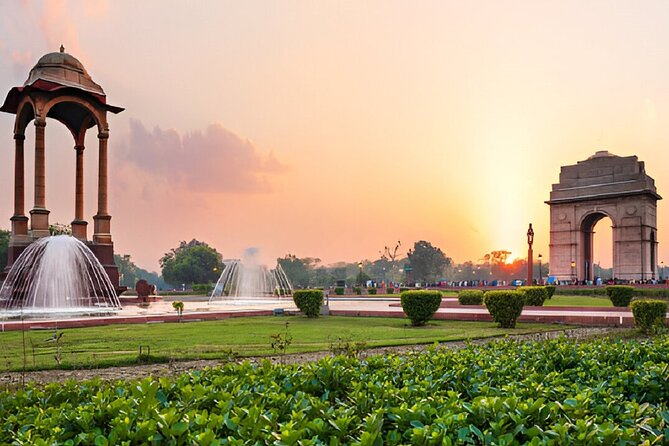
Day 1 is Old Delhi to Mughal grandeur to Delhi Sultanate monumentality.
Jama Masjid (about 30 minutes)
You’ll start at Jama Masjid, one of the largest and best-known mosques in Old Delhi. It was commissioned by Mughal Emperor Shah Jahan and built between 1650 and 1656. Even in a short visit, you can get a sense of how central this mosque is to the neighborhood around it, including the scale of the courtyard.
A practical note: mosques are working religious spaces, so plan for modest dress and respectful behavior.
Humayun’s Tomb (about 2 hours)
Next is Humayun’s Tomb, a UNESCO World Heritage Site and a major milestone in Mughal architecture. It was built in 1570 by Empress Bega Begum in memory of her husband, Emperor Humayun. This is the kind of place where time helps. In about two hours, you can move through the layout and understand the symmetry and garden concept that make it so influential.
Qutub Minar (about 1 hour)
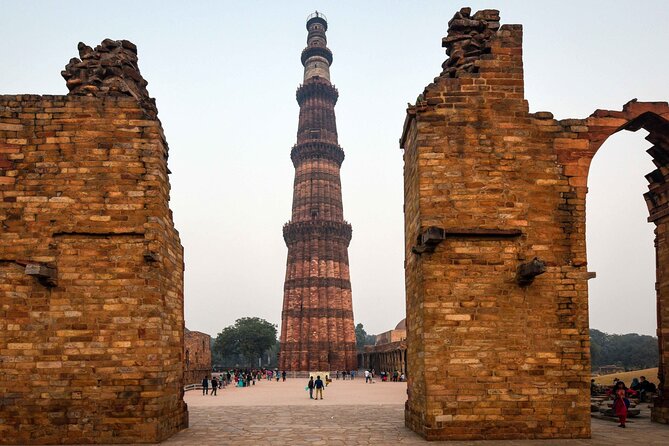
Then comes Qutub Minar, a UNESCO site and the tallest brick minaret in the world at 72.5 meters. It traces back to the Delhi Sultanate era, with construction associated to Qutb-ud-din Aibak. If you’re the type who likes “how did they build that,” this stop rewards you. In around an hour, you get enough to appreciate the vertical scale without feeling rushed.
What you’ll feel in Delhi: the city shifts fast. Old Delhi’s mosque life, Mughal tomb planning, and Sultanate monument design all show up in one day. That’s the benefit of a guided plan: you don’t just see stops—you connect them.
Agra at sunrise: Taj Mahal, Agra Fort, and Mehtab Bagh
Day 2 is the centerpiece day. You’re set up for the Taj Mahal at sunrise, and then you’re not done when the crowds usually arrive.
Taj Mahal (about 3 hours, ticket included)
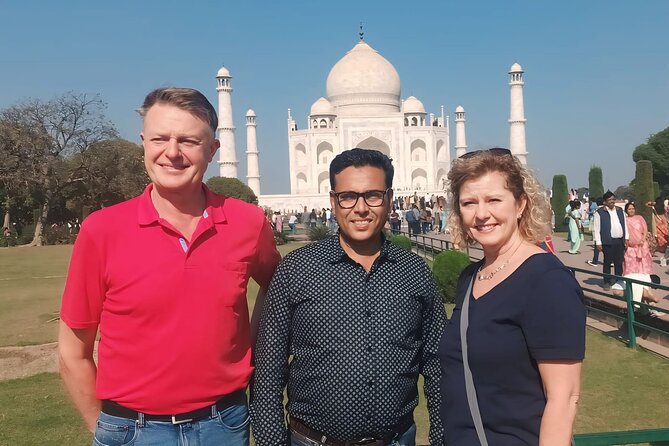
The Taj Mahal is a UNESCO World Heritage Site and the famous white-marble symbol of Shah Jahan’s love for Mumtaz Mahal. It’s built of marble inlaid with detail, and the sunrise approach matters because you get softer light and a calmer start.
Three hours is a comfortable block. It gives you time to walk at an easy pace, take photos without feeling like you’re constantly sprinting, and still leave room for your guide to explain what you’re seeing—materials, layout, and why the building’s design reads so clearly.
Agra Fort (about 2 hours, ticket included)
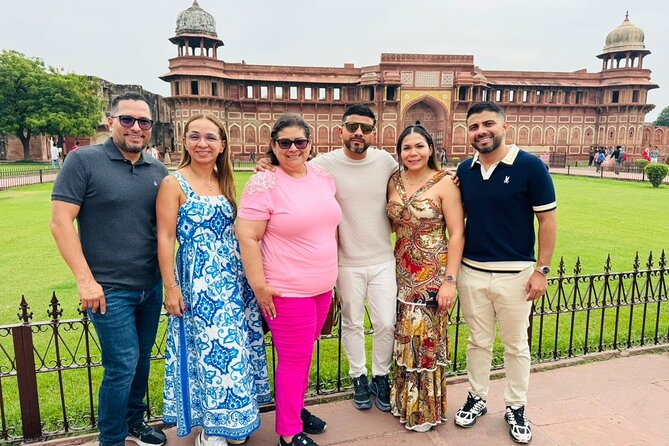
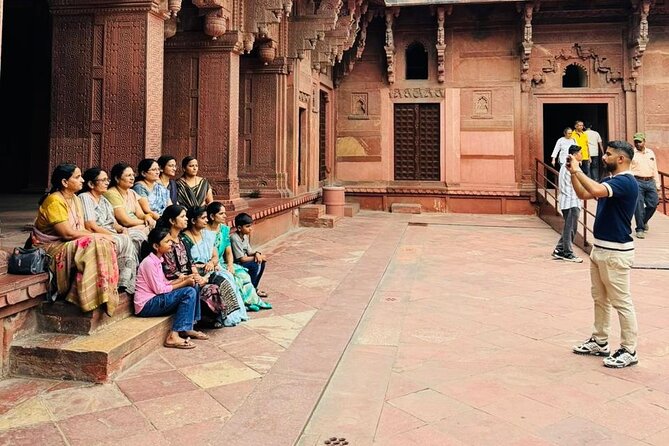
After the Taj, you’ll head to Agra Fort, another UNESCO World Heritage Site. This red-sandstone fortress was built by Emperor Akbar in 1565 and served as the Mughal dynasty’s main residence. It’s big, but a good guide makes the fort feel like a lived-in palace complex rather than only walls.
Feedback highlights a guide named Shahid at Agra Fort. The praise wasn’t about reciting facts—it was about storytelling: history, architecture, and Mughal heritage brought to life through clear explanations. That’s what you want here. Forts can otherwise blur together. With interpretation, every passage feels like it has a reason.
Mehtab Bagh (about 1 hour, ticket included)
You finish with Mehtab Bagh, a charbagh-style garden on the opposite side of the Yamuna River. It’s known for the symmetrical view looking toward the Taj. This stop is short, but it’s a smart way to add “the Taj from another angle” to your day.
What you’ll feel in Agra: you go beyond the icon. Taj Mahal gives you the emotional centerpiece; Agra Fort gives you power and governance; Mehtab Bagh adds balance and viewpoint.
Fatehpur Sikri: a UNESCO Mughal capital near Agra
Day 3 is Fatehpur Sikri, a UNESCO World Heritage Site near Agra. You’ll spend about two hours here, and admission is listed as free.
Fatehpur Sikri was built by Emperor Akbar in the 16th century and was meant to function as the Mughal capital. The site’s red sandstone city design mixes Indo-Islamic architecture in a way that’s easy to spot once you’re there.
Two hours is the right amount of time for a place like this. If you try to do it in a rush, you miss how the layout supports the story of an imperial center. Take breaks when you can. Even on guided trips, these sites ask you to pay attention.
Jaipur’s royal core: City Palace, Hawa Mahal, and Jantar Mantar
Day 4 is your “Pink City” architecture day. You’ll hit three big landmarks with included tickets.
City Palace of Jaipur (about 1 hour, ticket included)
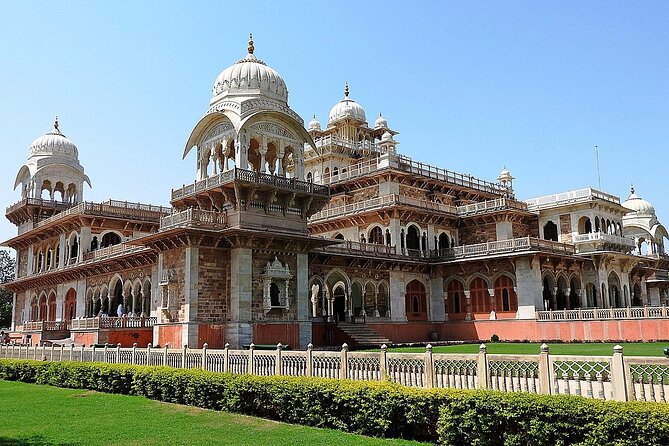
Start with City Palace, described as a blend of Rajput, Mughal, and European architectural elements. It’s in the heart of Jaipur and works as a royal residence with courtyards, gardens, and museums.
In about an hour, you’ll focus on the most important areas. It’s enough time to understand the palace as a functioning complex, not just a backdrop for photos.
Hawa Mahal (about 30 minutes, ticket included)
Next is Hawa Mahal, the Palace of Wind. It was built in 1799 by Maharaja Sawai Pratap Singh and is known for its five-story facade with many windows. The idea is simple but clever: the design creates airflow and also gives royal women a way to observe street life.
Thirty minutes can feel fast, but it’s also the right timing. You’ll see the facade, get the key context, and avoid turning it into a fatigue stop.
Jantar Mantar (about 1 hour, ticket included)
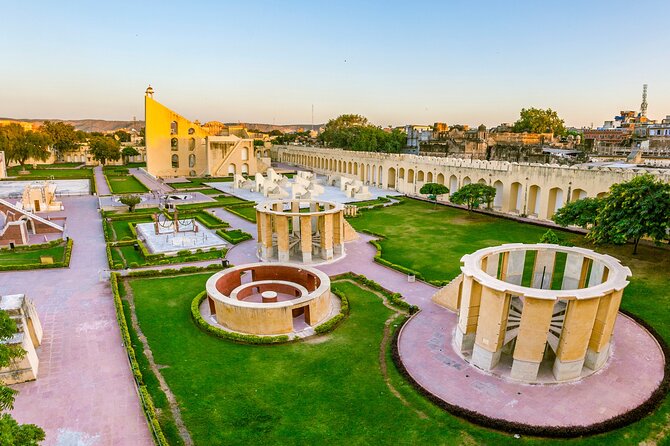
Then Jantar Mantar, an astronomical observatory built in 1734 by Maharaja Sawai Jai Singh II. The site has 19 architectural instruments, including the world’s largest stone sundial.
This is often the surprise highlight for people who think they’re only there for palaces and temples. The explanations make it click: it’s science designed in stone, tied to timekeeping and the sky.
What you’ll feel in Jaipur: a shift from tombs and forts to design systems—royal planning, window logic, and clockwork-scale observation.
Galtaji Temple: calm, springs, and temple steps
Your final day is Galtaji Temple in Jaipur, set in the Aravalli Hills. It’s an ancient Hindu pilgrimage site known for natural springs and the temple complex’s kunds (sacred water tanks), along with pavilions.
You’ll spend about an hour here, and admission is included. This stop is a good mental reset after the high-structure architecture of Jaipur’s palace core. Instead of only geometry and facades, you get water features and a more devotional pace.
If you’re a photo person, you’ll likely enjoy it. If you’re not, it still works because it slows you down for a bit.
Transportation, hotels, guides, and the value you’re really paying for
Let’s talk practicalities, because this tour is built on convenience.
Private AC car + tolls/parking covered
You get pickup and drop-off and a private AC car for the entire tour activity. All toll taxes and parking are included, which is one less thing to worry about during the day.
Professional guide in each city
The itinerary is structured so you have a professional tour guide in each city. That’s the real difference between seeing monuments and understanding them. The feedback also points to guides making meaningful contributions, including Shahid at Agra Fort.
3-star hotel + breakfast
You’re staying in 3-star hotels with breakfast included. That matters because it reduces decision fatigue. You can focus your energy on the day’s sights instead of breakfast hunting.
Tickets: where the price makes sense
The tour includes entry tickets for many key places:
- Taj Mahal (listed as 1300 INR)
- Agra Fort (600 INR)
- Qutub Minar (550 INR)
- Humayun’s Tomb (600 INR)
- Hawa Mahal (200 INR)
- City Palace (1000 INR)
- Jantar Mantar (100 INR)
- Mehtab Bagh (200 INR)
It also includes admission for Jama Masjid and Galtaji Temple, and Fatehpur Sikri is listed as free.
That ticket coverage is the reason this can feel like good value for a private itinerary. If you were to self-plan, you’d still be paying for transport time, guide time, and tickets, often while juggling timing and lines.
What’s not included
Lunch and dinner aren’t included, along with any personal expenses. The good part: you’re not paying for meals you might not want. The trade-off: you need to budget time and money for food each day.
What this tour is best for (and who should adjust)
This 5-day plan is ideal if you:
- Want the Golden Triangle without DIY stress
- Prefer a guide who explains meaning, not only dates
- Like a mix of major icons plus context stops (like Mehtab Bagh and Jantar Mantar)
You might want to rethink the fit if you’re the type who hates early starts or you strongly prefer long unstructured free time. The stops are scheduled with durations, and this route is designed to cover a lot.
Also, wear shoes you can walk in. Even the “short” visits add up across five days—especially in places with stairs, uneven surfaces, and crowd flow.
Should you book this 5-day Delhi–Agra–Jaipur tour?
I’d book it if your priority is an efficient Golden Triangle with included tickets, guides in each city, and a private AC car that keeps the day simple. The sunrise Taj Mahal plan alone is a big draw, and the way Agra Fort and Mehtab Bagh are included means you don’t leave after only one famous building.
I’d pause if you know you hate meal planning on the road. Since lunch and dinner are not included, you’ll want to decide how you’ll handle meals each day so the schedule stays comfortable.
If you want a guided, ticket-managed path through three historic cities, this one is easy to recommend.
FAQ
What cities are included on the tour?
The tour covers New Delhi, Agra, and Jaipur as part of the Golden Triangle route.
How long is the tour?
The experience is listed as about 5 days.
Is this a private tour?
Yes. It’s described as a private tour/activity, meaning only your group participates.
What transportation is included?
You get pickup and drop-off and a private AC car for the entire tour activity, with all toll taxes and parking included.
Are monument entry tickets included?
Many are included. The tour lists tickets for places like Taj Mahal, Agra Fort, Humayun’s Tomb, Qutub Minar, City Palace, Hawa Mahal, and Jantar Mantar. Fatehpur Sikri is listed as free admission, and admission tickets are also included for Jama Masjid, Mehtab Bagh, and Galtaji Temple.
Is breakfast included?
Yes. Breakfast in the hotel is included.
Are lunch and dinner included?
No. Lunch and dinner are not included, and any personal expenses are also not included.
When do you visit the Taj Mahal?
The tour overview says you’ll visit the Taj Mahal at sunrise.
Can I get a full refund if I cancel?
Yes. The policy states free cancellation up to 24 hours in advance for a full refund.