REVIEW · NEW DELHI
Private Old and New Delhi Full or Half-Day Guided Tour by Car
Book on Viator →Operated by Dream India Trip · Bookable on Viator
Delhi in one smooth, guided sweep.
This full-day drive-by tour is built for getting results without the headache. You cover top highlights from Old Delhi’s Mughal sights to New Delhi’s grand government buildings, all with a private guide and air-conditioned vehicle doing the heavy lifting while traffic, tolls, and parking stay handled. I especially like that it’s structured around walking checkpoints you can actually enjoy, rather than a rushed bus marathon.
Two things I really like: first, the guide commentary. When someone like Ashok Dhakrey or Nikhil brings the stories to life, the day stays informative but not tense. Second, the comfort factor—round-trip transport plus bottled water means you can focus on monuments, not logistics. One consideration: it’s still Delhi, so you’ll spend real time on the road; start times and site timing matter, especially if you’re sensitive to heat or crowds.
In This Review
- Key Points That Matter on the Ground
- Old Delhi and New Delhi, Packed Into One Smart Day
- The Comfort Factor: Air-Conditioned Car, Plus Tolls and Parking Taken Care Of
- Jama Masjid: Big Mughal Architecture and a View Into Daily Worship
- Chandni Chowk: Old Delhi Markets, Guided Through the Chaos
- Agrasen Ki Baoli: A Step Back, With Legends Attached
- Humayun’s Tomb: Mughal-Era Grandeur Without Needing a Textbook
- Qutub Minar and the Victory Tower Story
- India Gate: A Quick Break, Then Off Again
- Old Parliament Building and Rashtrapati Bhavan: New Delhi’s Big-Name Architecture
- Lotus Temple: When Architecture Looks Like a Flower
- Monday Swap: Lotus Temple Closed, Gurudwara Bangla Sahib Steps In
- Price and What You’re Getting for $17.11
- What to Bring and How to Avoid the Common Friction Points
- Who This Tour Suits Best
- Should You Book This Old and New Delhi Car Tour?
- FAQ
- FAQ
- What areas in Delhi/NCR do you pick up from?
- Is this tour private?
- How long is the guided tour?
- What kind of vehicle will I ride in?
- Are monument entrance tickets included?
- Do I need a dress code for the religious sites?
- What happens if I’m on a Monday?
- Can I cancel for free?
Key Points That Matter on the Ground
- Private attention in a car: you can ask questions and move at a pace that fits you.
- Door-to-door pickup and drop-off across Delhi, Noida, Faridabad, and Ghaziabad.
- Major sights without the stress of sorting directions, parking, and ticket lines.
- Chandni Chowk via tuk-tuk/rickshaw option: a practical way to feel the neighborhood without walking every step.
- Lotus Temple on most days, Monday exception: it’s closed Mondays, so you’ll swap in Gurudwara Bangla Sahib.
- Dress code is real for temples and mosques, so plan clothing accordingly.
Old Delhi and New Delhi, Packed Into One Smart Day
The appeal here is simple: you get the headline landmarks of Delhi in one organized loop. The day starts in Old Delhi with Jama Masjid and the market area of Chandni Chowk, then shifts to the big-sky monuments and official architecture of New Delhi.
What makes this tour feel good is the mix of scales. You get huge, dramatic spaces—then you get tight, human-scale streets where you’ll notice spices, sounds, and the fast pace of everyday Delhi life. And because you’re in a private car, you’re not stuck making multiple transfers or wrestling for taxis between far-flung stops.
This is a great way to build your bearings fast. Delhi has layers, and seeing Old and New side by side helps those layers make sense.
You can also read our reviews of more guided tours in New Delhi



The Comfort Factor: Air-Conditioned Car, Plus Tolls and Parking Taken Care Of
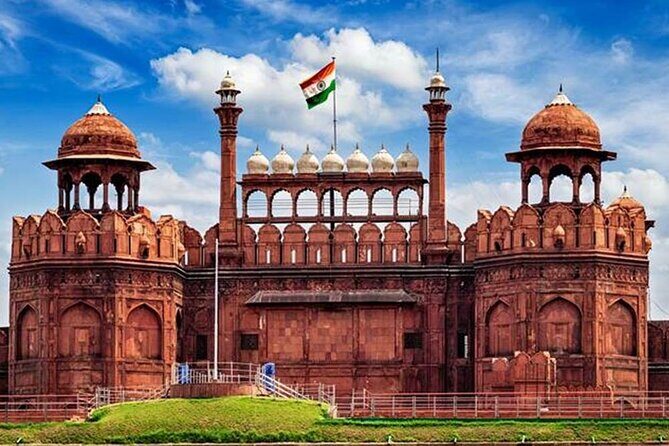
Delhi’s not shy about traffic. That’s exactly why the car matters. You’ll ride in an air-conditioned private vehicle with all tolls, fuel, parking charges, and taxes handled, so you’re not constantly stopping to sort payment.
Vehicle size is planned around your group:
- 1–2 people: four-seater sedan
- 3–5 people: six-seater car
- 6–8 people: ten-seater mini van
- 9–12 people: fifteen-seater van
For most people, that means you’ll sit together and keep the day smooth—no splitting up, no waiting around, and less time spent guessing how long each drive will take.
Also, you’ll get complementary mineral water bottles, which sounds minor until you’re standing under the sun during short monument stops.
Jama Masjid: Big Mughal Architecture and a View Into Daily Worship
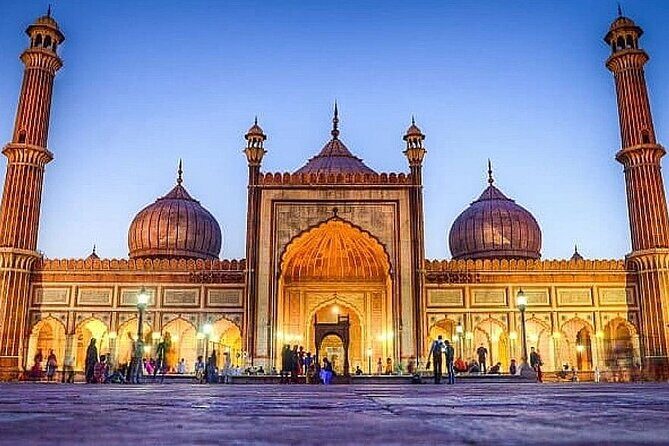
Jama Masjid is the first major stop, and it’s a strong one. Built in the 17th century by the fifth Mughal emperor Shah Jahan, it’s described as one of the largest and most beautiful mosques in India, with capacity to offer namaz together for around 25,000 people.
This matters because Jama Masjid isn’t only a photo stop. It’s an active place of worship with an atmosphere that feels different from purely museum-like sites. Even if you’re visiting as a history and architecture person, you’ll feel the scale the moment you’re inside the complex.
Practical tip: keep your shoulders covered and your clothing respectful; the mosque dress code is part of what keeps the space calm and sacred.
Admission is listed as included for this stop, so you can spend your time focusing on the sight rather than negotiating ticket details.
Chandni Chowk: Old Delhi Markets, Guided Through the Chaos
Chandni Chowk is where Delhi smells like food and spices and sounds like daily life. It’s described as the oldest and busiest market in Old Delhi, and it’s not the kind of place you want to try to navigate alone if you’re short on time.
The tour approach here is smart: you’re guided to see what matters, and you get an easier route into the market area. There’s an option for a tuk-tuk/rickshaw ride in this section, which can help you experience the buzz without walking every step.
Two things you’ll likely notice fast:
- The market is a visual feast. You’ll see colorful stalls and narrow streets packed with commerce.
- The experience changes hour by hour. Early timing can feel less intense than peak crowd periods, so don’t plan to casually stroll forever.
Also, the ticket note for this stop says admission is free, which makes it a low-cost way to experience a high-impact neighborhood.
Agrasen Ki Baoli: A Step Back, With Legends Attached
Next is Agrasen Ki Baoli, a famous stepwell tied to urban legends. If you like places with atmosphere—and a little mystery—this stop has that going for it. The tour frames it as a spot many people consider haunted and a center for supernatural stories.
Even if you don’t care about the legends, it works as a change of pace from the massive open spaces and market crowds. You move from active worship and street energy to a more contained, eerie-feeling structure that invites quiet attention.
This stop lasts about 30 minutes. Admission is listed as included, so you can keep it simple: show up ready to look closely, take a few photos if permitted, and then move on without overthinking it.
You can also read our reviews of more private tours in New Delhi






Humayun’s Tomb: Mughal-Era Grandeur Without Needing a Textbook
Humayun’s Tomb is a centerpiece stop. It was built in the 16th century by Humayun’s wife, Haji Begum. The tour description points out it’s the first Mughal architecture, and that design details were attributed to Mirak Mirza Ghiya.
What makes this place effective on a guided day is the way it turns architecture into something understandable. Instead of staring at walls and wondering what you’re looking at, your guide can connect the design choices to the broader Mughal tradition—so it feels less like homework and more like seeing.
It’s also a nice pacing break. After Jama Masjid and Chandni Chowk, this is a calmer environment where you can slow down and absorb details. Expect about one hour here, with admission included.
Practical tip: bring something for sun protection. You’ll be outside for at least part of the experience.
Qutub Minar and the Victory Tower Story
Qutub Minar is next, and it’s built for scale. It’s described as India’s tallest minaret. The construction is said to have been started by Qutubuddin Aibak to commemorate victory—so it’s also called the Victory Tower.
This stop works because it gives you a clear visual reference point. You can look up, you can appreciate vertical design, and you can understand why this is one of Delhi’s must-sees.
You’ll likely spend around one hour here. Admission is listed as included, which is convenient on a tour day with several charged stops.
Tip for photos: try to get one “full view” shot early, then do a second sweep once your eyes adjust to the angles and details. It tends to make your photos look less repetitive.
India Gate: A Quick Break, Then Off Again
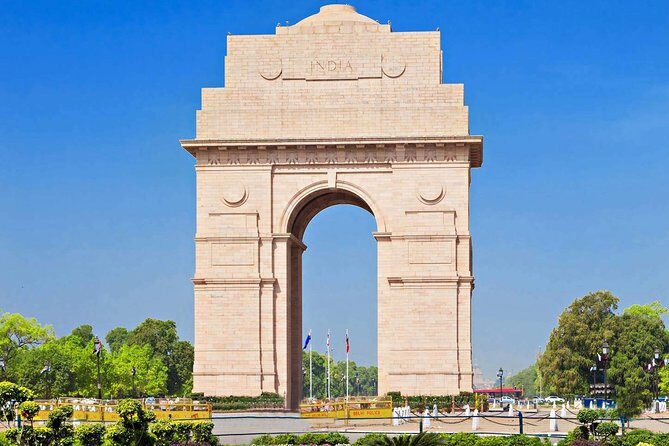
After Qutub Minar, you’ll hit India Gate—a memorial inspired by the Arc de Triomphe in Paris, built in 1931. It was originally known as the All India War Memorial, and the description notes it commemorates 90,000 Indian soldiers, with construction attributed to the Royal Nepal Government.
The stop is short—about 15 minutes—so it’s best for absorbing the basics and then moving on. If you’re a deep linger type, you might find this segment a bit fast. But on a day packed with major sights, it’s a good way to keep momentum.
Admission is listed as included for this stop, so you’re not losing time dealing with ticketing.
Old Parliament Building and Rashtrapati Bhavan: New Delhi’s Big-Name Architecture
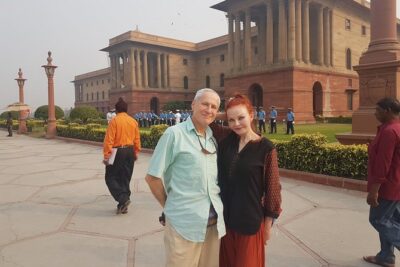
Now you shift into New Delhi’s grand government-core zone. The Old Parliament Building section references the moment Delhi became India’s capital in 1911, with architects Sir Edwin Lutyens and Herbert Baker tasked with shaping the city’s monumental look.
Then Rashtrapati Bhavan comes in. It’s described as the governmental residence of the President of India. The tour notes it was designed by Edwin Lutyens—also credited for India Gate and the Indian Parliament.
This is one of those areas where a guide earns their fee. Without context, it’s easy to see buildings and forget what they represent. With a guide, you can read the space: why these buildings look the way they do, and how New Delhi’s official identity was built.
Even if your photos don’t catch the grandeur fully, the scale and planning usually comes through in person.
Lotus Temple: When Architecture Looks Like a Flower
Lotus Temple is a very different kind of experience. It’s a Baha’i place of worship near Delhi’s capital area. The tour description highlights that there’s no idol and no religious rituals in the traditional sense inside. Instead, it’s described as a space centered on worship, without the usual ritual structure you might expect in other faith sites.
It’s also a visual stop that tends to reset your brain after older stone-and-arch stories. The mood is calmer, and the architecture is easy to appreciate even if you’re not trying to memorize dates.
Expect about 30 minutes. Admission is listed as included.
Monday Swap: Lotus Temple Closed, Gurudwara Bangla Sahib Steps In
Here’s an important practical note: Lotus Temple is closed every Monday. If your day lands on Monday, the tour will swap in Gurudwara Bangla Sahib instead.
If you’re planning around specific photos or a specific temple, keep this in mind before you lock your dates.
Price and What You’re Getting for $17.11
At $17.11 per person, the value comes from what you avoid, not just what you get. You’re paying for:
- Round-trip transfers from anywhere in Delhi, Noida, Faridabad, and Ghaziabad
- A private guide
- An air-conditioned private vehicle
- Transport costs like tolls, fuel, parking, and taxes
- Mineral water
On top of that, some add-ons are option-based. Monument entrance fees are noted as included only if the option is selected, and lunch is included only if you choose the lunch option. A rickshaw ride is also included only if selected, and drink costs with lunch are not included.
For me, the best value angle is the “no stress” design: you spend your limited day actually seeing, not bargaining with drivers or figuring out routes between distant sites.
What to Bring and How to Avoid the Common Friction Points
This tour is straightforward, but a few small things prevent big slowdowns.
- Carry a valid photo identity for monument checks.
- Dress for temples and mosques. Shoulders must be covered, upper arms must be covered, and lower wear needs to be at least below knee length.
- If you’re sensitive to sun, plan shade/sun protection since multiple stops are outdoors.
Also, because it’s a private tour/activity, your group is the only group participating, which usually means less waiting and less mismatch between your pace and someone else’s.
Who This Tour Suits Best
This is a strong pick if you:
- Want a high-coverage Delhi highlights day without committing to lots of independent navigation
- Prefer a private guide who can adjust explanations to your interests
- Like a balanced mix of monumental architecture and street-level neighborhoods
- Appreciate comfort in transit, especially in warmer months
It’s also a good choice for first-timers. The day shows you the big anchors of Delhi, so your later exploration feels more confident.
If you’re the type who wants to linger for hours in one place, you might find some stops a bit timed. But that’s the tradeoff for seeing so much in one car loop.
Should You Book This Old and New Delhi Car Tour?
If you want Delhi highlights with minimal friction, I’d say yes. The private guide, air-conditioned vehicle, and door-to-door coverage across Delhi/NCR are the kind of practical benefits that make sightseeing actually enjoyable.
Book it if you like guided context and a structured day where you don’t have to plan every turn. Skip it or adjust expectations if you’re hoping for slow, deep wandering at just one site, because the itinerary is designed to move you through multiple major landmarks.
FAQ
FAQ
What areas in Delhi/NCR do you pick up from?
Pickup and drop-off are included from anywhere in Delhi, Noida, Faridabad, and Ghaziabad. You can also start from various pickup points in the Delhi/Gurugram area as part of the service.
Is this tour private?
Yes. It’s a private tour/activity, so only your group will participate.
How long is the guided tour?
The tour duration is listed as about 8 hours.
What kind of vehicle will I ride in?
Vehicle type depends on group size: a four-seater sedan for 1–2 people, a six-seater car for 3–5, a ten-seater mini van for 6–8, and a fifteen-seater van for 9–12.
Are monument entrance tickets included?
Monument entrance fees are included if you select the option. The tour notes that Chandni Chowk has admission free, while other key stops list admission ticket included.
Do I need a dress code for the religious sites?
Yes. For temples and mosques, you should cover shoulders, chest, navel, and upper arms, and wear lower clothing at least below the knee inside the religious complex.
What happens if I’m on a Monday?
Lotus Temple is closed every Monday, so the tour will visit Gurudwara Bangla Sahib instead.
Can I cancel for free?
Yes. Free cancellation is available up to 24 hours in advance for a full refund. If you cancel less than 24 hours before the start time, the amount paid isn’t refunded.