REVIEW · NEW DELHI
Private Day Trip to Haridwar and Rishikesh from Delhi by Car
Book on Viator →Operated by Tours to Agra · Bookable on Viator
A long day, but worth it. This private trip strings together two of northern India’s most meaningful places—Haridwar and Rishikesh—in one smooth run from Delhi, where public transport can turn into a time-sink. I like that you get hotel pickup and drop-off in the City Center area plus an air-conditioned private car for the long haul. I also like that you have an English-speaking guide in Rishikesh, so you’re not stuck staring at signs and hoping. The one real drawback to plan for is the sheer time: it’s about 14 hours, and you’ll have a long day in the car plus separate monument/ashram entrance fees (around $30 per person), so it’s not the best choice if you hate long drives.
Haridwar gives you the sacred river feeling fast: Har Ki Pauri is famous for a reason, and you get a chance to see Ganga worship in action. Then you head to Rishikesh, where bridges, temples, and ashram compounds create a totally different rhythm—more reflection than rushing.
This is the kind of day trip that suits you if you want both spirit and logistics handled. Reviews highlight drivers and guides like Ajay (excellent driving and deep knowledge) and Pawan (safe, confident driving and good English), and even when English varies a bit (Jyoti was great at showing spots, with less English), the overall experience still lands as calm, organized, and worth the trip.
In This Review
- Key highlights I’d focus on
- Why Haridwar and Rishikesh by private car makes sense
- Entering Har Ki Pauri: the Ganga’s meeting point feeling
- Ganga aarti time: what the second Har Ki Pauri stop gives you
- Lakshman Jhula: a long bridge view over the river
- Ram Jhula: iron suspension bridge with pedestrian-plus-chaos energy
- The ashram circuit in Rishikesh: Sivananda to Anandamayee
- Sivananda Ashram (short stop, big context)
- Parmarth Niketan (more rooms, more pilgrim energy)
- Geeta Bhawan (discourse halls and rooms)
- Swarg Ashram (more than silence)
- Shree Shree Ma Anandamayee Ashram (a different kind of presence)
- The Beatles connection and why it’s worth remembering
- Driver and guide quality: the difference between a tour and a real day
- Price and logistics: what you’ll actually plan for
- Who this trip suits best (and who should skip it)
- Quick tips to make your day feel smoother
- Should you book this Haridwar and Rishikesh day trip?
- FAQ
- Is this a private tour?
- How long is the day trip?
- What’s included in the price?
- Are entrance fees included?
- Do I get help with pickup?
- What happens if weather is poor?
Key highlights I’d focus on
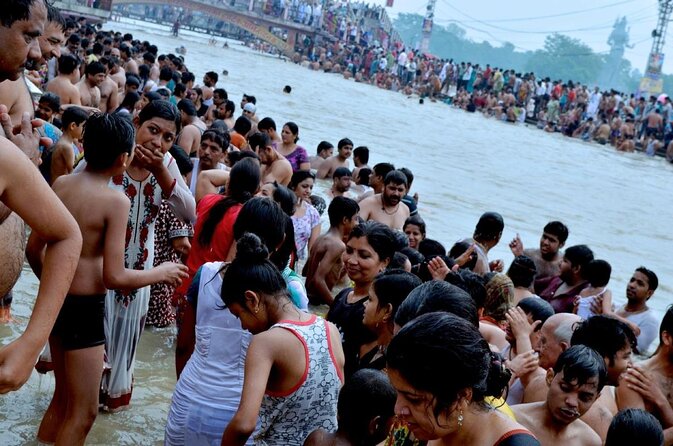
- Two Har Ki Pauri visits: one earlier to take in the ghat, then a second time for the evening aarti feel
- Bridge time that actually matters: Lakshman Jhula and Ram Jhula give you skyline views over the Ganga
- Ashram circuit with real atmosphere: from Sivananda onward, you’re walking through active spiritual spaces
- English support where you need it: driver handles the road; guide helps you understand the sites in Rishikesh
- Private, not shared: only your group, so you keep control of pace and priorities
Why Haridwar and Rishikesh by private car makes sense
Delhi to Haridwar and Rishikesh is one of those routes that sounds simple until you try it with buses and trains. Distances are manageable, but connections, timing, and last-mile getting-around can chew up your day. A private day trip by car fixes the biggest pain point: you spend the time seeing places, not negotiating schedules.
You’re also buying comfort. The drive is done in an air-conditioned private vehicle, and you’ll have an English-speaking driver. That matters because traffic around pilgrimage zones can be intense, especially near ghats and major crossings. One review specifically praised the fact that the driver managed the trip with almost no horn-honking drama, and another noted very safe driving even with crowds moving on roads.
The “value” angle here is simple math: you’re paying $80 per person for a private, full-day route, and then you may pay additional entrance fees (listed as $30 per person for monuments). Even with that add-on, you’re likely still ahead versus spending your day piecing together multiple tickets and taxis while losing hours to travel friction.
You can also read our reviews of more tours and experiences in New Delhi.


Entering Har Ki Pauri: the Ganga’s meeting point feeling
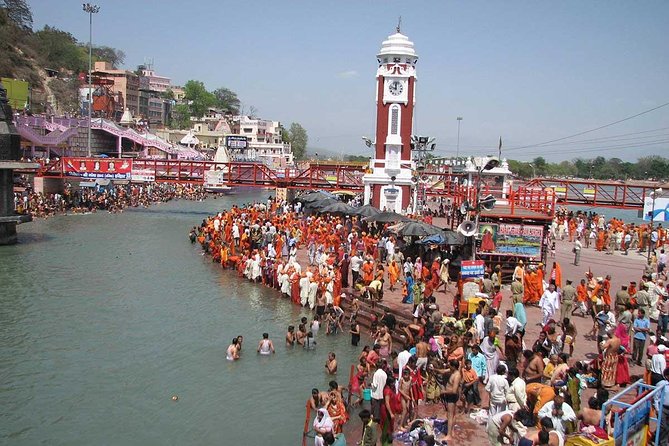
Har Ki Pauri is the star at Haridwar. It’s one of the holiest ghats in the country, and the tradition goes that it’s the first place where the Ganga reaches the plains from the Himalayas. That idea alone gives you context as you stand there: you’re not just looking at river steps, you’re standing at a symbolic border between mountains and everyday life.
You get about two hours here. That’s enough time to walk the ghat area, orient yourself, and settle in for the river vibe without feeling rushed. The ghat is also tied to the kind of worship that makes people stop mid-sentence and just watch. The tour includes experiences connected to the Ganga aarti, and the overall description also references the floating lights ceremony—both are the sort of sights you don’t get in most quick city stops.
Practical note: ghats are active spaces with uneven footing and lots of people moving. Wear shoes that handle stone steps. If you plan to stay near the waterline for the best views, bring a light layer for evening chill and keep your phone ready but protected.
Ganga aarti time: what the second Har Ki Pauri stop gives you
A smart twist is the return to Har Ki Pauri later in the day. Instead of giving you one quick pass, you get another two-hour block specifically timed for the aarti atmosphere.
The tradition here is tied to Pandit Madan Mohan Malviya and aarti that began decades ago, with the practice continuing. Whether you’re deeply religious or just a curious observer, this second visit changes your experience. Morning ghat energy feels like arrival and orientation. Evening ghat energy feels like devotion in motion—people gather, the ritual rhythm takes over, and you understand why this place keeps pulling pilgrims back year after year.
From a practical perspective, the second stop reduces stress. If your first visit is messy (crowds, timing, or just jet-lag from the day), you still get another shot at being in the right mindset when the lights and ritual take over.
Lakshman Jhula: a long bridge view over the river
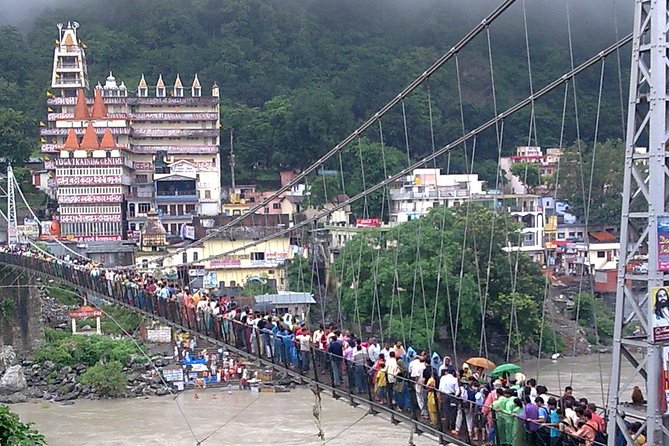
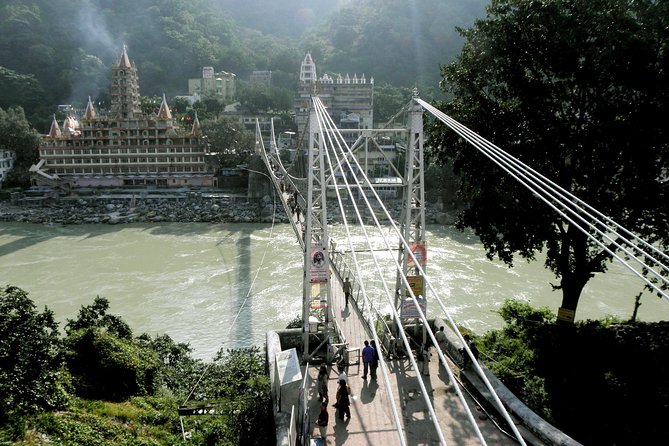
Next you shift from steps to a crossing—Lakshman Jhula. This hanging bridge across the Ganga is a well-known Rishikesh landmark. The key detail: it’s about 450 feet long and sits roughly 70 feet above the river. That height helps. Even if you’re not thinking about legends, you can see the geography clearly: river, bends, and the temple-town layout that grows along both sides.
You’ll have about two hours for this stop, which is longer than most bridge stops in typical itineraries. That’s good. Bridges aren’t only for walking across. You’ll want time to pause, look both directions, and watch the riverway activity.
One note: bridges in Rishikesh can feel busy with foot traffic. You’ll want comfortable walking shoes and a watch for cyclists and street movement. The tour is on foot here, so you’ll feel the city’s pace rather than just watching from a car window.
Ram Jhula: iron suspension bridge with pedestrian-plus-chaos energy
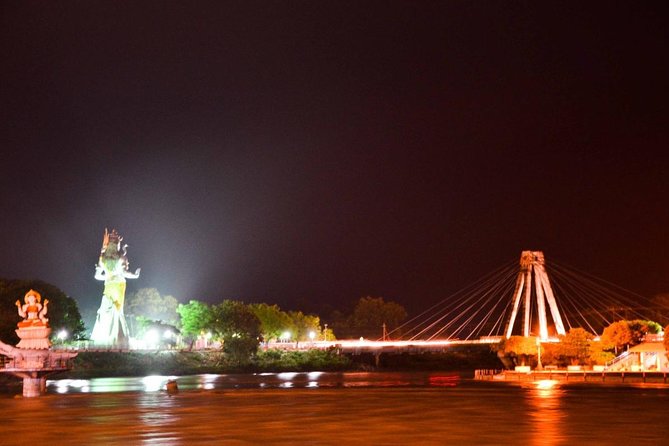
After Lakshman Jhula, you’ll visit Ram Jhula, another bridge crossing the Ganga. It’s described as an iron suspension bridge connecting Muni Ki Reti with Swargashram. It’s pedestrian-focused, but the route also allows bikes, so you get a mix of slow walkers and quick movement.
You get around one hour, which is about right. Enough time to cross, take photos, and then step into the next phase of the day without burning your energy. If you care about viewpoints, aim to spend at least part of that hour looking back toward the river. From the bridge, the Ganga often becomes the “main character,” with movement and reflections changing by the minute.

The ashram circuit in Rishikesh: Sivananda to Anandamayee
Rishikesh isn’t just a pretty riverside. It’s an ashram-and-retreat city, and this tour treats it like a spiritual route, moving from one compound to the next. You’re not just sightseeing from outside gates—you’re walking through places that feel active and lived-in.
Sivananda Ashram (short stop, big context)
You’ll spend about 30 minutes at Sivananda Ashram. The description ties it to His Holiness Sri Swami Sivananda, with construction of the “Divine Life” mansion starting from 1936, brick by brick, built on foundations described as purity and integrity. Even on a short visit, that timeline gives the place weight. You can feel it’s not just a tourist stop; it’s a long-running project and community.
Because your time here is limited, treat it like orientation. Walk, look at the main compound feel, and then move on. If you want long meditation-style visits, you’d likely need a separate half-day or overnight plan.
Parmarth Niketan (more rooms, more pilgrim energy)
Next is Parmarth Niketan Ashram, with about one hour. This is described as the largest ashram in Rishikesh, with over 1000 rooms. It’s known for clean, sacred atmosphere and gardens for thousands of pilgrims.
This stop changes the mood again. Sivananda feels foundational; Parmarth feels operational. The scale means you’ll see more people and more movement, so come with patience. The payoff is that you see what “ashram life” looks like at scale—less postcard, more real rhythm.
Geeta Bhawan (discourse halls and rooms)
You’ll visit Gita Bhawan for about 30 minutes. It’s described as a large complex by the riverbank in Swargashram, with several discourse halls and over 1000 rooms. If you like knowing what you’re looking at, this is the type of stop where the structure makes sense once you hear the purpose: places designed for talks, study, and long-term stays.
Swarg Ashram (more than silence)
Swarg Ashram also gets about 30 minutes. The description doesn’t just paint it as quiet. It mentions bistros, stores, shopping areas, libraries, parks, contemplation focus points, Ayurvedic dispensaries, eateries, and inns. It sounds like a town-within-a-town built around spiritual practice.
That matters for your experience because it changes what you’ll notice. You might see daily routines, not only chanting. It can feel more approachable if you’re not used to silent spaces.
Shree Shree Ma Anandamayee Ashram (a different kind of presence)
The tour includes Shree Shree Ma Anandamayee Ashram for about 30 minutes. The text focuses on her personality—described as distant or mysterious in aloofness but tempered by compassion. Even without knowing every detail, this stop is a reminder that ashrams aren’t all the same aesthetic. Some are about architecture and routines; some are about a spiritual “presence” and the way people behave inside that space.
The Beatles connection and why it’s worth remembering
Rishikesh is famous for attracting global spiritual seekers, including a connection to an ashram where The Beatles stayed. The tour’s description brings that up, and it’s a useful mental hook: it helps you see Rishikesh as more than Indian-only tradition.
When you remember that history while you’re walking these compounds, the vibe lands differently. You notice how the city balances openness to visitors with strong spiritual identity. That’s also one reason why you’ll likely encounter a mix of people: pilgrims, students, and those doing a personal reboot.
I’d still keep expectations grounded. You’re not going to get a Beatles museum. You’re experiencing the living spiritual city that drew international attention in the first place.
Driver and guide quality: the difference between a tour and a real day
A full-day private trip lives or dies on people. Here, you’ve got two roles: the English-speaking driver and an English-speaking guide in Rishikesh.
In the reviews, the strongest praise clusters around smooth driving and clear explanations. Ajay is highlighted as outstanding—both driver and guide, with lots of knowledge shared in a way that matched a guest’s interest in Hinduism. Pawan is described as safe and confident, with good English and explanation during key stops.
There’s also evidence that the driving can be calm even in crowded pilgrimage traffic. One review praised the fact that the driver didn’t create constant horn noise, which may sound petty until you’ve spent time in Delhi traffic and know how rare calm can be.
One balancing point: not every guide’s English level gets the same mention. In one account, Jyoti was excellent at showing locations, but English was noted as limited for those who wanted more context. Still, the overall set-up includes an English-speaking guide in Rishikesh, which should help.
Price and logistics: what you’ll actually plan for
Let’s make the money real.
- Base price: $80 per person
- Listed monument/entrance fees: $30 per person (for all monuments)
- Optional: gratuities
So you’re looking at roughly $110 per person before tips, assuming you pay the stated entrance fees. That doesn’t sound cheap until you compare it with what you’re avoiding: a full day of independent transit stress, multiple taxi hops, and lost time between Haridwar and Rishikesh.
Also remember what you’re getting for that price: private car, hotel pickup/drop-off in New Delhi City Center area, and language support where it matters.
The other “logistics cost” is energy. Fourteen hours on the go means you should pack for comfort: water, snacks you can eat quickly, a layer for river air at night, and comfortable footwear for ghats and bridge walks.
Who this trip suits best (and who should skip it)
This private day trip is a strong match if you:
- Want to see both cities without messing with train schedules
- Like religious sites but also need clear explanations
- Prefer a controlled pace with pickup and drop-off instead of hunting taxis
- Enjoy a mix of river sights and ashram compounds
You might want a different plan if you:
- Hate long days and long car time
- Want only one city (Haridwar or Rishikesh) instead of both
- Don’t want any extra entrance fees or walking time
Quick tips to make your day feel smoother
- Bring modest clothing and expect dress expectations at religious places.
- Wear shoes that handle stone steps and crowded areas.
- Keep your plan flexible around ceremonies: the best viewing spots can fill fast.
- If you’re interested in Ganga worship scenes, arrive with enough calm that you can watch rather than rush.
- For pictures, use the bridges for wide shots and Har Ki Pauri for the human-and-river feeling.
Should you book this Haridwar and Rishikesh day trip?
I’d book it if you want an honest one-day hit: ghats + ashrams + bridges, done with private transport and enough time to actually feel the places. The best sign is that this is designed as a structured day—Har Ki Pauri early and again later, then multiple ashram stops—so you’re not just collecting checkmarks.
Skip it if you’re sensitive to long drives or you’re hoping for a low-effort trip. The day is long, and entrance fees aren’t included in the base price. But if you go in prepared, this is one of those rare Delhi day trips where the effort pays back with real spiritual and scenic payoff.
FAQ
Is this a private tour?
Yes. It’s a private tour/activity, so only your group participates.
How long is the day trip?
It runs about 14 hours (approx.).
What’s included in the price?
Included are hotel pickup and drop-off in the New Delhi City Center area, transport by an air-conditioned private car, an English-speaking driver, an English-speaking guide in Rishikesh, and all taxes and service charges.
Are entrance fees included?
No. Entrance fees are listed as $30 per person for all monuments.
Do I get help with pickup?
Yes. Pickup and drop-off are offered for the New Delhi City Center area.
What happens if weather is poor?
This experience requires good weather. If it’s canceled due to poor weather, you’ll be offered a different date or a full refund.