REVIEW · JAIPUR
Jaipur City Tour with Traditional Flower Market Visit
Book on Viator →Operated by Rajasthan India Tour Driver · Bookable on Viator
Waking up early paid off in Jaipur. This is a private AC car day that strings together the city’s big-name sights with one hands-on local morning: the flower and vegetable market walk plus chai and snacks. I like that it moves you through the Pink City with a friendly guide (Vinod comes up again and again), and I also like how the route mixes monuments with everyday street life instead of doing sightseeing-only photo stops.
The main thing to consider is time and budgeting. It’s about 9 to 10 hours, and the major monument entrance fees are not included (there’s a combined ticket price), plus camera fees may apply at some places.
In This Review
- Key Things That Make This Tour Worth Your Time
- Your Day Starts With a Private Pickup and a Clear Game Plan
- Morning Flower and Vegetable Market Walk (7–8 AM Option) From Hawa Mahal
- Chai and Snacks at Old Local Food Stores
- Amer Town: Mughal–Rajput Grandeur Just Outside Jaipur
- Panna Meena Ka Kund Stepwell: Cool Stone in the Shadow of a Fort
- Jal Mahal on Man Sagar Lake: A Palace-Like Presence
- Royal Gaitor Cenotaphs: Carved Memorials in the Nahargarh Foothills
- Hawa Mahal Again? Yes, But in a Different Way
- City Palace Complex: Mughal–Rajput Fusion and a Still-Living Royal Space
- Jantar Mantar: Early 18th-Century Astronomy Made Visible
- Isarlat Sargasuli Tower: A 7-Story View Point
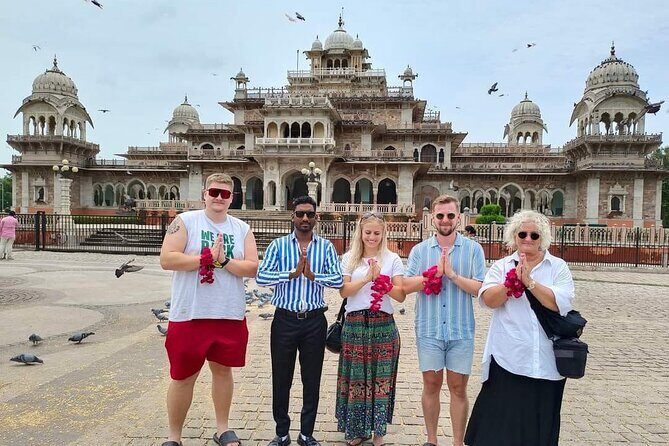
- Albert Hall Museum: Indo-Saracenic Architecture and a Museum Stop
- Galta Ji Temple: Spring-Fed Kunds and Hilltop Views Near 10 km Out
- Optional End-of-Day Shopping for Fabrics, Sandals, and More
- Price, Entrance Fees, and the Real Value of a Private Driver
- Who This Tour Fits Best (And Who Should Consider a Different Plan)
- Book It or Skip It? My Straight Answer
- FAQ
- What’s included in the tour price?
- Are entrance fees included for Jaipur monuments?
- How long is the Jaipur city tour?
- Is pickup and drop-off included?
- What time does the flower market visit happen?
- Is the shopping at Jaipur markets optional?
Key Things That Make This Tour Worth Your Time
- 7–8 AM Flower Market option that starts with a photo stop at Hawa Mahal before walking to the stalls
- Private, door-to-door pickup and drop-off in an AC car, with fuel, parking, and taxes handled
- Vinod-style guidance that focuses on practical local context, not just reciting facts
- A smart mix of Jaipur icons (Amer, City Palace, Jantar Mantar, Hawa Mahal) and quieter stops (Panna Meena Ka Kund, Royal Gaitor)
- Built-in breaks for chai and snacks after the market walk, so you’re not just rushing from stone to stone
Your Day Starts With a Private Pickup and a Clear Game Plan
You begin with pickup from your hotel in Jaipur City. From there, you ride in an air-conditioned private car with a driver who keeps things running and a local guide who helps you actually understand what you’re seeing.
For me, the value here is that the day feels organized without feeling rigid. You’re not navigating traffic on your own, and you’re not stuck buying a bunch of separate tickets without anyone to explain what matters most. The tour is also flexible in the sense that you can add on the optional market time at the end if you want to shop.
There’s also a mobile ticket, which is handy if you like having everything ready on your phone when you arrive.
You can also read our reviews of more city tours in Jaipur

Morning Flower and Vegetable Market Walk (7–8 AM Option) From Hawa Mahal
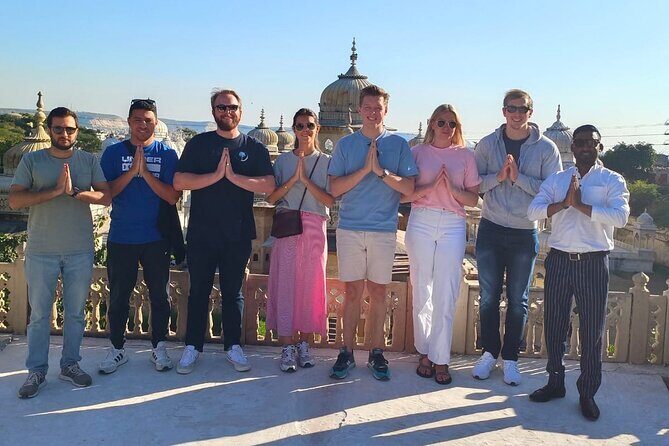
If you pick the 7:00 AM to 8:00 AM slot, the day starts with a drive to Hawa Mahal first. You get a photo opportunity there, which works well because Hawa Mahal is the kind of landmark you’ll want to look at from multiple angles while the light is still clean.
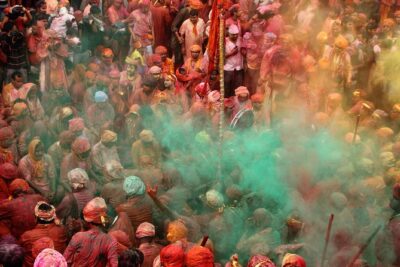
Then you start walking toward the flower and vegetable market. On the way, you pass an 18th-century heritage building. The guide explains how local selling works—what people are buying, how flower and vegetable trading is organized, and what the atmosphere is like early in the morning.
This part is the most “real Jaipur” feeling in the itinerary. Instead of only viewing heritage from a distance, you’re seeing the daily rhythm of the city. It’s also a strong move for anyone who has only a single day and wants at least one experience that doesn’t feel like a museum.
One consideration: since it involves walking, you’ll want comfortable shoes. It’s not an athletic hike, but you’ll be on your feet more than you might expect.
Chai and Snacks at Old Local Food Stores
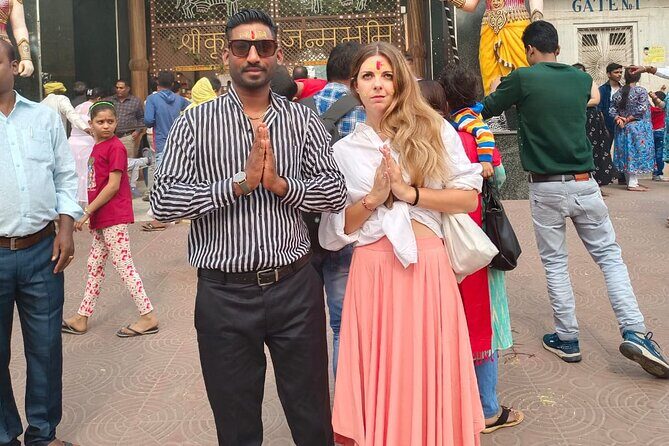
After the market visit, you stop at the oldest local food stores for chai and snacks. You can choose masala chai and a snack such as samosa or kachori, and the tour includes complementary tea/coffee and lassi as part of the food break.
This stop matters because it grounds the morning. You’ve just seen the market economy up close, and then you get the flavors that make Jaipur feel like Jaipur. It also helps you pace the day. With a full sightseeing run after this, that energy boost matters more than you’d think.
If you’re the kind of person who usually skips food breaks to “save time,” try not to. Here, the pause keeps the rest of the itinerary enjoyable instead of exhausting.
Amer Town: Mughal–Rajput Grandeur Just Outside Jaipur
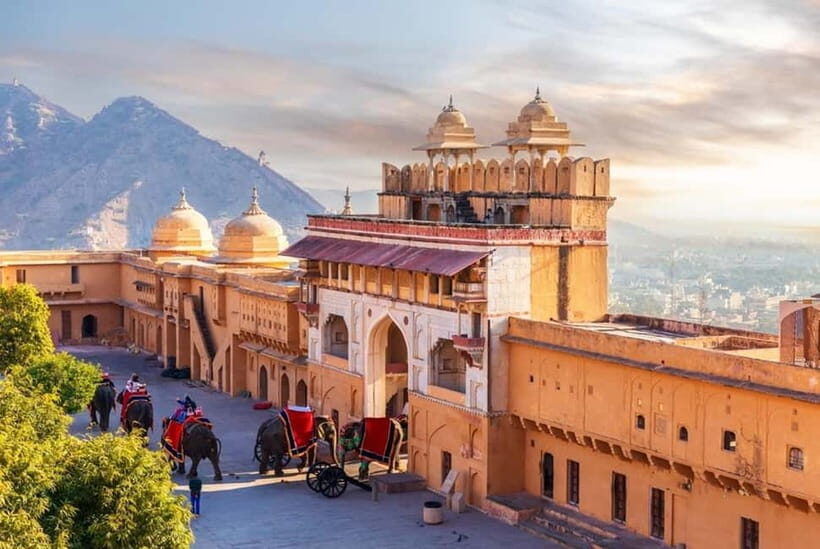
Amer is about 11 kilometers from Jaipur, and it’s one of those places where the scenery and the architecture do the talking. You’ll see palaces, temples, and intricate carvings that show the blend of Mughal and Rajput influences.
Key landmarks you’ll hear about and likely focus on include Sheesh Mahal (Mirror Palace) and the Sila Devi Temple. Amer also gives you the classic fort-and-city feeling—stone, courtyards, and views that make you understand why rulers wanted this area.
Practical tip: Amer can feel like a lot of “look at buildings” if you rush. A good guide helps you notice details like materials, layout, and why certain spaces were built for specific court functions. This tour is set up for that kind of guided attention.
Panna Meena Ka Kund Stepwell: Cool Stone in the Shadow of a Fort
Next comes Panna Meena Ka Kund, a stepwell described as a bit of a lesser-known stop. It’s a beautiful 16th-century structure, and it sits in the shadow of a famous fortress.
Stepwells in Rajasthan aren’t just pretty—they’re functional. Even if you don’t go deep into engineering details, you can still feel what it was like to collect and store water in a dry climate. It’s one of those stops that changes your pace from “grand sights” to “quiet observation.”
This is a nice place to slow down briefly, take photos, and breathe. The main drawback is that it may feel less dramatic than some of the bigger palaces, so it helps if you like architecture and atmosphere as much as big views.
You can also read our reviews of more shopping tours in Jaipur






Jal Mahal on Man Sagar Lake: A Palace-Like Presence
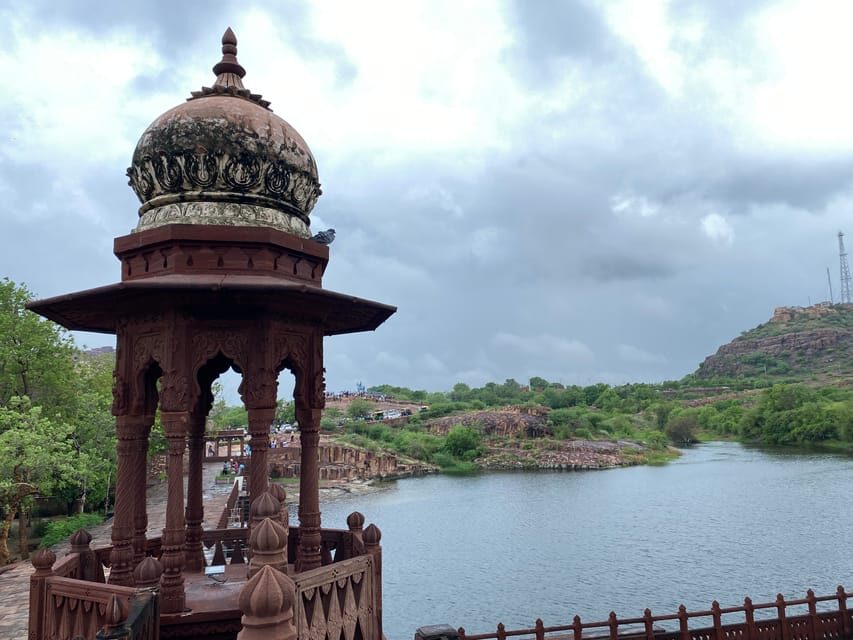
Then you head toward the city monuments with a stop at Jal Mahal. This palace sits in the middle of Man Sagar Lake and is a well-known sightseeing spot.
Why it’s worth a stop: it’s a contrast moment. You’ve been in fort-and-stone mode, and now you get a palace silhouette in water. Even from a distance, it helps you break up the day and keep your photos varied.
The tour keeps it simple here—enough to see the spot and keep moving toward the next set of attractions.
Royal Gaitor Cenotaphs: Carved Memorials in the Nahargarh Foothills
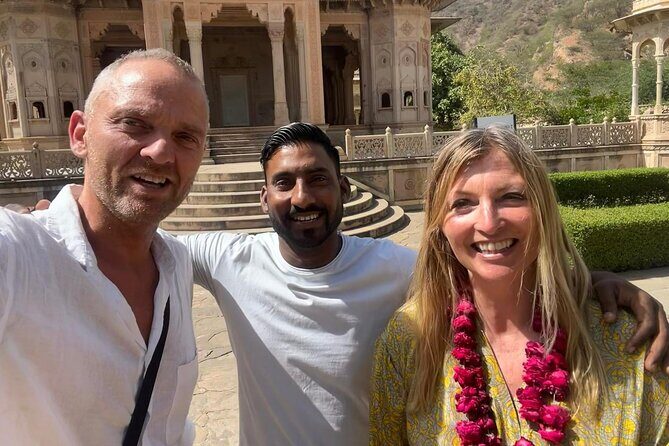
Royal Gaitor is on the Nahargarh foothills, and it’s described as a restful place. This stop includes cenotaphs of Maharaja Pratap Singh, Madho Singh II, and Jai Singh II.
What makes this stop interesting is the stonework. The monuments are intricately carved and arranged in a way that lets you walk and look without the “rush feeling” you get at some high-traffic attractions.
A standout detail is the marble cenotaph of Maharaja Jai Singh II, with a dome supported by 20 carved pillars. If you like seeing craftsmanship up close, this is one of the best places in the route for that.
Hawa Mahal Again? Yes, But in a Different Way
You’ll encounter Hawa Mahal twice in the day if you choose the flower market option. First, it’s for a quick photo opportunity early. Later, you’ll visit it as a core monument stop.
Hawa Mahal is a five-story building dedicated to Lord Krishna. It’s famous for being built without a foundation, and for its curved architecture that leans at an 87-degree angle with a pyramidal shape designed to help it stay erect for centuries.
Even if you already saw pictures, seeing the facade in person changes how you understand it. The real magic is in how the architecture supports its purpose—especially those window-like elements that let someone see outside while staying protected.
Practical consideration: if you’re sensitive to sun and heat, earlier is better. The later visit can be longer depending on how you manage time with photos and viewing.
City Palace Complex: Mughal–Rajput Fusion and a Still-Living Royal Space
City Palace is deep within Jaipur’s walled city. It was conceived and built by Maharaja Sawai Jai Singh II, the founder of Jaipur, and it shows a fusion of Mughal and Rajput architecture.
What I like most here is that it’s not a dead set. The palace complex is still home to the last ruling royal family, with a private section of the palace. That “living heritage” detail gives the place a different emotional tone than a pure museum.
City Palace is also a strong contrast to the stepwell and cenotaphs. It’s larger, more ceremonial, and designed to impress. Plan to slow down for a couple of key areas rather than trying to see everything at top speed.
Jantar Mantar: Early 18th-Century Astronomy Made Visible
Next, you visit Jantar Mantar, an astronomical observation site built in the early 18th century. The site includes a set of around 20 main fixed instruments.
This is where the day gets “slow-brain” in a good way. You’re looking at measurements and instruments meant to track time, motion, and celestial patterns. With a guide, it becomes less like random stone and more like a working toolset—old tech with a clear purpose.
If you like science but hate dry lectures, this is a rare way to learn while walking around. You’ll still need to pay attention to details, but the visual layout makes it easier than you might expect.
Isarlat Sargasuli Tower: A 7-Story View Point
You’ll also visit Isarlat (Sargasuli Tower), a seven-storied historical monument built in 1749 by Sawai Ishwari Singh. The payoff here is panoramic city views from the top.
Why it’s worth it: towers give you context. After spending hours among palaces, forts, and courtyards, a broad view helps you understand where everything sits and how Jaipur stretches out.
If you prefer ground-level monuments only, you might treat this as a “check it out if time allows” moment. But if you’re the kind of person who loves skyline photos, this one is a keeper.
Albert Hall Museum: Indo-Saracenic Architecture and a Museum Stop
The itinerary includes Albert Hall Museum. It’s described as the oldest museum of Rajasthan and functions as the state museum. The building sits in Ram Niwas’s garden outside the city wall opposite New Gate, and it’s known for Indo-Saracenic architecture.
This stop is best for people who like a museum pacing—one place to pause, sit if you can, and absorb artifacts or cultural displays in a single chunk rather than chasing new angles every 10 minutes.
The tradeoff: museums take time, and your day is already full. If you’re museum-light, focus on the parts your guide thinks you’ll enjoy most and keep moving.
Galta Ji Temple: Spring-Fed Kunds and Hilltop Views Near 10 km Out
Galta Ji Temple is an ancient Hindu pilgrimage site about 10 km from Jaipur. The complex includes a series of temples built into the crevice of hills surrounding the city, with natural spring water flowing down to fill kunds (water tanks) where pilgrims bathe.
There’s also a hilltop temple for views over the valley floor and Jaipur’s fortifications. The legend mentioned for this site involves Saint Galav, who is said to have lived, meditated, and done penance here.
Why it works in a city tour: it shifts the setting from urban streets and palaces to hills and water. It also adds a spiritual tone, which changes the day’s rhythm in a helpful way.
Logistics note: you may walk more than you think depending on your route through the temple complex and hill paths. Wear grippy shoes and plan your pace.
Optional End-of-Day Shopping for Fabrics, Sandals, and More
If you want markets after sightseeing, the driver can take you to famous Jaipur markets. You can shop items like fabrics, sandals, bags, and more with a focus on low prices and quality.
This is a useful optional add-on because you’re coming with a full day of context. Once you’ve seen monuments and learned how the city is laid out, shopping doesn’t feel random—it feels connected.
Just keep your energy in mind. You’re at the end of a long day. If you want serious shopping, do it with a plan (what you want, what you’ll pay attention to, and when you’ll stop). Otherwise you can end up with “stuff you bought because it was shiny.”
Price, Entrance Fees, and the Real Value of a Private Driver
The price is listed as about $13.59 per group (up to 3 people), and the duration runs around 9–10 hours. That’s the kind of pricing that can look suspiciously low until you read what’s included and what’s not.
What’s included:
- pickup and drop-off from your hotel/airport/railway station
- private transportation in an AC car
- fuel, parking charges, and taxes
- local tour guide
- bottled water
- complementary tea/coffee/lassi and snacks (samosa or kachori)
What’s not included:
- monument entrance fees (combined entry fees for Jaipur’s popular tourist monuments are listed at $30.00 per person)
- camera fees at monuments
- tips and gratuities (recommended)
Here’s how I’d think about it: you’re paying for the convenience and time savings of a private car plus a guide. The entrance fees are a separate add-on, so your real total will depend on how many monuments you enter and what camera fees apply.
If you’re traveling as a small group of up to three, the per-group structure can be a great deal. If you’re traveling alone, the value still works if you want a full-day plan without arranging multiple tuk-tuk or taxi stops.
Who This Tour Fits Best (And Who Should Consider a Different Plan)
This tour fits you best if you want:
- a full-day sampler of Jaipur’s major highlights
- one early, local experience (the flower and vegetable market)
- a private car with AC and pickup/drop so you’re not negotiating transport all day
- a guide who can connect the dots between palaces, monuments, and daily life
It may feel like too much if:
- you want a slower pace with fewer stops
- you hate walking and want mostly seated, indoor time
- you’re highly sensitive to long days and midday heat
The itinerary includes a lot of different types of places—fort areas, stepwell structure, memorials, astronomical instruments, a museum, and a temple complex—so it’s a strong match for people who enjoy variety.
Book It or Skip It? My Straight Answer
I’d book this tour if you have one day (or close to it) in Jaipur and you want the city’s icons plus a morning market experience. The flower market timing, the built-in chai snack break, and the private guide/driver setup make it a practical “save-your-energy” choice.
I’d hesitate only if entrance fees and walking time would stress you out, or if you’re the type who prefers to linger longer at fewer sites. In Jaipur, you can always do that—but then you’d need a different kind of plan.
If you’re on the fence, pick the 7–8 AM flower market option if it matches your schedule. It’s the piece of the day that gives you something you can’t recreate just by seeing monuments from a taxi window.
FAQ
What’s included in the tour price?
The tour includes bottled water, hotel or station pickup and drop-off, private transportation in an AC car, fuel/parking/taxes, a local tour guide, and complementary tea or coffee or lassi with snacks like samosa or kachori.
Are entrance fees included for Jaipur monuments?
No. Entrance fees for Jaipur’s popular tourist monuments are listed separately as combined entry fees (shown as $30.00 per person), and camera fees may also apply at monuments.
How long is the Jaipur city tour?
It runs about 9 to 10 hours.
Is pickup and drop-off included?
Yes. Pickup and drop-off from your hotel (or airport/railway station) are included.
What time does the flower market visit happen?
There is a flower market option specifically for the 7:00 AM to 8:00 AM time slot, with a photo stop at Hawa Mahal before walking to the flower and vegetable market.
Is the shopping at Jaipur markets optional?
Yes. After sightseeing, you can choose to visit famous markets for shopping such as fabrics, sandals, bags, and more.