REVIEW · CHANDIGARH
Golden Triangle 6 Days
Book on Viator →Operated by INDIA TRIP DESIGNER India · Bookable on Viator
Golden Triangle moves fast, and that’s the point. You’re covering Delhi, Agra, and Jaipur with hotel pickup and a guide, plus the big moment of Taj Mahal timed for early morning. It’s an efficient way to see the essentials without playing taxi roulette.
I love the way the trip stays organized from the first transfer to the daily sightseeing flow. You get five nights of shared accommodations with breakfast, and you’ll have commentary that helps you make sense of what you’re walking past.
The main drawback to plan for: monument entrance fees aren’t included, and the schedule is packed, especially with the early Taj Mahal start.
In This Review
- Key highlights at a glance
- The Golden Triangle in 6 days: what you’re really buying
- Day 1 transfer into Delhi: start with sleep, not stress
- Day 2 in Delhi: Qutub Minar, Humayun’s Tomb, and the Old Delhi wall-to-wall
- Qutub Minar: five stories of stone
- Humayun’s Tomb: Mughal-era grandeur with a calmer feel
- Red Fort: power and palace-atmosphere in Old Delhi
- Jama Masjid: one of Delhi’s largest mosques, and fast entry
- Lotus Temple and the India Gate stop: modern symbols plus a breather
- Day 3 Agra Fort plus Mehtab Bagh: the best part is the approach
- Agra Fort: where rulers lived before the world knew the Taj
- Mehtab Bagh: Taj views from the other side
- Day 4: sunrise Taj Mahal and Fatehpur Sikri’s Akbar-era dream city
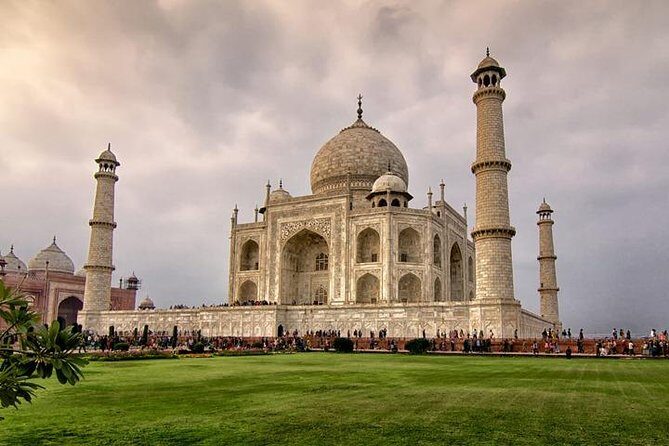
- Taj Mahal at sunrise: why the timing matters
- Fatehpur Sikri: Akbar’s dream capital stop
- Day 5 in Jaipur: Amber to Hawa Mahal, with Jal Mahal for a quick wow
- Amber Palace (Amer Fort): plan for a longer feel
- City Palace of Jaipur: the royal center in the planned city
- Jantar Mantar: astronomy you can walk through
- Hawa Mahal: the façade that makes Jaipur instantly recognizable
- Jal Mahal: the Water Palace moment
- Day 6 wrap-up: Jaipur to Delhi by car or flight
- The included guide and skip-the-line privileges: why they matter in real life
- Price and extra costs: the math you should do before you book
- Who this tour suits best (and who should think twice)
- Practical tips to make the days smoother
- Should you book this Golden Triangle 6 Days tour?
- FAQ
- What’s included in the Golden Triangle 6 Days price?
- Are monument entrance fees included?
- Do I get skip-the-line access?
- Is this tour private or shared with other people?
- Will someone pick me up from the airport?
- What happens on the last day for the trip back to Delhi?
Key highlights at a glance
- Hotel pickup and drop-off that removes the stress of meeting points and routing
- Skip-the-line privileges at many stops, which can save real time on busy days
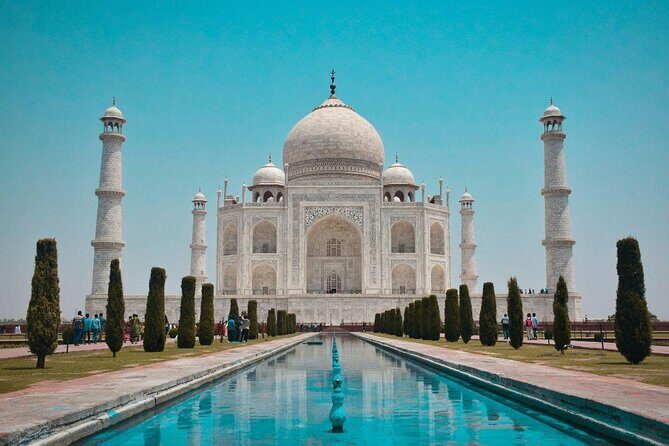
- Sunrise Taj Mahal timing for softer light and a cooler start
- UNESCO-level sights like Qutub Minar and Humayun’s Tomb built into real daylight time
- Jaipur’s big-hitters in one day: Amber Palace, City Palace, Jantar Mantar, Hawa Mahal
- Private for your group so your pace and stops stay in your hands
The Golden Triangle in 6 days: what you’re really buying
This kind of tour is all about momentum. In six days you’re jumping between three cities that are each major in their own right, so the value comes from having transportation, planning, and a guide bundled into one smooth package.
For $544.27 per person, the big win is that you’re not paying extra for each segment of the day. You’re getting hotel pickup and drop-off, a guide for the route, and all the city-to-city transit handled. Add in skip-the-line privileges at many stops, and you’re trading some freedom for saved hours.
The trade-off is that you’ll feel the “whirlwind” part. You won’t have time to wander for long stretches on your own. If you like slow museum hours and long café breaks, this format can feel a bit like being on rails.
You can also read our reviews of more tours and experiences in Chandigarh
Day 1 transfer into Delhi: start with sleep, not stress

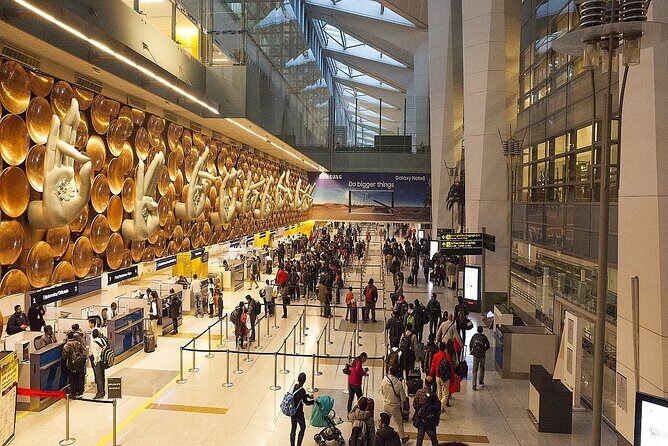
On day one, the day is simple: your driver picks you up from the airport and transfers you to your Delhi hotel for an overnight rest. That matters more than it sounds. Landing in a new country is already a lot; adding directions, traffic guesses, and finding your own ride can turn day one into a stressful intro.
Once you’re checked in, you’re set up for a proper sightseeing day next. You’ll also be able to reset your energy levels before the early starts that come later.
Day 2 in Delhi: Qutub Minar, Humayun’s Tomb, and the Old Delhi wall-to-wall
Delhi day is built like a highlights reel, but it still has variety. You’re moving from the old Mughal era to major Islamic architecture, then into the heart of Old Delhi’s big monuments.
Qutub Minar: five stories of stone
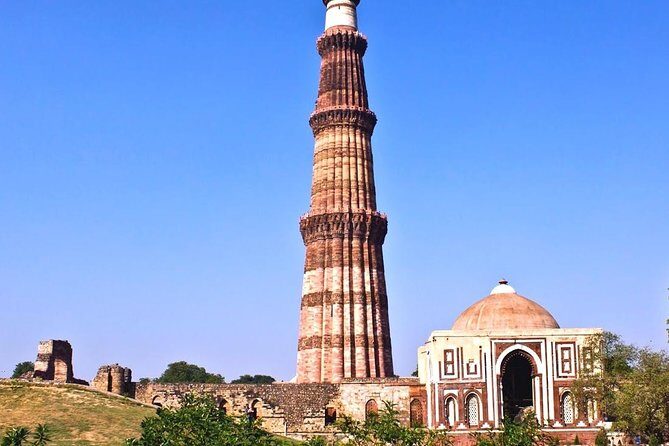
Your first stop is Qutub Minar, a UNESCO World Heritage Site in the Mehrauli area. The minaret stands about 73 meters tall and is designed in five tapering stories, anchored by a 14.3-meter base. Even if you don’t know the history details, you’ll feel the scale quickly—this is one of those monuments where photos don’t quite explain it.
Practical note: the stop is listed as about one hour, and the admission ticket isn’t included. Plan on time to handle the entry process on-site.
Humayun’s Tomb: Mughal-era grandeur with a calmer feel
Next up is Humayun’s Tomb, Humayun’s tomb commissioned in the late 1500s. It’s a major Mughal site, and it tends to feel a bit more grounded and spacious than the biggest, most crowded landmarks. You’re given about one hour here, again with admission not included.
If you like architecture and symmetry, this is a great “pause” stop before Old Delhi’s louder, busier energy.




Red Fort: power and palace-atmosphere in Old Delhi
Then you move to Red Fort, built by Shah Jahan in the mid-1600s. The tour allocates about one hour. Expect fort walls and monumental spaces rather than a simple photo-op.
Admissions aren’t included here either, so build in time for ticketing and entry.
Jama Masjid: one of Delhi’s largest mosques, and fast entry
After Red Fort, you visit Jama Masjid, one of the largest mosques in India. The stop is shorter—around 30 minutes—and the admission is listed as free.
This is also a good stop for people-watching if you’re curious about daily life around historic religious sites. If you’re photographing, keep it respectful and follow the space rules.
Lotus Temple and the India Gate stop: modern symbols plus a breather
The day closes with Lotus Temple (about 30 minutes). It’s a Bahá’í House of Worship known for its flowerlike shape, dedicated in December 1986. Then you also pass the India Gate, a war memorial on the Rajpath ceremonial axis.
I like this part because it gives your eyes a change of scenery. After walking forts and tombs, a more modern landmark helps you reset your brain before tomorrow’s travel.
Day 3 Agra Fort plus Mehtab Bagh: the best part is the approach
Agra is where the Golden Triangle starts feeling more cinematic. The route brings you into a different pace and mood, and you start getting the “Taj is coming” anticipation.
Agra Fort: where rulers lived before the world knew the Taj
You’ll spend about two hours at Agra Fort, described as the main residence of the Mughal emperors until 1638, when the capital shifted to Delhi. It’s a strong choice for the afternoon because forts make more sense once you’ve already seen how cities were controlled and defended.
Admission tickets aren’t included, so factor that into your planning.
Mehtab Bagh: Taj views from the other side
Then you go to Mehtab Bagh, famous as a key viewing spot for the Taj Mahal. It’s often considered one of the best “pre-Taj” viewpoints because you’re looking for the composition before you reach the main complex.
Your time here is about one hour, and the admission is listed as not included. You’ll get good photo moments if the light cooperates, but even without perfect weather, the viewpoint idea is the point.
Day 4: sunrise Taj Mahal and Fatehpur Sikri’s Akbar-era dream city
This is the day with the big emotional payoff. The tour schedules Taj Mahal early morning, timed for sunrise or after breakfast. Your Taj visit is set for about two hours, and monument entry isn’t included.
Taj Mahal at sunrise: why the timing matters
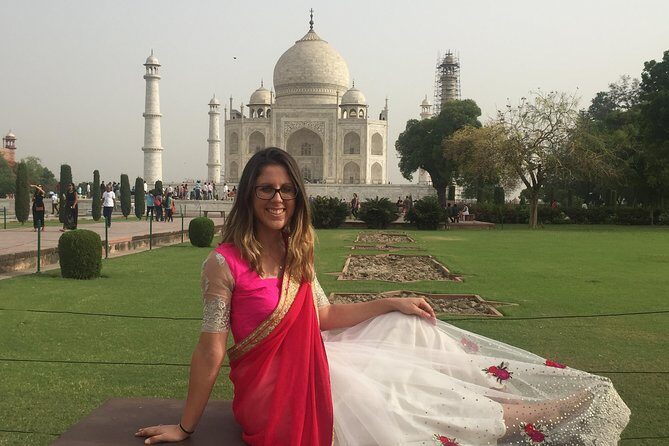
The Taj Mahal is built by Mughal Emperor Shah Jahan in memory of Mumtaj Mahal, completed over 1631–53. Seeing it at sunrise is not just a romantic idea—it can mean fewer crowds and softer light. You’re also more likely to feel like you’re experiencing the site, not just rushing through it.
Practical tip: wear layers. Early morning sun can be bright quickly, even if you start cool. And keep your camera settings simple so you don’t waste time fiddling.
Fatehpur Sikri: Akbar’s dream capital stop
After Taj Mahal, you return for check-out and depart Agra to Jaipur, with a stop at Fatehpur Sikri. The tour lists it as about one hour, and it’s marked free.
Fatehpur Sikri is described as the dream capital of Akbar. Even if you only have an hour, it’s a meaningful contrast to the Taj: instead of one love story monument, you’re seeing a broader, ambitious imperial idea of an entire city.
Day 5 in Jaipur: Amber to Hawa Mahal, with Jal Mahal for a quick wow
Jaipur day is efficient and varied, with fort history, royal palace space, and then the famous skyline shapes.
Amber Palace (Amer Fort): plan for a longer feel
You start at Amber Palace, also known as Amer Fort, about two hours. It’s located roughly 11 kilometers from Jaipur and was the original capital of the state. This stop tends to be one of the most rewarding in terms of atmosphere, because forts feel “lived-in” even centuries later.
Admission isn’t included, so you’ll deal with entry logistics as part of the visit. The upside is that you’re given enough time—about two hours—to take your time without feeling constantly rushed.
City Palace of Jaipur: the royal center in the planned city
Next is City Palace of Jaipur, about one hour. Jaipur is described as the first planned city of medieval India, divided into nine blocks, with the royal palace at the center.
This is a strong stop if you like maps and urban planning. It’s not only about buildings; it’s about how the city was designed to function.
Again, monument entry isn’t included.
Jantar Mantar: astronomy you can walk through
Then you visit Jantar Mantar, with about 45 minutes here. It’s a collection of architectural astronomical instruments built by Sawai Jai Singh II, the Kachwaha Rajput king who founded Jaipur.
I like this stop because it turns science into something you can experience physically. If you enjoy hands-on learning, you’ll get more from this than a quick glance would suggest. But even if you don’t, it’s still visually distinctive.
Hawa Mahal: the façade that makes Jaipur instantly recognizable
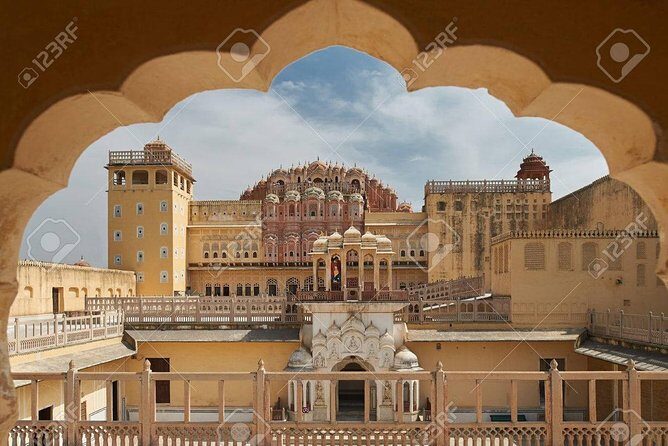
After Jantar Mantar, you get Hawa Mahal (Palace of Wind) for about 30 minutes. It’s made of red and pink sandstone and sits on the edge of the City Palace, extending toward the Zenana.
This is a short stop by design. The palace is more about the exterior and the idea of the women’s quarters facing the street than about spending hours inside.
Jal Mahal: the Water Palace moment
Finally, you stop at Jal Mahal, the Water Palace in the middle of Man Sagar Lake. The stop is short—around 15 minutes—and the admission is listed as free.
It’s a “quick wow” location. You’re not here for a long stay; you’re here to get that distinctive view in a tight window before the day ends.
Day 6 wrap-up: Jaipur to Delhi by car or flight
On your final day, you’ll depart Jaipur to Delhi around five hours by drive based on your schedule. The tour also notes you can take a flight from Jaipur depending on your departure plan.
This flexibility matters because it lets you match the end of the trip to your own flight timing. If you prefer fewer hours on the road, the flight option could be worth checking early.
The included guide and skip-the-line privileges: why they matter in real life
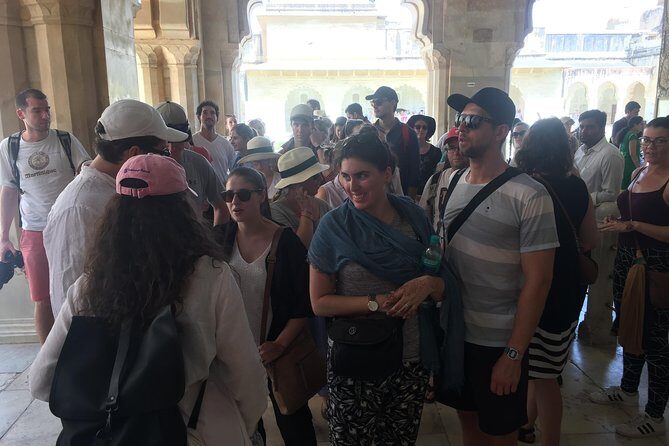
A good guide can change how a monument feels. Here, the concept is straightforward: you’re not just being transported—you’re getting commentary as you travel, and the stops are set up so you don’t miss major things.
The skip-the-line privileges at many stops are especially practical on a busy route. Even when you’re short on time, shaving off waiting lines keeps your day from slipping. That’s the difference between finishing on schedule and spending your precious hours inside sun and queues.
Also, this is a private tour. Your group is the only one on your schedule, which tends to make timing more predictable. If you like asking questions (and you should—India’s history is thick with context), this format gives you more space to do that.
One more piece I appreciate: the service style is repeatedly praised as comfortable and careful. In the write-ups I saw, drivers like Mr. Sumit and Surendra/Surinder were highlighted for being kind, informative, and flexible with local driving conditions. You might also run into coordination led by Manoj, who was mentioned as responsive and helpful when building an itinerary around family needs.
Just don’t treat that as guaranteed. It’s a good sign, though, that the agency tends to staff with strong English-speaking drivers and guides.
Price and extra costs: the math you should do before you book
Monument entrance fees are not included, and that’s the first “hidden” line item you’ll likely pay on your own. The good news is some stops are listed as free, including Jama Masjid and Fatehpur Sikri, and Jal Mahal is also marked free.
Still, other major stops—Qutub Minar, Humayun’s Tomb, Red Fort, Agra Fort, and the Taj Mahal—are listed with admission not included. Your final bill depends on which monuments you enter fully and how the on-site ticketing works at the time you visit.
So the real value question isn’t only the $544.27. It’s whether you’d spend similar money anyway if you planned flights, hotels, private drivers, and guides across three cities. Most people don’t realize how quickly costs stack up when you do it yourself. Here, transportation between cities, pickup and drop-off, hotel stays for five nights, and guided interpretation are already rolled into one price.
If you’re traveling as a couple or a small group and you want a managed route without day-by-day decisions, this is good value. If you’re very budget-focused and love planning, you may find you can do it cheaper on your own—just with more work.
Who this tour suits best (and who should think twice)
This tour fits you if you want a structured way to see the essentials: major Delhi monuments, the Agra/Taj moment, and the Jaipur highlights in one run. It’s also a smart pick for first-time India visitors who want fewer logistics headaches.
It’s less ideal if you hate early starts, dislike packed days, or want long free time in each city. The itinerary is built around high-priority stops, not free roaming.
One more practical note: accommodations are shared, and breakfast is listed as included for four days. That means you’ll want to check how breakfast lines up with your specific hotel nights, especially around departure or arrival timing.
Practical tips to make the days smoother
A schedule like this rewards preparation. You’ll see a lot on foot, and you’ll also spend hours in transit.
- Wear comfortable shoes you can walk in for longer stretches.
- Keep a light layer for early mornings, then be ready for sun once sightseeing starts.
- Pack a small day bag for water and essentials, since monument time windows can be tight.
- When you reach ticket areas, keep your wallet and ID handy to reduce delays.
- If you want photos, plan on the timing the tour gives you rather than trying to control every minute—your guide’s flow helps.
And small humor helps too: on Golden Triangle days, your camera strap becomes your workout plan.
Should you book this Golden Triangle 6 Days tour?
I’d book it if you want an efficient, guided route through Delhi, Agra, and Jaipur with pickup, transportation, and skip-the-line help built in. The biggest selling points are the structured access to major sights and the way sunrise Taj Mahal is timed as a real priority, not an afterthought.
I’d skip it or consider a slower alternative if entrance fees would make you uncomfortable, or if you want lots of unplanned time in each city. Also, shared rooms can be a deal-breaker for some people.
FAQ
What’s included in the Golden Triangle 6 Days price?
The package includes a local guide, hotel pickup and drop-off, and a private tour experience. It also includes breakfast (listed as 4) and five nights of shared accommodations.
Are monument entrance fees included?
No. Monument entrance fees are listed as not included. Some stops are marked free, including Jama Masjid, Fatehpur Sikri, and Jal Mahal.
Do I get skip-the-line access?
Yes, the tour includes skip-the-line privileges at many stops, which can help you save time at busy attractions.
Is this tour private or shared with other people?
It’s private. Only your group will participate, so you won’t be mixed in with unrelated travelers.
Will someone pick me up from the airport?
Yes. Day 1 includes airport pickup with transfer to your Delhi hotel for the overnight stay.
What happens on the last day for the trip back to Delhi?
On day 6, you depart Jaipur to Delhi around five hours by drive based on your flight schedule. The tour also notes you can take a flight from Jaipur depending on your departure plans.