REVIEW · CHANDIGARH
The Hipster Chandigarh Architecture History Tour
Book on Viator →Operated by Rusty · Bookable on Viator
Chandigarh’s concrete tells stories. This two-day architecture tour turns the city’s best-known modernist landmarks into a walkable narrative, with insider access and an easy rhythm that keeps the facts fun. I especially like how the tour pairs major sites like the Capitol Complex with quieter architectural details that many first-time visitors miss.
I love the guide’s angle: Rusty is a third-generation Chandigarh local who spent 24 years living in Corbusier’s public social housing, then studied in Pierre Jeanneret-designed schools. His humor stays politically neutral, and he times the day for real stops—so you get room for photos, snacks, and those little lightbulb moments about how the city was planned. One thing to consider: this experience needs good weather, and it includes open-air concrete structures plus campus-style walking, so wear shoes you trust.
In This Review
- Quick highlights to know before you go
- Meet Rusty: the real engine behind the Hipster Chandigarh tone
- Price and what $71.02 buys you in Chandigarh terms
- Day 1: Capitol Complex to Open Hand Monument, UNESCO at walking pace
- Le Corbusier Centre and Gandhi Bhawan: buildings that explain their own cooling
- Chandigarh Architecture Museum: Zurich Pavilion echoes in Chandigarh concrete
- Geometric Hill and the Tower of Shadows: patterns and sunlight as design tools
- Panjab University and the Maison Jeanneret connection
- Day 2: Sukhna Lake and Sector 17 Market for real city rhythm
- War Memorial: a quiet pause in Sector 3’s Bougainvillea Garden
- Rare access day: public socialist housing and a Corbusier-designed art museum
- Lake Club: the quiet ending to a big design obsession
- What to expect: pace, photos, food breaks, and group size
- Who this tour suits best (and who might not love it)
- Should you book the Hipster Chandigarh Architecture History Tour?
- FAQ
- How long is the Hipster Chandigarh Architecture History Tour?
- What time does the tour start?
- Is pickup included?
- What does the tour price include?
- Are snacks included?
- How large is the group?
- Are service animals allowed?
- Can I get a refund if I cancel?
Quick highlights to know before you go
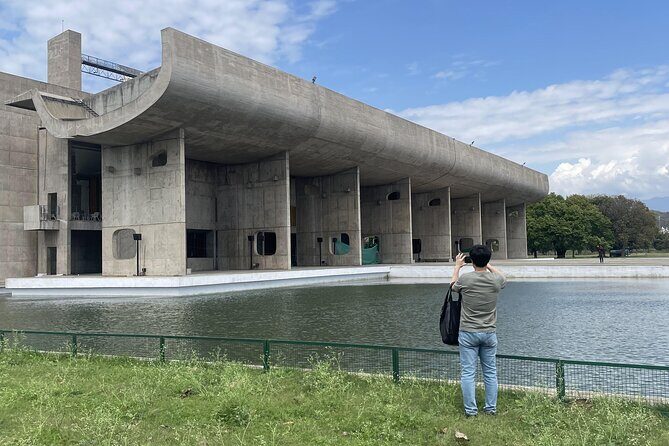
- UNESCO Capitol Complex access covering the Secretariat, Assembly Hall, and the Open Hand Monument
- Rusty’s local lived-in perspective, backed by 11 years of journalism and deep study of the city
- Tower of Shadows as a hands-on example of how solar movement shaped design
- Rare interior-style visits, including Pierre Jeanneret’s Maison Jeanneret museum and limited access to public socialist housing
- Practical value built in: pickup, air-conditioned vehicle, and admissions/photo fees included
- A mix of architecture and daily life, from Sector 17 market walks to Sukhna Lake
Meet Rusty: the real engine behind the Hipster Chandigarh tone
This tour feels different because the guide doesn’t treat Chandigarh like a museum piece. Rusty brings a personal, street-level understanding of how the architecture fits real routines—because he lived inside it. That matters when you’re walking through places like the Capitol Complex: you’re not just looking at forms, you’re hearing how the design language was meant to work.
His background also shows in the way he teaches. He’s an 11-year journalist, so the storytelling comes with facts and careful phrasing. And since he’s lived here for generations, he can explain what you’re seeing without turning it into a lecture. The result is a day where jokes stay light, explanations stay clear, and photos happen when the architecture actually rewards them.
You can also read our reviews of more tours and experiences in Chandigarh.



Price and what $71.02 buys you in Chandigarh terms
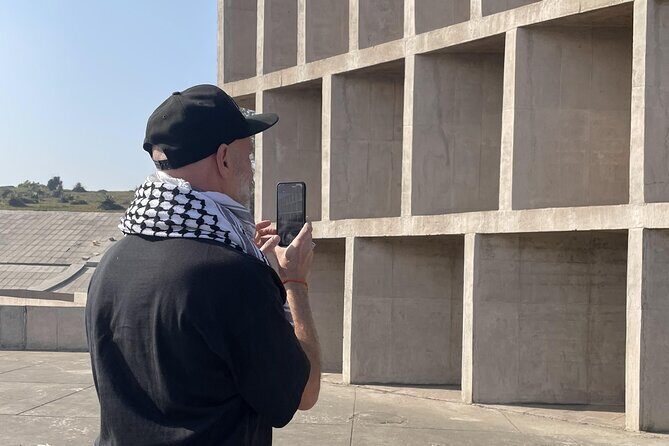
At $71.02 per person for a roughly 2-day experience, the value is mostly about what gets covered up front. You don’t just pay for a guide—you also get the transport and the entry fees.
Here’s what’s included that can add up fast on your own:
- Pickup and drop charges, plus parking fees
- An air-conditioned vehicle with taxi/driving/waiting charges covered
- Admission tickets for all listed stops
- Photography tickets and fees included (so you’re not stuck negotiating on the spot)
Not included is mainly your flexible spending: snack stops are on you, but the tour notes they’re inexpensive. Also, gratuities are optional. If you like a trip that keeps decision-making low, this setup usually feels worth it.
Day 1: Capitol Complex to Open Hand Monument, UNESCO at walking pace
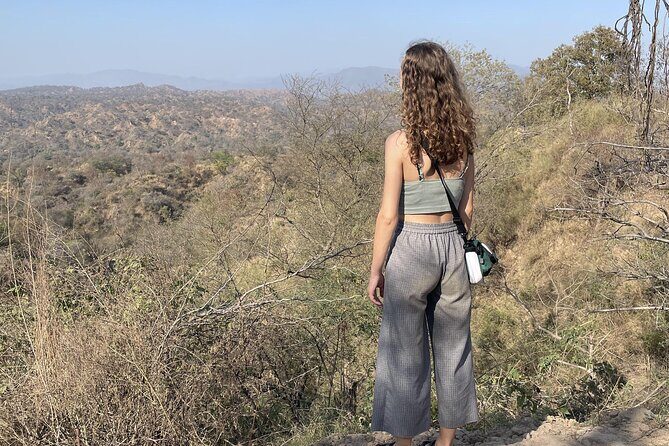
Day one starts with the Capitol Complex, a UNESCO World Heritage site, and it’s set up for a guided, insider-style visit. You’ll move through standout pieces like the Secretariat, the Assembly Hall, and the Open Hand Monument—with an eye on the brutalist concrete forms and the planning logic behind them.
The advantage of starting here is simple: it gives you a framework for everything that follows. When you later see the more specialized structures (like the “demo” building type designs), you’ll understand the design obsession behind the city’s overall geometry and sunlight thinking.
What to watch for: this part of the day has multiple major photo stops. If you’re traveling with a phone-only camera, you might want to charge fully and bring a small power bank. The Open Hand Monument can be windy, so it helps to bring something light to steady hats and loose hair.
Le Corbusier Centre and Gandhi Bhawan: buildings that explain their own cooling

Next you’ll visit the Le Corbusier Centre, which is housed in the old architects’ building and operates as a museum/memorial. This stop focuses on early “green” thinking—specifically the first attempt at a naturally cooled approach and visual demonstrations that help you see the logic instead of just memorizing it.
Then comes Gandhi Bhawan, one of Chandigarh’s recognizable university structures designed by Pierre Jeanneret. The standout here is the spinning lotus-shaped roof—an architectural detail that looks playful at first glance, but makes sense once someone guides you through what the form does.
This pairing is smart for your pacing. You go from a museum-style explanation (Le Corbusier Centre) to a living design element embedded in the university (Gandhi Bhawan). You’ll start spotting how the city uses shape to solve practical needs.
Chandigarh Architecture Museum: Zurich Pavilion echoes in Chandigarh concrete
After that, you’ll enter the Chandigarh Architecture Museum, described as an homage to Le Corbusier’s 1965 Zurich Pavilion. You’ll see a raw concrete form and a tubular stairway, then move across multiple levels to view rare exhibits.
This museum stop is especially useful if you’re the type who wants context. You’re not just passing by iconic architecture; you’re learning how Chandigarh’s modernist story connects to other modernist experiments. The three-level layout also gives you natural breaks in sightlines, so the day doesn’t turn into one long blur of buildings.
A drawback to consider: museums inside can feel slower than outdoor sites. If you’re traveling with someone who wants constant movement, remind them in advance that this is where you’ll get the explanations that make later stops click.


Geometric Hill and the Tower of Shadows: patterns and sunlight as design tools
Day one keeps getting more specific. Geometric Hill is a sculptural setup of grid-like earth mounds and concrete forms connected to the Capitol Complex. It’s the kind of place where a good guide matters, because you need a framework to read the shapes as more than “cool forms.”
Then you’ll reach The Tower of Shadows, an open-air concrete structure designed as a “demo” building to study solar movement. This is one of those stops that can change how you see the whole trip. It’s not abstract; it’s about how sunlight tracks through the day and how that affects planning choices.
Practical tip: because this portion is open-air, wear sunscreen and bring water. If the light is harsh, you’ll still be able to photograph, but it’s easier on your eyes to have a hat and sunglasses.
Panjab University and the Maison Jeanneret connection
You’ll also get an insider-style visit at Panjab University. The tour time is set to give you a guided walk without turning the stop into a rushed run-through, which helps if you want to ask questions about campus design.
The day ends with a rare and personal-feeling visit to Museum Maison Jeanneret, the first house constructed in Chandigarh. It started as Pierre Jeanneret’s residence for 11 years, and now it functions as a museum. This stop is a nice emotional shift after the grand government-scale architecture: it reminds you that Chandigarh’s modernism wasn’t only about civic statements—it also shaped home life.
If you like contrast in your travel days, this is a strong closer.
Day 2: Sukhna Lake and Sector 17 Market for real city rhythm
Day two begins with a gentle walk around Sukhna Lake, a manmade lake designed by Corbusier to refresh groundwater and cool the northern sectors of the city. You’ll hear the lake’s creation story and how it evolved over time, but the walk itself keeps the pace easy after day one’s heavier concrete stops.
After that, you’ll go to Sector 17 Market. This is a walk-and-talk focused on the commercial designs of Corbusier that many people overlook. The key here is shade and street life: tree-lined walkways and people watching are built into the experience.
This is where you’ll start understanding Chandigarh as more than an architectural set piece. Markets show how design supports everyday behavior—routes, shade, and flow—so you’ll come away with better city “map sense.”
War Memorial: a quiet pause in Sector 3’s Bougainvillea Garden
Next comes the Chandigarh War Memorial, located in a tribute park within the Bougainvillea Garden of Sector 3. The tone shifts here—more solemn, more reflective—while still keeping the architecture lens. You’ll get guided context for the memorial concept, created by Lt. Gen. J.F.R. Jacob.
I like memorial stops in architecture tours because they remind you that planning and design aren’t only about aesthetics. They’re also about how a city chooses to remember and how space can hold emotion.
If you’re sensitive to solemn settings, this stop can feel weighty in the best way. It’s not a long stop, but it changes the mood of the day.
Rare access day: public socialist housing and a Corbusier-designed art museum
One of the most interesting parts of day two is the mention of private, very rare access to Pierre Jeanneret’s public socialist housing. The tour notes that it depends on local variables, but the promise is that it stays functional in its original stance.
This is the kind of access that can’t be replicated by browsing photos online. Even if you don’t know the design theory, you’ll likely understand the intent instantly: how housing shape, light, and communal space can affect daily life.
Then you’ll visit the Government Museum and Art Gallery, a 1960s heritage museum designed by Le Corbusier. It houses pre-partition-era artifacts from Pakistan, including one of the world’s largest collections of Greco-Buddhist art.
This museum stop is valuable because it adds cultural weight beyond Chandigarh’s concrete language. It helps you see the city’s modernist identity alongside the broader historical material it displays.
A practical note: art museums can be timed well or timed poorly. Here, the tour time is set to one hour, so it should feel substantial without dragging.
Lake Club: the quiet ending to a big design obsession
The final stop is Lake Club, described as a rarely known private yacht club designed by Corbusier about a year before his death. You’ll get an insider guided look at the recreational boating and social space, plus the architectural design behind it.
I like ending here because it flips the scale. You’re leaving behind government and campus spaces and finishing with a private setting that still carries the same design brain. It helps the trip feel complete rather than like a checklist of famous sites.
If you’re a photographer, this is also a good last stop because you’ll have your “Chandigarh eye” turned on by then. You’ll start noticing how geometry and function show up even in places that feel social and relaxed.
What to expect: pace, photos, food breaks, and group size
The day is built around guided entry points and time allowances per stop, so you’ll get more than just outdoor sightseeing. Most stops include admission tickets, and the tour is set for an easy-to-follow rhythm across both days.
Group size is capped at 41. That’s large enough to keep energy up but small enough that the guide can still manage questions and pacing. If you’re the kind of traveler who likes to ask “why this shape,” that’s a good size.
Food-wise, you’ll have frequent snack breaks, but you pay for them. The tour flags them as budget friendly, which is useful if you’re traveling with a student budget or just want to avoid big meal surprises. Bring a bottle of water, and if you’re sensitive to heat, plan your snacks around the open-air portions.
Who this tour suits best (and who might not love it)
This works best for you if you’re curious about how architecture and planning shape daily life. If you’re the first-time Chandigarh visitor who wants a guided framework, this is a strong fit because it connects major landmarks to design concepts like sunlight study and natural cooling.
It also suits couples and families who like a mix of indoor and outdoor stops. The tour is described as gentle enough for families, with facts presented in an entertaining way rather than a dry lecture.
You might want a different plan if you prefer classic tourist highlights over modernist design. This tour is about concrete, geometry, and the city’s planning ideas. If that’s not your interest, the day may feel too technical—even with the humor.
Should you book the Hipster Chandigarh Architecture History Tour?
If you want two days that feel organized, high value, and genuinely guided, I’d book it. The biggest reasons are practical: pickup and air-conditioned transport, admissions and photo fees included, and the chance to see both the showpiece sites and the quieter design-linked spaces.
The second reason is personal: Rusty’s lived experience in Corbusier’s public social housing gives the tour a perspective you can’t copy with a guidebook. You’ll get stories tied to the buildings, not just building facts.
The only real caution is weather and walking. Bring comfortable shoes, water, and a light layer for open-air concrete stops. If the day turns windy or bright, you’ll still be fine—you just need to be prepared.
Overall: if Chandigarh’s modernist side is even a little interesting to you, this tour is the kind that helps everything click.
FAQ
How long is the Hipster Chandigarh Architecture History Tour?
It’s approximately 2 days.
What time does the tour start?
The tour start time is 9:00 am.
Is pickup included?
Yes. Pickup and drop charges are included, and you travel by air-conditioned vehicle.
What does the tour price include?
The price includes parking fees, pickup and drop charges, air-conditioned vehicle transportation, entrance fees with photo tickets, and admission tickets for the stops.
Are snacks included?
No. There are frequent snack stops, and you pay for them yourself. The tour notes they are very cheap.
How large is the group?
The tour has a maximum of 41 travelers.
Are service animals allowed?
Yes, service animals are allowed, and the tour notes that most travelers can participate and it’s near public transportation.
Can I get a refund if I cancel?
You can cancel up to 6 days in advance for a full refund. Cancel 2–6 full days before for a 50% refund. If you cancel less than 2 full days before, the amount paid is not refunded. If poor weather cancels the tour, you’ll be offered a different date or a full refund.