REVIEW · AGRA
From Agra: Fatehpur Sikri Private Tour
Book on GetYourGuide →Operated by Agra Taxi and Service · Bookable on GetYourGuide
Fatehpur Sikri can feel like a time machine. I especially like the skip-the-line entry that helps you start sightseeing faster, and the English-speaking guides who explain how Akbar’s world worked. One thing to consider: the 5–8 hour window can feel a bit tight if you want extra time for photos in every corner.
This is a good fit if you want a calmer day than a big bus tour. You get a private air-conditioned vehicle, your guide can tailor the pace to what you care about, and you’re not stuck waiting behind a crowd.
Plan around practical details. You’ll want an ID on hand, and if you add Taj Mahal / Agra Fort tickets to your day, remember the Taj Mahal is closed on Fridays.
In This Review
- Key things you’ll notice on this Fatehpur Sikri day
- Fatehpur Sikri: a Mughal city with a story you’ll actually understand
- Hotel pickup and the comfort math of an AC car
- Buland Darwaza and Jama Masjid: the entrance that sets the tone
- Buland Darwaza (Gate of Victory)
- Jama Masjid
- Diwan-i-Khas and Panch Mahal: where politics meets architecture
- Diwan-i-Khas (Hall of Private Audiences)
- Panch Mahal (five-story palace with big views)
- Tomb of Salim Chishti and Jodhabai’s Palace: faith and family connections
- Tomb of Salim Chishti
- Jodhabai’s Palace
- Your time on site: how 5–8 hours plays out in real life
- Guide quality is the difference between seeing and understanding
- Value and price: when $16 per person actually feels worth it
- Optional Taj Mahal and Agra Fort add-on: great, but watch Friday closures
- What to bring, and small on-the-ground tips that help
- Who should book this Fatehpur Sikri private tour
- Should you book the Agra to Fatehpur Sikri private tour?
- FAQ
- How long is the tour from Agra to Fatehpur Sikri?
- Do I get skip-the-line entry?
- What’s included in the tour price?
- Is food included?
- Is this a private tour?
- What languages are available for the guide?
- Where do pickup and drop-off happen?
- What should I bring with me?
- Is the Taj Mahal open every day?
- What cancellation options are available?
- Is there an option to pay later?
Key things you’ll notice on this Fatehpur Sikri day

- Skip-the-line entry using a separate entrance to cut waiting time
- Hotel pickup and drop-off in a private air-conditioned vehicle, with guide support
- English/French/Spanish live guide who can answer questions on the spot
- Akbar-era stops you can’t really appreciate without context (like Diwan-i-Khas and Panch Mahal)
- Private-feeling pace with flexibility to move at your own speed
- Small-group limit (up to 15) that keeps it from turning into total chaos
Fatehpur Sikri: a Mughal city with a story you’ll actually understand
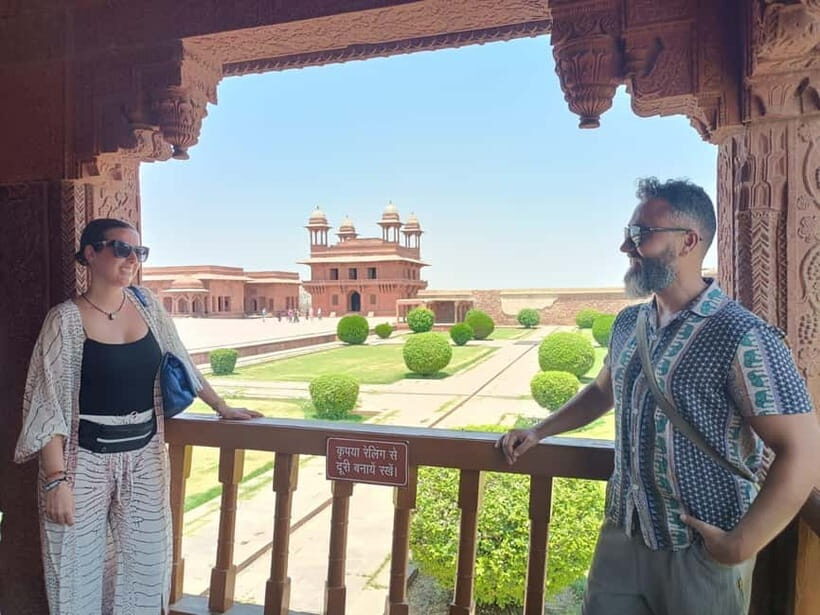
Fatehpur Sikri isn’t just a set of pretty buildings. It’s a planned Mughal complex where power, religion, and everyday politics all show up in stone. The best part of going with a guide is you’ll stop seeing it as random monuments and start seeing it as a system—who used what spaces, and why those spaces were built the way they were.
You’ll also get the unusual experience of visiting a place people often treat like a quick stop. With this kind of organized, guide-led format, you can slow down enough to notice the relationships between the monuments. That’s how a day trip turns from sightseeing into understanding.
And yes, the views can be dramatic. Even when weather isn’t perfect, the architecture still does the heavy lifting.
You can also read our reviews of more private tours in Agra



Hotel pickup and the comfort math of an AC car
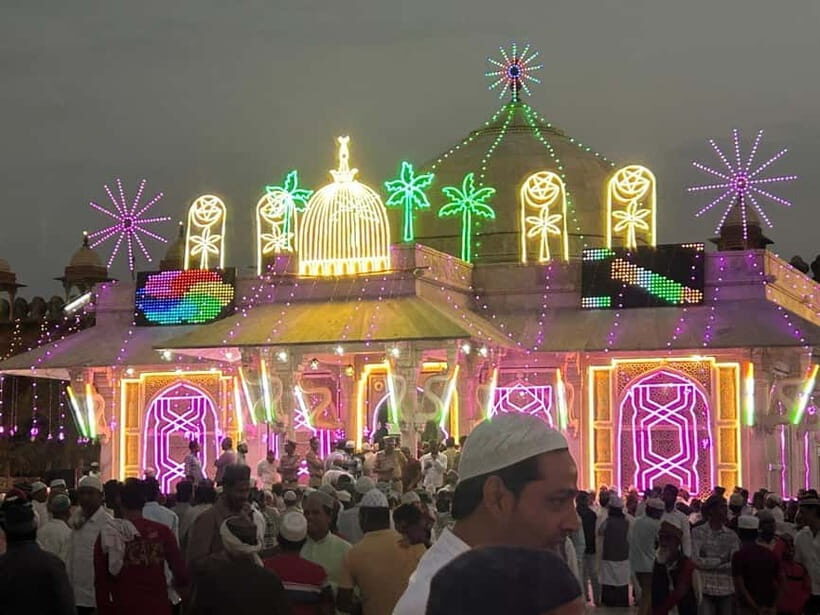
A big reason this tour works well is the logistics are handled. You get pickup from your hotel (and some booking options include pickup/drop-off from Jaipur or Fatehpur Sikri as well). Then you ride in a private air-conditioned car with a driver who stays with you through the day.
Why does that matter? Because Fatehpur Sikri is the kind of site where you want your attention to stay on details, not on transport hassles. One of the most praised parts of the experience is the comfortable, punctual transport—drivers like Sahil show up politely and drive carefully, which makes the whole day feel easier.
If you’re sensitive to heat, or you just want a smoother start, this setup is a clear advantage. It also helps you get a clean rhythm: leave Agra, arrive, tour, then go back without the scramble.
Buland Darwaza and Jama Masjid: the entrance that sets the tone
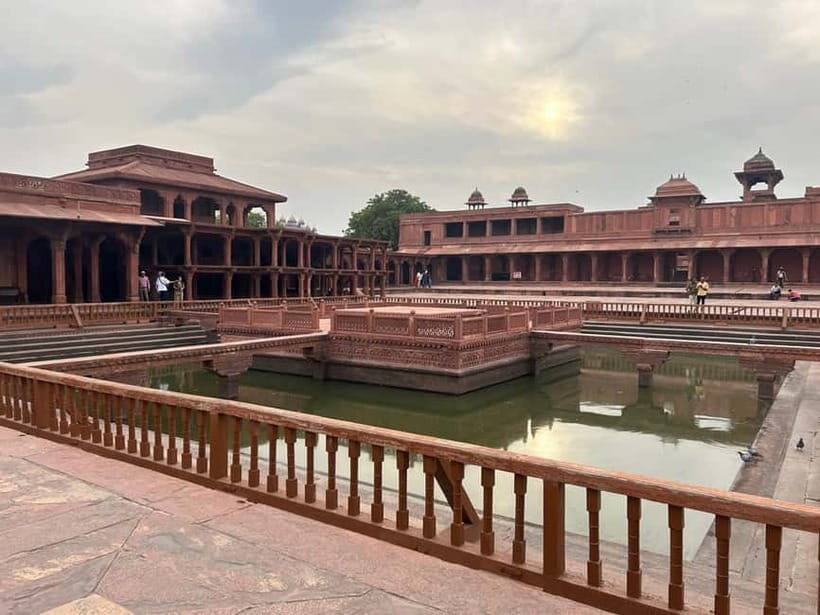
Most people walk into Fatehpur Sikri and focus on what’s immediately in front of them. The better move is to let the first monuments do their job: orient you and signal why this place is grand.
Buland Darwaza (Gate of Victory)
Buland Darwaza is the showpiece entrance. It’s grand in a very direct way: scale that’s meant to impress before you even understand the history. With a guide, you’ll learn how it functions as a statement—less about one building and more about the message the whole complex sends.
Practical note: the photos can be best when the light is decent. If the day is foggy or hazy, you may get less “wow” from the long-distance effects, but the structure still reads clearly up close.
Jama Masjid
Right after the gate, you get to Jama Masjid, one of the Mughal-era architectural highlights of the complex. This is where the details start rewarding your attention. You’ll see form, symmetry, and that deliberate mix of grandeur and devotion.
What I like about this pairing is timing. You go from a massive entrance statement into a religious centerpiece, and the shift helps your brain reset. It makes the site feel coherent instead of random.



Diwan-i-Khas and Panch Mahal: where politics meets architecture

This is the part of Fatehpur Sikri where a guide becomes essential. Without context, these spaces can blur together. With context, you start noticing how the Mughal court used buildings like tools.
Diwan-i-Khas (Hall of Private Audiences)
Diwan-i-Khas is tied to the idea of private audiences—where Akbar would meet with his closest advisors. That single detail changes how you interpret the hall. You’re not just looking at architecture; you’re looking at a space designed for decision-making, access, and influence.
If you like political history more than art history, this stop will click fast.
Panch Mahal (five-story palace with big views)
Panch Mahal is a five-story palace structure with spectacular views of the surroundings. The fun here is climbing your imagination: your guide will explain what you’re looking at and how the levels work as a visual device.
This is also a good place to slow down. The architecture rewards you when you take a few minutes to look up, look across, and then look back again. In mist or fog, the views can soften, but the play of light on the structure still helps you get a sense of why people wanted to be up here.
Tomb of Salim Chishti and Jodhabai’s Palace: faith and family connections
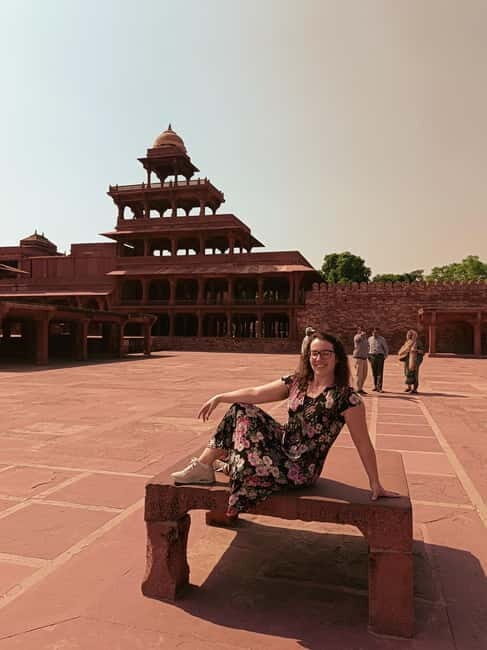
Fatehpur Sikri doesn’t stay in “court mode.” It shifts toward spirituality and personal legend, which is why these stops feel so human.
Tomb of Salim Chishti
The Tomb of Salim Chishti is a sacred site tied to Sufi tradition. Visiting it with a guide helps because it’s not just a tomb; it’s part of a living belief system that shaped how this Mughal complex was experienced.
This stop can feel quieter than the grand architectural statements. That’s not a problem—it’s a balance. You go from big symbols to a place where meaning is central.
Jodhabai’s Palace
Jodhabai’s Palace is another key architecture highlight. It’s associated with the believed residence of Akbar’s wife, Jodha Bai, and it gives you a different angle on the story of the complex.
Even if you don’t get every historical detail, you’ll leave with a better sense of how the Mughal world wasn’t only public power. It was also family life, status, and domestic space—planned and expressed in stone.
Your time on site: how 5–8 hours plays out in real life
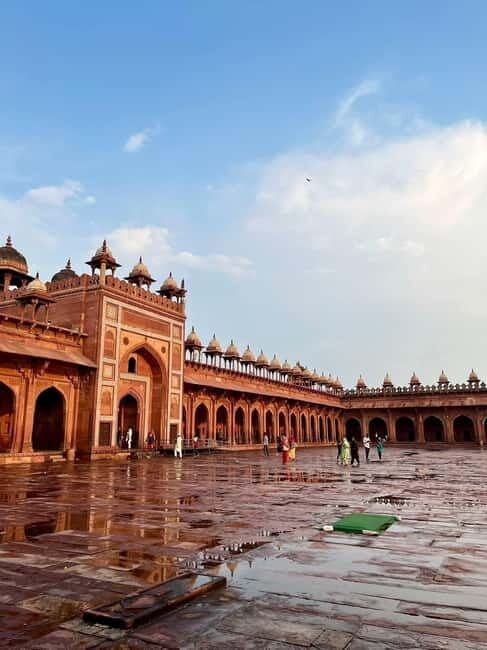
The schedule is built around a guided visit to Fatehpur Sikri (about 6 hours noted). In practice, you’ll be spending enough time to cover the major monuments without feeling like you’re sprinting—especially if your guide keeps the flow smart.
Still, here’s the one consideration I’d flag: if you’re the type who loves lingering in one spot to really read every carving, you may wish you had more time. Some visitors felt they could have used a little more time on-site, even though the overall tour worked well.
My advice: choose what you care about most before you go.
- If you love architecture, you’ll want your guide to prioritize entrances, halls, and the layered viewpoints.
- If you love stories and symbolism, ask your guide to spend extra time explaining the meaning of each section of the complex.
A private setup with flexible pacing helps, but your day still has limits.
Guide quality is the difference between seeing and understanding
The most consistently praised part of the experience is the guide. You’ll have an English-speaking guide (and options also include French and Spanish). The strongest impression is that guides come prepared to explain the site in a clear, engaging way.
Names that came up strongly include Ansar, who delivered an engaging experience at the historical sites, and other guides like Ilsad and Fesel, who were praised for being very good while showing the sites. The pattern is consistent: professional explanations, good English, and answers to questions without making you feel rushed.
That’s a big deal at Fatehpur Sikri, where the buildings can look similar at first glance. A strong guide helps you sort out:
- what each monument was for
- how spaces relate to each other
- why the Mughal leadership structured the complex the way they did
Value and price: when $16 per person actually feels worth it
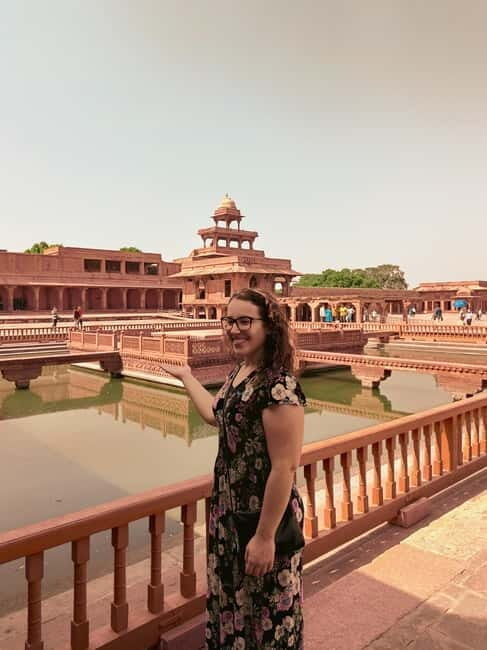
At around $16 per person, this tour can be great value—mainly because you’re paying for more than entry tickets. You’re also getting:
- a private air-conditioned car
- a professional guide
- all taxes and parking
- and skip-the-line entry (with a separate entrance)
The question isn’t only whether the price is low. It’s whether the package reduces friction. If you’re trying to avoid long waits and you want someone to connect the dots for you, the value is stronger.
One more factor: the tour notes that it can include Taj Mahal and Agra Fort skip-the-line tickets if you choose that option. If you’re already planning to do Taj Mahal and Agra Fort on the same day, that add-on can make the day feel more efficient—assuming the schedule works for you.
Optional Taj Mahal and Agra Fort add-on: great, but watch Friday closures

Some versions of this experience include Taj Mahal and Agra Fort skip-the-line entry tickets. If you select the add-on, it’s a chance to turn the day into a heavier Mughal hitters list.
Two practical points:
- The Taj Mahal is closed on Fridays, so this is only possible on open days.
- Even with skip-the-line entry, you’ll still want to manage your expectations about crowds at peak times. Skip-the-line means less waiting, not zero waiting.
If your goal is a “most famous highlights” day with minimal hassle, this option can work nicely.
What to bring, and small on-the-ground tips that help
This is one of those tours where being prepared makes the day smoother.
Bring:
- Passport or ID card (you’ll need it)
Plan for:
- Comfortable shoes. You’ll be walking around multiple monuments.
- Sun or fog. Weather can change the feel of the day; one person described thick fog that softened the experience, but the visit still felt worth it.
Also, a minor reality check: you might get a follow-up request to leave a rating afterward. One guest mentioned it felt a bit pushy. If that kind of request annoys you, just treat it as routine service wrap-up.
Who should book this Fatehpur Sikri private tour
This tour is a strong choice if you:
- want a guide-led Fatehpur Sikri day instead of a self-guided shuffle
- care about context (who, why, what each building meant)
- prefer the comfort of an AC car and hotel pickup
- like a paced experience without the chaos of a large group
It’s also a good match for couples, small families, and anyone who’s short on time in Agra but still wants to see more than the obvious one-stop sites.
If you’re a hardcore architectural nerd, you’ll get a lot out of the key court-and-court-adjacent stops. If you mostly want quick photos, you may feel the time limit more strongly.
Should you book the Agra to Fatehpur Sikri private tour?
If you want Fatehpur Sikri with skip-the-line entry, a real guide, and comfortable door-to-door transport, I’d say yes. The best reason to book is simple: a guided flow changes how you read the complex, and that’s what turns a few monuments into a memorable day.
Book it especially if you’re planning Taj Mahal/Agra Fort too, since the optional skip-the-line tickets can tighten your schedule. Just keep Friday closures in mind if your day lands on a Friday, and be honest with yourself about whether 5–8 hours is enough for how you travel.
If you want a calmer, smarter Mughal day trip from Agra, this is the kind of setup that usually delivers.
FAQ
How long is the tour from Agra to Fatehpur Sikri?
The duration is listed as 5 to 8 hours, with a guided visit to Fatehpur Sikri of about 6 hours.
Do I get skip-the-line entry?
Yes. Entry is handled through a separate entrance for skipping the line.
What’s included in the tour price?
It includes an air-conditioned car, a professional tour guide, all taxes and parking, and skip-the-line entry tickets for Taj Mahal and Agra Fort if you choose that option.
Is food included?
No. Food and drinks are not included.
Is this a private tour?
It’s described as a private tour with private guide and driver support, and it also notes a small-group limit of up to 15 participants.
What languages are available for the guide?
The guide is available in English, French, and Spanish.
Where do pickup and drop-off happen?
Pickup and drop-off locations are listed as Jaipur, Fatehpur Sikri, or Agra. Pickup is also described as from your hotel or desired location in Agra.
What should I bring with me?
You should bring your passport or ID card.
Is the Taj Mahal open every day?
No. The Taj Mahal is closed on Fridays.
What cancellation options are available?
Free cancellation is available up to 24 hours in advance for a full refund.
Is there an option to pay later?
Yes. You can reserve now and pay later.