REVIEW · NEW DELHI
Four-Day Private Luxury Golden Triangle Tour to Agra and Jaipur From New Delhi
Book on Viator →Operated by Crystal India Holidays · Bookable on Viator
Golden Triangle in four days is a sprint. That’s what makes it fun. You’ll see the Taj Mahal at sunrise, then move on to Agra’s Mughal-era highlights and finish in Jaipur, with a private driver and local guides joining you at the key monuments.
Two things I like a lot: the pacing is built around the best light (especially the early Taj start), and the guides are there to translate what you’re looking at into plain stories you can actually remember. You get pickup and drop-off in the Delhi area too, so you start the trip without the usual hassle.
One drawback to think about: entrance fees are not included, and you’re also committing to a lot of seat time between Delhi, Agra, and Jaipur. If you hate early mornings or long drives, this plan may feel like too much.
In This Review
- Quick Highlights You’ll Feel Immediately
- The Real Value of This 4-Day Golden Triangle Plan
- Money Matters: What You Pay and What You Still Need to Budget
- Day 1 in Delhi: Qutub Minar, Lotus Temple, and the Central Government Area
- Qutub Minar (UNESCO site)
- Lotus Temple (open to everyone)
- India Gate and the ceremonial core
- Driving to Agra
- Day 2: Sunrise Taj Mahal Plus Agra Fort and Itimad-ud-Daula
- Why sunrise at the Taj Mahal is worth it
- Agra Fort
- Tomb of Itimad-ud-Daula (often nicknamed Bachcha Taj)
- On to Jaipur
- Day 3 in Jaipur: The Pink City Route That Keeps You Moving
- Panna Meena ka Kund (step well)
- Jal Mahal (lake palace) for photos
- City Palace
- Jantar Mantar (UNESCO astronomical observatory)
- Hawa Mahal (Palace of Breeze)
- One thing to double-check: Amber Fort
- Day 4: The Return to Delhi (and When You’ll Land)
- Guides and Drivers: The Staff Factor That Changes Everything
- Hotels, Breakfast, and Breaks That Keep You From Burning Out
- Who This Tour Fits Best (and Who Might Want Something Else)
- Should You Book This Golden Triangle Tour?
- FAQ
- Is pickup in Delhi included?
- What’s the duration of the tour?
- Does the price include monument entrance fees?
- Are hotels included?
- Will I see the Taj Mahal at sunrise?
- Is transport private?
- Do we get help with tickets at monuments?
- Is there a battery bus for the Taj Mahal?
- Are guides included and do they speak English?
- What happens if my dates fall on Monday or Friday?
Quick Highlights You’ll Feel Immediately
- Sunrise Taj Mahal access with guided time inside so you’re not just snapping photos from a distance
- Private, air-conditioned car with the driver handling the long highway stretches
- Local guides at each stop (you may meet guides like Divi in Delhi, Manoj in Agra, and Yogesh in Jaipur)
- Battery bus to Taj parking to shave off some walking in the early hours
- Hotel options that keep you comfortable between sight days with daily breakfast included
- Staff support in English (and a real chance to adjust if your day needs tweaks)
The Real Value of This 4-Day Golden Triangle Plan
This tour works for one main reason: it respects how these cities are laid out. Delhi to Agra to Jaipur is a big loop, and doing it in private transport means you aren’t waiting on other people’s schedules. You’ll still be on the road for hours, but the experience is designed to turn travel time into a smoother part of the day rather than a lost one.
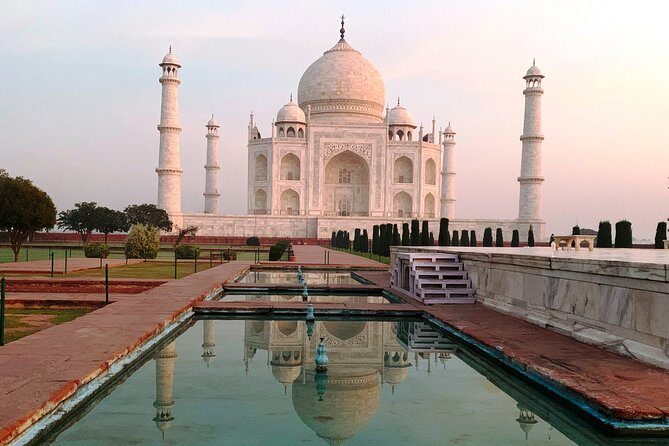
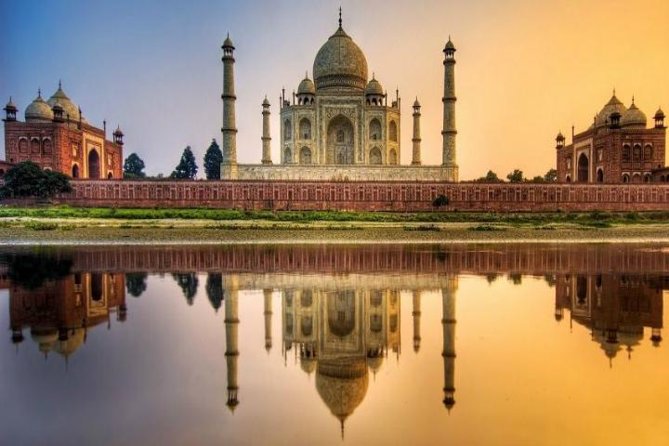
The sunrise Taj Mahal is the anchor. The Taj Mahal is always impressive, but early light makes the white marble look softer and the crowds feel manageable. That’s why this itinerary starts early the next morning after your Delhi sightseeing day. It’s a smart choice for your photos too, because the building changes as the sun climbs.
I also like that your day isn’t just monoliths and monuments. Delhi gets major landmarks like Qutub Minar, the Lotus Temple, and India Gate—and then the tour shifts gears quickly into Mughal Agra and Rajput Jaipur. The “Golden Triangle” formula is classic, but the execution here is focused: guided stops, private transport, and enough time inside each big site to make it stick.
You can also read our reviews of more tours and experiences in New Delhi.



Money Matters: What You Pay and What You Still Need to Budget
The listed price is $160.70 per person, and the value depends on which option you choose.
Here’s what’s typically included:
- Private air-conditioned transport (with car size chosen by your group size)
- Private local guides for sightseeing
- Daily breakfast if you book with the hotel option
- Three nights accommodation if you choose the hotels option
- Pickup and drop-off from your Delhi-area location
- Bottled mineral water during journeys
- Battery bus to and from Taj Mahal parking
- All taxes and service charges (as stated)
Here’s what’s not included:
- Monument entrance fees, listed as $60.00 per person
That $60 matters. Even if you’re comfortable paying extras, you’ll want to plan for it so it doesn’t feel like a surprise at the gate. Also, if you upgrade to higher-end hotels, your total budget will rise. The tour does offer 4-star and 5-star lodging choices, so check what you actually selected.
My practical take: for many people, the cost feels fair because you’re buying three things at once—transport, guides, and a hotel base. If you tried to stitch this together yourself, the planning time and language barrier can easily eat up the difference.
Day 1 in Delhi: Qutub Minar, Lotus Temple, and the Central Government Area
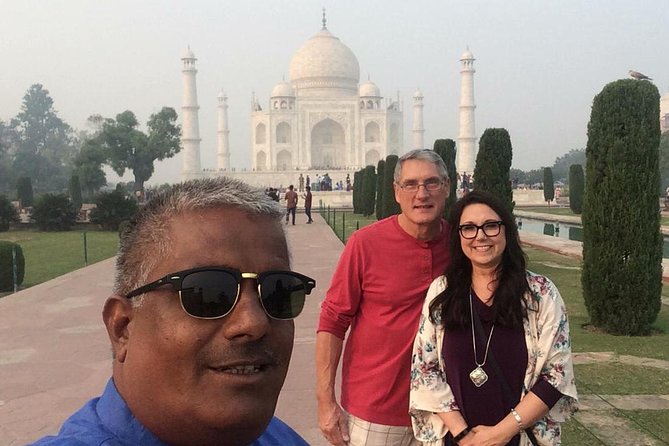
Your trip starts with pickup from your hotel or a selected location in Delhi, Gurugram, or Noida. This matters more than it sounds. It reduces stress on the first day, especially if you’ve just arrived from overseas.
Qutub Minar (UNESCO site)
Qutub Minar is a 73-metre tall five-storey tower, begun in 1193 by Qutub-ud-din Aibak. It’s one of those sites where the scale is the point. With a guide, you get context for why this building matters beyond the photo.
Time on it is around one hour, which is enough to see the tower well and absorb a basic explanation without feeling rushed.
Lotus Temple (open to everyone)
The Lotus Temple is the visual palate cleanser of Delhi: a flower-like shape, built in 1986, designed for people of all faiths. It’s free to enter, and it’s quick—about 30 minutes.
Important note: it’s closed on Monday. If your dates land on a Monday, expect the day’s route to adjust.



India Gate and the ceremonial core
India Gate is a war memorial near Rajpath and a classic local hangout spot. You’ll spend about 30 minutes, and it’s often a good time to take a breath between more intense monuments.
Then you’ll pass by short stops like:
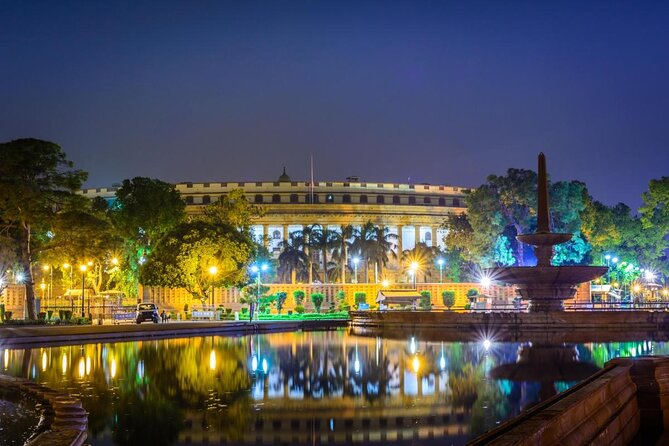
- Parliament House (Sansad Bhavan), with the building’s shape linked to the Ashoka Chakra
- Rashtrapati Bhavan, the President’s official residence area
These aren’t long museum-style visits. They’re quick orientation stops that help you understand where Delhi’s modern power sits.
Driving to Agra
After lunch at a local restaurant, you set off on the drive to Agra, described as about three hours via Yamuna Expressway. You’ll then check into your Agra hotel—either 4-star or 5-star depending on what you booked—so you wake up ready for the Taj day.
Day 2: Sunrise Taj Mahal Plus Agra Fort and Itimad-ud-Daula
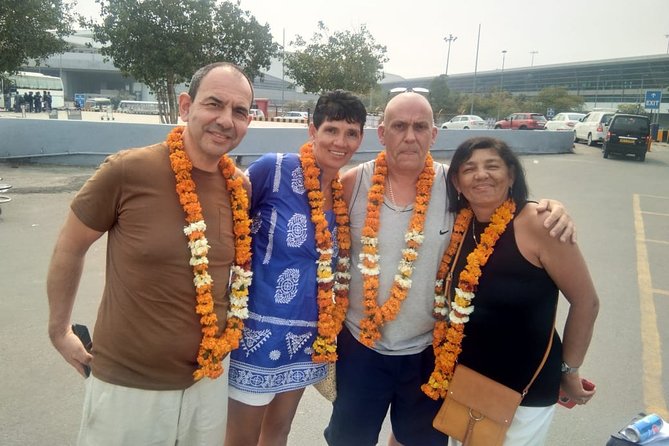
This is the day you came for. The plan is an early start to see the sunrise over the Taj Mahal, then a guided visit inside for about two hours.
Why sunrise at the Taj Mahal is worth it
At sunrise, the Taj Mahal’s white marble looks less harsh and more dimensional. You also get that feeling of stepping into the place before the day fully wakes up. Add a guide, and you’re not just reading the monument like a postcard—you’re getting the story behind the tomb built by Mughal Emperor Shahjahan.
Also, there’s a battery bus ride to and from the Taj Mahal parking lot, which helps on early mornings when walking can feel like a chore.
Agra Fort
Next up is Agra Fort, another UNESCO World Heritage site. Expect roughly one hour here. A guide explains the Mughal-era significance and highlights the fort’s palaces, balconies, and gardens.
This part is great because it shows power in a different way than the Taj. The Taj is about love and monumentality; Agra Fort is about rule, defense, and daily grandeur.
Tomb of Itimad-ud-Daula (often nicknamed Bachcha Taj)
You’ll finish Agra with Itimad-ud-Daula, the so-called jewel box mausoleum. The description often calls it the “Bachcha Taj,” and the time inside is about 30 minutes.
This stop is a smart closer. It’s smaller than the Taj, but it’s where the details can feel extra rewarding if you’re the type who likes craftsmanship and patterns.
On to Jaipur
After your Agra sightseeing, you head to Jaipur and check in. Then you get downtime to rest before the full Jaipur day.
Day 3 in Jaipur: The Pink City Route That Keeps You Moving
Jaipur is where the Golden Triangle turns from Mughal to Rajput. Your day includes step wells, lake views, a palace complex, a science-and-astronomy site, and the famous wind-pattern façade.
Panna Meena ka Kund (step well)
This is a quick but interesting stop—about 15 minutes. It’s a step well, and it’s one of those places that looks simple until a guide explains the design logic and what it was for.
Jal Mahal (lake palace) for photos
Then you head to Jal Mahal, a palace sitting in Man Sagar Lake. Time is about 15 minutes, with a focus on photos.
It’s a visual break after walking-heavy monuments. Just don’t expect it to be a long dwell-in; it’s a photo-and-go moment.
City Palace
The City Palace is the centerpiece of this day’s history. You get about one hour here. The palace was built in 1721 and served as the administrative and ceremonial seat of the Maharaja of Jaipur.
This is where Jaipur stops feeling like a checklist and starts feeling like a functioning story about how the city organized power, ceremony, and daily life.
Jantar Mantar (UNESCO astronomical observatory)
Next is Jantar Mantar, UNESCO-listed and built in 1734. It includes nineteen architectural astronomical instruments created under Sawai Jai Singh II.
The best way to enjoy Jantar Mantar is to let your guide point out what the instruments are meant to do. You’re not just looking at rocks and shapes. You’re watching how humans once tracked the sky with built structures.
Hawa Mahal (Palace of Breeze)
You’ll close the day with Hawa Mahal, the five-storey pyramidal monument made from pink and red sandstone. It’s about 15 minutes, and it’s mostly about the façade and those tight, iconic views.
It’s a good wrap because you end the day with something immediately recognizable and photo-friendly.
One thing to double-check: Amber Fort
Amber Fort is listed as a highlight in the overall description. Since Jaipur time is packed, you should confirm your exact inclusion and order with your guide on the day. If it’s part of your itinerary, plan for it to be the big “set piece” Jaipur moment.
Day 4: The Return to Delhi (and When You’ll Land)
Day four is a simpler structure: after breakfast, you’ll travel back toward Delhi, with a drive time listed around five hours. The tour notes that you’ll be back in Delhi around 2 pm on the final day, though timing depends on traffic and exact drop-off points.
If you’re continuing onward, this is where the planning pays off. The tour includes drop-off at your hotel or airport/railway/bus station in Delhi, so you’re not stuck arranging your own last transfer.
Guides and Drivers: The Staff Factor That Changes Everything
With this kind of trip, the difference is rarely the monuments. It’s the human layer between you and the logistics.
The tour is built around a private driver who stays with you across the longer rides, plus private local guides at the main stops. In the staff examples shared from past experiences, drivers like Sohan, Rajesh, and Ashok were praised for smooth, calm driving and being responsive. On the guide side, names like Divi in Delhi, Manoj in Agra, and Yogesh in Jaipur come up often, especially for clear explanations and helping make each stop feel manageable.
Even if your guide role is “just history,” it’s practical history: what you should look for, where the best angles usually are, and how to understand design choices without a lecture.
Also, since it’s a private tour, you don’t have to fight for time. If you want an extra 10 minutes at the Taj marble details or at City Palace carvings, you’re more likely to get it.
One more practical staff note: the tour states that drivers and guides are English-speaking, and if you need another language you can request it at booking.
Hotels, Breakfast, and Breaks That Keep You From Burning Out
This is where luxury matters in a realistic way. You’re doing a lot of sightseeing and driving, so your hotel has to do two jobs: be comfortable enough to recover and be well located enough to keep transfers efficient.
The tour includes three nights of accommodation if you choose the hotel option, with daily breakfast included. Lodging is described as 4-star or 5-star depending on what you booked. Names that come up in the provided info include places like Fern Residency as an example for 4-star in Jaipur, and options in the 5-star range such as Intercontinental or Hilton.
In plain terms: you’ll appreciate this if you’re not in “sleep anywhere” mode.
There’s also time built in on most days for lunch and rest, and the plan tries to cluster the heavy sights into focused blocks instead of scattering them randomly.
Who This Tour Fits Best (and Who Might Want Something Else)
This is a strong fit if you:
- want the classic Golden Triangle route in a short window
- prefer private transport over trains and multiple transfers
- care about safe, guided visits in places with language and navigation barriers
- like waking up early for the best-light Taj moment
It’s also a good pick for solo travelers and couples who want structure without feeling boxed in. The “private only your group” setup matters if you dislike big tour crowds.
You might want a different plan if you:
- hate long road time between cities
- need a very relaxed schedule
- get grumpy with early mornings (sunrise Taj is non-negotiable in this format)
- travel on a Monday and strongly want Lotus Temple specifically (it’s closed on Monday)
Should You Book This Golden Triangle Tour?
I’d book it if you want a smooth, guided 4-day hit of Delhi–Agra–Jaipur with private transport and hotel comfort. The biggest win is the early Taj Mahal experience, plus the fact that you’re not left to figure out guides, tickets, and timing alone. The structure is tight enough to be efficient, but not so tight that you’ll feel like you’re sprinting through everything with no context.
Before you click confirm, do two things:
- Budget the $60 per person monument entrance fees so you’re not surprised later.
- Confirm your exact Jaipur major stops (especially if Amber Fort is a must for you) and watch for day-of-week issues like Lotus Temple being closed on Monday and the note that Taj Mahal closes on Friday, which can shift the routing.
If those check out, this tour is the kind of plan that turns a short trip into a real memory—one sunrise, a fortress day, and a Jaipur day built for maximum meaning per hour.
FAQ
Is pickup in Delhi included?
Yes. Pickup is offered from hotels, airports, railway stations, and other pickup locations in Delhi, Noida, and Gurugram.
What’s the duration of the tour?
The tour runs for about 4 days (approx.).
Does the price include monument entrance fees?
No. Entrance fees are listed as about $60.00 per person and are not included.
Are hotels included?
Hotels are included if you book the option that includes accommodation. It lists three nights of lodging and daily breakfast with that hotel option.
Will I see the Taj Mahal at sunrise?
Yes. The next day starts early to reach the Taj Mahal for sunrise, followed by a guided visit inside for about two hours.
Is transport private?
Yes. This is a private tour with private air-conditioned vehicle transport. Only your group participates.
Do we get help with tickets at monuments?
The tour notes that your guide helps you buy entrance fees for monuments so you do not have to wait in line to buy tickets.
Is there a battery bus for the Taj Mahal?
Yes. There’s a battery bus ride to and from the Taj Mahal parking lot up to the monument.
Are guides included and do they speak English?
Yes. The tour includes private guides, and it states you’ll get an English-speaking guide. You can request another language in special requirements.
What happens if my dates fall on Monday or Friday?
Lotus Temple is listed as closed on Monday. Taj Mahal is listed as closed on Friday, and the itinerary order can change depending on which day you start.