Delhi feels huge. This tour shrinks it fast. You get a private, government-approved local guide and an air-conditioned car, plus the best contrast in one day: the old city’s markets and mosques, then New Delhi’s grand monuments and quiet temples. It’s designed for you to get your bearings fast without playing transport roulette.
I especially like two things. First, the rickshaw ride in Old Delhi turns history into something you can feel, not just look at. Second, the personalized pacing is real; guides like Dilip and Shiv were praised for adapting timing and making stops match your interests, even on a rainy day.
One thing to consider: the schedule is packed across 8 to 9 hours, so you’ll want comfortable shoes and a bit of stamina. If you prefer slow museum-style time, you’ll need to use the customization option to shorten market stops or skip shopping.
Private means just your group with a guide and driver, no mixing with strangers.
AC car + bottled water makes Delhi traffic more bearable.
Old and New Delhi in one day keeps the trip efficient for short stays.
Tickets and lunch option handle the annoying parts of planning.
Guides can tailor your pace (I kept seeing that theme in real reviews).
Monday closures to watch for Gandhi Smriti and Lotus Temple.
In This Review
- How the Private Old + New Delhi Mix Helps You See More
- Pickup, Car Comfort, and the Real Joy of Not Navigating Alone
- Old Delhi First: Jama Masjid and the Big-Scale Mosque Feel
- The Rickshaw Ride Through Old Delhi’s Lanes
- Chandni Chowk and Khari Baoli: Two Kinds of Market Madness
- Agrasen Ki Baoli Stepwell and Bangla Sahib’s Marble Calm
- Red Fort Stop: Mughal Power in Sandstone Form
- New Delhi’s Civic Icons: India Gate, Parliament House, and the President’s Area
- Humayun’s Tomb and Gandhi Smriti: Mughal Splendor and a Quiet Reminder
- Lotus Temple and Qutub Minar: Contrasts in Faith and Architecture
- Lunch Timing, Food Options, and How to Make It Fit Your Pace
- Customization You Can Actually Use (Not Just a Marketing Line)
- Price and Value: Why $16.45 Can Be a Deal (If You Use the Included Bits)
- Who Should Book This Tour (and Who Might Want to Adjust It)
- Should You Book This Private Old and New Delhi Tour?
- FAQ
- How long is the Old and New Delhi city tour?
- Is this tour private?
- What transportation is included?
- Do I get hotel or airport pickup?
- What activities are included in Old Delhi?
- Are monument entrance tickets included?
- Is lunch included?
- What should I know about closures?
- Can I customize the itinerary?
How the Private Old + New Delhi Mix Helps You See More
Old Delhi and New Delhi are two different worlds. One is crowded, sensory, and full of tight lanes. The other is more spacious, planned, and built for big monuments and wide avenues. This tour puts those two halves together so you’re not guessing which day to do what.
The big value isn’t just the sights. It’s that you have a guide who can connect them. For example, you’re not only looking at Mughal-era architecture in one place and then forgetting it. You move through the story as the day unfolds—mosques, stepwells, tombs, then the civic core of New Delhi.
And because it’s private, you can adjust on the fly. If you want a little more time at Qutub Minar or you’d rather cut a market stop, you can ask. Reviews frequently call out guides like Dilip and Pinky for pacing that fits the group, not a rigid factory schedule.
Pickup, Car Comfort, and the Real Joy of Not Navigating Alone
You’ll get hotel, airport, or railway-station pickup, with drop-off back where you want in Delhi, Noida, or Gurugram. That matters in Delhi because traffic can turn “short distances” into long ones.
You also travel in a comfortable air-conditioned vehicle. The tour uses different vehicle types depending on your group size:
- For one to two people, a 4-seater sedan
- For three to four people, a 6-seater SUV
- For five to ten people, a 10-seater van
Small detail, big payoff: bottled mineral water is included during the journey. And multiple reviews mention how safe and careful drivers felt in Delhi traffic—especially helpful if you’re arriving after a long flight or you’re traveling solo.
If you’re the type who doesn’t love constantly carrying your day bag, this tour makes it easier because you can keep belongings in the car between stops (again, a common theme in the reviews).
Old Delhi First: Jama Masjid and the Big-Scale Mosque Feel
The day typically starts in New Delhi, then heads to Old Delhi. One of the first anchor stops is Jama Masjid, the Friday Mosque.
This is one of the city’s most impressive landmarks: red sandstone, Shah Jahan’s Mughal-era influence, and a scale that can hold around 25,000 people. Even if you just take in the architecture from the right angles, it’s the kind of stop that makes Old Delhi feel real.
Time is set around 30 minutes here. That’s enough for photos and a proper orientation, but not enough to treat it like a half-day devotional visit. If religious sites are your main interest, you can ask your guide to trade time from a market stop to extend the mosque visit.
A useful practical note: monument entrance fees can differ depending on your status (foreigners, SAARC/BIMSTEC, Indian/OCI cardholder). You’ll need valid ID to get the tickets priced correctly.
The Rickshaw Ride Through Old Delhi’s Lanes
Then comes a highlight: a rickshaw ride in Old Delhi.
This isn’t just a novelty activity. It’s a moving viewpoint. Your guide and your route take you through tight, busy areas where walking can be slow, hot, and tiring. The tour also builds in recognizable snack-and-shop stops you’ll pass along the way, such as jalebi sellers (including a famous one listed as established in 1884), Chandni Chowk tea stops like Naguri Chai, and stops near places like Shish Ganj Gurudwara.
You’ll get about 45 minutes for this portion. If you’re with kids, it’s also a crowd-pleaser. Reviews repeatedly mention that a teen or family member loved the ride.
Practical tip: Old Delhi can be chaotic in sound and motion. Wear comfortable shoes, and keep your phone secured. The rickshaw gives you a taste of the city’s energy without you fighting crowds on foot for every meter.
Chandni Chowk and Khari Baoli: Two Kinds of Market Madness
Next you hit Chandni Chowk, the old city’s main bazaar. You’ll get around 30 minutes here. This is where Delhi’s shopping culture turns into a full sensory experience—clothes, shawls, footwear, jewelry, and food options that can tempt you even when you’re trying to stick to the lunch plan.
The tour keeps this stop short enough to stay manageable, but it’s still a real look at how the city lives. If you’re the kind of traveler who likes street food but hates indecision, this is a good place to do quick taste sampling and move on.
After that, the itinerary takes you to Khari Baoli, often described as Asia’s largest spice market in Old Delhi. Expect colors, stacks of goods, and hundreds of shops selling local and exotic spices. This stop is about 30 minutes, free admission listed in the plan, which makes it a smart use of time.
And here’s what I think is underrated: spice markets are where you learn smells and names you won’t get from a supermarket. It’s not only shopping; it’s cultural context.
If you’re sensitive to strong scents or dust, go in with expectations. A spice market is meant to be aromatic and active.
Agrasen Ki Baoli Stepwell and Bangla Sahib’s Marble Calm
The tour then slows the pace with a different kind of Old Delhi landmark: Agrasen Ki Baoli. This stepwell dates back to the 14th century and is famous for its steep steps—about 103 steps down to the water level.
This is one of those stops that’s easier to appreciate when you pause. It’s not about shopping chaos. It’s about noticing scale and how people built a place for water and community. You’ll have about 30 minutes.
Then you shift to faith and atmosphere at Gurudwara Bangla Sahib. This Sikh shrine is known for its onion-shaped domes and bright white marble. The tour gives you about 45 minutes, and that timing works well because it’s a place where you might want a moment to watch daily life and devotees.
Both of these stops help balance the day. After the noise of markets, the stepwell and gurdwara offer a calmer, more reflective tempo.
Red Fort Stop: Mughal Power in Sandstone Form
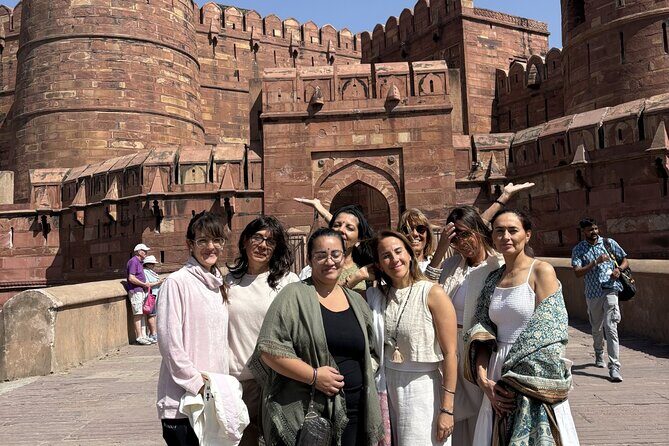
Your route includes time at the Red Fort—a UNESCO-listed sandstone complex tied to Mughal power for nearly two centuries.
The itinerary doesn’t spell out exact minutes for the Red Fort stop in the same detail as other points, but the plan clearly positions it as a major landmark during the Old Delhi stretch. If you’re history-first, this is a good day to prioritize it.
Practical thinking: if you’ve already seen the fort, your guide can help you swap time. Reviews mention that guides can tailor the day to what you care about, including adjusting visits like Red Fort time when other sites were already covered.
New Delhi’s Civic Icons: India Gate, Parliament House, and the President’s Area
Once you leave Old Delhi behind, New Delhi feels like the pause button—wide roads, big architecture, and monuments designed for symmetry and scale.
You’ll see India Gate next, a 42-meter-high stone memorial designed by Edwin Lutyens (1921) in the shape of a massive arch. It honors soldiers who served in the Indian Army, with a figure cited in the tour description around 90,000 names.
The stop is short—around 15 minutes—so treat it as a quick orientation plus photo time. If you want a longer look at the area, ask your guide to adjust.
The plan also includes viewing Parliament House and the President’s House area (the tour description mentions Sansad Bhavan and Durbar Hall, plus other halls and a library). These are exterior viewing points in most day tours like this, and that’s fine. What matters is that your guide frames what you’re looking at so it doesn’t feel like just another government building.
If you’re traveling with someone less into museums, this part is a nice bridge. It shows you how modern India was built and how power is staged in stone and ceremony.
Humayun’s Tomb and Gandhi Smriti: Mughal Splendor and a Quiet Reminder
You then move into Mughal-era beauty at Humayun’s Tomb, a UNESCO World Heritage Site. Built in 1570, it’s described as a jewel of Mughal architecture and houses Emperor Humayun’s remains.
This stop is about 1 hour and includes admission tickets. That longer time is well used here. Humayun’s Tomb rewards slow looking: the main structure, surrounding gardens, and the way the design sits in the landscape.
After that comes Mahatma Gandhi Museum at Gandhi Smriti (mentioned as formerly Birla House). This is a memorial dedicated to Gandhi, including the fact that he spent his last 144 days there and was assassinated in 1948.
Time is about 30 minutes. It’s a different kind of “sight,” one that asks for calm attention. If you tend to skim plaques, this is still worth it—your guide can point you to what matters most.
Important for planning: Gandhi Smriti and Lotus Temple are closed every Monday. If your tour date lands on Monday, you’ll want to coordinate how your day adjusts.
Lotus Temple and Qutub Minar: Contrasts in Faith and Architecture
Two of Delhi’s most iconic spiritual and architectural stops close out the New Delhi side of the day.
First is Lotus Temple, also known as the Bahai House of Worship. It’s built in the form of a lotus flower, designed in 1986, and meant to bring various faiths together. You’ll have about 30 minutes.
Again, check the Monday closure note. If you’re visiting on a Monday, this stop won’t run.
Then you hit the tall landmark you can’t miss: Qutub Minar. The itinerary describes it as a victory minaret built after Qutb-ud-din’s proclamation of supremacy, rising about 73 meters with five storeys.
You’ll have about 45 minutes and tickets included. One of the most practical reasons this is a strong end-of-day stop is light and photo timing. Even without making big promises, Qutub Minar is a place where changing daylight makes a difference, and reviews mention it can look beautiful later in the day.
If you want photos, your guide can also help you choose better angles. Reviews include guide tips like photo-friendly spots from people such as Shiv and Dilip.
Lunch Timing, Food Options, and How to Make It Fit Your Pace
Lunch is included if you choose the option with lunch. The plan states it’s a multi-cuisine meal at a clean and reputable restaurant, with vegetarian and non-vegetarian options.
This matters because the tour covers crowded areas earlier in the day. Having lunch organized avoids the common Delhi-travel headache of trying to find a safe, clean place in the middle of market chaos.
From a practical standpoint, plan for a full day. Even if you’re not a slow walker, 8 to 9 hours adds up—especially with hot sun, crowds, and stairs at places like the stepwell.
One small but important tip: wear comfortable walking shoes and bring something for sun and hydration. Bottled water is included in the vehicle, but you’ll still want to handle personal comfort.
Customization You Can Actually Use (Not Just a Marketing Line)
This tour isn’t locked into one rigid route with no flexibility. Your guide can tailor the day to match your interests and adjust time at stops.
The best examples from real feedback: solo travelers and families appreciated guides who paced the day to their needs, and people noted guides were willing to slow down, speed up, or add adjustments. For instance, reviews call out guides like Pinky for matching your pace—going deeper if you want it, moving on faster if you’re ready.
If you’re trying to pick what to focus on, here’s a simple decision rule:
- If you love architecture, prioritize Jama Masjid, Humayun’s Tomb, Qutub Minar, and give Lotus Temple your attention.
- If you love street life, don’t skip Chandni Chowk, and treat Khari Baoli like a sensory stop.
- If you’re traveling with kids, the rickshaw ride and markets usually keep energy high.
Price and Value: Why $16.45 Can Be a Deal (If You Use the Included Bits)
The price shown is $16.45 per person, and that sounds low for what’s included. Even if you expect it to be budget, what you’re buying is the elimination of multiple expensive headaches:
- private pickup and drop-off
- AC car and a driver
- a private, government-approved local guide
- entry tickets where listed
- lunch if you select the lunch option
- a rickshaw ride
- bottled mineral water during the journey
- taxes and handling charges
For Delhi, the value comes from bundling. If you tried to stitch this together yourself, you’d pay for transport, then pay separately for guides, and then track ticket rules. Here, the tour handles the core coordination.
A key detail: monument entrance fees differ by eligibility group, and you’ll need valid ID for the correct ticket price. That’s not a deal-breaker—just a reason to keep your passport or relevant ID handy.
Also, because this is 100% private, the cost scales with the group size in a way that can feel fair. The larger your group, the more the “private” part becomes the main value engine.
Who Should Book This Tour (and Who Might Want to Adjust It)
This tour is ideal if:
- You’re on a short stay and want old + new highlights in one day
- You want a private guide to explain what you’re seeing
- You’re traveling solo and like the security of planned transportation
- You enjoy markets but don’t want to manage crowds and tickets alone
- You’re traveling with family and want the rickshaw ride as a clear winner
You might want to adjust the plan if:
- You prefer slow, in-depth time at fewer sites
- You’re sensitive to crowd noise in Old Delhi
- You’re visiting on a Monday (Lotus Temple and Gandhi Smriti are closed)
If any of those apply, tell your guide right after pickup what you want to cut or extend.
Should You Book This Private Old and New Delhi Tour?
Book it if you want a high-efficiency Delhi introduction with a guide who can shape the day around you. The rickshaw ride, Jama Masjid, Humayun’s Tomb, and Qutub Minar together cover the city’s biggest “wow” beats, while markets like Chandni Chowk and Khari Baoli give you the daily-life side.
I’d book it especially if you’re landing as a first-timer, traveling solo, or you’re short on time. A lot of the best feedback centers on guides like Dilip, Shiv, Pinky, and Lucky paired with careful drivers who make the day feel safe and well-managed.
Just go in with realistic expectations: it’s a full day. Wear good shoes, bring a little patience for Delhi traffic, and use customization early so the day feels right, not rushed.
FAQ
How long is the Old and New Delhi city tour?
The tour is approximately 8 to 9 hours, depending on traffic and how much time you choose to spend at each stop.
Is this tour private?
Yes. It’s a 100% private tour, with only your group participating. You’ll have your own private guide and driver.
What transportation is included?
You get transport by a private air-conditioned car. The vehicle type depends on group size: a 4-seater sedan, 6-seater SUV, or 10-seater van.
Do I get hotel or airport pickup?
Yes. Pickup and drop-off are available from your hotel, airport, railway station, or any preferred location in Delhi, Noida, or Gurugram.
What activities are included in Old Delhi?
The itinerary includes a rickshaw ride in Old Delhi, plus time at major Old Delhi market areas like Chandni Chowk and Khari Baoli.
Are monument entrance tickets included?
Yes, entrance fees are included for monuments where the plan lists admission as included (for example Jama Masjid, Humayun’s Tomb, and Qutub Minar). Admission fees may vary by eligibility group.
Is lunch included?
Lunch is included if you choose the option for Old & New Delhi with lunch. It’s a multi-cuisine meal with vegetarian and non-vegetarian options.
What should I know about closures?
Gandhi Smriti and Lotus Temple are closed every Monday.
Can I customize the itinerary?
Yes. The tour is customizable. Tell your guide what you want to add or skip, and they’ll adjust the timing to match your preferences.