REVIEW · CITY TOURS
Private Old and New Delhi City Sightseeing Tour
Book on Viator →Operated by Tour Guide Delhi · Bookable on Viator
A day in Delhi can feel like sensory overload. This tour is built to keep you moving smart: private air-conditioned transport, a real guided plan, and hands-on street time in Old Delhi. You’ll also get a mix of Mughal-era icons, Gandhi landmarks, and New Delhi’s grand monuments, with photo stops where inside access can be limited.
I especially like the Old Delhi rickshaw ride after Jama Masjid. It’s one thing to see Chandni Chowk on a map, and another to ride through the lanes and watch the stalls, signs, and crowds flow past you at close range. The other big win is the day stays practical: you get a professional driver, cold bottled water, and a schedule that doesn’t force you to constantly sort out transport on your own.
One consideration: several stops note that admission tickets are not included (Jama Masjid, Rashtrapati Bhavan, Gurudwara Bangla Sahib, Qutub Minar). Also, some of the famous buildings like the Red Fort and Parliament are mainly photo stops from outside, so plan your expectations around what you can actually enter.
In This Review
- Key highlights at a glance
- Why this Old and New Delhi day works so well
- Pickup, private car comfort, and guides who set the pace
- New Delhi photo circuit: India Gate, Rashtrapati Bhavan, and Parliament exteriors
- Jama Masjid and the Old Delhi shift you can feel
- The Chandni Chowk rickshaw ride: your best street-level payoff
- Red Fort photo stop: famous, but from outside
- Raj Ghat and Gandhi’s cremation memorial
- Buffet lunch option: when all-inclusive actually helps
- Agrasen Ki Baoli: the stepwell stop I’d pencil in
- Gurudwara Bangla Sahib: time for worship and quiet observation
- Qutub Minar: World Heritage, tall views, and final-day momentum
- Price and value: what $79 per person buys you
- Who this tour fits best (and who should consider another plan)
- Should you book this private Old and New Delhi sightseeing tour?
- FAQ
- How long is the Private Old and New Delhi City Sightseeing Tour?
- What time does the tour start?
- Where can pickup happen?
- Is this tour private or shared?
- What transportation is included?
- Do I ride in a rickshaw in Chandni Chowk?
- Are entrance fees included for the monuments?
- Is lunch included?
- Is water provided during the tour?
- Can I cancel for a full refund?
Key highlights at a glance
- Old Delhi rickshaw time after Jama Masjid, when you want to feel the street-level energy
- Gurudwara Bangla Sahib and its big Sikh shrine setting with time to slow down
- Qutub Minar as the late-day capstone, a World Heritage site and major sightseeing draw
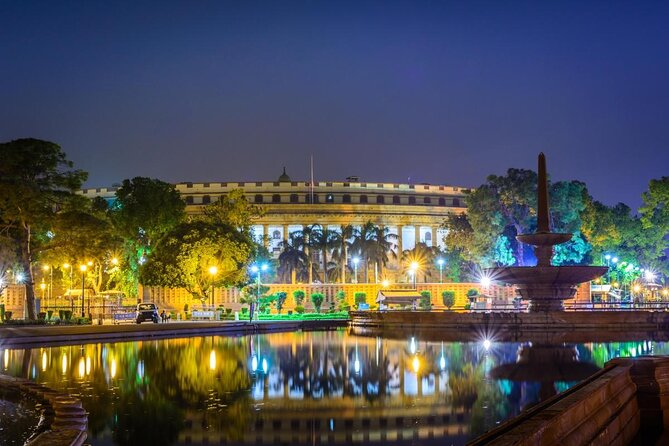
- New Delhi photo routes for India Gate, Rashtrapati Bhavan, and Parliament-style exteriors
- Lunch and entrance-fee flexibility via the all-inclusive option, depending on what you pick
Why this Old and New Delhi day works so well
Delhi has two faces that look like they belong to different cities. Old Delhi is about lanes, faith, markets, and sound. New Delhi is about wide avenues, government buildings, and monuments meant for photographs from a distance.
This tour does a good job of mixing both without making you bounce between neighborhoods in a stressful way. You start in New Delhi in comfort—private air-conditioned car and a professional chauffeur—then shift to Old Delhi for the one part where you actually need to slow down and experience the streets. That rickshaw ride through the Chandni Chowk area is the moment the day really becomes memorable.
I also like that the route is built around time blocks you can actually handle. Instead of one long stop where you rush through everything, you get short, focused visits and then move on. That matters in Delhi, where heat, crowds, and traffic can easily drain your energy.
Pickup, private car comfort, and guides who set the pace
Your day begins with pickup around 9:00 AM (or your chosen time). The pickup area includes Delhi, Gurugram, and Noida, and the tour is private, so it’s only your group in the vehicle. You also get a mobile ticket, which is a small thing but helps on arrival.
In practice, the value of a private car in Delhi is not just comfort. It’s control. You avoid the timing chaos of hopping between metro stations, and you can start seeing more in the same hours. The tour also includes packaged drinking water (cold and unlimited). When you’re walking around Old Delhi later, that becomes surprisingly useful.
Guides are another big part of why this works. From the names that show up again and again—Suraj Prakash, Shikha, Praveen, Rumi, Vivek, and Joyful—you can expect a style that focuses on practical context: what you’re looking at, what to notice, and how to move efficiently through each area. The best sign is that people repeatedly bring up both friendly attitude and helpful explanation, which is exactly what you want when you’re seeing a lot of sacred and historic sites in one day.
New Delhi photo circuit: India Gate, Rashtrapati Bhavan, and Parliament exteriors
After pickup, the day shifts into the New Delhi rhythm: monument views, quick photo stops, and wide space where a car route is the right tool.
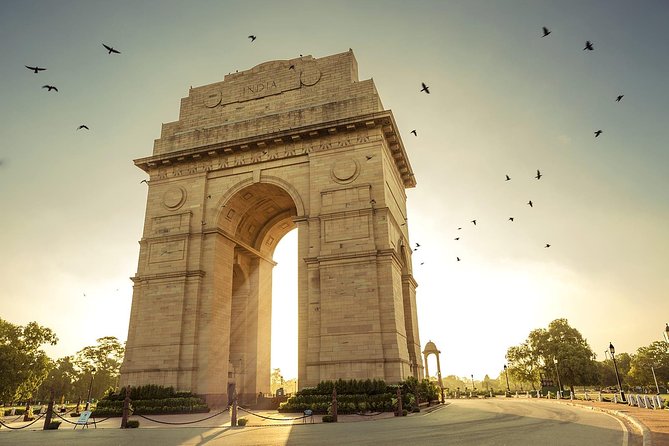
You’ll stop for photos at India Gate, a 140-foot-high arc-like gateway built as a war memorial. The stop is short (about 15 minutes), so use it as a framing moment. Try a few angles, then move on rather than burning time.
Next come outside photo views of Rashtrapati Bhavan. It was the Viceroy’s House before independence, and the exterior is what you’ll focus on during this drive-by portion. You’ll also see the Parliament area designed by British architect Edwin Lutyens and Herbert Baker. This part is similarly exterior-based, and the idea is to get your bearings: where India’s national power centers sit in the city layout.
A practical note: these New Delhi stops are not the kind of places where you spend hours inside during a day tour. If you want lots of indoor time, you’d need a different plan. But for most first-timers, a few well-timed exteriors are the fastest way to understand New Delhi’s scale.
Jama Masjid and the Old Delhi shift you can feel
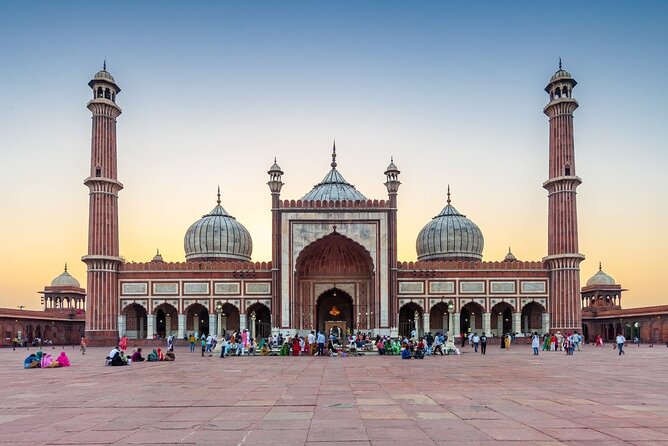
Old Delhi starts with Jama Masjid, the Mughal Friday Mosque and one of the biggest landmarks in the area. Your time here is about 30 minutes. The listing notes that the admission ticket is not included, so be ready for that added cost if you decide to enter.
What makes Jama Masjid such a strong first Old Delhi stop is how it anchors the whole neighborhood. When you arrive, you immediately see why the area grew around major religious sites and trade corridors. It’s not just a building—it’s a hub that shapes the flow of people and activity around it.
After that, you’ll move into the street maze.
The Chandni Chowk rickshaw ride: your best street-level payoff
This is the part you’ll remember when the trip is over.
After Jama Masjid, you’ll take a cycle rickshaw / tuk-tuk style ride through the Chandni Chowk bazaar streets. The time block is roughly 30 minutes. That’s long enough to notice the rhythm of the area without being so long that you get stuck in stop-and-go crowds.
If you’re the type who likes to travel with your senses—watching shop signs, looking at goods, hearing the mix of languages—this ride gives you that. You’re not just passing by from behind a car windshield. You’re close to street life.
One more thing: a rickshaw ride also gives you a kind of orientation. After this, you’ll understand how Old Delhi is laid out—narrow lanes, big nodes of activity, and why some walking routes feel easy while others feel chaotic.
Red Fort photo stop: famous, but from outside
You’ll stop for photos at the Red Fort from outside. The reason given is that most of the building is acquired by the Indian Army, so your experience here is exterior viewing and clicking pictures rather than deep interior exploration.
This is worth accepting up front. If you expect to spend real time inside, you’ll end up wishing you had booked a different option. If you go in expecting a quick photo stop and a chance to connect the fort to what you saw earlier in Old Delhi, it’s still a satisfying moment.
Delhi has plenty of places where access changes by day and rules. This tour keeps the pace steady by not promising more than it can reliably deliver in a single day.
Raj Ghat and Gandhi’s cremation memorial
Next is Raj Ghat, the memorial to Mahatma Gandhi. Your stop is about 30 minutes, and the admission ticket is listed as free.
This is a quieter, reflective break after the intensity of Old Delhi. Raj Ghat centers on an elementary square platform of black marble symbolizing the spot where Gandhi was cremated. Even if you don’t know every detail, the physical simplicity makes the meaning feel direct.
If you like travel days that aren’t all photos and noise, this stop helps balance the itinerary. It also gives your feet and head a rest before you head back into New Delhi monuments and then further south toward other historic sites.
Buffet lunch option: when all-inclusive actually helps
Lunch is built in as a buffet option if you choose the all-inclusive setting. The listed lunch block is about 1 hour.
Why this matters for value: in Delhi, finding a comfortable, efficient lunch stop can eat up time and energy, especially when you’re already bouncing between neighborhoods. Having lunch organized means you can keep the schedule moving.
One caution: the all-inclusive option also affects entrance fees to monuments. If you’re trying to estimate total cost, it’s smart to compare what you’ll pay separately versus what the package covers. If you want to enter more sites rather than only view exteriors, the all-inclusive approach can make your day feel smoother.
Agrasen Ki Baoli: the stepwell stop I’d pencil in
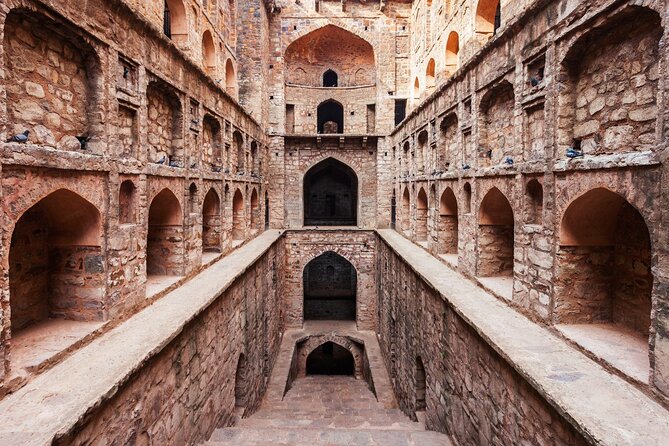
After lunch, you’ll visit AgraSen Ki Baoli (Leamigo), a long stepwell. It’s described as about 60 meters long and 15 meters wide and once served as a water reservoir. It’s positioned as an example of ancient engineering and architecture, and the stop is short—about 15 minutes.
Stepwells aren’t always on the standard first-time Delhi list, which is exactly why this stop works. It’s a different type of monument: not a tomb or a temple façade, but a functional structure that hints at how people lived with water management before modern systems.
If you enjoy unusual architecture and don’t want every photo to look like a palace, this is a great palate cleanser. It’s also a good spot to slow your pace for a moment because you can take in the shapes and levels without feeling rushed.
Gurudwara Bangla Sahib: time for worship and quiet observation
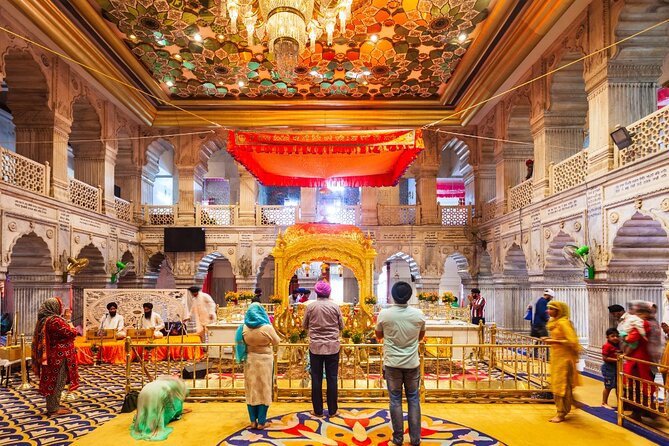
Then it’s Gurudwara Bangla Sahib, a Sikh temple with a golden dome and a sacred role in the capital. The time block is about 1 hour, and admission is listed as not included.
This is one of the best parts of the tour for travelers who like a more human-scale religious stop—observing devotion, structure, and daily rhythms. It’s also placed after a mix of forts and monuments, so it gives the day a different texture.
A useful tip, based on what people have described: the Sikh shrine kitchen setting can make the visit feel more than just sightseeing. Even if your exact schedule differs, you’re likely to see that the temple environment supports hospitality and community life in a way that’s hard to replicate elsewhere.
Qutub Minar: World Heritage, tall views, and final-day momentum
The last major stop is Qutub Minar, a World Heritage site and a top Delhi attraction. Your time here is about 1 hour, and admission is listed as not included.
The minaret was constructed in 1192 by Qutab-ud-din Aibak, and it’s highlighted as an example of Indo-Islamic Afghan architecture. This is a strong ending because it’s both visual and historic. It’s also one of those sites where height and detail matter—up close, you notice carvings and structural logic more than you can from a distance.
If your feet are tired by this point, you’ll still get value. Qutub Minar is the kind of place where even partial exploration feels satisfying because the scale does the work for you.
Price and value: what $79 per person buys you
At $79 per person for a 7 to 8 hour private day, the value comes from the combination, not any single item. You’re paying for:
- A government-approved tour guide
- Private air-conditioned vehicle with a professional driver
- Cold unlimited bottled water
- Tuk-tuk / rickshaw ride in Old Delhi
- And depending on your choice, buffet lunch and entrance fees to monuments
That’s a lot of “moving parts” in one day. The big reason it can be worth it is time. Delhi traffic and distances are real, and doing this route on your own likely takes more planning than you think. With the guided structure, you can spend your effort looking at sites instead of mapping stops.
Where the value shifts is entrance fees. Since Jama Masjid and Qutub Minar (and other key spots) list admission as not included, you need to decide if you want to enter everything. If yes, the all-inclusive option is usually the better math. If your plan is mostly exterior views and photos for certain monuments, you can keep costs lower by selecting only what you need.
Who this tour fits best (and who should consider another plan)
This tour is a smart fit if you:
- Want one day that covers both New and Old Delhi highlights
- Like a mix of major monuments and street-level experience
- Prefer private transport because Delhi logistics can be tiring
- Appreciate a guide who can explain what you’re seeing, not just point and move
It may not be ideal if you:
- Want lots of time inside every major building
- Have a very tight budget for entrance fees and don’t want added costs
- Prefer slow travel where you linger for hours in one neighborhood
If you’re a first-timer in Delhi, this is the kind of day that helps you build a foundation for future visits. You’ll know where things are and what you want to return to with more time.
Should you book this private Old and New Delhi sightseeing tour?
I’d book it if you want a high-efficiency Delhi day with real structure: private car, a guide, one top street experience in Old Delhi, and major Delhi landmarks across both halves of the city. The rickshaw ride after Jama Masjid is the kind of detail that turns a list of sites into a story you’ll remember.
Just check your expectations on access. Since multiple stops note tickets are not included and several famous sites are exterior/photo focused, this works best when you’re planning for a sightseeing route, not a “museum marathon.”
If you do want more entrances and a smoother day with fewer add-on decisions, choose the all-inclusive style so lunch and monument entry fees are handled together. That’s often the easiest way to protect your time and keep the day feeling relaxed.
FAQ
How long is the Private Old and New Delhi City Sightseeing Tour?
The tour runs about 7 to 8 hours.
What time does the tour start?
It starts at 09:00 AM or at your given time.
Where can pickup happen?
Pickup is offered from Delhi, Gurugram, and Noida.
Is this tour private or shared?
It’s private. Only your group participates.
What transportation is included?
You get an air-conditioned vehicle with a professional driver, plus a tuk-tuk / rickshaw ride in Old Delhi.
Do I ride in a rickshaw in Chandni Chowk?
Yes. After Jama Masjid, you take a cycle rickshaw / tuk-tuk ride around the Chandni Chowk area.
Are entrance fees included for the monuments?
Admission is not included for some stops listed (like Jama Masjid, Gurudwara Bangla Sahib, and Qutub Minar). Entrance fees to monuments are included only if you select the all-inclusive option.
Is lunch included?
A delicious buffet lunch is included if you select the all-inclusive option.
Is water provided during the tour?
Yes. The tour includes packaged drinking water (cold and unlimited).
Can I cancel for a full refund?
Yes. You can cancel up to 24 hours in advance for a full refund.