REVIEW · NEW DELHI
Old & New Delhi Full or Half Day Sightseeing Tour
Book on Viator →Bookable on Viator
Old and new Delhi, handled right. This is a private way to see the big-ticket sights without spending your day wrestling maps and traffic. You can do Old Delhi or New Delhi in about half a day, or stitch them together for a full day with an easy route from mosque courtyards to imperial monuments.
I particularly like two things: the comfort-first transportation (air-conditioned car with a driver, plus local tuk-tuk/rickshaw moments in Old Delhi), and the way a good guide helps you connect what you see to what it means. Guides like Ali, Mayank, Suhail, Tabrej, and Raj/Saji are often praised for being on time, making you feel safe, and adjusting the pace when you want more time for photos or a specific stop.
One consideration: if you don’t choose the entrance-fee upgrade, plan for possible paid entries and extra gate rules. A previous guest noted surprise costs at attraction entrances (for example, rules around shoes), so double-check what’s included in your selected option.
In This Review
- Key things to know before you go
- Why Old Delhi and New Delhi work so well in one plan
- Price and value: what $24.55 really buys you
- Pickup, transport, and how you avoid Delhi time-wasting
- Half-day Old Delhi: Jama Masjid, Chandni Chowk lanes, and the Red Fort zone
- Gurudwara Bangla Sahib and the langar kitchen stop
- New Delhi monuments: India Gate, Rashtrapati Bhavan, and Parliament viewpoints
- Humayun’s Tomb, Lotus Temple, and Qutub Minar in one memorable arc
- Guide style and pacing: what makes the day feel easy
- Small logistics that can make or break your comfort
- Who this tour suits best (and who should consider another plan)
- Should you book this Old & New Delhi sightseeing tour?
- FAQ
- How long is the Old & New Delhi sightseeing tour?
- Can I choose pickup time and where I’m picked up?
- Is this a private tour or a shared group tour?
- Do I ride a tuk-tuk or rickshaw in Old Delhi?
- Are entrance tickets included?
- Which major sights are included in Old Delhi?
- Which major sights are included in New Delhi?
- Is food or drinks included?
- What’s not included besides food and drinks?
- Is there a return ride included after the tour?
Key things to know before you go

- Private pickup across Delhi NCR (Delhi, Noida, Gurugram, Ghaziabad, Faridabad) and you choose your start time
- AC car comfort with driver, plus tuk-tuk in Old Delhi when your option includes it
- Old Delhi street sights: Jama Masjid, Chandni Chowk lanes, and the Red Fort area
- Gurudwara Bangla Sahib + langar kitchen stop with a guide-led explanation
- New Delhi monument arc: India Gate area, Rashtrapati Bhavan and Parliament House viewpoints, Humayun’s Tomb, Lotus Temple, and Qutub Minar
- Upgrade option for entrance tickets, which can save time and hassle at gates
Why Old Delhi and New Delhi work so well in one plan
Delhi can feel like two different cities. Old Delhi is all about the sensory stuff: mosque courtyards, narrow lanes, and markets where people still move with purpose. New Delhi is more spaced out, with broad avenues and grand monuments that were planned to project power and order.
This tour makes that contrast easy. You get guided visits to major landmarks, but you also get the practical rhythm of a half-day or full-day schedule. That matters because Delhi’s traffic can chew up hours if you’re trying to hop around on your own. Here, the route is built around efficient travel time, then topped with walking time where it counts—like in the Jama Masjid area and the Chandni Chowk lanes.
You also get a flexible feel. Several guests highlighted timing that didn’t feel like a sprint—more like you set the pace with your guide, within the overall plan.
Price and value: what $24.55 really buys you
At about $24.55 per person, the value is less about fancy add-ons and more about saving your time and decision fatigue. The big-ticket parts you’re paying for are:
- Private guide time (not a free-for-all group briefing)
- AC car with driver (parking, tolls, fuel, taxes covered)
- Smart coverage of Old and/or New Delhi highlights in a short window
A key value lever is the entrance-fee upgrade. When you include tickets for monuments, you avoid friction at gates and keep the day moving. If you skip it, you may still see everything, but you might pay some entries separately and deal with additional gate rules.
Also note what’s not included: drinks and food, plus tips/gratuities. If you’re the type who likes a long sit-down lunch, budget for it. If you’re happy with snacks and bottled water, you’ll be fine—especially since the tour says water bottles and umbrellas are provided.
Pickup, transport, and how you avoid Delhi time-wasting
The best part of starting with pickup is that it removes the first stress test. You can be collected from anywhere in Delhi, Noida, Gurugram, Ghaziabad, or Faridabad, and you choose the pickup time that fits your day.
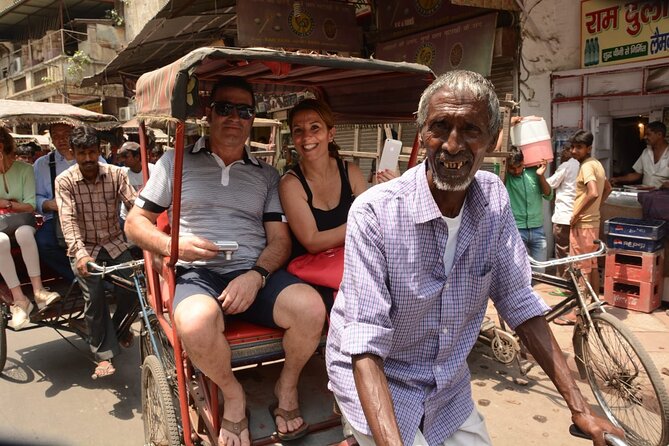
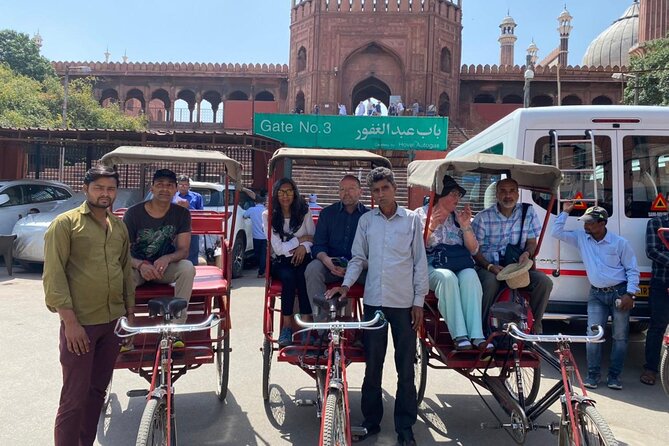
Once you’re in the car, you stay there unless the plan deliberately swaps you into local transport for the Old Delhi feel. Your route includes a moment where you ride a tuk-tuk in Old Delhi (when that option is selected), and there’s also a rickshaw hop for the Chandni Chowk market lanes.
That combo sounds small, but it’s smart. The car protects your energy between distant sights, and the local rides put you right where the atmosphere lives. Many guests also stressed feeling safe in traffic—thanks to the driver—especially when the driving can look chaotic from the outside.
Half-day Old Delhi: Jama Masjid, Chandni Chowk lanes, and the Red Fort zone
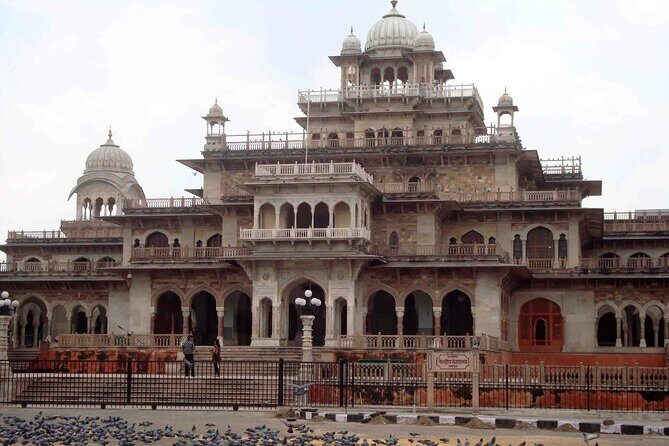
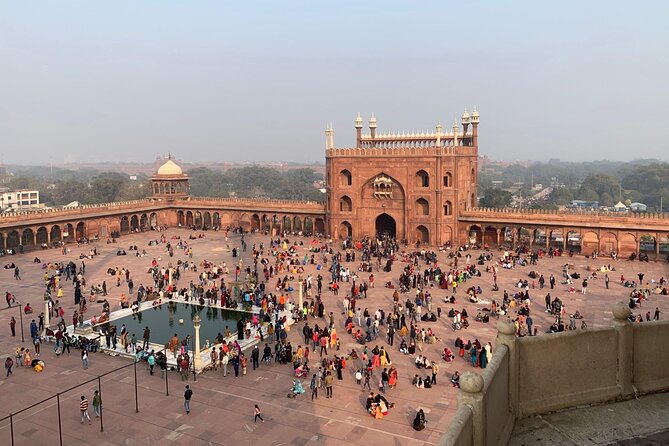
If you pick the Old Delhi option, your day starts with a showpiece. Jama Masjid is the biggest mosque in India, built in 1656. You’ll walk in the courtyard made of red sandstone and get time to take it in properly—big architecture up close, not just quick snapshots from the curb.
From there, you shift into market mode. You’ll head toward Chandni Chowk, one of Delhi’s most famous shopping areas. The plan includes a stop for the lane-side exploration by rickshaw, including areas such as Cham Cham Gali (linked with wedding shopping) and Parathe Vali Gali. Even if you don’t buy anything, this is where you see how the city’s daily life looks.
Then comes the Red Fort area. The fort is enormous, built by Shah Jahan between 1639 and 1648, and it’s tied to the Mughal emperors’ residence. The tour is structured for viewing with context, not for a rushed stamp-and-go.
A practical note: Old Delhi is where dress and comfort matter. Think about easy movement for walking in and around courtyards and lanes. Also, keep an eye on shoe rules at some entrances—one guest called out extra costs linked to gate requirements, including leaving shoes outside. It doesn’t mean you’ll face it at every stop, but it’s a smart thing to be prepared for.
Gurudwara Bangla Sahib and the langar kitchen stop
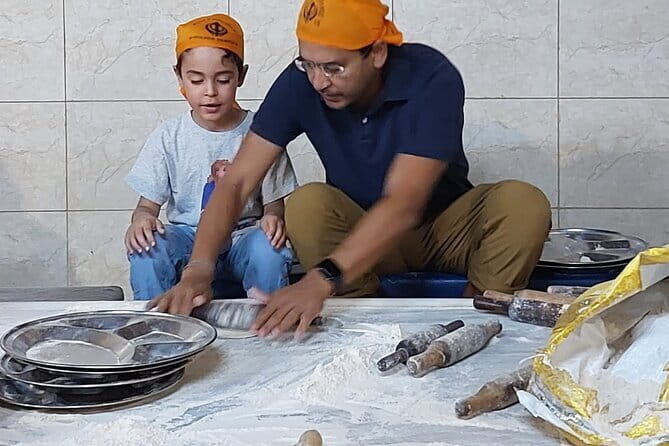
This is the stop that often feels different from the monuments around it. Gurudwara Bangla Sahib is known for its spiritual significance, its history, and the langar kitchen—the community meal service.
What you get here is not just a photo moment. Your guide leads you through what makes the place meaningful and explains what you’re seeing while you’re there. Several guests singled out this experience as a highlight, specifically because it shows a side of Delhi culture that feels everyday, not only ceremonial.
If you want a break from the intensity of Old Delhi markets, this is a nice reset. It’s also usually a calm environment to slow down your pace for a while. And since admission is listed as free for this stop, it’s a good value add on a day that already includes paid entrances elsewhere.
New Delhi monuments: India Gate, Rashtrapati Bhavan, and Parliament viewpoints
If you choose New Delhi as your half day—or roll it into a full day—you’ll get a classic government-and-symbolism arc.
The plan includes stops around India Gate, plus the President’s House (Rashtrapati Bhavan) and Parliament House (Sansad Bhavan). These aren’t only landmarks; they’re part of how modern Delhi communicates its national identity through architecture and space. Expect mostly guided viewing and photo opportunities rather than long indoor visits based on what’s typically possible at such sites.
One extra value here is context. A strong guide helps you connect the visual scale—long halls, official buildings, and carefully planned vistas—to the historical timeline that shaped the city. Even if you’re not a “monument person,” you’ll probably walk away with clearer reasons for why these places matter.
Also, New Delhi can be hit-or-miss for how much you can see at any moment depending on public events. If a stop is limited, a flexible guide can usually shift the emphasis to what’s still available nearby without wrecking the whole schedule.
Humayun’s Tomb, Lotus Temple, and Qutub Minar in one memorable arc
The New Delhi portion really comes alive with three very different landmark styles.
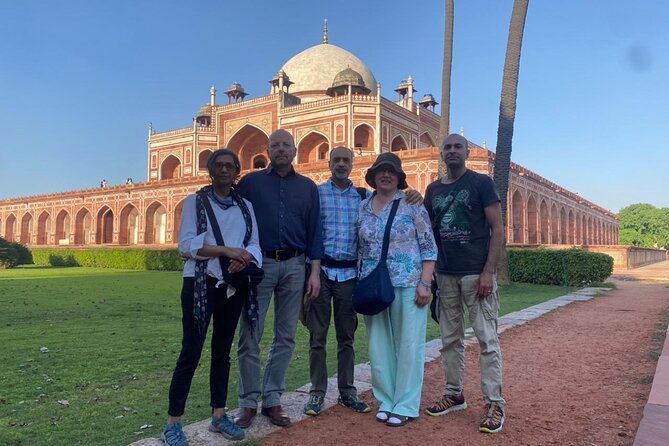
First, Humayun’s Tomb. It’s UNESCO-listed and described as the first garden tomb of India. Humayun’s wife commissioned it after his passing, which gives the site a personal story behind the stone and symmetry. Your stop is about 1 hour, and admission is listed as included if you choose the ticket upgrade.
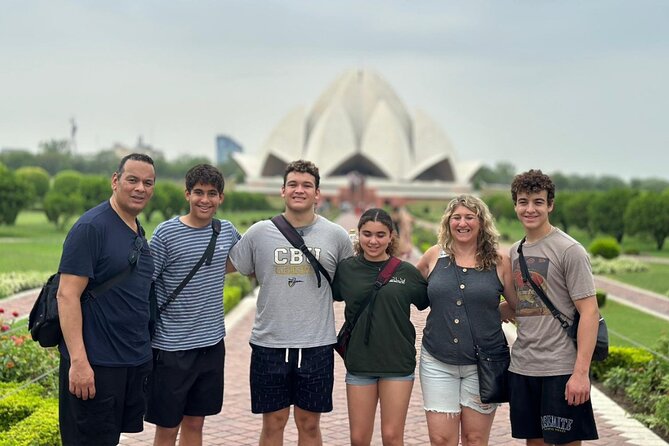
Next, Lotus Temple. This one looks like a lotus flower and is a Bahá’í House of Worship, built in 1986. It’s short and sweet on this itinerary (about 30 minutes), and admission is listed as free. This is where you get a calmer mood—less about empire and more about quiet contemplation and clean lines.
Finally, Qutub Minar. It’s the tall tower you recognize from a distance, and it’s included as a major finish point. The plan describes a ruler, Sultan Qutb-ud-din, and that the tower structure has five parts. Your stop is about 1 hour, with admission listed as included when you select the ticket option.
If you do Old and New together, this sequence helps you transition from street history to planned monumental history to spiritual modern architecture to an older tower complex. It’s a good flow for first-timers because your brain gets a variety of visual “proof” for different eras.
Guide style and pacing: what makes the day feel easy
A private tour succeeds or fails on the guide. This one tends to win on three things: safety awareness, clear explanations, and pacing that doesn’t feel like you’re trapped.
Many guests mention guides such as Ali and Mayank for being on time and giving history in a way that actually sticks. Others praised Suhail for being pleasant and professional. Raj and Saji were highlighted for being attentive to individual needs, which is important if you want more time for the mosque courtyard photos or less time staring at government buildings.
There’s also a pattern of flexibility. One guest described the tour as having built-in flexibility, and another emphasized that they didn’t feel rushed. That’s what you want in a city like Delhi, where “time” can turn into “time plus traffic plus line plus one more photo.”
If you’re traveling solo, this type of pacing can make a huge difference. One guest specifically recommended it as a solo option and praised the driver’s navigation through chaotic New Delhi traffic.
Small logistics that can make or break your comfort
Delhi trips are rarely about just landmarks. Comfort and small rules shape how enjoyable the day is.
- Bring cash for extras you didn’t plan for. If you skip entrance tickets, you may pay at gates. One guest noted additional costs at entrances, including shoe-related requirements.
- Dress for mosques and calm places. The tour includes Jama Masjid and a gurudwara. Even if you’re not told in advance, respectful clothing makes everything smoother.
- Use the provided water and umbrella, and still keep snacks in mind. The tour includes water bottles and umbrellas, but drinks and food are not included. If your day runs long (up to about 8 hours), you’ll want something to keep your energy steady.
- Plan your footwear. If shoes need to come off or get stored at an entrance, choose footwear that’s easy to handle quickly.
And one practical tip: confirm your pickup time clearly before the day starts. There was an example of a miscommunication around start time in feedback, and you don’t want that kind of stress when you’re supposed to be sightseeing.
Who this tour suits best (and who should consider another plan)
This tour is a smart fit if you’re:
- A first-time visitor who wants major Old Delhi and New Delhi highlights in a short window
- Someone who values private guiding over sorting out directions on your own
- Travelers who want a mix of street-level culture (Jama Masjid, Chandni Chowk lanes) and monument-scale architecture (Humayun’s Tomb, Qutub Minar, India Gate area)
It may be less ideal if you:
- Want a deep, slow study of only one neighborhood. Old Delhi especially rewards unhurried wandering, and a half-day plan has to choose priorities.
- Plan to eat a full sit-down meal at multiple stops. Food isn’t included, so you’ll likely need to slot meals on your own.
Should you book this Old & New Delhi sightseeing tour?
Yes, if your goal is to get your bearings fast and see the best-known Delhi sights without the daily stress of navigating traffic. The value comes from the combination of private guide + comfortable driver and the way the route connects Old Delhi’s daily-life energy with New Delhi’s monumental layout.
Book it especially if you like structure but still want room to breathe. The tour’s comfort setup (AC car, water/umbrella) plus the option to ride local transport in Old Delhi makes it feel like sightseeing, not just logistics.
If you’re picky about entrances and costs, choose the entrance-ticket upgrade option so your day stays smooth at gates. And keep a little buffer for local rules that sometimes affect shoes and entry. Do that, and you’ll come away with a Delhi that feels real—not just photographed.
FAQ
How long is the Old & New Delhi sightseeing tour?
The tour runs about 4 to 8 hours, depending on whether you choose a half-day route (Old Delhi or New Delhi) or a full-day route (both).
Can I choose pickup time and where I’m picked up?
Yes. You can be picked up from any location in Delhi, Noida, Gurugram, Ghaziabad, or Faridabad, and you can decide the pickup time you need.
Is this a private tour or a shared group tour?
It’s a private tour/activity, meaning only your group participates.
Do I ride a tuk-tuk or rickshaw in Old Delhi?
The tour includes a tuk-tuk ride in Old Delhi when that option is selected, and it also includes a rickshaw to explore Chandni Chowk.
Are entrance tickets included?
Entrance tickets are included only if you select the option that includes monument entrance fees. Otherwise, entries may not be included.
Which major sights are included in Old Delhi?
Old Delhi includes Jama Masjid, Chandni Chowk (with lane exploration), Red Fort, and Gurudwara Bangla Sahib.
Which major sights are included in New Delhi?
New Delhi includes India Gate, President’s House (Rashtrapati Bhavan), Parliament House (Sansad Bhavan), Humayun’s Tomb, Lotus Temple, and Qutub Minar.
Is food or drinks included?
No. Drinks and food are not included, but water bottles are included.
What’s not included besides food and drinks?
Tips/gratuities to the guide and driver are not included. Also, check your selected option for whether entry tickets are included.
Is there a return ride included after the tour?
Yes. You’ll get a free ride back to wherever you want to go in Delhi, Noida, Gurugram, Ghaziabad, or Faridabad.