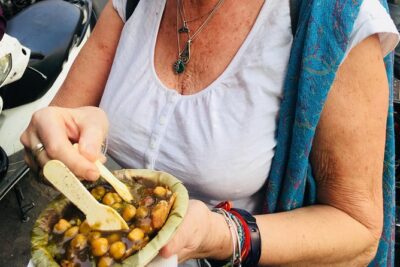
Food has a way of starting conversations.
This is the kind of New Delhi experience that feels personal fast: you arrive for a traditional welcome with floral garlands and tikka, then learn Northern Indian cooking in a family home setting. The menu focus is practical too, with classic dishes like paneer masala and chicken tandoori that you can recreate back home. It’s not just watching someone cook; it’s doing the work and eating what you make.
What I love most is the combination of hands-on instruction plus a full meal right afterward—so the learning sticks. I also really like the sense of occasion: the greeting and the household setting make it feel like you’re being hosted, not processed through a show. One thing to consider is logistics: the activity is on the second floor and you need to use stairs only.
In This Review
- Key Highlights You’ll Care About
- Arriving at Chez Anjali: The Welcome That Sets the Tone
- Private, Family-Led Cooking: What That Means in Real Life
- The Core Dishes and Skills You’re Learning
- Lunch or Dinner: Eat What You Just Learned
- What the Family Interaction Adds (Beyond the Food)
- Price and Value: Is $35 a Good Deal?
- Who This Is Best For
- How to Plan Your Evening Around It
- Should You Book Chez Anjali?
- FAQ
- How long is the cooking workshop at Chez Anjali?
- What time does the class start?
- Is it private or shared with other groups?
- What’s included in the price?
- Where do I meet for the activity?
- Is the location easy to access?
Key Highlights You’ll Care About
- Floral garlands + tikka welcome for a proper home-style introduction
- Private half-day format for your group only, with a personal cooking guide
- Hands-on Northern Indian dishes (examples include paneer masala and chicken tandoori)
- Lunch or dinner included so you eat right away what you learn
- Masala tea and fresh drinks included, with alcohol available for an extra cost
- Second-floor meeting point with stairs only, plus it’s near public transport
Arriving at Chez Anjali: The Welcome That Sets the Tone
Chez Anjali is set up for small-group visitors looking for an at-home-style meal and cooking lesson in central New Delhi. The first impression matters here, and you feel it immediately. Your start is at the address in Prasad Nagar, Phase 2, Karol Bagh (O-14, D.D.A flats). You’ll meet there and then the experience runs back to the same meeting point.
The start time is 5:00 pm, and the whole workshop is about 3 hours. That timing is useful if you want something early enough for dinner plans to fall into place afterward. It’s also a nice option if you’ve already spent the day seeing sights and you want a calm, indoors-focused activity.
Most homes use small spaces, so the “second floor” detail isn’t just a footnote. You’ll be climbing stairs only. If you have any mobility issues—or you simply don’t love staircases after a day out—factor that in when you pick this class.
Private, Family-Led Cooking: What That Means in Real Life
This is a private experience, meaning only your group participates. That matters more than it sounds. In a larger public class, you can get stuck waiting your turn, or you may feel like you’re watching from the sidelines. Here, the setup is meant for interaction with an Indian family during the cooking demo and the meal.
You also get a personal cooking guide. The result is a more conversational pace: you can ask questions while ingredients and steps are right there in front of you. And because it’s a household environment, you’re more likely to learn the practical habits behind the food—how people think about flavor, timing, and what to do when something changes while cooking.
The theme is Northern Indian food, which is a big deal if your goal is variety you can replicate. Northern Indian cuisine has lots of dishes built around spice blends, yogurt-based marinades, and rich gravies. If you master a few core techniques, you’ll be able to adapt those skills to other recipes too.
The Core Dishes and Skills You’re Learning
The workshop centers on a lunch or dinner menu that includes traditional dishes. The examples given are paneer masala and chicken tandoori, both very recognizable, both tied to classic Northern Indian flavor profiles.
Here’s what that usually translates to for you as a home cook, even without you needing fancy equipment:
- You get exposure to how spices are used, not just which spices are used. That’s what makes Indian food taste right after you recreate it at home.
- You practice a structure: prep, mixing or marinating, cooking, and finishing. Once you understand the flow, you can repeat it.
- You learn how dishes balance heat, tang, and richness. Paneer masala tends to bring creamy comfort, while tandoori-style chicken brings smoky char and spice-forward flavor.
Because the class is hands-on, you’re not just collecting recipe names. You’re gaining the habits that make the dish work—how much time to spend on prep, when to adjust seasoning, and what the dish should look and smell like as it comes together.
One detail worth noting: the experience is described as vegetarian lunch or dinner in a traditional Indian household, but the dish examples include non-vegetarian items like chicken tandoori. In practice, that can mean the menu has vegetarian offerings and may also include meat options depending on what’s being prepared. If you’re strict about vegetarian-only (or you avoid certain meats), I recommend you confirm the exact menu when booking so you know what you’ll be eating.
Lunch or Dinner: Eat What You Just Learned
After cooking, you sit down for lunch or dinner. This is one of the biggest value points here. A class where you only taste a sample teaches less than one where you actually dine on a full meal made from your work.
Also included are complimentary fresh drinks and masala tea. That’s not just a nice touch. Masala tea is part of the everyday Indian rhythm, and it rounds out the meal in a way that makes the cooking lesson feel complete. It also gives you a chance to keep chatting with your host family or guide, asking how they’d serve the dishes at home.
Alcohol such as wine, beer, or liquor can be provided for an additional cost. If that matters to your group, ask when you book what’s available and how it’s handled.
Practical tip: plan to enjoy the meal rather than squeezing it into a tight schedule. Since the class is about 3 hours starting at 5:00 pm, you’ll likely want an easy evening afterward.
What the Family Interaction Adds (Beyond the Food)
This isn’t only about cooking steps. It’s also about spending time in a family setting in central Delhi. That’s where you get the most memorable parts: learning how an Indian household approaches food day to day.
The experience highlights interaction with the Indian family, and the welcome includes floral garlands and tikka—small gestures that can carry real meaning. It’s the kind of attention that turns a cooking class into a cultural meeting, not just a ticketed activity.
From a practical standpoint, family interaction can also clarify questions that don’t show up in standard recipe writing. For example: how spicy is considered normal at home, how leftovers are handled, or what a dish is typically paired with. Even if you don’t get answers to everything, the conversation gives you context so your cooking matches what you’re aiming for.
And based on the high satisfaction shown in the rating, the warmth of Anjali and her family clearly plays a major role in why people recommend this. You’re not just treated politely—you’re invited into a home-style moment.
Price and Value: Is $35 a Good Deal?
At $35 per person, this workshop is priced like a mid-range experience for New Delhi. The value comes from what’s included:
- Private group format (not a crowded mass class)
- A personal cooking guide
- Hands-on learning
- A full lunch or dinner during the 3-hour session
- Masala tea plus fresh drinks
If you’ve ever compared cooking classes that cost similar amounts but only include a snack-sized tasting, this is the better deal. Eating what you make is not a throwaway perk—it’s part of the learning loop. You cook, you taste, you adjust your understanding immediately.
Also, the “mobile ticket” feature makes entry simpler. You don’t need a paper mess in your bag. It’s small, but it helps, especially if you’re moving around Delhi with limited time.
Who This Is Best For
This is a strong match if you want a food-focused experience with real human connection. It works particularly well for:
- Small groups who want privacy rather than a large workshop setting
- People who enjoy Indian food and want to learn the “how,” not only the “what”
- Anyone building skills for Northern Indian dishes they can repeat at home
- Visitors who prefer an evening indoor plan starting around 5 pm
It may be less ideal if stairs are a major problem for you. Also, if you have very specific dietary requirements beyond vegetarian vs non-vegetarian, confirm the menu first so you know exactly what will be cooked and served.
How to Plan Your Evening Around It
Because it starts at 5:00 pm, you can plan your day in a simple way. Do your sightseeing earlier, eat a light snack if you need to, and then plan to arrive ready for a full meal experience.
The meeting point is in central Delhi near public transportation, which helps if you’d rather not rely on a long taxi ride. Still, for comfort, travel a little early so you don’t feel rushed climbing to the second floor.
Once you’re there, treat the session like a relaxed dinner plan with cooking included. You’ll get the best experience if you take time to taste, ask questions, and let the pace be family-paced rather than tour-busy.
Should You Book Chez Anjali?
I’d book this if you want a cooking class that feels like a visit to an Indian home—welcome, hands-on instruction, and a sit-down lunch or dinner that completes the lesson. For $35, the combination of private format, guided cooking, and included drinks and masala tea is strong value.
Skip it or double-check details if stairs are an issue for you, or if your group needs strict clarity on vegetarian-only versus mixed menus. Other than that, this is an easy recommendation for food lovers who like learning in a real household setting.
FAQ
How long is the cooking workshop at Chez Anjali?
The experience lasts about 3 hours.
What time does the class start?
The start time is 5:00 pm.
Is it private or shared with other groups?
It’s private. Only your group will participate.
What’s included in the price?
The price includes the cooking demo/workshop, hands-on instruction, lunch or dinner, and complimentary fresh drinks plus masala tea. Alcohol can be provided for an additional cost.
Where do I meet for the activity?
You meet at Chez Anjali, O-14 Prasad Nagar M.I.G D.D.A flats, Prasad Nagar, Phase 2, Karol Bagh, New Delhi, Delhi 110005, India. The activity ends back at the meeting point.
Is the location easy to access?
It’s near public transportation, but it’s on the second floor and you need to climb by stairs only.