REVIEW · JAIPUR
Golden Triangle Tours
Book on Viator →Operated by Raj India Tours · Bookable on Viator
Six days can change your map. This Golden Triangle plan strings together Delhi, Agra, and Jaipur with the driving and timing handled for you by Raj India Tours. I like that it is private, so the pace and photo stops stay in your hands. I also like the English-speaking guide approach for key monument days.
Budget one extra line for entrances. Many sights are listed as admission not included, so your real day-to-day cost can rise fast unless you plan for it. A few places are marked free, like Lotus Temple, Fatehpur Sikri, and Jal Mahal, but several of the headline attractions are not.
If you want classic India highlights without the DIY stress, this is built for that. You’ll get a mobile ticket, and pickup is offered, with a hotel-based flow through the cities.
In This Review
- Key highlights in plain terms
- Golden Triangle in 6 Days: the pace you should expect
- Day 1 in New Delhi: a practical setup day
- Day 2 in Delhi: Qutub Minar, Humayun’s Tomb, Red Fort, plus free sights
- A small bonus: India Gate timing
- Day 3 in Agra: Taj Mahal, Agra Fort, and Mehtab Bagh timing
- Day 4: Fatehpur Sikri and Chand Baori in Rajasthan’s style
- Day 5 in Jaipur: Amer Fort, Jal Mahal, City Palace, Jantar Mantar, and Hawa Mahal
- Jaipur tip that saves time
- Transportation, pickup, and why the private format matters
- Price and logistics: where the real value comes from
- Who this tour is best for (and who should skip it)
- Should you book this Golden Triangle tour?
- FAQ
- How long is the Golden Triangle tour?
- Where does the tour take place?
- What is the tour price?
- Is pickup included?
- Is this a private tour?
- Do I need a minimum number of people?
- Are admission tickets included for the monuments?
- What time does the tour start?
- Is it recommended for travelers with heart problems?
- What happens if weather is poor or if plans change?
Key highlights in plain terms
- Private group touring across Delhi–Agra–Jaipur, not a cattle-car route
- English-speaking guidance on monument-heavy days so you actually understand what you’re seeing
- A smart mix of paid “musts” and free stops, like Lotus Temple and Jal Mahal
- A 6-day loop that keeps you moving without skipping the big names (Taj, Amer Fort, City Palace)
- Experienced operator background, with Raj KUMAR GUPTA’s 20+ years in tourism and driving across Northern India and Rajasthan
- Team support with real guide/driver examples named in past trips (like Nikhileshh with Sunda, or Jitendra, Himmat, and Arvind)
Golden Triangle in 6 Days: the pace you should expect

This is a classic India starter route: Delhi first, then Agra, then Jaipur. In practice, the “6 days” feel like a tight highlight circuit with a lot of sightseeing windows—especially in Delhi and around the Taj Mahal.
What makes it work for most people is the structure. You’re not juggling tickets, transit changes, or “where do we go next?” puzzles. You’re following a pre-set order, with guides stepping in for specific stops and your driver moving you between cities and neighborhoods.
The main trade-off is energy. You’ll be on the move, and you’ll spend time at multiple major monuments per day. If you like slow travel and long café hours, you might find this schedule a bit intense. If you want the major sights covered without gaps, it’s a good fit.
You can also read our reviews of more tours and experiences in Jaipur.



Day 1 in New Delhi: a practical setup day
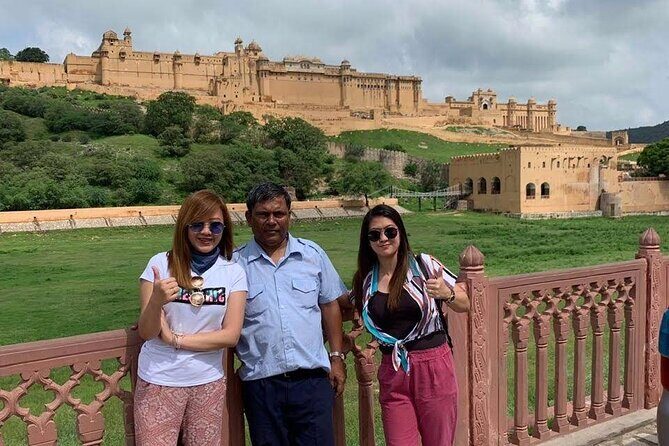
Day 1 is straightforward: you stay in a hotel in New Delhi for a long block of time. The plan doesn’t list a paid admission stop here, so this day reads as your “arrive, reset, and get oriented” portion.
That matters more than it sounds. Landing in India after a flight (or even a long train ride) can knock you off balance. A hotel block gives you time to handle laundry, exchange cash, and buy water before you start the monument sprint.
If you’re the type who likes to start sightseeing immediately, this day may feel slow. But it’s also the day that helps you enjoy Day 2 instead of rushing through it like a checklist machine.
Day 2 in Delhi: Qutub Minar, Humayun’s Tomb, Red Fort, plus free sights
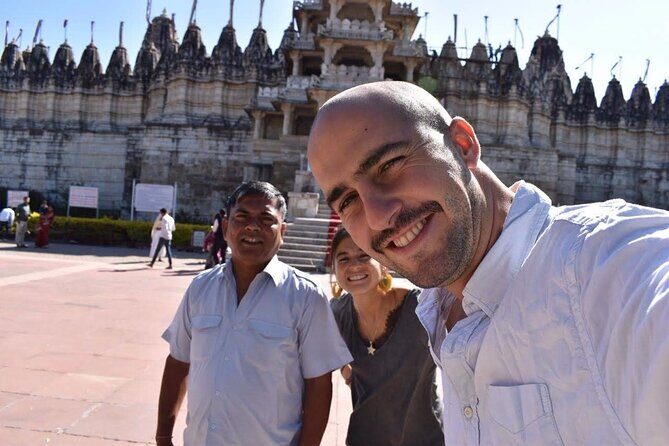
Delhi on Day 2 is a heavy day of famous Mughal and historic landmarks.
Qutub Minar is first, and it includes an English-speaking guide. The listed visit time is short (about 30 minutes), and admission is noted as not included. This is one of those stops where a guide helps you spot what matters—how the monument fits into Delhi’s early history and why it became such a signature landmark.
Next comes Humayun’s Tomb, a garden tomb and a key Mughal-era site. Again, admission is not included, and the time window is about 30 minutes. Expect a “look, learn, photograph” rhythm more than a relaxed wander.
Then you hit Red Fort (Lal Qila). The visit time is about 45 minutes, with admission not included. This one is big, so 45 minutes can feel quick unless you come in knowing what you want to see. If you love architecture and layout, ask your guide to point out what you shouldn’t miss before you start walking.
After the big-ticket heritage stops, you also get two free religious landmarks that work well for photos and a break from ticket lines:
- Lotus Temple (about 30 minutes, marked free)
- Jama Masjid (about 30 minutes, marked free)
One detail to keep in mind: this day includes several monuments, so you’ll likely move between areas in Delhi. Wear shoes that handle uneven pavement and bring water for the gaps between stops.
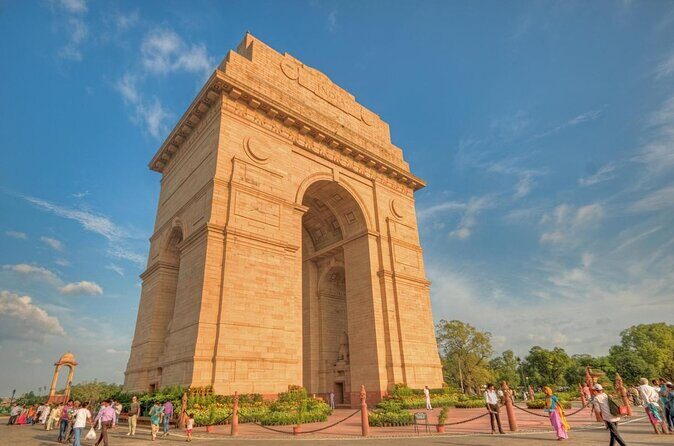
A small bonus: India Gate timing
The plan also includes India Gate along Rajpath. It’s not given a tight “tour time” block like the forts and tombs, so think of it as an easy landmark stop—good for a quick orientation moment and photos on the approach.
Day 3 in Agra: Taj Mahal, Agra Fort, and Mehtab Bagh timing
Day 3 is the “you came for this” day.
Taj Mahal is scheduled as the first Agra stop with about 2 hours allocated. Admission is not included. With this kind of time, you should be able to do the full wow moment, plus a little time to slow down and actually look at details instead of just taking one quick photo and moving on.
Next is Agra Fort, about 1 hour, also admission not included. Agra Fort is a different kind of experience than the Taj—less about marble beauty from a distance and more about fort-life context and the Mughal power center behind it.
Finally, Mehtab Bagh is listed for about 30 minutes, with admission not included. This stop can feel like a “breather” compared to the Fort and Taj rush. It’s a good place to refocus your eyes and remember how the city connects visually with the river-area views.
One practical note: because a lot here is paid and admission isn’t included, you’ll want to keep your expectations clear. If you want to minimize surprises, budget for entry fees ahead of time rather than assuming everything is covered inside that $343 number.






Day 4: Fatehpur Sikri and Chand Baori in Rajasthan’s style
Day 4 shifts you into Rajasthan territory and adds two off-the-beaten-path-feeling stops.
Fatehpur Sikri is scheduled for about 2 hours and is marked admission free. This is a major plus in the itinerary. A free admission monument with a 2-hour window gives you room to explore without feeling like you’re being herded out the door after you pay the entry fee.
Chand Baori (stepwell) is next: about 30 minutes, and admission is not included. Even in a short visit, stepwells have a strong “wow” factor because of the scale and the repeating geometry. If you’re a photo person, this one usually pays off quickly.
The trade-off on Day 4 is that travel time between sites can still take a bite out of your energy. The schedule is built for seeing a lot, so plan for a full day with breaks that are mostly “on the move” rather than long sit-down pauses.
Day 5 in Jaipur: Amer Fort, Jal Mahal, City Palace, Jantar Mantar, and Hawa Mahal
Jaipur is where the tour leans into iconic Rajasthan imagery—fort walls, palace interiors, and the sort of viewpoints you can frame like a postcard.
Amber Fort (Amer Fort) is first, about 1 hour 30 minutes. Admission is not included. For many people, this is the day they start to feel the real difference between “Delhi monuments” and “Rajasthan palaces.” If you enjoy palace design and fort structure, this time slot can be just enough to get a sense of how the place functioned.
Then comes a quick visual stop:
- Jal Mahal (about 10 minutes, marked free)
It’s short on paper, but it’s a great contrast stop. You’re moving from fort and palace themes to a scene set on Man Sagar Lake. Even with only 10 minutes, you’ll get the photo moment.
Next is City Palace of Jaipur for about 1 hour 30 minutes, with admission not included. This is where you can slow down a bit mentally. City Palace connects directly to the court history and the way Jaipur was planned and ruled. If your group likes guided context, this stop is a strong candidate to ask questions.
After that is Jantar Mantar (Jaipur) for about 30 minutes, admission not included. It’s a set of astronomical instruments, and the time given suggests a quick “what it is and why it mattered” pass rather than a long museum-style visit.
The plan also includes Hawa Mahal as a stop, but it doesn’t list a specific time or admission detail. In practice, plan for some sort of photo or exterior viewing. Hawa Mahal works best when you’re ready to notice the façade pattern and think about why it was designed that way.
Jaipur tip that saves time
Because Day 5 includes multiple major sites, keep your focus sharp. Pick what matters most to you—Amer Fort vs. City Palace vs. Jantar Mantar—and use the guide time wisely so you don’t feel like you’re just walking for the sake of walking.
Transportation, pickup, and why the private format matters
This is a private tour/activity, meaning only your group participates. That’s a big deal on a route like this, where a shared-group tour can create delays when people move at different speeds.
Pickup is offered, and the itinerary language suggests a hotel-based flow on city days (for example, pickup from the hotel with city tour guiding in Agra and similar phrasing in Jaipur). You’re not managing timing across separate tickets and meeting points for each city attraction.
In past trips associated with this operator, you’ll find specific driver and guide names listed: Nikhileshh with driver Sunda, plus drivers Jitendra, Himmat, and Arvind. You shouldn’t assume you’ll get the exact same people, but naming real staff is usually a sign the operator organizes by team members rather than by anonymous “whoever is available.”
One other practical note: the tour listing says it’s near public transportation. That’s useful if you need flexibility on a free hour, but for most of the day you’ll be using the private vehicle.
Price and logistics: where the real value comes from
The price shown is $343 for a roughly 6-day tour. On a tour like this, value comes from two places: (1) planning and routing, and (2) having a driver plus guided segments at key stops.
What can change your out-of-pocket cost is admissions. The plan repeatedly marks “admission ticket not included” for many major sites:
- Qutub Minar
- Humayun’s Tomb
- Red Fort
- Taj Mahal
- Agra Fort
- Mehtab Bagh
- Chand Baori
- Amber Fort
- City Palace
- Jantar Mantar
…and possibly Hawa Mahal (not clearly specified)
Meanwhile, a few stops are marked free, including Lotus Temple, Fatehpur Sikri, and Jal Mahal. That’s real money saved, and it also helps keep your day smoother since you’re not worrying about payment for every single stop.
If you budget for entry fees up front, the price feels more predictable. If you don’t, you might finish the trip surprised by how quickly entrance costs add up when you stack major monuments.
Also keep the minimum in mind: at least 2 people are required to book. So this tends to work best for couples or small friend groups. If you’re a solo traveler, you may need to check how the $343 price applies to a single participant because that detail isn’t spelled out.
Who this tour is best for (and who should skip it)
This setup works well for:
- People who want the core Golden Triangle sights—Delhi, Agra, and Jaipur—without DIY navigation
- Small groups who prefer a private pace
- Travelers who like having an English-speaking guide for major monuments rather than reading everything alone
It’s not a match for:
- People for whom the listing says it is not recommended for heart problem. The itinerary includes long travel days and significant walking at major sites.
If you’re traveling in summer or shoulder season, you’ll also want to pay attention to the “requires good weather” note. Weather can affect outdoor experience and may trigger date changes.
Should you book this Golden Triangle tour?
I’d book it if you want a guided, private Golden Triangle route that covers the big names in Delhi, Agra, and Jaipur while keeping planning handled. The combination of hotel flow, English-speaking guidance, and a route that includes both paid and marked-free stops (like Lotus Temple, Fatehpur Sikri, and Jal Mahal) gives you a good mix of value and variety.
Skip it or ask lots of questions if you’re trying to keep costs ultra-low, because many headline admissions are marked as not included. Also make sure the walking and long days won’t be an issue for your group.
If you want a classic first India trip with less stress and more direction, this is a solid option—especially if you can go with at least one other person.
FAQ
How long is the Golden Triangle tour?
The tour runs for about 6 days.
Where does the tour take place?
It focuses on Jaipur as the location, with the route covering Delhi and Agra as well.
What is the tour price?
The price listed is $343.
Is pickup included?
Pickup is offered, and the itinerary includes pickup from the hotel on some days.
Is this a private tour?
Yes. It is a private tour/activity, and only your group will participate.
Do I need a minimum number of people?
Yes. At least 2 people (minimum 2 Pax) are required to book.
Are admission tickets included for the monuments?
Not consistently. Many stops list admission as not included, while some are marked as free (for example Lotus Temple, Fatehpur Sikri, and Jal Mahal). A mobile ticket is included, but that doesn’t replace paid monument entry.
What time does the tour start?
The meeting points list a start time of 12:00 am.
Is it recommended for travelers with heart problems?
The listing says it is not recommended for travelers with heart problem.
What happens if weather is poor or if plans change?
The tour requires good weather. If it’s canceled due to poor weather, you’ll be offered a different date or a full refund. You can cancel up to 3 days in advance for a full refund if you cancel at least 3 full days before the experience’s start time.