REVIEW · GOLDEN TRIANGLE TOURS
Golden Triangle India
Book on Viator →Operated by Services International Ltd. · Bookable on Viator
Three cities, one well-planned sprint. This Golden Triangle route is interesting because it mixes big, iconic monuments with guided context, all in a private setup with entrance fees handled for you. I like the smart city-to-city structure and the way it keeps the focus on major sites rather than random stops. One consideration: it’s packed, and the day trips mean long driving blocks—especially the early push to Jaipur.
You start with pickup/meeting at Indira Gandhi International Airport, then settle into solid hotel bases for 5 nights: Suryaa in Delhi, Four Points by Sheraton in Jaipur, and Grand Mercure in Agra. The tour lists an English-speaking guide, and I’ve seen examples of French-language guiding as well, including with Mr. Arun; the tour manager also stays in touch during the trip. If you want first-time-friendly structure with comfort, this is a good fit.
Expect a guided walk-and-photo rhythm at each landmark, plus at least one street-level glimpse of real India (Chandni Chowk is on the route, even if you mainly see it while passing through). The final day ends with a transfer to Delhi airport for your return, so you’ll want to plan around that last travel timing since there’s no included extra night in Delhi.
In This Review
- Key Highlights You’ll Actually Feel
- The Value of a Real Golden Triangle Schedule (Not a Random Hit List)
- Day 1: Landing in Delhi and Getting Oriented Fast
- Delhi Day 2: Raj Ghat, Jama Masjid, Qutub Minar, Humayun’s Tomb, India Gate
- Day 3: The Early Drive to Jaipur (Why Morning Travel Helps)
- Jaipur Day 4: City Palace, Jantar Mantar, Hawa Mahal Area, and the Fort Stop
- Agra Day 5: Taj Mahal Plus Agra Fort in One Strong Day
- Day 6: The Smooth Exit Back to Delhi Airport
- Hotels That Anchor the Trip (Suryaa, Four Points, Grand Mercure)
- What You’re Really Buying With $1,542 for Up to 2
- Who This Private Golden Triangle Tour Suits Best
- Should You Book This Golden Triangle?
- FAQ
- Where does the Golden Triangle tour start?
- How many days is this tour?
- Which cities are included?
- What’s included in the price?
- Are hotel stays included?
- Is this a private tour?
- How far in advance can I cancel for a full refund?
Key Highlights You’ll Actually Feel
- Private group setup with an air-conditioned vehicle: you’re not sharing the ride with strangers.
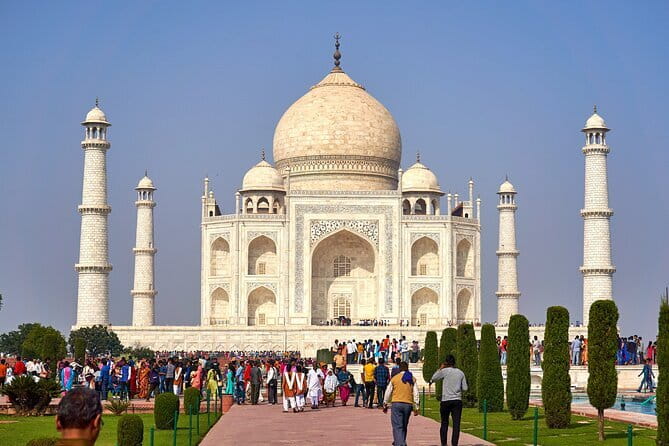
- Monument access is built in: tickets are included for stops like Jama Masjid, Qutub Minar, Humayun’s Tomb, City Palace, Jantar Mantar, Taj Mahal, and Agra Fort.
- Delhi without the guesswork: you get guided stops plus a pass through Chandni Chowk.
- Two heavyweight days in the Mughal heartland: Taj Mahal and Agra Fort on one side, and major Mughal-era Delhi sites on the other.
- Service quality can matter on long days: in feedback, an educated driver like Mr. Vipin and daily refreshment breaks came up as real wins.
The Value of a Real Golden Triangle Schedule (Not a Random Hit List)
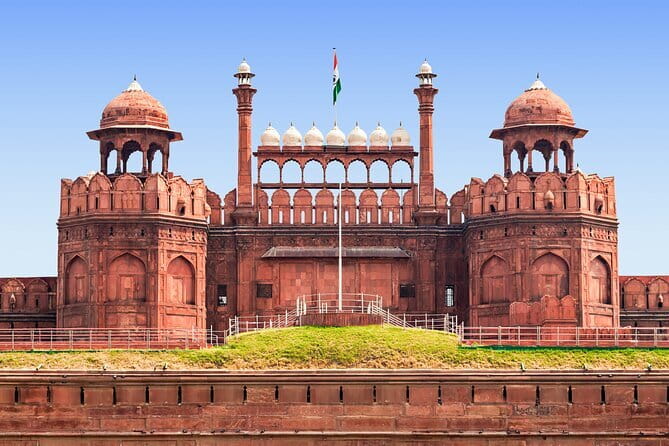
The best Golden Triangle tours do one thing well: they connect Delhi, Agra, and Jaipur into a logical arc, so you’re not just checking boxes. This plan covers the big-name sights you’d expect—then adds just enough guidance so you understand what you’re looking at while you’re standing there.
For your money, the value isn’t only the guide or the sightseeing. It’s that the cost package includes hotel accommodation for 5 nights, entrance fees for the listed monuments, and an air-conditioned vehicle for the transfers between cities and sights. That means you spend less time figuring out ticket lines and more time on the moments that actually matter.
The other big “value” factor is pacing by design. Instead of cramming every stop into every minute, you get full guided blocks in each city, with hotel recovery built in. Still, it is a 6-day experience, so you should be ready for a few long travel legs.
Day 1: Landing in Delhi and Getting Oriented Fast
On arrival in Delhi, you’re met by a representative and transferred to your hotel. That matters in India, where airports and traffic can turn a smooth arrival into a stressful one—having someone waiting for you reduces that friction immediately.
Your first night sets the base for your sightseeing. After you check in, you’ll have the energy to handle Day 2, which is where Delhi stacks up the major monuments.
Also note the tour start time: the meeting point is Indira Gandhi International Airport at 9:00 am. If you’re landing with a tight schedule, plan to arrive early enough to make the start comfortable.
Delhi Day 2: Raj Ghat, Jama Masjid, Qutub Minar, Humayun’s Tomb, India Gate
Delhi is the “context” city in the Golden Triangle, and Day 2 leans hard into that. The route moves from modern national memory to Mughal architecture to UNESCO-listed landmarks, then finishes with a landmark war memorial.
Start at Raj Ghat
You visit Raj Ghat, the cremation memorial of Mahatma Gandhi. It’s one of those places where the site itself does the explaining—quiet, reflective, and emotionally powerful for many Indians. For you as a visitor, it’s a fast way to understand why this country’s story isn’t only about palaces and forts.
A pass through Chandni Chowk
Next you pass by Chandni Chowk, a famous, busy market area. Even when you’re not doing a deep shopping walk, it’s a useful stop because it puts you in the middle of everyday Delhi life—sound, movement, and local energy.
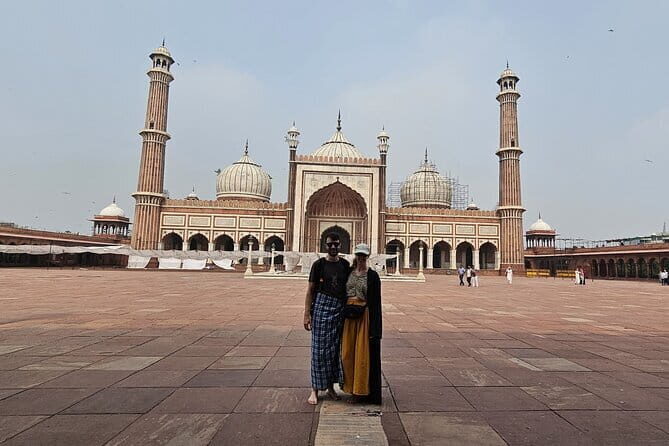
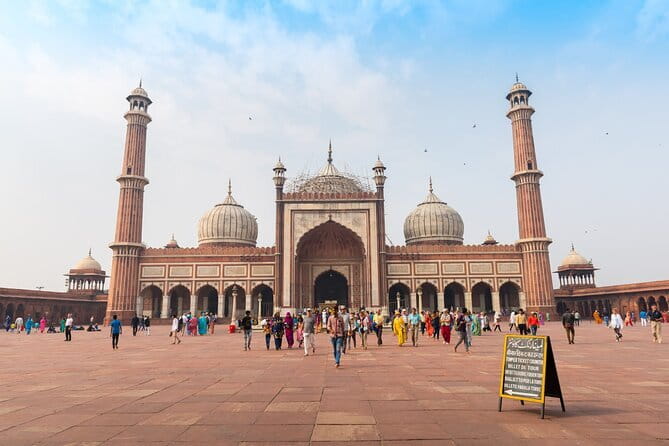
Jama Masjid
You then visit Jama Masjid, one of India’s largest mosques, built by Shah Jahan. This is the kind of stop where size and symmetry hit you right away, and the included guided time (around 45 minutes) is enough to get your bearings without rushing.
Qutub Minar
Qutub Minar follows, and it’s a major one: a UNESCO World Heritage Site and described as India’s largest minaret. The site is also surrounded by activity, so it’s not a sterile monument stop—you’ll feel like you’re seeing the landmark as part of the city, not as a postcard.
Humayun’s Tomb
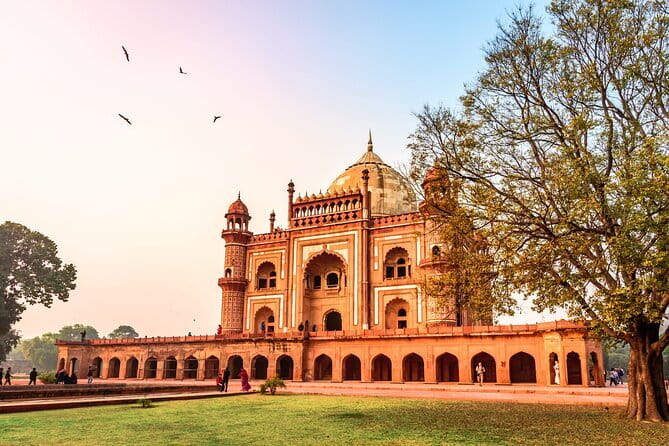
Then comes Humayun’s Tomb, another UNESCO site. This stop tends to land well because it’s both historical and visually peaceful, with space to slow down after the busier parts of the day.
India Gate and government-area passes
Later you visit India Gate, a war memorial and a strong symbol of national pride. Between stops, you also pass major government buildings like Parliament House and President’s House, which helps connect the sightseeing to the modern capital.
Lakshmi Narayan Temple
You finish Day 2 at Lakshmi Narayan Temple, dedicated to Goddess Lakshmi and Lord Narayan. It’s a good change of pace after the Islamic and Mughal architecture earlier in the day—different style, different energy, same city.
One practical note: This is a long day of moving between sites. If you’re sensitive to walking or heat, build in slow-down moments during breaks, even if you can’t extend the schedule.
Day 3: The Early Drive to Jaipur (Why Morning Travel Helps)
Day 3 starts with an early morning drive to Jaipur. Jaipur is described as originating about 260 years back and being founded by Maharaja Jai Singh, named for the king. That background matters because once you reach the forts and palaces, you’ll understand why the city was planned the way it was.
Morning driving can be a quiet win. You’re more likely to feel fresh for arrival, and you avoid losing half the day to light and traffic surprises. The itinerary doesn’t specify the exact drive duration, but the “early morning” cue tells you to treat this as a get-up-and-go day.
Once you reach Jaipur, you’ll have a new city base for the next two sightseeing blocks.
Jaipur Day 4: City Palace, Jantar Mantar, Hawa Mahal Area, and the Fort Stop
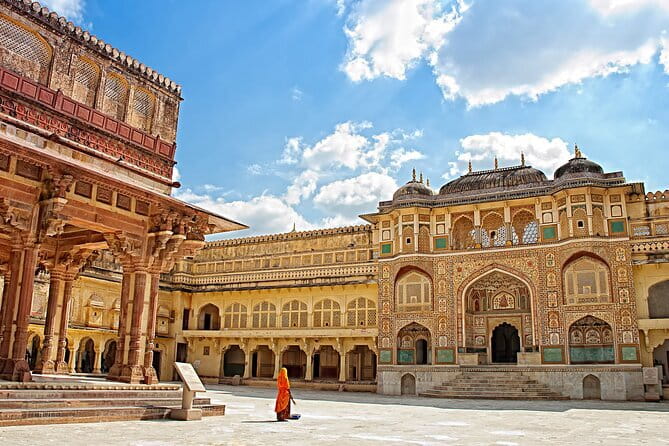
Jaipur is where the Golden Triangle becomes more dramatic. Day 4 mixes royal residence, scientific observatory, and iconic palace architecture in a way that makes the city feel intentional.
City Palace of Jaipur
You visit City Palace, a royal palace complex described as having seven stories and combining multiple architectural influences (Mughal, Rajput, and European). This is one of those places where you can look up and see how the styles change across the same complex. With about 45 minutes, you’ll have enough time to wander key areas without treating it like a full museum day.
Jantar Mantar
Next is Jantar Mantar, the observatory. The attraction here isn’t just the structures—it’s the fact that it’s an active place of measurement and calculation concepts, attracting mathematicians and astronomers. If you like seeing how people used design to track the sky, this stop delivers.
Hawa Mahal drive-past
You drive past Hawa Mahal, famous for its distinctive facade. You don’t get the full interior visit listed here, so treat this as a photo-and-first-impressions moment. Even so, seeing it from the road gives you a feel for why it’s such a recognizable symbol of Jaipur.
Later visit to a fort
The day also includes a fort visit later. Since the specific fort name isn’t provided in your itinerary details, I can’t promise which one you’ll see—but you should still expect a classic Jaipur fort experience: viewpoints, stonework, and a feeling of stepping into the city’s power story.
How to enjoy Day 4: Jaipur is visual. Wear comfortable shoes and plan to look around—not just forward. The best photos tend to come from turning your head and noticing how different buildings relate to each other.
Agra Day 5: Taj Mahal Plus Agra Fort in One Strong Day
Agra is the “wow” day, and this itinerary builds that around two monuments that complement each other.
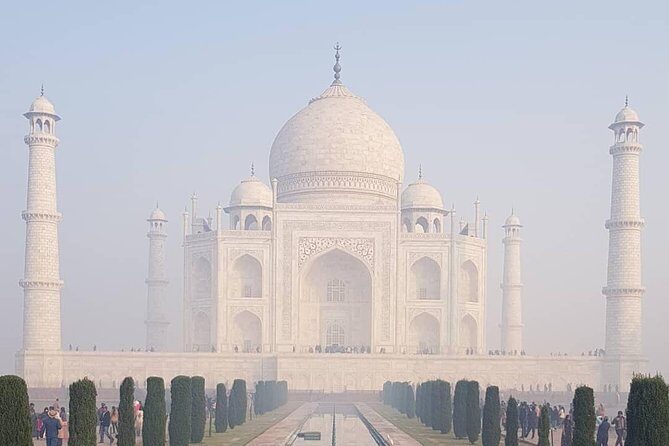
Taj Mahal
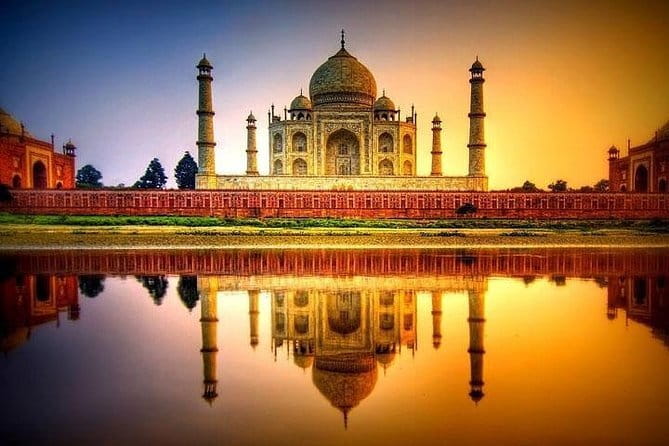
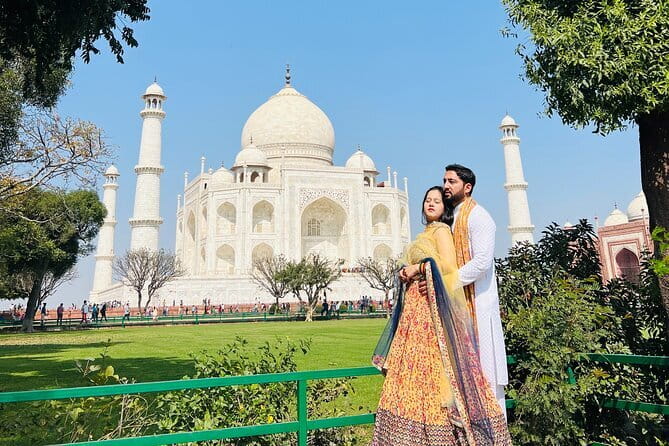
You visit Taj Mahal for about two hours. It’s described as built in white marble by Mughal Emperor Shah Jahan on the banks of the Yamuna River. This is your main set-piece moment in the whole trip, and the included entrance time gives you room to look carefully rather than racing through.
Tip for your enjoyment: take your time at the edges as well as the center views. Taj Mahal is famous for the overall picture, but the details are what keep it interesting when you step back from the crowd energy.
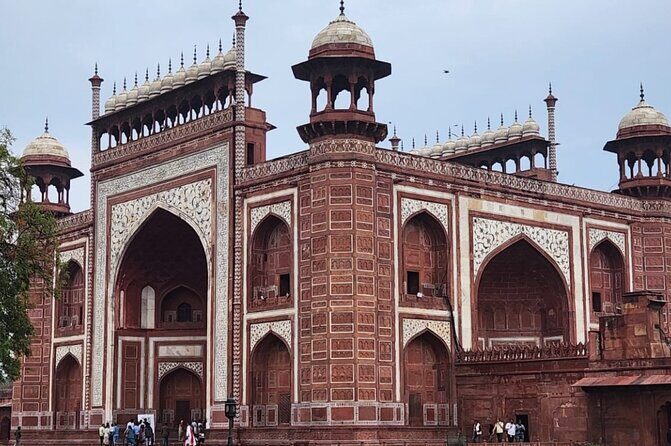
Agra Fort
Then you visit Agra Fort, a UNESCO World Heritage Site and described as built in the 16th century by Shah Jehan. The visit time is about one hour, which is short but reasonable if you focus on the major sections and the fort’s architectural shape. It’s a fitting companion to the Taj because it shows another side of imperial power—less romantic, more fortress-like.
If you like your monuments with different moods, Day 5 delivers: one heavenly masterpiece, one fortified stronghold.
Day 6: The Smooth Exit Back to Delhi Airport
Day 6 is straightforward. You’ll be transferred from Agra to Delhi airport in time for your return flight, and the itinerary notes that many departures leave after midnight, which is why there’s no included lodging in Delhi on the final night.
This is the main “schedule reality” to consider before you book: your last day is about airport timing, not sightseeing. If you want extra buffer time after your tour ends, consider planning a little flexibility in your flight booking.
Hotels That Anchor the Trip (Suryaa, Four Points, Grand Mercure)
Hotel choice can make or break a short trip like this one, and here you get a clear set of named properties in each city.
- Delhi: Suryaa
- Jaipur: Four Points by Sheraton
- Agra: Grand Mercure
You get 5 nights of hotel accommodation total. That matters because the itinerary spends most days on sightseeing blocks. Having a reliable base means you can reset each night—shower, stretch, pack for the next day, and get a proper breakfast when it’s included.
Breakfast is listed as included for 4 mornings. That’s not every morning, so plan for at least one breakfast outside the included coverage if your travel days don’t align perfectly with the included dates.
What You’re Really Buying With $1,542 for Up to 2
The price is listed as $1,542.00 per group (up to 2). Since it’s a private tour, that cost isn’t just “a guide”—it’s the whole package: transport in an air-conditioned vehicle, English-speaking guidance, hotel stays, and entrance fees for the monuments on the plan.
For value, I like that the biggest-ticket items are already included:
- Entrance fees at the monuments you visit
- Hotel accommodation for 5 nights
- All fees and taxes handled in the package
- English-speaking guide for guided time at the sites
Where you need to think ahead is what’s not included: anything not listed in the inclusions. That usually means meals beyond included breakfasts, drinks, and any optional extras you might want during free time.
Given the number of landmark visits in a tight window, this can be a good deal if you’re traveling as a couple (up to 2). If you’re traveling with a larger group, you’ll want to confirm how pricing scales, since the listed price is per group.
Who This Private Golden Triangle Tour Suits Best
This tour fits best if you want:
- a private experience rather than a large group
- a guided itinerary that hits key monuments in Delhi, Agra, and Jaipur
- comfortable day-to-day logistics, including an air-conditioned vehicle and pickup/transfer support
- a short trip that still covers the core “Golden Triangle” sights
It may not be ideal if you want lots of free time in each city or you hate tight schedules. Day 2 alone includes multiple major stops, then you add city transfers and another full packed sightseeing day.
You’ll also want moderate physical fitness. The plan involves visiting major sites and walking through them, with enough movement between locations to notice it in your legs by the end of Day 2 and Day 4.
Should You Book This Golden Triangle?
If you’re aiming for an organized first trip to India’s top triangle cities, I’d say yes—with one condition: you’re okay with a packed schedule and a lot of guided movement. The included entrance fees, hotel base in each city, and air-conditioned private transport make it easier to enjoy the sights without turning your trip into logistics homework.
I also like that the itinerary isn’t just “drive past and go.” It gives you real stops at major landmarks: Raj Ghat, Jama Masjid, Qutub Minar, Humayun’s Tomb, City Palace, Jantar Mantar, Taj Mahal, and Agra Fort. The added examples of strong on-the-ground service—like an educated driver such as Mr. Vipin and a tour manager like Siddant/Siddhant Maheshwari credited for going above and beyond in coordination—suggest the operator understands the difference between a plan and a smooth day.
If you want a calmer pace with more independent wandering, you might prefer a longer trip. But for 6 days, this is a solid, first-timer-friendly version of the Golden Triangle.
FAQ
Where does the Golden Triangle tour start?
The meeting point is Indira Gandhi International Airport, New Delhi (110037), with a listed start time of 9:00 am.
How many days is this tour?
The duration is 6 days (approximately).
Which cities are included?
The tour covers Delhi, Jaipur, and Agra.
What’s included in the price?
Included items are an air-conditioned vehicle, all fees and taxes, an English-speaking guide, entrance fees at the monuments per the itinerary, hotel accommodation, and breakfast (4).
Are hotel stays included?
Yes. You receive 5 nights of hotel accommodation, using Suryaa in Delhi, Four Points by Sheraton in Jaipur, and Grand Mercure in Agra.
Is this a private tour?
Yes. It’s listed as private, so only your group participates.
How far in advance can I cancel for a full refund?
You can cancel up to 6 days in advance for a full refund (at least 6 full days before the experience’s start time).