REVIEW · AGRA
From Delhi: Taj Mahal & Agra Fort Tour with Transfers
Book on GetYourGuide →Operated by Taj Imperial Guide · Bookable on GetYourGuide
Half a day, two icons, zero stress. This tour is built around time-saving skip-the-line access and a private air-conditioned car, so you spend more moments on the monuments and less time stuck in logistics.
I love the focus on sunrise Taj Mahal viewing with a real guide telling you what you’re looking at, not just repeating postcard facts. I also like the photo help you get, with guides such as Mr. Arif working as a kind, practical photographer so you can actually enjoy the sites.
One consideration: the schedule is tightly time-boxed, so you’ll need to be ready for an early start and quick transitions between stops.
In This Review
- Key highlights you’ll feel right away
- A smart half-day route from Delhi or Agra
- Getting there: private AC car transfers that keep the day calm
- Taj Mahal at sunrise: why the guide changes everything
- After the Taj: what happens between monuments
- Marble inlay demonstration: the Taj you can understand by touch (almost)
- Agra Fort: quick, guided, and worth the short time
- How long it takes and what the pace feels like
- Price and value: is $10 a fair deal for all this?
- Languages and comfort details that make a difference
- Practical tips to get the most out of your day
- Who this tour suits best
- Should you book this Taj Mahal & Agra Fort tour?
Key highlights you’ll feel right away

- Pre-booked entry = skip the ticket line and faster monument time
- Private AC transfers from Noida, Delhi, Gurugram, Haryana, or Agra
- Taj Mahal at sunrise with guided storytelling (about 3 hours on site)
- Agra Fort guided visit plus shopping time (about 1 hour)
- Marble inlay work demonstration connected to the craftsmen’s descendants
- Photo support from your guide, reported as especially helpful (Mr. Arif noted)
A smart half-day route from Delhi or Agra

If you’re short on time but still want the classic Agra combo, this works because it’s designed to protect your attention. You’re not trying to conquer everything by yourself while negotiating tickets and transport on the fly.
What makes it feel efficient is the combination of a driver who handles the car logistics and a guide who handles the meaning. That matters at both the Taj Mahal and Agra Fort, because the architecture is impressive, but it gets way better once someone explains why the details exist.
You also get the option of a pickup from several places, including Noida, Delhi, Gurugram, Haryana, or Agra. That’s a real advantage when your hotel is far from the main departure points.
You can also read our reviews of more tours and experiences in Agra.



Getting there: private AC car transfers that keep the day calm

The tour includes pickup and drop from your selected area, and the car is air-conditioned. That might sound like a basic comfort thing, but in Agra it’s the difference between arriving fresh enough to look closely and arriving fried and blinking at marble.
You’ll typically meet your driver first, then the guide joins you so you can head straight to the monuments. The flow is simple: less waiting around, more time for the actual sights.
Timing can vary based on your pickup location and the day’s traffic. So if you’re sensitive to early starts, choose your pickup point carefully and be ready for a more structured schedule.
Taj Mahal at sunrise: why the guide changes everything
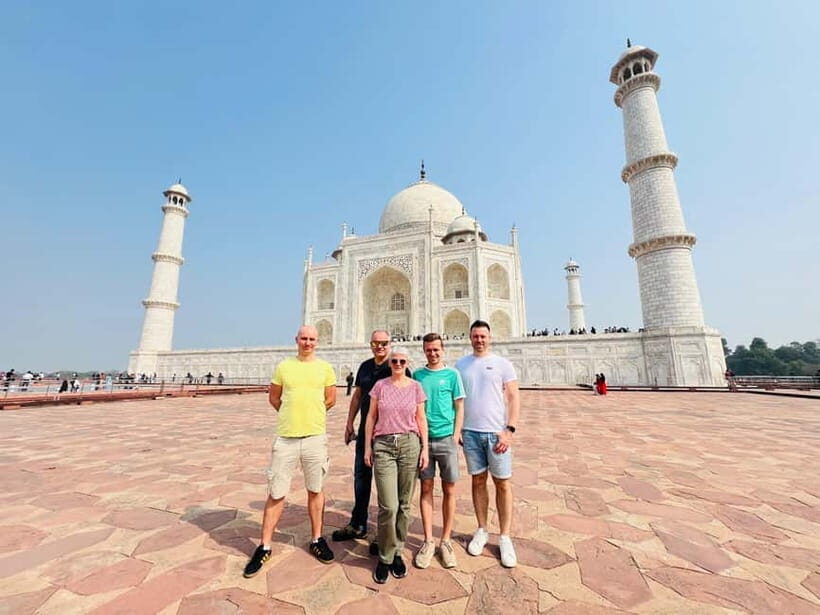
This is the centerpiece: Taj Mahal. You’ll have a photo stop and then a guided visit and sightseeing session, with the plan including sunrise as part of the experience (about 3 hours total at the monument).
At sunrise, the Taj Mahal tends to look extra crisp and the light is kinder for photos. But the real value here is that you’re not walking around guessing what you’re seeing. Your guide shares stories tied to the Mughal era and the rulers behind the monument—so the building doesn’t stay stuck as a famous photo.
Here’s what you should pay attention to when your guide points things out:
- The way the structure’s proportions create balance as the light changes
- The significance of key design choices that connect to the Mughal world view
- Details you might otherwise miss when you’re focused only on taking a picture
One detail worth calling out from the experience: the guide will help with photos. Mr. Arif, for example, is mentioned as being a nice, kind photographer who knows where the best angles are. If you’d rather spend your energy watching the site instead of constantly repositioning your camera, you’ll appreciate this.
After the Taj: what happens between monuments
Once the Taj visit is done, the plan moves you toward the next part of the day. There’s a food break built in: breakfast is noted, and there’s a lunch window of about 45 minutes if needed.
I like this structure because it reduces the common problem on day trips: you get so absorbed at the first monument that you either skip meals or end up paying too much at random stops with limited time. Having a scheduled break makes the day feel more human.
After that, you’ll head to an additional cultural stop tied to the Taj Mahal’s craft heritage: a marble inlay work demonstration.
Marble inlay demonstration: the Taj you can understand by touch (almost)
One of the best parts of this tour is the inlay demonstration. It’s not just a quick sales pitch type of stop—it’s specifically described as connected to the descendants of the workers who built the Taj Mahal. That’s important because you’re seeing continuity, not a dead craft turned into a souvenir shop only.
In practical terms, what you’ll get is:
- An explanation of the technique behind marble inlay work
- The chance to observe the craftsmanship approach in person
- A historical connection that makes Taj Mahal details feel less like decorative fluff
Even if you don’t plan to buy anything, watching how the work is done helps you look at the Taj with better instincts. You start to notice patterns, precision, and the labor that goes into what looks effortless from a distance.
And if you do want a keepsake, you’ll have time during the day for shopping later at Agra Fort, so this isn’t the only opportunity.






Agra Fort: quick, guided, and worth the short time
Agra Fort is included right after the Taj segment. Your visit here includes guided sightseeing and about an hour that also leaves room for shopping.
The fort works best when you view it as more than a fortress. It’s tied to the Mughal era and the political reality of the time—who held power, where they controlled movement, and how the space was used. A good guide helps you connect the stones to the stories, instead of treating it like a second set of random walls.
The time window is shorter than Taj Mahal, so you won’t be doing a slow, stand-around-every-corner exploration. That’s not a flaw here—it’s part of why the whole tour stays compact. You get a guided hit with enough time for meaningful viewing, plus a little free time for browsing.
If shopping matters to you, this is where you’ll likely feel the most freedom. If you don’t like shopping stops, just treat it as a chance to step inside a market area and then come back to the sights.
How long it takes and what the pace feels like
The duration is listed as 5 to 12 hours, depending on the starting times and your pickup/drop route. In real-life terms, that means your experience can range from tight half-day execution to a more extended outing, especially if you’re starting farther away or aligning with sunrise.
Since Taj Mahal at sunrise is about 3 hours on its own, you’re basically building the day around that. Then Agra Fort adds about an hour, with food breaks and the inlay demonstration filling the gaps.
So the pace is purposeful:
- Taj Mahal first (the main event)
- Fort second (a guided highlight with time to browse)
- Inlay demonstration used as a meaningful bridge between monuments
If you want a slow travel day with lots of wandering, this isn’t the style. If you want efficiency without feeling rushed inside the monuments, it’s a strong fit.
Price and value: is $10 a fair deal for all this?
The price shown is very low on paper: about $10 per person. That’s the part that makes you pause and ask what’s actually included.
Here’s what you’re getting that drives value:
- A private air-conditioned car with pickup and drop
- An experienced guide for the monument sections
- Pre-booked skip-the-line tickets
- Entry fees for Taj Mahal mausoleum and Agra Fort, but only if you select the relevant option
- A marble inlay demonstration
- Support for photos (your guide taking pictures and suggesting good spots)
- All tolls, parking fees, and taxes
The key detail is the entry fee options. The tour indicates Taj Mahal mausoleum entry fee and Agra Fort entry fee are included if you choose the correct option. If you don’t select those, you might pay entry separately later, so check that before you lock it in.
Even with that note, the combination of car + guide + skip-the-line + two major sights is where the value comes from. Without this kind of package, you’d be juggling transport, tickets, and guide time separately, which usually costs more and wastes time.
Languages and comfort details that make a difference
You can request or expect a live guide in multiple languages: English, French, Spanish, Chinese, and Hindi. That matters because with sites like Taj Mahal and Agra Fort, clarity is what turns your photos into understanding.
The tour is also described as wheelchair accessible. And group size is flexible, with private or small groups available. Small-group formats tend to feel more relaxed, but the big win here is that you’re not forced into a huge crowd pace inside the monuments.
Practical tips to get the most out of your day
Here’s how I’d plan to enjoy this route without frustration:
- If sunrise is part of your schedule, treat it like sunrise. Be ready early, not late.
- Wear shoes you can stand in for guided walks. The monuments demand your feet even when time slots are short.
- Bring a camera or phone you can operate fast. With photo help from the guide, you’ll still want to take your own shots.
- If you’re sensitive to heat later in the morning, take advantage of the fact that you’ll have an AC car between stops.
- For the inlay demonstration and Fort shopping areas, go in with a mindset of learning first. If purchases happen, great. If not, you still gain context.
One small but useful mindset: think of your guide as a translator for what you’re seeing. If you ask a couple questions during the Taj segment, the rest of the day becomes easier to interpret.
Who this tour suits best
This works best if:
- You want Taj Mahal + Agra Fort in one day without juggling tickets and transport
- You like guided explanations tied to Mughal-era stories
- You prefer an efficient route that still includes meaningful extras like the inlay demonstration
- You’d benefit from photo guidance rather than hunting for angles alone
It may not be ideal if you want lots of free time, slow wandering, and long breaks between stops. This tour is built for structured viewing and quick transitions.
Also, if your main goal is only the Taj and you don’t care about the fort or the craft stop, you might feel the schedule is more than you need.
Should you book this Taj Mahal & Agra Fort tour?
If you’re visiting Agra for a short stretch and want a day that feels guided, comfortable, and efficiently planned, I’d say yes—especially because skip-the-line entry and pre-arranged transfers remove two of the biggest sources of wasted time.
Before you book, do two quick checks:
- Make sure you select the options that match your entry expectations for Taj Mahal mausoleum and Agra Fort.
- Decide whether sunrise timing is genuinely workable for you. If early starts feel painful, choose the time window that best fits your energy.
If those points align, this is a strong value way to see two landmark monuments plus a craft experience that helps the Taj Mahal make sense beyond a single photo.