REVIEW · NEW DELHI
5 Days Golden Triangle Tour. Delhi-Agra-Jaipur-Delhi
Book on Viator →Operated by INDIA through my eyes · Bookable on Viator
Golden Triangle, done at a human pace. This 5-day route strings together India’s big-name sights with a private, air-conditioned car and a city tour guide, so you’re not stuck figuring things out day after day. I like that the plan is structured, but you’re still able to go at your own rhythm instead of sprinting from one photo stop to the next.
Two things I really like: first, the mix of major monuments with “between” moments—like a rickshaw glide through Chandni Chowk and quiet stops such as Raj Ghat. Second, the itinerary is built around the real practical win for North India: efficiency without chaos, with a guide who can handle logistics and help you stay comfortable (including health and safety care mentioned in guide feedback).
One consideration: monument tickets are not included, even though several stops are free. Also, the details on accommodation are a bit mixed (the overview talks about 3-star stays with breakfast, while the pricing section lists accommodation as not included), so you’ll want to confirm exactly what you’re paying for.
In This Review
- Key things I’d bank on before you book
- The $300 Question: what you’re really paying for
- Day 1 in Delhi: Jama Masjid, Chandni Chowk by rickshaw, and Humayun’s Tomb
- Day 2: an evening at Birla Mandir (and why timing matters)
- Day 3 in Jaipur: Amber Palace to City Palace, plus Jantar Mantar
- Day 4: Chand Baori’s 3,500 steps and Agra Fort’s UNESCO stamp
- Day 5: sunrise Taj Mahal and making the most of the final morning
- The small extras that make this feel smooth
- Who should book this Golden Triangle tour?
- Should you book? My straightforward take
- FAQ
- What is the duration of the 5 Days Golden Triangle Tour?
- What does the price include for $300 per person?
- Are monument entrance tickets included?
- Do we get pickup and private transportation?
- Is accommodation included?
- What are some free stops during the tour?
- What’s the best time to visit the Taj Mahal?
- What happens if the tour is canceled due to weather?
Key things I’d bank on before you book
- Private air-conditioned vehicle means less waiting and less stress in traffic-heavy routes
- Free-entry anchors like Jama Masjid courtyard, Raj Ghat, Lotus Temple, and Birla Mandir help you manage costs
- Sunrise Taj Mahal timing is the smart move, especially for lighter crowds and softer light
- Chand Baori stepwell gives you a wow moment that isn’t as obvious as the big palaces
- Your guide matters: named guides like Vishal and Prashant are praised for safety, smooth coordination, and even photo support at the Taj
- Not all monuments are ticket-free, so budget for paid entrances on top of the $300 price
The $300 Question: what you’re really paying for
At $300 per person for about 5 days, this tour aims for value through the big items you’d otherwise have to juggle yourself: transport, coordination, and guided context. You’re getting pickup offered, a private car with A/C, city tour guide, packaged drinking water, and all fees and taxes tied to the included services.
What’s not baked into the price is the biggest wild card: monument entrance tickets. Many of the most famous stops are listed as not included (Humayun’s Tomb, Qutub Minar, Amber Palace, City Palace, Jantar Mantar, Agra Fort, and the Taj Mahal). That doesn’t make the tour bad—it just means you should treat the $300 as the base for logistics, then plan a separate budget for entrances.
Also, double-check accommodation. The overview says 3-star hotels with breakfast, but the list of “not included” includes accommodation. If you want a true “sleep included” trip, confirm before you pay.
This is best for first-timers who want a “start-to-finish” plan and for people who prefer comfort over constant navigation.
You can also read our reviews of more tours and experiences in New Delhi.



Day 1 in Delhi: Jama Masjid, Chandni Chowk by rickshaw, and Humayun’s Tomb
Day 1 is classic Old Delhi energy, then it settles into calmer, iconic Mughal landmarks. You start at Jama Masjid, described as the largest mosque in India. The courtyard can hold more than 25,000 people, which gives you perspective fast: this isn’t a small stop, it’s a whole civic space.
Next comes Chandni Chowk with a rickshaw ride. This is one of those experiences where the route matters as much as the sights. You’ll get a feel for how busy Old Delhi can be, without you having to figure out how to cross streets or navigate shortcuts.
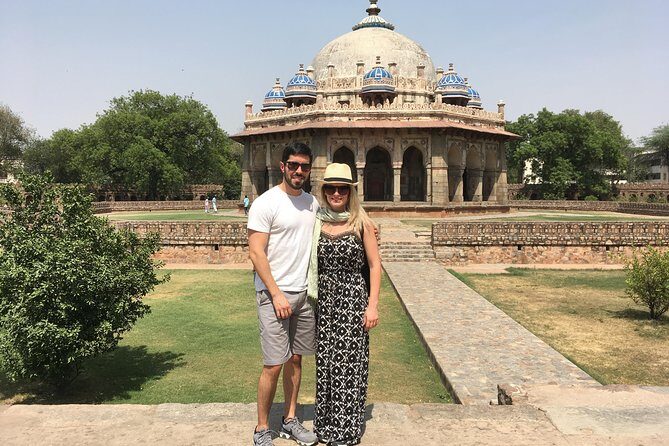
Then you hit Humayun’s Tomb, noted as the first garden-tomb on the Indian subcontinent and a UNESCO Heritage Site. The time allotment is reasonable for seeing the core layout without turning it into a checklist sprint. Admission isn’t included, so it’s a good moment to decide whether you want to pay and slow down, or skip if you’re keeping costs tight.
You round out the day with Raj Ghat (free) for a quieter, reflective stop for Mahatma Gandhi. After that, Qutub Minar appears next (ticket not included). It’s described as the tallest brick minaret in the world—so if you’re into standout monuments, this one is a natural “yes.”
Finally, you end with Lotus Temple, a Bahá’í House of Worship that’s open to all. Admission is free, and the visit gives a nice contrast to the Delhi days’ older stone and busy markets—more open, more airy, and less push-and-pull.
Possible drawback for Day 1: it’s a long day of big sights in one city. If you’re sensitive to crowds or want downtime, build in extra rest during travel between stops.
Day 2: an evening at Birla Mandir (and why timing matters)
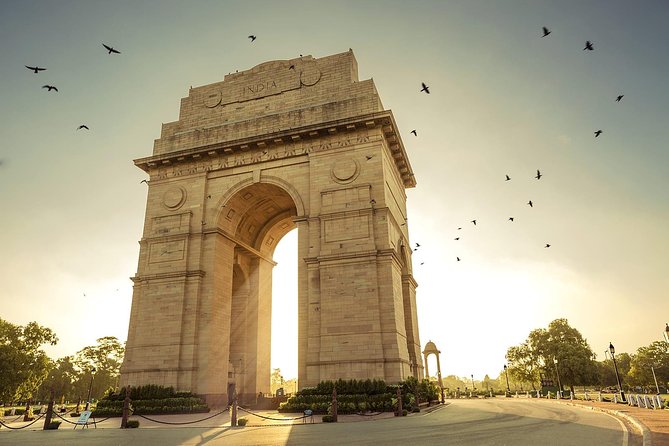
Day 2 is centered on Birla Mandir Temple in the evening. The key detail here is the option to attend an evening ceremony. The temple is dedicated to Lord Vishnu (Narayan) and his consort Lakshmi, and this timing can feel more human than showing up in the midday heat.
Admission is free, so this is one of the easier days to keep within budget while still having a meaningful stop. If your group is split between “big ticket monuments” and “temples and atmosphere,” this day tends to satisfy both.
Because the itinerary only lists this stop for the day, you should expect a more relaxed structure than Day 1. That’s not always the case on Golden Triangle trips, so I view this as a built-in breather.
Day 3 in Jaipur: Amber Palace to City Palace, plus Jantar Mantar
Jaipur Day 3 focuses on Rajput architecture and the city’s landmark complexes. You start at Amber Palace, the main tourist attraction in Jaipur, where Mughal influence shows up in the architectural style. It’s the residence of the Rajput Maharajas and their families, so you’re not just looking at buildings—you’re stepping into the scale of how rulers lived.
Amber Palace is not ticket-free, so treat it as a priority pay. The allotted time (about 1 hour 30 minutes) is enough to see more than the first courtyard and walk out with a real sense of the place.
Next is Jal Mahal, the palace in the water. You’re driving past it, with a quick 10-minute photo stop if you want one. This is a smart, low-effort add-on: you get the iconic view without losing half your day.
Then comes City Palace of Jaipur, established alongside the city by Maharaja Sawai Jai Singh II. The palace complex includes multiple buildings, courtyards, and galleries. Admission is not included, but if you want context for Jaipur beyond a single fortress, this is where you get it.
Finally, Jantar Mantar arrives. It’s described as an equinoctial sundial with a gigantic triangular gnomon, plus quadrants of a circle that relate to the Earth’s axis. If you like the science-meets-royalty angle, this stop can surprise you. If you don’t, it’s still worth a look because it’s different from the usual palace photos.
A small “picture stop” is listed as well, which suggests the day includes short roadside moments without demanding extra entry fees.
Day 4: Chand Baori’s 3,500 steps and Agra Fort’s UNESCO stamp
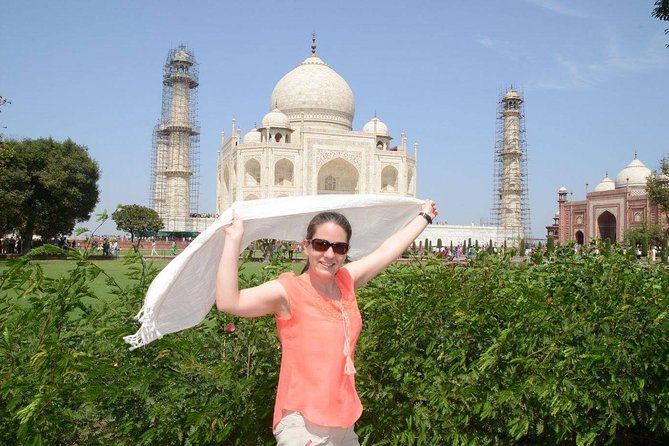
Day 4 is a change of pace: one spectacular off-the-beaten-track stop, then a major historical fort in Agra.
You begin with Chand Baori in Abhaneri. This stepwell is described as having 3,500 narrow steps over 13 stories, extending about 30 meters (100 feet) into the ground. That scale is hard to grasp until you’re there. Even with a short time window, it’s one of those places where the geometry does the talking.
Chand Baori’s admission is listed as not included. Still, if you want a photo and an “I didn’t expect this” moment, this is where the tour can earn its keep.
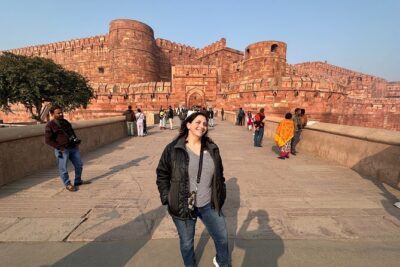
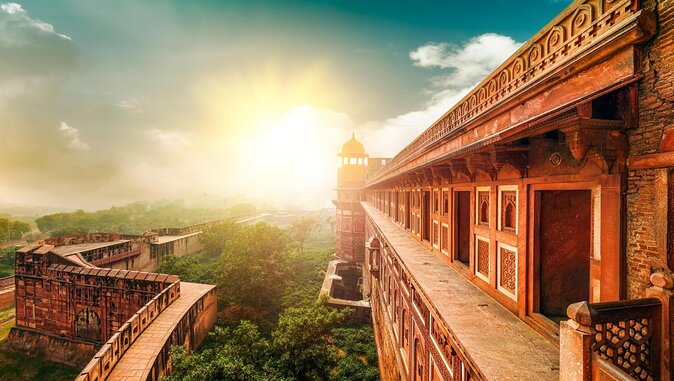
After that you go to Agra Fort, built for Mughal Emperor Akbar between 1565 and 1573. It’s also listed as UNESCO World Heritage. Admission isn’t included, but the payoff is seeing Agra’s power center from a different angle than the Taj. It helps the Taj feel like part of a larger story rather than a lone miracle on the horizon.
Possible drawback for Day 4: it’s fort-and-wow heavy. If you prefer more hands-on local life (food, neighborhoods, shopping), you may want to add side time in Agra on your own, since the provided day is mostly monuments.





Day 5: sunrise Taj Mahal and making the most of the final morning
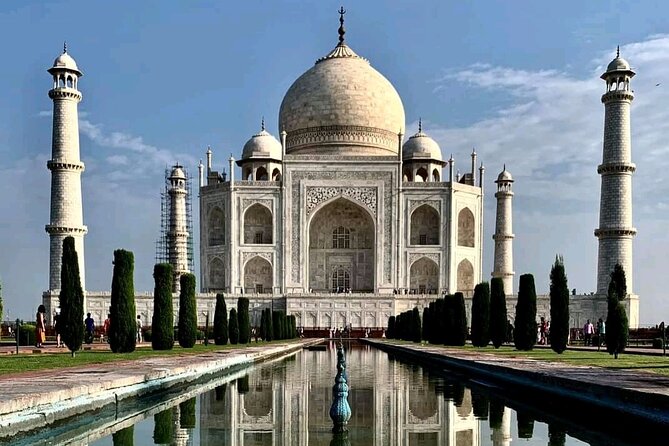
Day 5 is all about the big one: Taj Mahal. The itinerary points out that sunrise is the best time, because early light turns the dome a soft golden color and because it tends to have the least amount of crowds. That’s practical advice, not just romantic marketing.
Admission isn’t included, but the time allocation (about 2 hours) is realistic: enough time to see the front facade, absorb the symmetry, and still leave room for lingering when your brain finally catches up to what you’re seeing.
This day also benefits from the tour’s structure. You’re not trying to coordinate your own sunrise entry while learning the city. With private transport and a guide, you’re more likely to show up calm and ready.
After Taj Mahal, the plan doesn’t list extra stops, which can be a gift. You can choose whether to continue at your own pace or use the remaining time for a slow walk and a final look back.
The small extras that make this feel smooth
Some of the best perks here are the unglamorous ones that keep your trip from turning into a moving headache:
- Private transportation with A/C matters in North India’s heat swings and for long travel days.
- City guide means you’re not left guessing what you’re looking at when the monument gets crowded or confusing.
- Packaged drinking water is included, which is helpful when you’re moving between sites.
- Mobile ticket is listed, which usually cuts down on paper chaos.
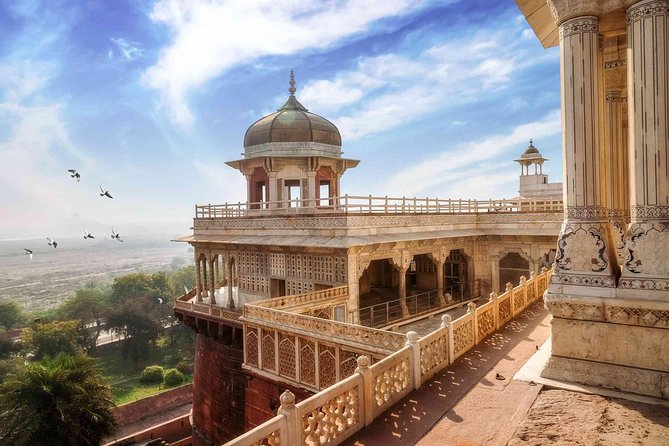
- Guides praised by name—Vishal and Prashant—show up in feedback for doing the practical work: translation, safety focus, and even organizing extra photo time at the Taj.
If you’re the type who likes your days organized but still wants room to breathe, this tour’s pace should fit.
Who should book this Golden Triangle tour?
I’d point you to this tour if you want:
- a 5-day highlight loop with private transport
- a mix of major monuments and a couple of “less expected” sights like Chand Baori
- guided context so the trip feels less like a photo scavenger hunt
I’d think twice if:
- you don’t want to pay separate entrance fees on multiple days
- you care a lot about confirming whether accommodation is included, since the written details conflict between sections
- you prefer slower travel with fewer sites per day
Should you book? My straightforward take
If you want an organized, comfortable Golden Triangle that covers Delhi, Jaipur, and Agra with the Taj at sunrise, I think this is a solid choice. The combination of A/C private car, a guide, and a schedule that mixes free stops with paid monuments gives you real control over costs and energy.
Just do one homework task first: confirm what’s included regarding hotel accommodation and breakfast. Then budget for monument tickets since many key sites are marked not included. If those two pieces are clear, this tour looks like a great way to get your bearings fast.
FAQ
What is the duration of the 5 Days Golden Triangle Tour?
It runs for approximately 5 days, covering Delhi, Agra, and Jaipur, then returning to Delhi.
What does the price include for $300 per person?
The tour includes an air-conditioned vehicle, private transportation, city tour guide, all fees and taxes, and packaged drinking water.
Are monument entrance tickets included?
No. The Taj Mahal and several other sights are listed as not included for admission tickets.
Do we get pickup and private transportation?
Yes. Pickup is offered, and you travel by private air-conditioned car.
Is accommodation included?
The overview says three-star hotels with breakfast are included, but the pricing section lists accommodation as not included. Confirm your exact package before booking.
What are some free stops during the tour?
Stops listed as free include Jama Masjid (courtyard), Raj Ghat, Lotus Temple, Birla Mandir, and the option for picture time at Jal Mahal.
What’s the best time to visit the Taj Mahal?
The tour notes that sunrise is the best time to visit the Taj Mahal, including for softer early light and generally fewer crowds.
What happens if the tour is canceled due to weather?
This experience requires good weather. If canceled due to poor weather, you’ll be offered a different date or a full refund.