REVIEW · NEW DELHI
5-Day Private Luxury Golden Triangle Tour From Delhi
Book on Viator →Bookable on Viator
This Golden Triangle route feels effortless. You’ll move through Delhi, Agra, and Jaipur with a private English-speaking guide and comfortable private transport, hitting the big UNESCO-name landmarks without spending your days figuring things out.
I especially love two things: the hotel pickup and drop-off (so you’re not wrestling with schedules and taxis), and the private guide who helps you connect what you’re seeing—tombs, forts, temples, and observatories—to what they mean. One heads-up: monument entrance fees aren’t included, so you’ll want to budget for tickets as you go, especially for the Taj Mahal.
On top of that, you get 4 nights of single or double sharing accommodations plus breakfast, and there’s bottled water while travelling. The pace is sightseeing-heavy—some stops are only 15 to 30 minutes—so you’ll get plenty of highlights, but you won’t linger forever at every photo spot.
In This Review
- Key highlights you’ll feel on the ground
- Why this 5-day private luxury Golden Triangle feels worth it
- Day 1 in Delhi: Humayun’s Tomb, Qutub Minar, Lotus Temple, Old Delhi icons
- Humayun’s Tomb: Mughal architecture with garden calm
- Qutub Minar: the tall stone minaret and Quran-carved detail
- Lotus Temple: peace-and-purity architecture that welcomes everyone
- Jama Masjid: a major Old Delhi mosque
- India Gate and Raj Ghat: New Delhi’s reflective side
- Day 1 consideration
- Day 2 in Agra: Taj Mahal, Agra Fort, Itmad-ud-Daulah, and Mehtab Bagh
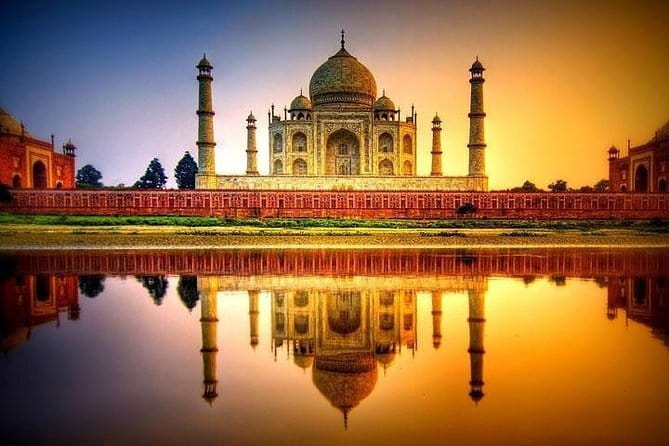
- Taj Mahal: the white marble masterpiece
- Agra Fort: Mughal grandeur in red sandstone
- Itmad-ud-Daulah: the Baby Taj and its marble inlay work
- Mehtab Bagh: a calmer Taj view across the Yamuna
- Day 2 consideration
- Day 3 near Agra: Fatehpur Sikri for an Indo-Islamic UNESCO day
- Day 4 in Jaipur: City Palace, Hawa Mahal, Jantar Mantar, and temple stops
- City Palace: royal complex with Mughal and Rajasthani mix
- Hawa Mahal: 953 jharokhas and pink sandstone drama
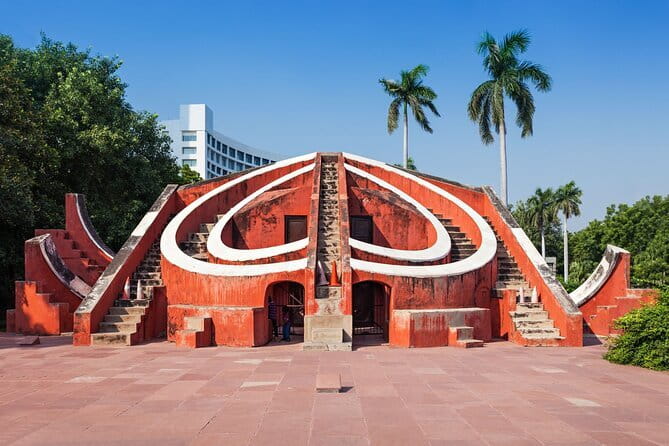
- Jantar Mantar: UNESCO astronomical observatory
- Birla Mandir and Govind Dev Ji: calm marble and devotional atmosphere
- Monkey Temple (Galtaji): Aravalli hills, springs, and kunds
- Day 5: Jaipur International Airport (Sanganeer) drop-off
- Price and value: what you get for $31.50 and what costs extra
- What’s included
- What’s not included
- The best value angle
- Who should book this luxury Golden Triangle tour
- Should you book it
- FAQ
- How long is the Golden Triangle tour from Delhi?
- Is pickup and drop-off included?
- Does the tour include an English-speaking guide?
- Are monument entrance fees included?
- Is breakfast included?
- Do you get water during the trip?
- Which sites are included in Delhi?
- Are any Delhi attractions free to enter?
- Is the Taj Mahal ticket included?
- What is the cancellation policy?
- Where does the tour end?
Key highlights you’ll feel on the ground
- Private, English-speaking guidance across Delhi, Agra, and Jaipur, so your photos come with context
- UNESCO-heavy route including Humayun’s Tomb, Taj Mahal, Agra Fort, Fatehpur Sikri, and Jantar Mantar
- Old Delhi plus New Delhi classics in one day, from Jama Masjid to India Gate and Raj Ghat
- Agra views beyond the main sights, including Mehtab Bagh for Taj Mahal sightlines
- Some stops are free, like Lotus Temple and India Gate—use that to control your entrance-fee budget
- A guide like Mr. Mohd. Riyaz can be part of the experience on certain departures, adding strong on-the-ground direction
Why this 5-day private luxury Golden Triangle feels worth it
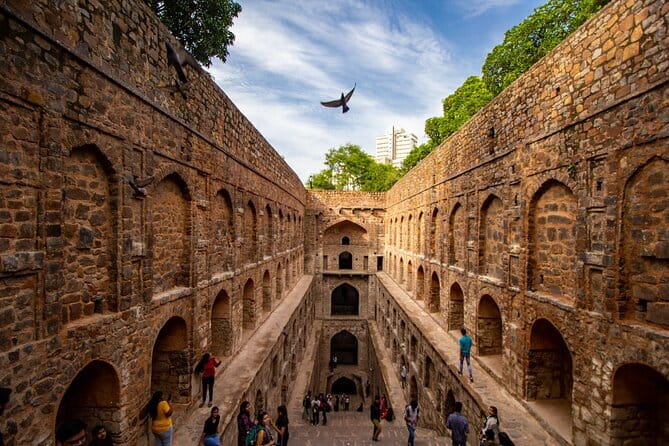
The Golden Triangle is famous for a reason. You get three cities that each show a different chapter of North India—imperial Mughal architecture, fort-and-mausoleum drama, and Jaipur’s royal-era design language. What makes this version stand out is how much it removes friction. You’re not hiring separate rides, building a day-by-day plan, or trying to translate everything on the fly.
At $31.50 per person, the biggest value driver is what’s bundled into the basic package: private guide time, hotel pickup and drop-off, private transport with toll taxes and parking covered, and 4 nights of lodging with breakfast. That’s the stuff that usually costs you the most when you plan independently.
Where you should be realistic: you’ll still pay for monument entrance fees and drinks separately. The package handles the “getting there and seeing it” part, not the ticket booth part. If you budget for that from day one, the rest feels smooth.
Also, this is a private tour for your group only. That matters in India, where group sizes and pickup windows can make or break your day. Here, your schedule is built around you.
Day 1 in Delhi: Humayun’s Tomb, Qutub Minar, Lotus Temple, Old Delhi icons
Delhi day one is a clean mix of Mughal grandeur, spiritual architecture, and iconic Old Delhi energy. The stops are spaced so you get variety without feeling like you jumped randomly between far-flung neighborhoods.
Humayun’s Tomb: Mughal architecture with garden calm
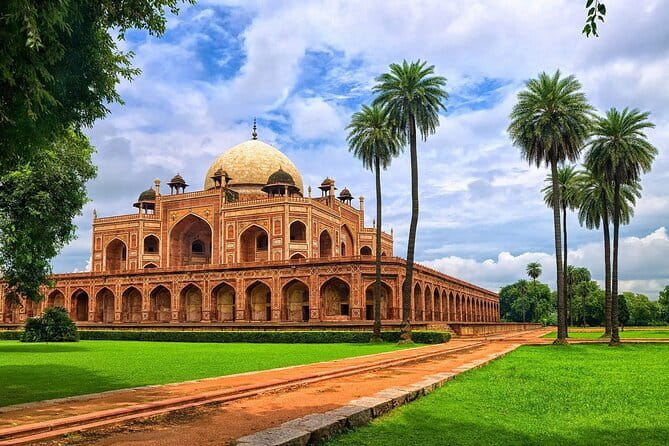
You start at Humayun’s Tomb, a UNESCO World Heritage Site known as a masterpiece of Mughal architecture, set within lush gardens. The pace is about 1 hour, which is enough time to take in the symmetry and the setting without feeling rushed.
Practical value: this is the kind of site where a guide can help you notice details you’d normally miss. Even if you’re not a hardcore architecture person, the gardens and design language help the rest of the Mughal sights click later in the trip.
Qutub Minar: the tall stone minaret and Quran-carved detail
Next is Qutub Minar, described as the tallest stone minaret in India at 72.5 meters, with intricate carvings of Quran verses. It’s about 1 hour here.
This stop is a good example of why a guide matters. You’re looking at height and carvings, but the context—built in the 12th century and why it became a landmark—is what turns it from just impressive to memorable.
Lotus Temple: peace-and-purity architecture that welcomes everyone
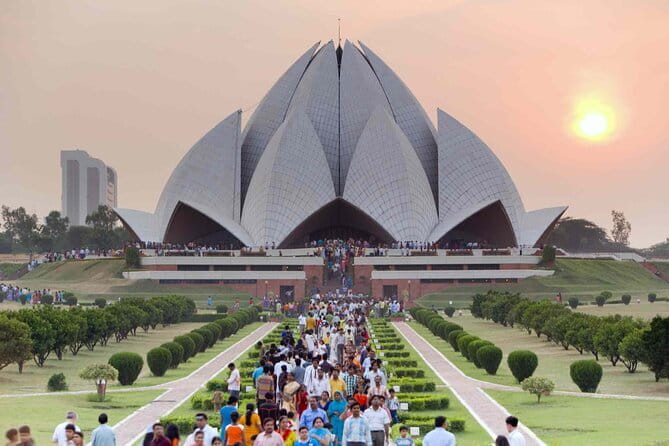
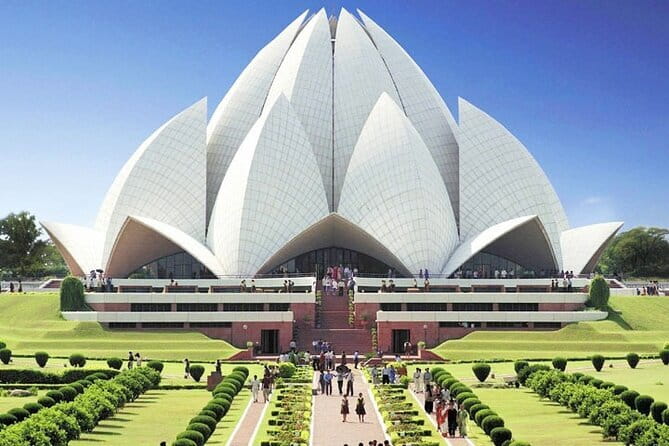
Then you shift to the Lotus Temple for about 30 minutes. It’s shaped like a blooming lotus, with a theme of peace and purity, and it’s open to people of all faiths as a Baha’i House of Worship. Admission here is free.
Why I like including this: it’s a pause from the heaviness of tombs and forts. It also breaks up your day nicely before you head into Old Delhi.
Jama Masjid: a major Old Delhi mosque
You’ll spend about 30 minutes at Jama Masjid, one of the largest mosques in India, built in 1656 by Emperor Shah Jahan. The materials stand out in the description: red sandstone and white marble.
Admission is listed as free, so this is one of those stops that gives you a lot visually without adding ticket cost. It’s also a great way to feel the “center of gravity” of Old Delhi.
India Gate and Raj Ghat: New Delhi’s reflective side
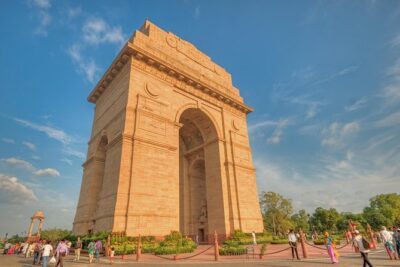
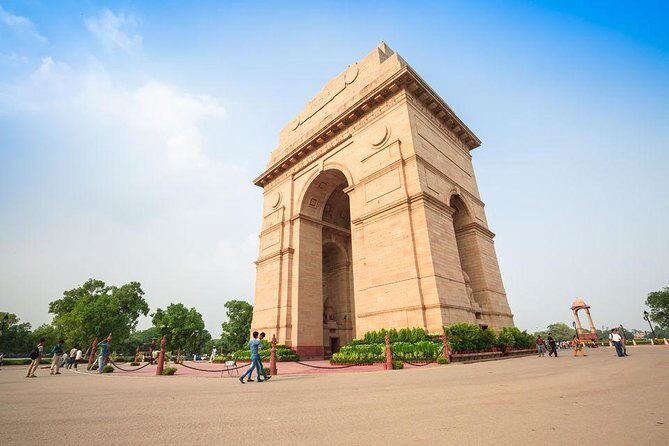
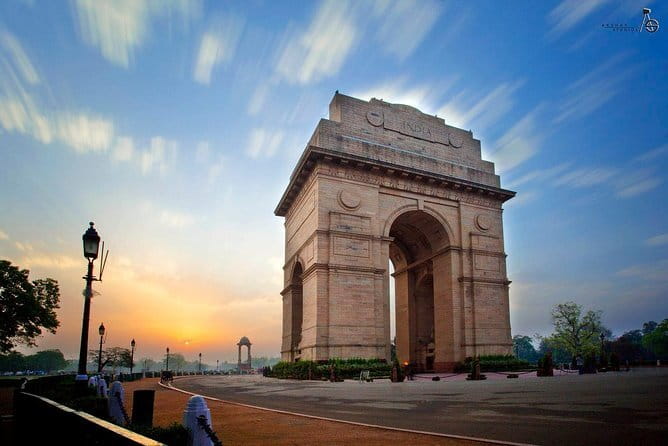
Finally, you wrap with India Gate (about 15 minutes) and Raj Ghat (about 15 minutes). India Gate is a grand war memorial designed by Sir Edwin Lutyens, built to honor Indian Army soldiers who died in World War I, with green lawns around it. Raj Ghat is a serene memorial dedicated to Mahatma Gandhi, marked by a simple black marble platform.
Both have free admission. If you want a practical strategy: use these free stops as your “budget buffer” to offset the ticket-heavy sights that come later.
Day 1 consideration
The trade-off of a packed day is that some stops are shorter. You’ll get meaningful time at each location, but if you love lingering for long photo sessions, this first day may feel like a sequence of highlights rather than a slow afternoon.
Day 2 in Agra: Taj Mahal, Agra Fort, Itmad-ud-Daulah, and Mehtab Bagh
Agra is where the Golden Triangle gets dramatic. Day two focuses on major Mughal-era architecture and mausoleums, with a photo advantage built into the route.
Taj Mahal: the white marble masterpiece
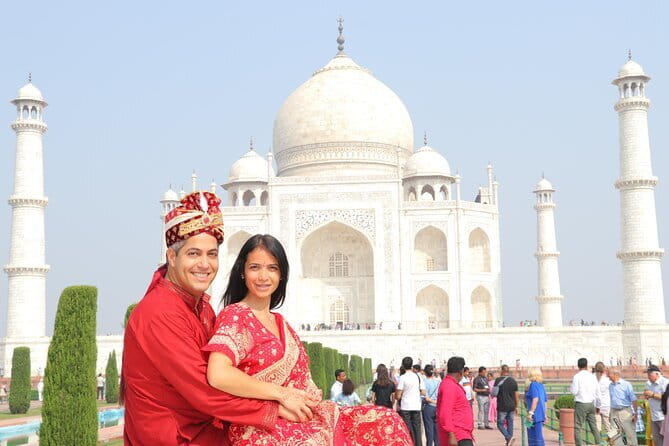
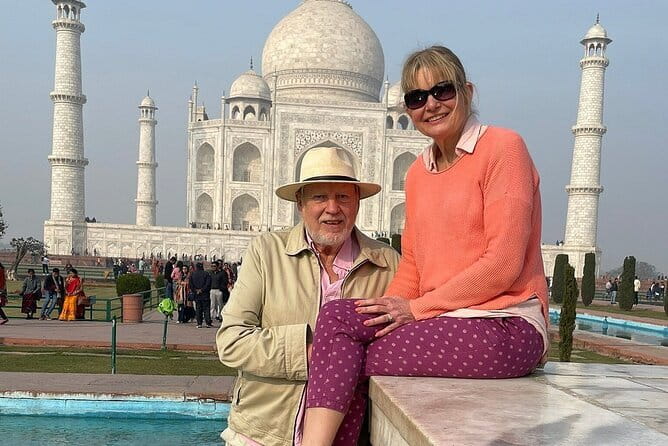
First up is the Taj Mahal, a UNESCO World Heritage Site and one of the Seven Wonders of the World. You’ll have about 45 minutes, and admission is not included.
Even within that time window, a private guide helps you understand what you’re seeing: it’s described as stunning white marble architecture, built by Emperor Shah Jahan in memory of his wife. The guide can also help you read how the design creates that iconic visual effect.
Tip for your planning mindset: don’t treat this as only a single “must-see photo.” Treat it as the centerpiece that makes the other Agra sights feel connected.
Agra Fort: Mughal grandeur in red sandstone
Next you’ll visit Agra Fort, UNESCO-listed, with about 1 hour. Admission is not included.
Agra Fort is described as a majestic red sandstone fort with Mughal grandeur and structures inside such as Jahangir Palace and the Diwan… (the rest is cut off in the description, but the point is clear: there’s more than one landmark inside). This stop works well if you like forts that explain how power was organized.
Itmad-ud-Daulah: the Baby Taj and its marble inlay work
Then comes Itmad-ud-Daulah, often called the Baby Taj. You’ll have about 30 minutes. Admission is not included.
This is a quieter counterpoint to the Taj. It’s described as a Mughal mausoleum commissioned by Empress Nur Jahan for her father, Mirza Ghiyas Beg, known for its intricate marble inlay work. If the Taj feels too overwhelming, this stop can give you more “close-up detail” satisfaction.
Mehtab Bagh: a calmer Taj view across the Yamuna
Finally, Mehtab Bagh gives you a chance to see the Taj Mahal from across the Yamuna River. It’s described as a serene garden complex with a view of the Taj Mahal and a design intended as a perfect replica of the Taj, connected to Babur’s Charbagh. You’ll get about 30 minutes here, and admission is not included.
Why this matters: not every Golden Triangle day includes a built-in “Taj from a different angle” moment. Mehtab Bagh can make your experience feel less repetitive, even though you’re still focused on the same iconic building.
Day 2 consideration
This is the ticket-heavy day: Taj Mahal, Agra Fort, Itmad-ud-Daulah, and Mehtab Bagh all list admission not included. If you only plan your budget around free Delhi stops, you’ll feel it here.
Day 3 near Agra: Fatehpur Sikri for an Indo-Islamic UNESCO day
Day three keeps things focused with Fatehpur Sikri, a UNESCO World Heritage Site near Agra. You’ll have about 1 hour, and admission is listed as free.
Fatehpur Sikri is described as a historic city built by Emperor Akbar in the 16th century, known for a blend of Indo-Islamic architecture. That blend is the hook: it’s not just one style dominating the day. You can walk away understanding how architecture evolved as empires interacted.
Since it’s a free admission stop, it’s also a smart day for budgeting. You’re getting a major UNESCO moment without stacking more entrance fees.
Day 4 in Jaipur: City Palace, Hawa Mahal, Jantar Mantar, and temple stops
Jaipur day four is the most “royal design meets spiritual stops” day. You’ll bounce between big-name monuments and smaller, more atmospheric religious sites.
City Palace: royal complex with Mughal and Rajasthani mix
Start at City Palace for about 1 hour. Admission is not included.
The description calls it a royal complex that blends Mughal and Rajasthani architecture and serves as the residence of Jaipur’s royal family. Expect ornate courtyards and grand halls, plus a mention of an iconic Peacock… feature (the description is cut off, but that’s clearly one of the standout interior elements).
If you’re the kind of person who likes to see how power lived day to day, this is where the Golden Triangle shifts from “emperor monuments” to “lived-in royal space.”
Hawa Mahal: 953 jharokhas and pink sandstone drama
Next is Hawa Mahal, the Palace of Wind, about 30 minutes. Admission is not included.
It’s described as a five-storey architectural marvel built in 1799 by Maharaja Sawai Pratap Singh, made of pink sandstone with 953 jharokhas (window-like openings). This stop is strongly visual—your camera will earn its keep.
Jantar Mantar: UNESCO astronomical observatory
Then you’ll visit Jantar Mantar for about 30 minutes. Admission is not included.
This UNESCO site is an astronomical observatory built by Maharaja Sawai Jai Singh II in the 18th century, with 19 large-scale instruments. The description mentions instruments including the w… (truncated), but the core idea stays: this is a working science space, not just a pretty landmark.
I love this stop because it adds a different angle to the trip. You go from tombs and forts into instruments that measure the sky. It makes Jaipur feel more than decorative.
Birla Mandir and Govind Dev Ji: calm marble and devotional atmosphere
After the big-ticket monuments, the route turns to temples:
- Birla Mandir Temple (about 30 minutes), a marble temple dedicated to Lord Vishnu and Goddess Lakshmi at the foot of Moti Dungri hill, with admission not included.
- Govind Dev Ji Temple (about 30 minutes) in the City Palace complex, dedicated to Lord Krishna, with admission not included. The description notes it’s known for the divine atmosphere and an idol brought from Vrindavan.
These temple stops are a nice pacing change if you want a quieter mental reset after Jaipur’s architectural spectacle.
Monkey Temple (Galtaji): Aravalli hills, springs, and kunds
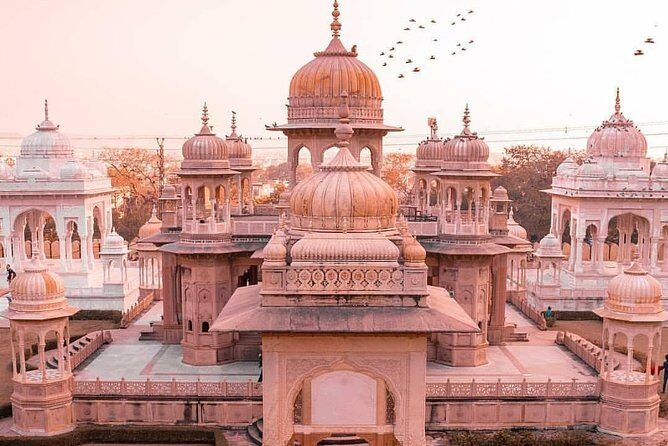
Finally, you’ll visit Monkey Temple, also known as Galtaji Temple, about 30 minutes. Admission is not included.
It’s described as a historic pilgrimage site near Jaipur in the Aravalli Hills, famous for natural springs and sacred kunds (water tanks), surrounded by lush green surroundings.
This is the day’s “out of the city” shift, and it helps round out Jaipur beyond palaces and observatories.
Day 5: Jaipur International Airport (Sanganeer) drop-off
The tour ends with arrival at Jaipur International Airport (Sanganeer). The description notes it’s about 13 kilometers from the city center.
This is a practical finish: you’re not stuck trying to find transport on your own for departure day. The tour includes pickup and drop-off, and day five is built around getting you to the airport area.
Price and value: what you get for $31.50 and what costs extra
Let’s talk money like adults.
What’s included
Based on the package details, you get:
- Hotel pickup and drop-off
- English-speaking private guide
- Water bottle while travelling
- All toll taxes and parking
- 4 nights accommodation (single or double sharing)
- Breakfast (4)
This is a strong bundle. A lot of DIY planning turns into paying separately for guide time, transport, and intercity logistics. Here, those pieces are handled upfront.
What’s not included
You should plan for:
- Monument entrance fees (not included)
- Drinks
In practice, this means your cash planning should be heavier on days where tickets are listed as not included—especially the Agra day built around the Taj Mahal, Agra Fort, Itmad-ud-Daulah, and Mehtab Bagh.
The best value angle
The value sweet spot here is for people who want the “big sights” done with private guidance, clean logistics, and hotel comfort, without taking on the project-management burden. If you’re the type who enjoys organizing, you could DIY some transport. But if you want time to focus on the sights, this package is built for that.
Who should book this luxury Golden Triangle tour
This works well for:
- Families and friend groups who want one plan and one set of guides, not multiple handoffs
- Couples who like private pacing and don’t want to scramble between cities
- First-time India visitors who want the classic highlights in a structured order, with an English-speaking guide to explain what you’re seeing
- People who appreciate a “luxury” base: 4 nights accommodation plus breakfast, and transport that includes tolls/parking handled
It might not be the best fit if:
- You want to spend very long hours inside each monument. Some stops are timed at 15, 30, or 45 minutes, so the plan is optimized for coverage rather than deep wandering.
- You’re trying to keep your total cost extremely low. The package price is attractive, but entrance fees and drinks will add up on ticketed days.
Should you book it
If you want the Golden Triangle highlights—Humayun’s Tomb, Qutub Minar, the Taj Mahal, Agra Fort, Fatehpur Sikri, City Palace, Hawa Mahal, Jantar Mantar—and you’d rather pay for structure than chase it, I’d say this tour is a smart buy.
I’d book it when you’re clear on one point: tickets are extra. If you budget for entrance fees ahead of time, the private guide and smooth transport make the whole experience feel like it was designed for your time, not the other way around.
FAQ
How long is the Golden Triangle tour from Delhi?
The tour is 5 days (approximately) with 4 nights of accommodation.
Is pickup and drop-off included?
Yes. Hotel pickup and drop-off are included.
Does the tour include an English-speaking guide?
Yes, the package includes an English-speaking private guide.
Are monument entrance fees included?
No. Monument entrance fees are not included.
Is breakfast included?
Yes. Breakfast is included for 4 days.
Do you get water during the trip?
Yes. Water bottle while travelling is included.
Which sites are included in Delhi?
Stops include Humayun’s Tomb, Qutub Minar, Lotus Temple, Jama Masjid, India Gate, and Raj Ghat.
Are any Delhi attractions free to enter?
Yes. Lotus Temple, Jama Masjid, India Gate, and Raj Ghat are listed as free.
Is the Taj Mahal ticket included?
No. Taj Mahal admission is not included.
What is the cancellation policy?
You can cancel for free up to 24 hours in advance for a full refund. If you cancel less than 24 hours before the start time, the amount paid is not refunded.
Where does the tour end?
The tour ends at Jaipur International Airport (Sanganeer).