REVIEW · AGRA
Taj Mahal & Agra Fort Fatehpur Sikri Tour By Car and guide
Book on Viator →Operated by Trip taj mahal india · Bookable on Viator
Agra is one of India’s most concentrated big-ticket days. This private day trip strings together three UNESCO World Heritage sights—plus a hands-on marble handicrafts stop—so you get a lot of wow per hour. I especially like the private guide approach, since the explanations really help you read Taj Mahal and Agra Fort instead of just staring. My one main caution: monument entry for Taj Mahal and Agra Fort is listed as not included, so you’ll want to budget for tickets or the optional add-on.
You’ll ride in an AC car with a driver and get hotel/airport/rail pickup and drop-off, which matters a lot when your time in Agra is tight. The day runs about 8 to 10 hours, so it’s a full one, not a slow stroll. If you’re prone to “only do one thing” sightseeing days, this might feel like a sprint.
In This Review
- Key highlights you’ll feel right away
- Why this one-day Agra plan works so well
- Taj Mahal: how to make your 2 hours count
- Agra Fort: Akbar’s architecture maze in a tight window
- Fatehpur Sikri: the City of Victory and its big-time feel
- Marble handicrafts in Agra: what you’ll see (and what to expect)
- Guides make or break the day
- Price and value: $8 base versus entrance fees
- A realistic timetable for your body
- What you should bring (without overpacking)
- Who this tour suits best
- Should you book this Taj Mahal & Agra Fort & Fatehpur Sikri tour?
- FAQ
- What is the duration of the tour?
- Do I get pickup and drop-off?
- Is this tour private?
- Are monument entrance fees included?
- Does the tour include meals?
- What’s included besides the guide and car?
- Can I cancel for a refund?
Key highlights you’ll feel right away
- Private, name-in-hand guiding: guides like Musharraf, Sunil, and Hilal are specifically praised for clear explanations and attention to questions.
- UNESCO-heavy itinerary: Taj Mahal, Agra Fort, and Fatehpur Sikri in a single day by car.
- Hotel/rail pickup and drop-off: convenient when you arrive by train or have tight schedules.
- Fatehpur Sikri + free admission: your longest stop includes a site entry listed as free.
- Marble handicrafts stop: you’ll see inlay work and how items (including marble/rug-style crafts) are made, with time to browse.
Why this one-day Agra plan works so well
This tour is built for people who want to see Agra’s biggest sights without spending half their day figuring out transport. You’re in an AC car with a driver, and your guide keeps the day moving in a sensible order so you’re not zig-zagging across town.
I also like that it’s a private setup. That means you’re not stuck with a loud group pace or forced photo stops. And if you care about history explanations, having a guide who follows up with answers can turn simple viewpoints into real understanding.
The big thing to know is that you’re packing a lot into 8 to 10 hours. You’ll want to start the day rested, hydrated, and dressed for sun—because you’ll be walking at multiple stops.
You can also read our reviews of more guided tours in Agra



Taj Mahal: how to make your 2 hours count
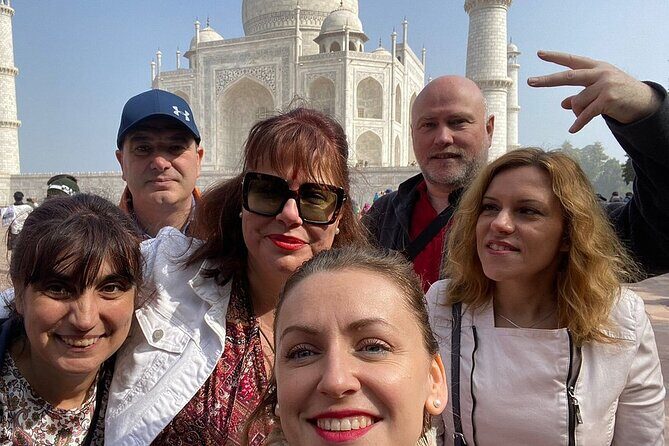
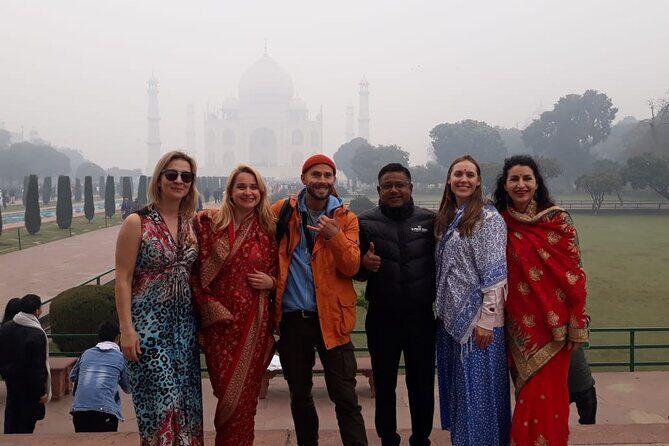
Taj Mahal is the reason most people come to Agra, and this stop gives you about 2 hours. The entry ticket for Taj Mahal is listed as not included in the base, so plan ahead—either for tickets separately or for the optional add-on if you choose it.
What I’d focus on first is getting your bearings quickly. A site this famous can tempt you into a rushed pattern: arrive, point camera, move on. Instead, I like to slow down for the main view, then circle back to details. Even if you’re not a monument expert, Taj Mahal rewards careful looking—stone patterns, symmetry, and the way light changes across the marble.
This is also where a great guide can really earn their keep. In the feedback I saw, guides like Musharraf were praised for good explanations and answering questions clearly. That matters here because the monument is easy to admire and harder to truly read without context.
One more practical note: this day includes multiple sites, so Taj Mahal is likely your first “big walk.” If you’re sensitive to heat, it’s smart to take small breaks and sip water from the bottle provided.
Agra Fort: Akbar’s architecture maze in a tight window
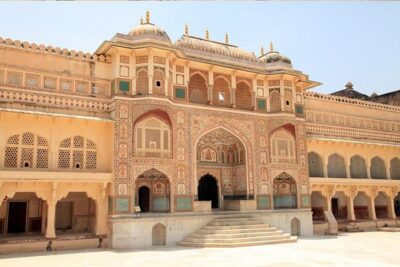
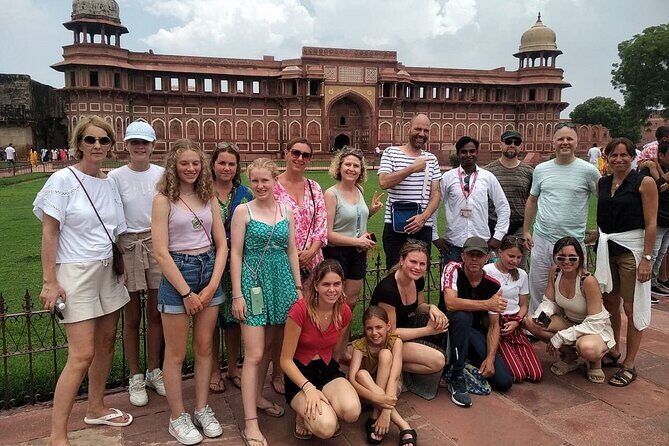
After Taj Mahal, you head to Agra Fort for about 2 hours. This fort is linked with Emperor Akbar and is described as having a complex layout of courtyards, mosques, and private chambers within its walls. In plain terms: it’s not one single postcard scene. It’s layers, passageways, and changing viewpoints.
This stop can be a little trickier than Taj Mahal if you go in expecting one highlight. Instead, treat it like an exploration. I recommend using your guide to understand how the fort is organized—where public areas give way to more private spaces—because that helps you make sense of what you’re seeing as you move.
In the feedback, Hilal stood out for his passion for Mughal architecture and history. If your guide is that kind of person, Agra Fort becomes more than old stone. You start to see how planning and power worked through the layout.
Admission for Agra Fort is also listed as not included in the base. So again: either buy your ticket separately or choose the optional entrance-fee add-on listed in the tour details.
Fatehpur Sikri: the City of Victory and its big-time feel
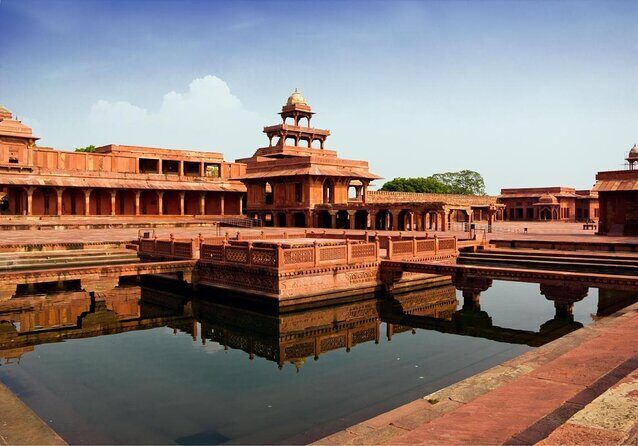
Fatehpur Sikri is the third main stop and it’s given the most time: about 4 hours. It’s known as the City of Victory, built in the late 16th century by Emperor Akbar, and it served as the Mughal Empire’s capital for a brief period before being abandoned.
That abandonment detail is important. It changes how the site feels. You’re not just looking at a functioning city; you’re reading an unfinished chapter of history left in stone. I like that this stop is longer because you’ll likely want time to move between structures and viewpoints without feeling rushed.
The good news: Fatehpur Sikri entry is listed as free in the tour itinerary. So while Taj Mahal and Agra Fort may require extra ticket planning, this portion is more straightforward on the cost side.
If you enjoy interpretation, ask your guide to explain why it mattered that it was a capital for only a short stretch of time. That one bit of context can make the whole site click—especially as you walk through the built spaces and sense the city scale.
And practical tip: four hours sounds like a lot, but it’s easier to lose time than you think. Wear comfortable shoes and be ready for some walking across uneven ground.
Marble handicrafts in Agra: what you’ll see (and what to expect)
Between major monuments, this tour adds a stop at Marble Handicrafts Agra for about 1 hour. The idea is to see inlay handmade art of marble (and there’s also mention of rug-style craftsmanship), plus how items are produced as souvenirs.
This is a “nice-to-see” cultural stop, not a required museum moment. If you’re curious about crafts, it can be genuinely interesting to watch the process and understand what makes inlay work special. It’s also free admission for this stop, so it doesn’t add another ticket layer to your day.
The only caution I’d give is the usual souvenir reality check in tourist areas. Some shops can lean hard on sales pressure. If you want to browse without feeling pushed, I’d set a personal rule beforehand: look only, or buy only if it’s something you genuinely love. A good guide can also help you keep the stop under control so it doesn’t steal time from the monuments.



Guides make or break the day
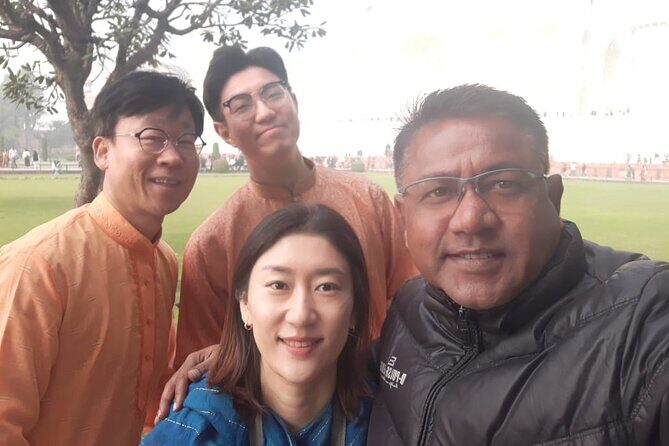
This tour is private, but the guide quality is what turns the schedule into a story you actually remember. I saw repeated praise for guides who explain clearly, answer questions, and stay attentive without hovering.
Musharraf is mentioned as a great guide with solid explanations and quick answers. Sunil is praised for perfect hosting in a strange city—meeting someone at the train station, staying close, and only stepping away when handing off to another guide or experience. Hilal is noted for passion about Mughal architecture and history.
The practical takeaway for you: if your guide offers to point out photo spots, ask. If something feels confusing, ask immediately while you’re still in the space. And if you’re on a tight schedule because of train or flight timing, say so early. The best guides will adjust the pace.
Even small things help. One person mentioned getting a nice picture from the guide. That’s the kind of extra attention that can turn a hurried visit into a more comfortable day.
Price and value: $8 base versus entrance fees
The listed price is $8.00 per person, and the tour description also says monuments entrance fees are optional with an add-on around $30 per person. That combination means the base price likely covers the private car/driver and guiding, while monument tickets are handled separately.
Here’s how I’d judge value: if you’re paying for convenience anyway—pickup, AC car, and a private guide—then a low base price plus clearly identified ticket costs can still be a good deal. But if you show up assuming everything is included, you’ll get surprised at the sites where entry is not included.
So before your day starts, decide your plan:
- If you like a simple budget, choose the optional entrance-fee add-on mentioned in the tour details.
- If you’d rather handle tickets yourself, then treat Taj Mahal and Agra Fort as ticket-required stops and plan accordingly.
Either way, don’t ignore the fact that meals are not included. You’ll want to plan food snacks or lunch on your own so you don’t lose energy mid-day.
A realistic timetable for your body
This is a full-day tour: about 8 to 10 hours total. The stop lengths are fairly clear—Taj Mahal around 2 hours, Agra Fort around 2 hours, Fatehpur Sikri around 4 hours, and a 1-hour handicrafts stop.
How that feels in real life: you’ll likely start strong with Taj Mahal, then shift to a more interpretive mindset in Agra Fort, then settle into Fatehpur Sikri for the longer walk and exploration. The handicrafts stop is short, but it can feel “extra” if you’re already a bit tired from monument days.
If you’re the type who gets cranky after long walking days, bring a simple strategy:
- wear comfortable shoes
- use sunscreen
- sip water even if you don’t feel thirsty
Bottled water is included, which helps. Just remember it’s still a long day, and heat in Agra can make you feel slower than you expect.
What you should bring (without overpacking)
The tour includes bottled water, pickup/drop-off, and a guide. What it does not include is meals/food, plus personal expenses like shopping.
Here’s what I’d pack:
- a light layer (sun can be intense, but indoor spaces cool down)
- comfortable walking shoes
- a hat and sunscreen
- a small snack plan for between sites
If you know you’ll want photos, bring your camera gear and extra battery. You’ll be in bright light for parts of the day, so it’s smart to keep memory storage in check too.
Who this tour suits best
This tour is a great match if you want a “greatest hits of Agra” day with minimal friction. It’s especially good for first-timers who feel overwhelmed by transport options or who want a guide to explain what you’re seeing at Taj Mahal, Agra Fort, and Fatehpur Sikri.
It also fits travelers who value efficient scheduling. You get pickup and drop-off at hotel/airport/railway station, which is perfect if you arrive by train and don’t want the hassle of finding a car.
If you’re the kind of traveler who hates guided pacing or wants lots of free time to wander alone, you might feel the schedule is too tight. In that case, you’d probably prefer a more relaxed, single-site-focused plan.
Should you book this Taj Mahal & Agra Fort & Fatehpur Sikri tour?
I’d book it if your priority is seeing the big UNESCO sites in one day with a private guide and an AC car. The structure makes sense: start with Taj Mahal, then shift to Agra Fort’s layout, then give Fatehpur Sikri enough time to feel like more than a stop on a route.
I’d think twice if your budget is super tight and you hate surprises at ticket time. Since Taj Mahal and Agra Fort entry are listed as not included, your final cost will depend on the optional entrance add-on you choose or your decision to buy tickets separately.
My final suggestion: when you message to confirm, clarify how you want the day paced and whether you want help covering tickets through the add-on. With the right guide energy—like the attention seen from Musharraf, Sunil, or Hilal—this becomes a memorable Agra day, not just a checklist.
FAQ
What is the duration of the tour?
The tour runs about 8 to 10 hours.
Do I get pickup and drop-off?
Yes. Pickup and drop-off are offered at your Agra hotel, airport, or railway station.
Is this tour private?
Yes. It’s a private tour/activity, and only your group participates.
Are monument entrance fees included?
Taj Mahal and Agra Fort entrance fees are listed as not included. There is an optional monument entrance fee add-on mentioned at about $30 per person. Fatehpur Sikri and the marble handicrafts stop are listed as free admission.
Does the tour include meals?
No. Meals and food are not included.
What’s included besides the guide and car?
The included items are a private AC car with driver, a private tour guide, pickup/drop-off, all fees and taxes, bottled water, and entrance fee inclusion is listed as optional. You’ll also receive a mobile ticket.
Can I cancel for a refund?
Yes. Free cancellation is available if you cancel up to 24 hours in advance for a full refund. If you cancel within 24 hours, you won’t receive a refund.