Golden Triangle, with wildlife legs. This is a private India route that strings together Delhi, Agra, Jaipur, and more, with Ranthambore and Jhalana safaris plus guided monuments along the way. I like that door-to-door air-conditioned transfers keep the long drives bearable, and I also like the way the trip gives you time to actually see big sights like the Taj Mahal. The one catch: monument entry fees and meals aren’t included, so you’ll want to budget those up front.
One more thing I appreciate: you’re not stuck with a rigid tour machine. The booking contact (Mr. Gopal) reaches out to confirm details, and the overall flow has that first-timer-friendly feel—see a lot, but still keep your day from getting total chaos.
In This Review
- Key highlights that make this itinerary worth your time
- The “private Golden Triangle” feeling, without the typical hassle
- Delhi in two gears: old city temples and Mughal icons
- Agra: getting the timing right for the Taj Mahal
- Fatehpur Sikri and Chand Baori: why the “in-between” stops matter
- Ranthambore and Jhalana safaris: how to maximize wildlife time
- Jaipur temples and monuments: from Galtaji to Hawa Mahal
- Udaipur: lake time plus palaces and temples
- Jodhpur: Mehrangarh views and a Bishnoi village day
- Pushkar and Mandawa: slowing down after the forts
- Price and value: what $835.72 buys you, and what you’ll pay separately
- Who this 14-day Rajasthan + safari trip suits best
- Room setup and the private-group reality
- Should you book this Golden Triangle + wildlife safari package?
- FAQ
- What’s the meeting point for the tour?
- Are airport transfers included?
- What vehicle will you use for transportation?
- Are safari rides and park entry included?
- Are monument entrance fees included?
- Does the price include accommodation and breakfast?
- What is the cancellation policy if weather affects the trip?
Key highlights that make this itinerary worth your time
- Private, guided sightseeing across Delhi, Agra, Jaipur, and beyond
- Two Taj Mahal moments: sunrise viewing plus a guided inside visit
- Wildlife focus: Ranthambore gets two safari outings, plus a Jhalana safari
- Battery bus to Taj Mahal (included), which saves time after parking
- Comfortable vehicles by group size (sedan, wagon, or minivan with AC)
- Day-to-day flexibility built in through a private, group-only setup
The “private Golden Triangle” feeling, without the typical hassle
This isn’t just a checklist of famous names. It’s a private, group-only plan built around daily hotel pickup and drop-off, which matters in India where travel time can swallow whole days if you’re handling it yourself. You’ll ride in an air-conditioned private vehicle, with the size matched to your group (4-seater sedan for 1–2, 6-seater wagon for 3–4, minivan for 5–10).
Your sightseeing also comes with private local guides. That’s a big value piece because monuments like Qutub Minar, Humayun’s Tomb, and Jantar Mantar make way more sense with someone explaining what you’re looking at, instead of you guessing from signs.
The route is also long—14 days with multiple cities—so it helps that the pacing includes overnight stays. You’re not trying to “speedrun” India on one single day of movement after another.
Delhi in two gears: old city temples and Mughal icons
Delhi day one is a strong, spiritual starter: Gurdwara Bangla Sahib, Agrasen ki Baoli, and a bit of evening freedom. Gurdwara Bangla Sahib is famous for the tank story—water from the pool was shared during historic epidemics, and the place still carries that community vibe. Agrasen ki Baoli (stepwell) is also worth your attention because it’s protected as a monument, and it has that quiet, slightly eerie feel you don’t get at more commercial stops.
Day two leans into landmarks. You’ll see Qutub Minar (UNESCO, tall, five-storey tower, built in the Sultanate era), then Lotus Temple (the flower-like shape and open-to-all design). After that, you hit the Mughal and imperial layer: India Gate, Parliament House (Sansad Bhavan), Jama Masjid, Humayun’s Tomb, and Chandni Chowk.
Here’s the practical takeaway. Delhi works best when you use the guide for context and use your own feet for the market energy. Chandni Chowk is where you’ll feel Delhi’s texture—spices, jewelry, narrow lanes, and lots of visual noise. Wear comfortable shoes, and don’t try to do heavy shopping every hour. Grab what you love, but leave room for simply walking.
Agra: getting the timing right for the Taj Mahal
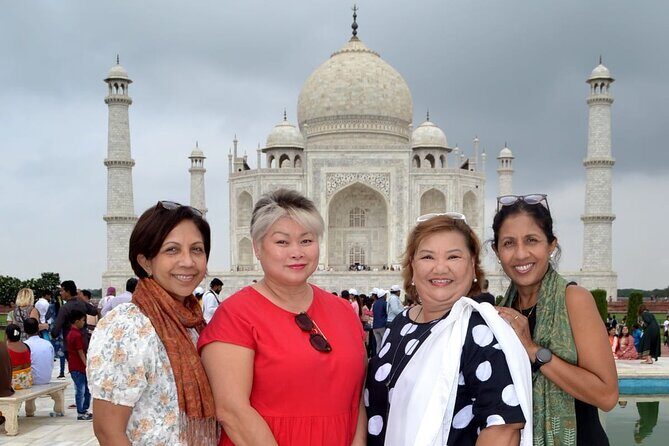
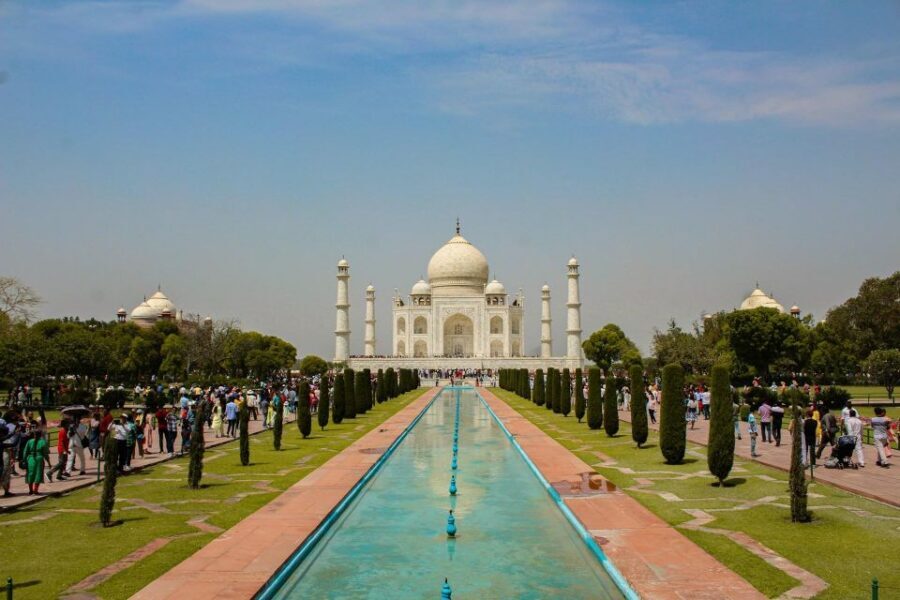
Agra is where this trip gets its wow. You’ll travel from Delhi to Agra in about 4 hours (around 222 km). Once there, you’ll check in, then start your sightseeing with the Taj Mahal, Agra Fort, Itmad-ud-Daula (often called Baby Taj), and Mehtab Bagh.
The Taj Mahal part is set up thoughtfully. On day three you get time to see it during the day, and on day four you get the classic move: watch the sun rise and take a guided inside tour for about two hours. That second Taj moment is valuable even if you think you already know the photos. Morning light changes everything, and the inside visit adds the story—this was built by Shah Jahan as a tribute to Mumtaz Mahal.
Two other Agra stops round out the experience. Agra Fort ties the Taj to the larger Mughal world, not just one monument. Itmad-ud-Daula gives you a smaller scale that still shows off the Mughal approach to design, and Mehtab Bagh is your “opposite bank” time for that Taj-at-the-right-angle photo.
One note: Taj-area logistics can be time-consuming anywhere. This tour includes the battery bus ride to and from the Taj Mahal parking up to the monument area, which can save you energy when you’re doing early mornings and long walking.
Fatehpur Sikri and Chand Baori: why the “in-between” stops matter
You don’t only go from Taj Mahal straight to wildlife. Day four adds two stops that make the drive day feel worth it.
Fatehpur Sikri (City of Victory) gives you a Mughal-era capital site—built in the late 16th century under Akbar and serving as the Mughal seat for about a decade. It’s one of those places where the scale and layout help you understand why rulers moved, built, and re-built power.
Then you stop at Chand Baori, the famous stepwell near Abhaneri. It drops roughly 30 meters underground and is described as one of the largest and deepest stepwells in India. A stepwell isn’t just a photo op. It’s also a way to see how people handled water, shade, and community space in hot climates.
After that, you head to Ranthambore National Park and check in for the night—so you’re ready to focus on safari the next morning.
Ranthambore and Jhalana safaris: how to maximize wildlife time
This is the core “wildlife safari & heritage” promise, and the schedule respects animal-viewing reality. At Ranthambore, you get a safari in the morning and a second one in the evening, each listed as a few hours and with safari time included. You’ll also have the Ranthambore safari entrance included, and the safari rides are by canter or jeep.
The main value here is not just that you go. It’s that you go twice in one park across different parts of the day. For many wildlife days, that difference is huge. Even if tiger sightings aren’t guaranteed (no one can promise that), two safaris give you more chances to spot other wildlife too.
Then, later you add a Jhalana Safari Park outing in Jaipur. That’s a separate safari experience with its own included entry. If you’re a wildlife-first person, this adds variety instead of repeating the exact same setting.
Practical advice I’d follow on a trip like this:
- Bring a light layer. Mornings and evenings can feel cooler, even when days are hot.
- Keep your camera battery charged. Your best moments won’t wait.
- Be flexible with expectations. Wildlife is wild.
Jaipur temples and monuments: from Galtaji to Hawa Mahal
Jaipur starts with a temple stop that feels different from the big-ticket palace vibe. On day six you visit Galtaji, also called the Abode of Monkeys. The key detail is the structure around multiple sacred pools of water, and yes—monkeys are part of the atmosphere. Then you also visit Birla Mandir, located on elevated ground at the base of Moti Dungri.
Before the city sightseeing day, you also have a Jhalana safari time in the evening. That sequencing works because it separates temple energy from wildlife focus. It also prevents your Jaipur days from becoming nonstop walking in one direction.
Day seven is your “big Jaipur” day. You’ll see Panna Meena ka Kund (a stepwell), then get a guided look at the palace area—described as the capital of Rajasthan until 1728 and associated with Raja Man Singh I. You also stop for photos at Jal Mahal, the palace on Man Sagar Lake.
Then the monuments you’ll remember:
- City Palace (about an hour), the administrative and ceremonial seat tied to the Maharajas of Jaipur
- Jantar Mantar (UNESCO, built in 1734), with the story of the astronomical instruments built by Sawai Jai Singh II
- Hawa Mahal (Palace of Breeze), a five-storey pyramidal structure in red and pink sandstone
My simple rule for a day like this: don’t race. You can easily burn out trying to “collect” sights. Instead, pick one or two to enjoy slowly and treat the others as short but meaningful stops.
Udaipur: lake time plus palaces and temples
Udaipur arrives after an early morning drive from the previous city (listed as about 8 hours). Once you check in, you get time for local markets and dinner based on your preference—meaning you can keep the evening relaxed instead of shoehorning in another scheduled attraction.
Day nine is classic Udaipur by the water. You’ll have Lake Pichola time, including a possible private boat ride where you can view Jagmandir Palace island. Then you visit City Palace, which sits right on the lake and includes a collection of items like weapons, guns, and ceremonial pieces.
Jagdish Temple is next, inside the City Palace complex. It’s described as Indo-Aryan style and is one of Udaipur’s famous temple stops.
Finally, you have Bagore Ki Haveli Museum. The itinerary notes a guide and private transportation, and also gives you the option to skip it if you don’t want to stop there. I like that flexibility. Udaipur has enough pace to allow a breather, so you don’t feel forced into one more ticketed indoor stop.
Jodhpur: Mehrangarh views and a Bishnoi village day
Jodhpur begins with another morning drive (about 6 hours). After check-in, you’ll head to the Clock Tower Market area for a first look and some shopping-time energy.
Then day eleven focuses on the big sights. Mehrangarh Fort (15th-century) is now a museum setting, with items like weapons, paintings, and royal palanquins (sedan chairs). Fort views are a big part of why the fort matters, and the museum aspect keeps it from being only scenery.
You’ll also see Umaid Bhawan Museum, described as one of the world’s largest private residences and a museum built with golden-yellow sandstone. Jaswant Thada comes next, a marble cenotaph and mausoleum for Marwar kings.
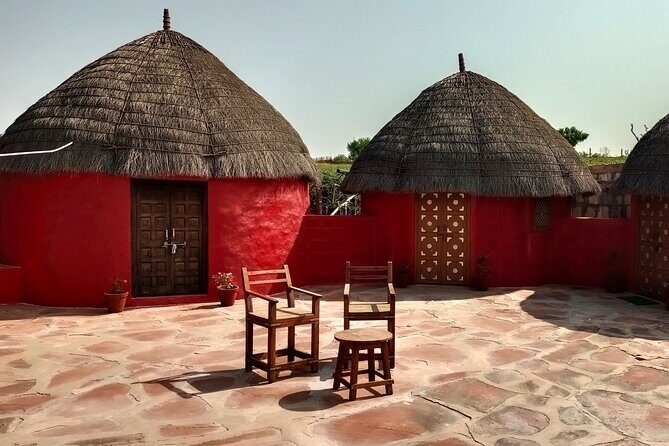
The final piece is the Bishnoi village excursion (highly recommended in the plan). You’ll spend a few hours with local women and enjoy the village day in a more everyday setting, then return to the hotel in the evening. This is the part that often feels most human after days of fort walls and palace gates.
Pushkar and Mandawa: slowing down after the forts
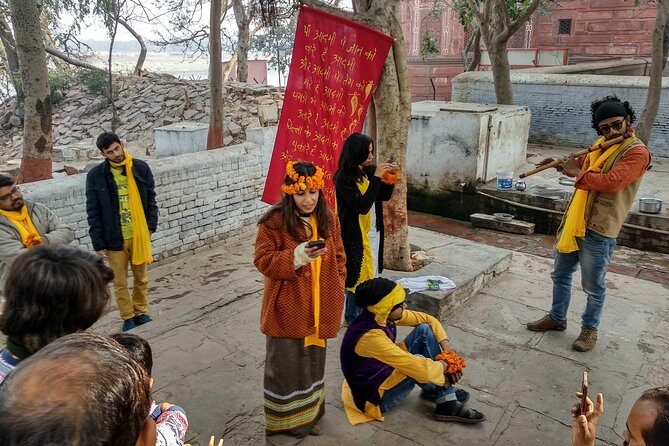
Pushkar is an overnight stop with a spiritual and ritual feel. You visit Brahma Temple—listed as the only Brahma temple in the world—then you move to Pushkar Lake area. The plan includes Brahma Ghat, described as a place for prayers and tribute rituals for happiness and for deceased souls. It’s also noted as a photography-focused spot.
Then you continue to Mandawa. The focus there is Francisco painted havelies—heritage homes with painted facades. Day thirteen is built around those visuals and then exploration of the village area in the evening.
This ending sequence works because it shifts you from big architectural monuments into smaller, local heritage details. You leave with a sense of Rajasthan that feels more lived-in.
Price and value: what $835.72 buys you, and what you’ll pay separately
At $835.72 per person for about 14 days, the value depends heavily on which option you book. The “included” list makes it clear that 13-nights accommodation is only included if you choose the option that includes hotels. Daily breakfast is also tied to that hotel option.
What’s strong here, even without guessing beyond the data:
- You get a private, air-conditioned vehicle with a driver for transfers between cities and between stops.
- You get private local guides for sightseeing.
- You get included wildlife costs: Ranthambore Safari Park entrance and the Jhalana safari entry, plus safari rides by canter or jeep.
- You get the Taj Mahal battery bus to and from the monument area.
- You get bottled mineral water during journeys.
What you should budget for:
- Monument entrance fees are listed as not included, and many stops show admission ticket not included.
- Tips for driver and guide aren’t included.
- Any meals aren’t included.
- Travel insurance and flights/train tickets aren’t included.
So think of this as a value-forward plan where most of the “hard work” is covered: transport, guides, hotel transfers, and safari access. Your biggest extra costs are typically tickets, meals, and tipping.
If you’re traveling solo or as a couple, a private tour like this can still make sense because you’re paying for time saved and expertise provided. If you’re trying to keep costs ultra-low, the not-included fees will add up fast, especially across multiple cities.
Who this 14-day Rajasthan + safari trip suits best
Choose this tour if you want:
- A private experience across many cities, not just Delhi, Agra, and Jaipur
- Built-in wildlife days: two Ranthambore safaris plus a Jhalana safari
- A tour pace that includes major monuments with guided context
- A first-visit-friendly structure, where someone else handles the day-to-day transitions
Consider a different fit if:
- You hate long driving days. The schedule includes multiple cross-city drives (Delhi to Agra, Agra to Ranthambore via stops, then onward to Jaipur, Udaipur, Jodhpur, Pushkar, and Mandawa).
- You want every ticket fully included. Monument entry fees and meals are not included.
Room setup and the private-group reality
Rooms are generally twin-sharing. If you book for 3 people, the default is triple-sharing, unless you pay an extra charge to get 2 rooms.
Transport changes with group size, so if your group is small, expect a sedan. That can feel easier in traffic and helps with turns and parking, compared with taking a big van everywhere.
Because this is a private tour/activity, only your group participates. That’s a quality-of-life point. You’re not waiting for other people’s pace.
Should you book this Golden Triangle + wildlife safari package?
I’d book this if you want the best mix of India’s headline sights and a real wildlife focus, without turning your trip into a logistics puzzle. The inclusion of safari access at Ranthambore and Jhalana, plus two Taj Mahal moments, is the kind of plan that pays you back in memories.
But do it with open eyes about the extra costs. Monument tickets, meals, and tips will be on you, and the driving days are real. If you’re okay planning for those, this route is a strong value way to see Golden Triangle heritage and Rajasthan wildlife in one connected trip.
FAQ
What’s the meeting point for the tour?
The tour meeting point is Indira Gandhi International Airport in New Delhi, Delhi 110037, India.
Are airport transfers included?
Yes. Hotel or airport pickup and drop-off is included.
What vehicle will you use for transportation?
For groups of 1 or 2 you use a 4-seater sedan. For groups of 3 or 4 you use a 6-seater wagon, and for groups of 5 to 10 you use a 10-seater minivan. All are described as air-conditioned.
Are safari rides and park entry included?
Yes. Ranthambore Safari Park entrance is included (canter or jeep), and you also have Jhalana Safari Park entrance included.
Are monument entrance fees included?
No. Monument entrance fees are listed as not included.
Does the price include accommodation and breakfast?
Accommodation and daily breakfast are included only if you book the option including hotels (13 nights of accommodation and daily breakfast).
What is the cancellation policy if weather affects the trip?
You can cancel for a full refund up to 24 hours in advance. The experience also requires good weather, and if it is canceled due to poor weather, you’ll be offered a different date or a full refund.